
Is Your Mirror Tilted Forward? Here’s the Real Reason Why
You hang a beautiful new mirror, step back to admire your work, and notice something is off. The top of the mirror is tilted forward, creating an awkward gap between the frame and the wall. It’s a frustratingly common problem that can ruin the aesthetic of a room and, more importantly, pose a serious safety risk.
This subtle but persistent tilt is more than just a minor annoyance. It’s a sign that something in your hanging method is fundamentally wrong. Understanding the cause is the first step to a secure and perfectly flush mirror.
You'll Learn About
The Hidden Dangers of a Tilted Mirror
A mirror that leans forward isn’t just an eyesore; it’s a potential hazard. The constant, uneven pressure on the hanging hardware can lead to catastrophic failure. This is especially true for heavy or large mirrors, which can cause significant damage or injury if they fall.
Beyond the immediate physical risks, a tilted mirror can distort reflections and improperly distribute light. Instead of opening up a space, it can create a warped perspective that makes a room feel slightly off-balance. Getting the installation right is crucial for both safety and style.
Why Your Mirror Won’t Sit Flush: Unpacking the Causes
Several factors can cause a mirror to tilt forward, most of which relate to the hardware and hanging technique. Identifying the specific cause is key to applying the right fix. From the type of wire used to the placement of the hooks, every detail matters.
Cause 1: The Hanging Wire Problem
The most common culprit is a single, long strand of picture wire stretched between two D-rings on the back of the mirror. When the mirror hangs from a single hook in the wall, gravity pulls the wire taut at its center, forcing the top of the mirror to angle away from the wall. The lower the D-rings are placed on the frame, the more pronounced this tilt will be.
This method creates a pivot point. The bottom edge of the mirror frame rests against the wall, while the top pivots outward on the wire. This is a recipe for instability and is not recommended for heavy mirrors.
Cause 2: Incorrect Hardware for Your Wall Type
Walls are not created equal. A standard screw drilled into drywall has very little holding power and can easily pull out under the weight of a mirror, causing it to lean. Plaster walls can be brittle and may crack or crumble if the wrong anchor is used.
Using hardware that isn’t rated for your mirror’s weight is a critical mistake. It’s essential to know what your walls are made of—drywall, plaster, or masonry—and select an anchor designed to handle the load securely. Failure to do so compromises the entire setup.
Cause 3: The Flaw of a Single Hanging Point
Relying on one hook to support the entire weight of a mirror is a risky strategy. A single point of contact concentrates all the stress, increasing the likelihood of failure. It also makes the mirror susceptible to shifting or tilting if bumped.
For large or heavy mirrors, distributing the weight across two separate hanging points is a much safer and more stable approach. This method prevents the mirror from pivoting and ensures it remains flush against the wall.
The Definitive Guide to Fixing a Tilted Mirror
Correcting a tilted mirror involves rethinking your hanging strategy. The goal is to eliminate the pivot point and create a secure, flush mount. This requires using the right hardware and a more stable technique.
Fortunately, these solutions are straightforward and accessible for any DIYer. By adopting a better method, you can ensure your mirror hangs perfectly straight and stays that way for years to come.
Solution 1: The Two-Hook Method
This is the simplest and most effective way to prevent tilting. Instead of using a wire, hang the mirror directly from the D-rings onto two separate, level hooks secured to the wall. This creates two stable points of contact that hold the mirror flat.
Measure the distance between the center of the D-rings on the mirror frame. Transfer this measurement to the wall, using a level to ensure the two points are perfectly horizontal. Install your wall hooks at these marks for a secure, flush fit.
Solution 2: Master the French Cleat
For very heavy or large mirrors, a French cleat offers the ultimate in security and stability. A French cleat consists of two interlocking brackets with angled edges. One is mounted to the wall, and the other to the back of the mirror frame.
The weight of the mirror is distributed evenly across the entire length of the cleat, providing exceptional support. This system holds the mirror incredibly close to the wall, completely eliminating any forward tilt.
Solution 3: Choosing the Right Anchors and Hardware
The security of your mirror depends entirely on the connection to the wall. Always anchor into a stud when possible. A stud finder is an indispensable tool for locating these solid wood supports within your walls. Driving a screw directly into a stud provides the strongest possible hold.
When a stud isn’t available, you must use a wall anchor appropriate for your wall type and the mirror’s weight. Toggle bolts and strap toggles are excellent choices for heavy items in drywall, as they brace against the back of the wallboard to distribute the load.
| Anchor Type | Wall Type | Weight Capacity (Approx.) | Best For |
|---|---|---|---|
| Standard Wood Screw | Wall Stud | 50-100 lbs+ | The most secure option for any heavy item. |
| Toggle Bolt | Drywall, Plaster | 50-100 lbs | Heavy mirrors where studs are not available. |
| Strap Toggle Anchor | Drywall, Plaster | 80-150 lbs | Extremely heavy mirrors, offering superior strength. |
| Masonry Sleeve Anchor | Brick, Concrete | 100+ lbs | Hanging mirrors on very hard, solid surfaces. |
The Leaning Mirror: From Problem to Design Choice
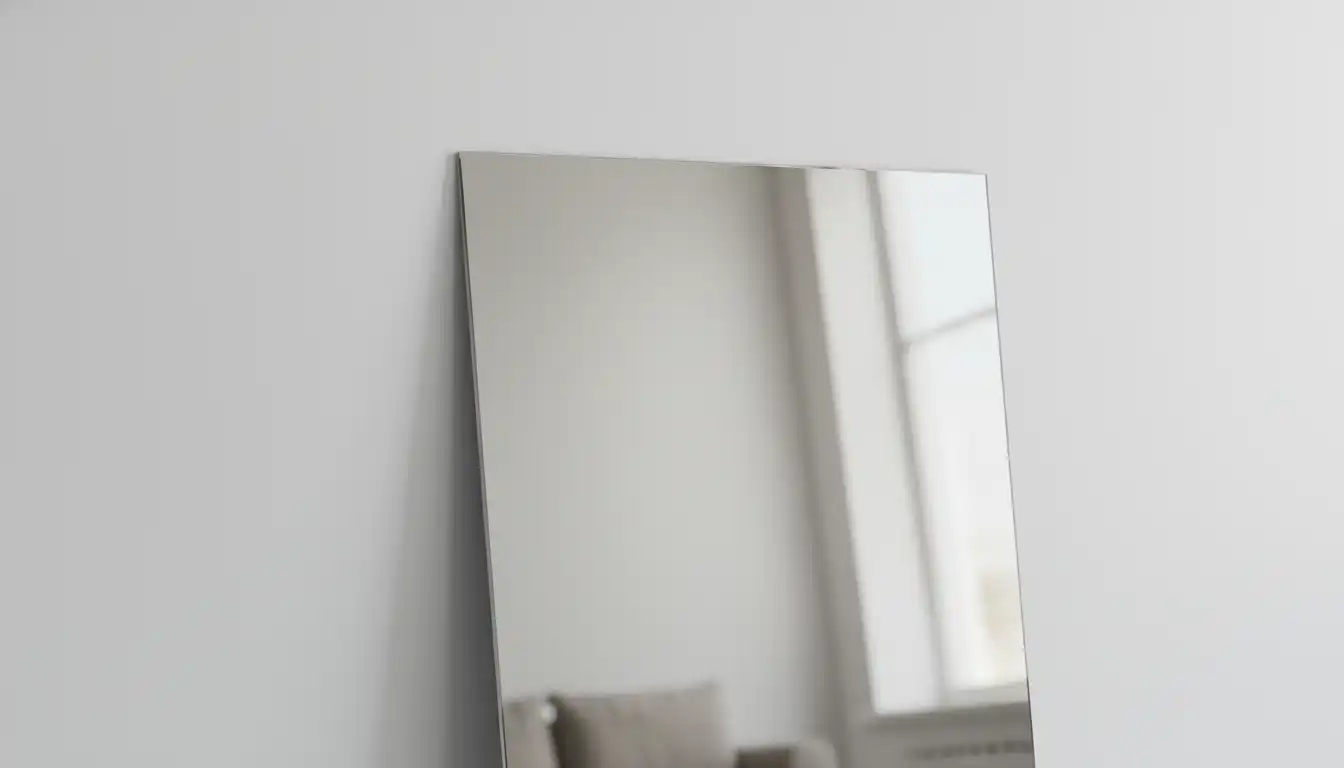
While an unintentional tilt is a problem, an intentional lean can be a sophisticated design statement. Large, full-length floor mirrors are often leaned against a wall to create a casual yet elegant focal point. This approach adds architectural interest and can make a room feel larger and more dynamic.
The key to the leaning look is intention and safety. The mirror should be substantial enough to feel grounded, and its base must be secure on the floor. For extra safety, especially in homes with children or pets, it’s wise to anchor the top of the leaning mirror to the wall with a furniture strap or bracket.
How to Safely Achieve the Leaning Look
To pull off this style, first ensure the mirror’s base won’t slip. On hard floors, place a non-slip pad or rubber grips under the frame. This simple addition provides crucial traction and prevents the mirror from sliding out from the bottom.
Next, secure the top. Attach a furniture anti-tip kit to the back of the mirror frame and the wall. This will keep the mirror from tipping forward if it’s accidentally bumped, providing peace of mind without compromising the aesthetic. This step is non-negotiable for creating a safe environment.
Enhancing Your Space with a Perfectly Placed Mirror
A well-hung mirror does more than just reflect an image; it transforms a room. It can amplify light, create an illusion of depth, and serve as a stunning piece of art. The angle of your mirror plays a significant role in this transformation.
For example, how a mirror interacts with your lighting is critical. A poorly placed mirror can create glare from fixtures like recessed lights. Thoughtful placement, however, can capture and reflect light beautifully. Understanding how to manage these details, such as learning how to avoid mistakes with recessed lights over a vanity, can elevate your entire design.
Reflecting Your Home’s Best Features
Position your mirror to reflect something beautiful, such as a window with a view of a garden. This brings the outdoors in and adds a sense of life to the space. You might even be inspired to enhance that view; perhaps by planting a tree like the a Royal Raindrops crabapple to add seasonal color.
The details surrounding your mirror matter as well. A beautifully hung mirror can draw attention to the surrounding architecture, including details like your baseboards. If they’re looking a bit tired, a fresh coat of paint, perhaps using a product like canned spray paint for baseboards, can complete the polished look of the room.
Conclusion
Correcting a forward tilt is essential for both the visual “weight” of your room and the long-term integrity of your hardware. This phenomenon, often called the “lean-out” effect, usually occurs when the hanging wire is too long or the anchor points are placed too far below the top of the frame. By shortening the wire or switching to a cleat-style hanger, you distribute the weight evenly against the wall, pulling the top of the mirror flush.
Ultimately, a mirror that sits flat isn’t just about aesthetics; it ensures the center of gravity remains stable. With the right tension and hardware placement, you can transform a precarious lean into a seamless, professional installation that feels like a permanent part of the architecture.
