
Royal Raindrops vs Prairie Fire: Which Crabapple Is Your Garden’s Missing Jewel?
Choosing the perfect ornamental tree for your garden can feel like an overwhelming task. You want stunning spring flowers, attractive summer foliage, and perhaps even some winter interest. For many homeowners, the search for the ideal small-stature tree leads them to the dazzling world of crabapples.
Two of the most celebrated and highly recommended varieties are the Royal Raindrops and the Prairie Fire crabapple. Both are champions of color and form, but their subtle and significant differences can make one a perfect fit for your landscape while the other is merely a good one. This guide will solve that dilemma for you.
You'll Learn About
Decoding the Dilemma: Why This Choice Defines Your Landscape
Selecting the right tree isn’t just about picking a pretty plant; it’s a long-term investment in your home’s curb appeal and your personal enjoyment of your outdoor space. A tree becomes a permanent fixture, a living sculpture that changes with the seasons. The choice between Royal Raindrops and Prairie Fire will influence your garden’s color palette, texture, and overall mood for decades to come.
Making an informed decision means looking beyond a single season of blooms. You must consider the foliage, the mature size and shape, the fruit, and, critically, the tree’s health and resilience. Both of these modern cultivars were bred for superior disease resistance, but they offer two distinct aesthetic paths for your garden design.
Meet the Contenders: A Head-to-Head Introduction
Before diving into a detailed comparison, let’s formally introduce these two horticultural heavyweights. While they share a reputation for excellence, their personalities are expressed in very different ways through their leaves, flowers, and overall structure.
Royal Raindrops Crabapple: A Regal and Refined Presence
The Royal Raindrops crabapple (Malus transitoria ‘JFS-KW5’) is celebrated for its truly unique foliage. Its leaves are deeply lobed or “cutleaf,” resembling a maple leaf more than a typical crabapple. This distinctive feature gives the tree a finer, more delicate texture than its counterparts.
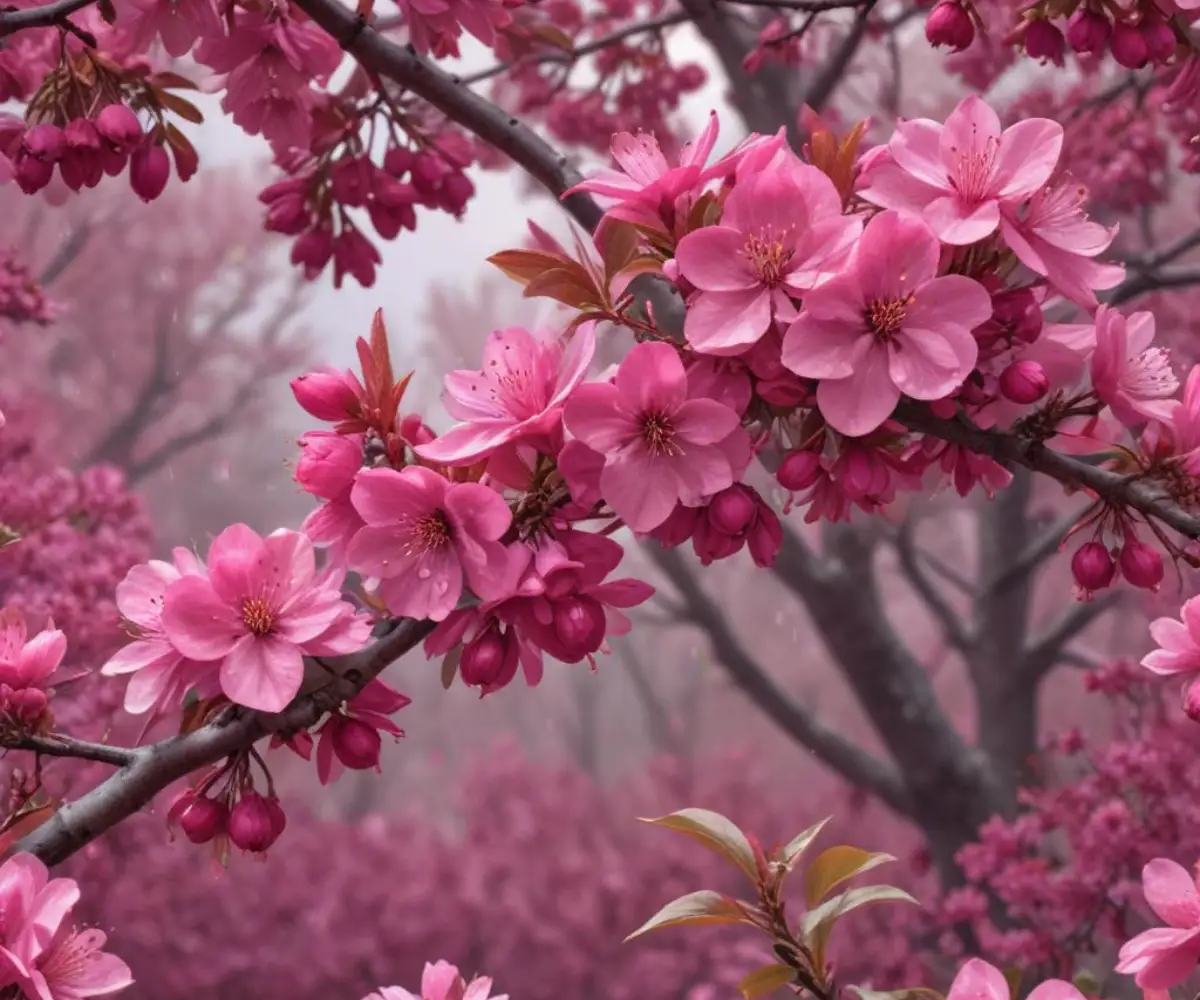
It explodes in spring with a profusion of stunning, magenta-pink single blossoms that are a magnet for bees. What truly sets it apart is that its deep purple foliage holds its rich color remarkably well through the heat of summer, providing a season-long splash of drama. Its fruit consists of tiny, sparkling red drupes that add winter interest.
Prairie Fire Crabapple: A Bold Blaze of Glory
The Prairie Fire crabapple (Malus ‘Prairifire’) is all about intense, undeniable color. Its spring floral display is a breathtaking spectacle of bright, pinkish-red single blooms that completely envelop the branches, creating a literal “prairie fire” of color. It is often considered one of the most vibrant and showy of all crabapple varieties.
Its new spring foliage emerges reddish-maroon, eventually maturing to a handsome dark green with purple undertones in the summer. In the fall, the leaves can take on a striking bronze-orange color. The small, persistent dark red fruits are a standout feature, often lasting well into the winter and providing a vital food source for birds.
The Ultimate Comparison: Royal Raindrops vs. Prairie Fire At a Glance
Seeing the core attributes side-by-side is the fastest way to understand the fundamental differences between these two outstanding trees. This table breaks down their most important characteristics for easy comparison.
| Feature | Royal Raindrops Crabapple | Prairie Fire Crabapple |
|---|---|---|
| Flower Color | Vibrant magenta-pink | Intense, bright pinkish-red |
| Foliage Shape | Unique, deeply lobed (cutleaf) | Traditional ovate (oval) shape |
| Spring/Summer Leaf Color | Deep purple, excellent color retention | Reddish-maroon aging to dark green |
| Fall Color | Orangey-red to bronze | Bronze to orange-red |
| Mature Size | 15-20 feet tall, 12-15 feet wide | 15-20 feet tall, 15-20 feet wide |
| Growth Habit | Upright, vase-shaped when young, rounding with age | Rounded and spreading |
| Fruit | Tiny (1/4 inch), sparkling deep red, less persistent | Small (3/8-1/2 inch), dark red, highly persistent |
| Disease Resistance | Excellent resistance to scab, fire blight, cedar-apple rust | Excellent resistance to scab, fire blight, cedar-apple rust |
| Hardiness Zones | USDA Zones 4-8 | USDA Zones 4-8 |
Beyond the Blossoms: A Deeper Dive into Key Differences
While the table provides a great overview, the true character of these trees lies in the details. Understanding these nuances is key to making a choice you’ll be happy with for years.
The Foliage Factor: A Tale of Two Leaves
The most dramatic and undeniable difference between these two crabapples is the leaf shape. The unique, deeply lobed foliage of Royal Raindrops is a standout feature in any landscape. It creates a soft, almost feathery texture that is unlike any other purple-leafed tree.
This cutleaf structure does more than just look interesting; it affects how light filters through the canopy. The lacy foliage allows dappled sunlight to reach plants underneath, making it a slightly better companion for understory plantings than the denser canopy of Prairie Fire. In contrast, Prairie Fire has a classic, solid oval leaf that provides a more traditional and dense shade.
A Spectrum of Color: Flower and Leaf Nuances
Both trees offer knockout spring color, but there is a subtle distinction. Prairie Fire’s blossoms are a pure, fiery hot pinkish-red that demands attention from across the yard. Royal Raindrops’ flowers lean more towards a deep magenta-pink, with slightly cooler, more purple undertones. This can be an important factor when coordinating with other spring-blooming plants in your garden.
The evolution of their foliage color is another critical point. Royal Raindrops is prized for its superior retention of its deep purple leaf color throughout the summer. While Prairie Fire’s new growth is a stunning reddish-maroon, these leaves tend to fade to a dark green by mid-summer, especially in hotter climates. If season-long dark foliage is your primary goal, Royal Raindrops has the clear advantage.
Form and Function: How Their Shapes Impact Your Yard
A tree’s natural growth habit dictates how it occupies space in your garden. The Royal Raindrops crabapple typically grows in a more upright, vase shape when it’s young. This makes it an excellent choice for tighter spaces, near a driveway, or as a street tree where clearance beneath the canopy is desired. As it matures, it will broaden into a more rounded form.
Conversely, the Prairie Fire crabapple has a more rounded and spreading habit right from the start. It fills out to become a beautiful, symmetrical round tree, making it a perfect standalone specimen in a lawn or the centerpiece of a large garden bed. Its wider form needs a bit more horizontal space to truly shine.
The Unspoken Advantage: Disease Resistance and Low Maintenance
One of the biggest problems with older crabapple varieties was their susceptibility to diseases like apple scab, which could defoliate a tree by mid-summer, leaving it bare and unsightly. This is where both Royal Raindrops and Prairie Fire represent a massive leap forward and a huge relief for gardeners.
Both cultivars have been specifically bred for outstanding resistance to the major crabapple diseases, including apple scab, fire blight, cedar-apple rust, and powdery mildew. This means you get a beautiful, healthy tree with clean foliage all season long without the need for a rigorous chemical spray schedule. This built-in resilience makes them a sustainable and low-maintenance choice for any modern garden.
Making the Perfect Choice: Which Tree Belongs in Your Garden?
By now, you should have a clear picture of what makes each tree special. The final decision comes down to which set of features best aligns with your personal taste and landscape goals.
Choose Royal Raindrops If…
You should opt for a Royal Raindrops crabapple if your primary desire is unique, textured foliage that sets your garden apart. Its cutleaf shape is a conversation starter. It’s also the winner if you want that rich, deep purple leaf color to remain a consistent feature from spring until fall. Its initially upright form is also a significant benefit for smaller yards or specific planting locations.
Choose Prairie Fire If…
The Prairie Fire crabapple is your tree if you want the most explosive and vibrant spring flower show possible. Its intense red-pink blooms are simply unmatched. It is also the superior choice for four-season interest, as its persistent dark red fruits create a stunning visual against bare winter branches and snow, providing beauty and a food source for birds long after the leaves have fallen.
Positioning your tree near a well-chosen storage shed can create a beautiful garden vignette. When considering options, the differences between Suncast and Keter can influence your overall landscape design.
Planting and Long-Term Care: Secrets to Success
Whichever tree you choose, providing the right start will ensure a lifetime of beauty. Both varieties are robust and adaptable, but following best practices for planting is essential for establishing a strong, healthy root system.
Select a location that receives full sun—at least six hours of direct sunlight per day. This is non-negotiable for achieving the best flowering and foliage color. They are adaptable to a range of soil types but will perform best in well-drained soil. When planting, dig a hole that is two to three times as wide as the root ball but no deeper. The top of the root ball should be level with or slightly above the surrounding soil.
Water the tree deeply and regularly during its first growing season to encourage deep root growth. Applying a 2-3 inch layer of mulch around the base of the tree (without touching the trunk) will help conserve moisture and suppress weeds. Once established, these crabapples are quite drought-tolerant and require minimal care beyond occasional pruning to remove any dead or crossing branches.
Once your garden is thriving, that inspiration often moves indoors. You might even find yourself tackling new projects, like painting inside kitchen drawers to bring a fresh look to your home’s interior.
Beyond the Basics: The Hidden Value of Modern Crabapples
These trees offer more than just aesthetic appeal; they are functional, valuable additions to a healthy ecosystem. The flowers are an important early-season source of nectar for pollinators. The persistent fruits of the Prairie Fire, in particular, are a critical winter food source for birds such as cedar waxwings, robins, and finches, bringing life and activity to your garden during the coldest months.
Furthermore, both trees demonstrate excellent urban tolerance. Their ability to withstand challenges like compacted soil and air pollution makes them fantastic choices for suburban and even city landscapes. Using their dark foliage as a design element is a professional technique. Place them in front of a light-colored fence or home to create a dramatic, high-contrast backdrop that makes the architecture pop.
To truly showcase your crabapple’s form after dark, consider landscape lighting. Ensure your home’s electrical system can handle the load; understanding what 150-amp service is can be crucial for planning larger outdoor projects.
The Final Verdict: A Win-Win for Your Garden
In the contest of Royal Raindrops vs. Prairie Fire, there is no single winner. The “better” tree is the one that best captures your imagination and fits the specific needs of your landscape. Both are spectacular, disease-resistant, and relatively low-maintenance choices that will reward you with year-round beauty.
If your heart is set on unique, lacy purple foliage that holds its color all summer, choose Royal Raindrops. If you dream of the most intense spring flower display and striking winter fruit, Prairie Fire is the champion for you. Whichever you plant, you are adding one of the best ornamental trees modern horticulture has to offer.
