
Filmy Green vs Sea Salt: The #1 Paint Choice You’re Getting Wrong
Choosing the perfect paint color feels like a high-stakes decision. You’re not just covering a wall; you’re setting the mood for an entire room. Two colors that frequently cause analysis paralysis are Sherwin-Williams Filmy Green and Sea Salt.
At first glance, they seem similar—both are soft, muted green-grays. But choosing the wrong one can mean the difference between a serene sanctuary and a room that just feels… off. This guide will reveal the critical differences and ensure you make a choice you’ll love for years to come.
You'll Learn About
Understanding the Contenders: A First Look at Filmy Green and Sea Salt
Before diving deep, it’s essential to recognize both Filmy Green (SW 6190) and Sea Salt (SW 6204) as premier choices from Sherwin-Williams. They are beloved by designers and homeowners for their ability to act as a neutral while still introducing a hint of calming color.
Their subtlety is their strength, but it’s also the source of confusion. Understanding their core characteristics is the first step to mastering your color selection.
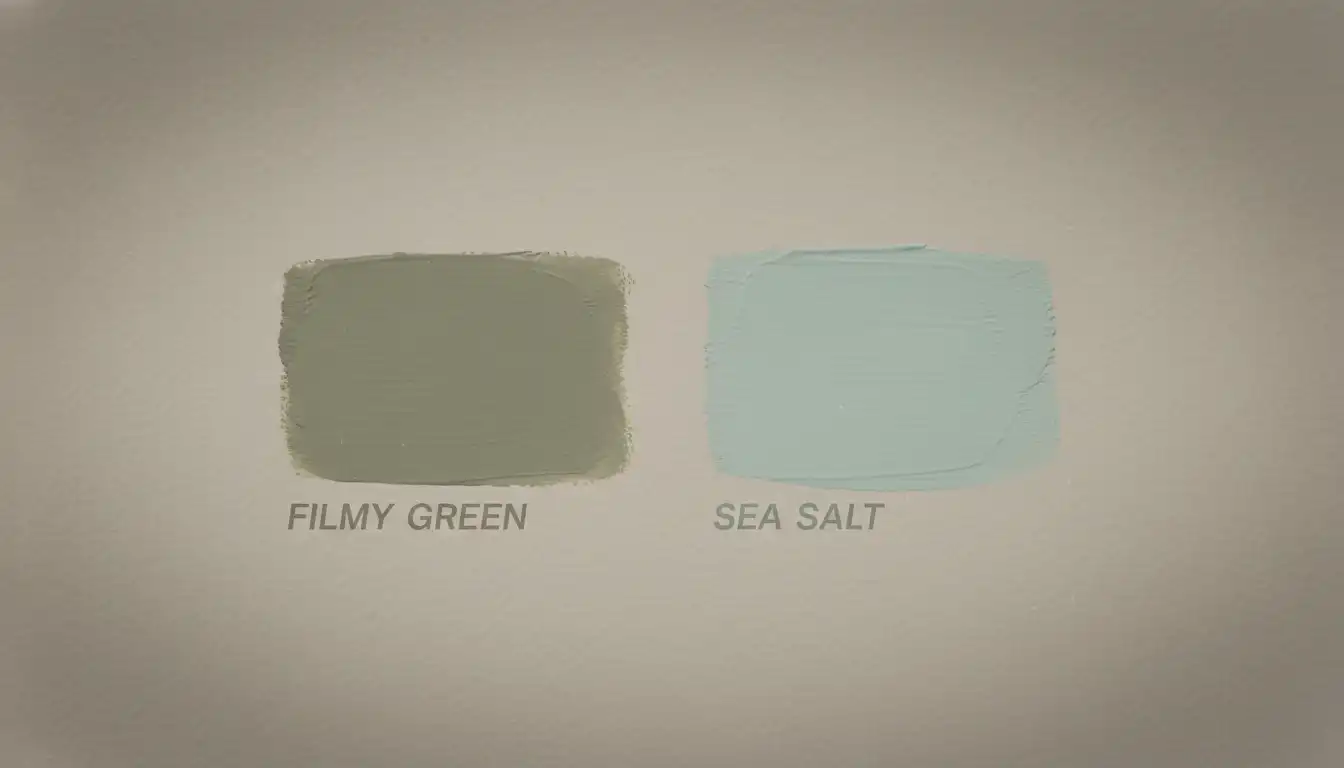
Deep Dive: Sherwin-Williams Filmy Green (SW 6190)
Filmy Green is a delicate and sophisticated shade that creates a sense of tranquility. It’s an excellent choice for creating calm, restful spaces without committing to a strong, overt color. Its versatility allows it to fit into various design styles, from modern farmhouse to classic traditional.
The Core of Filmy Green: What Are Its Undertones?
The secret to any paint color lies in its undertones. Filmy Green is a muted green with strong gray undertones. These gray undertones are what give it a soft, slightly cool, and airy feel. While it has a touch of warmth, it predominantly leans cool, making it ideal for spaces that need a dose of serenity and balance.
Understanding LRV: How Light is Filmy Green?
A color’s Light Reflectance Value (LRV) measures how much light it reflects. On a scale of 0 (absolute black) to 100 (pure white), Filmy Green has an LRV of 64. This places it in the light category, meaning it will reflect a good amount of light and can help make a room feel brighter without looking washed out. Its LRV is high enough to be used in rooms with moderate natural light and not feel too dark.
Where Does Filmy Green Look Best?
Filmy Green is exceptionally versatile, but it truly excels in certain environments. It’s an excellent choice for bedrooms and home offices, where its muted tone promotes a peaceful and focused atmosphere. In living rooms, it provides a sophisticated and calming backdrop that pairs well with natural wood accents and plush textures like velvet or linen.
It can also bring a sense of freshness to kitchens and bathrooms, especially when paired with white or gray countertops and matte black or brushed nickel fixtures.
Deep Dive: Sherwin-Williams Sea Salt (SW 6204)
Sea Salt is one of Sherwin-Williams’ most popular and iconic colors, celebrated for its unique ability to shift with the light. It evokes the feeling of a calm, misty sea breeze, making it a go-to for creating a relaxed, coastal-inspired vibe. This color is a true chameleon, and understanding its nature is key to using it successfully.
The Chameleon Color: What Are Sea Salt’s Undertones?
Sea Salt (SW 6204) is a soft green with noticeable blue and gray undertones. These undertones are what make it so dynamic. In some lighting, it will appear as a soft, gentle green. In other conditions, especially in north-facing rooms with cooler light, the blue undertones can become much more prominent, making the color read as a pale blue-green or even a light blue.
Its gray undertone keeps it muted and sophisticated, preventing it from looking like a bright mint green.
Understanding LRV: How Light is Sea Salt?
Sea Salt has an LRV of 63, which is very close to Filmy Green. This means it also falls into the light category and reflects a significant amount of light. This LRV helps it maintain a soft, airy feel, even as its undertones shift throughout the day. It’s light enough to brighten a space but has enough depth to always show its beautiful color.
Where Does Sea Salt Shine?
Thanks to its spa-like and refreshing qualities, Sea Salt is a superstar in bathrooms and laundry rooms. It creates a clean, tranquil atmosphere perfect for these functional spaces. It’s also a fantastic choice for bedrooms and sunrooms, especially in homes with a coastal or modern farmhouse aesthetic. Paired with crisp white trim and natural textures, it brings an effortless sense of calm and relaxation.
The Head-to-Head Comparison: Filmy Green vs Sea Salt
Seeing the details side-by-side makes the choice clearer. While both are soft greens with similar LRVs, their undertones create distinctly different experiences in a room.
| Feature | Filmy Green (SW 6190) | Sea Salt (SW 6204) |
|---|---|---|
| LRV | 64 | 63 |
| Primary Undertones | Gray, with subtle green/blue | Blue and Gray, within a green base |
| Overall Feel | Serene, sophisticated, earthy | Airy, coastal, spa-like, chameleon |
| Color Behavior | More stable; consistently a soft green-gray | Changes dramatically; can look green, blue, or gray |
| Best For | Bedrooms, offices, living rooms | Bathrooms, laundry rooms, coastal-themed spaces |
| Pairs Well With | Deep charcoals, crisp whites, warm earthy tones | Navy blues, warm greiges, natural wood tones |
The Deciding Factor Everyone Misses (But You Won’t)
Many design articles focus heavily on natural light, and for good reason. A color will look different in a north-facing room versus a south-facing one. But there’s a more dominant, often overlooked factor that can completely change how these colors appear in your home.
Why Your Lighting Isn’t the Whole Story
Yes, the direction of your windows matters. North-facing light is cool and blue, which will amplify the blue undertones in Sea Salt. South-facing light is warm and yellow, which will bring out the gentle green in both colors.
However, the most critical element influencing these colors isn’t outside your window—it’s already inside your room.
The Real Game-Changer: Your Home’s Fixed Elements
The ultimate deciding factor between Filmy Green and Sea Salt is your home’s fixed elements. These are the things you aren’t likely to change: your flooring, kitchen countertops, cabinets, bathroom tile, and even large pieces of upholstery. These elements cast their own color and undertones onto your walls, dramatically impacting how paint color is perceived.
How Warm Tones Affect Filmy Green vs Sea Salt: If your home has warm-toned wood floors (like honey oak or cherry), beige carpet, or warm granite countertops, these elements will interact very differently with each color. The yellow and orange in warm woods can make the subtle coolness of Filmy Green look washed out or slightly muddy. Conversely, those same warm tones will neutralize the blue in Sea Salt, making it appear as a more balanced, beautiful green.
How Cool Tones Affect Filmy Green vs Sea Salt: If your home features cool-toned elements like gray tile, cool-toned carpet, marble, or crisp white cabinets, the opposite is true. These cool surfaces will beautifully complement the gray undertones in Filmy Green, making it look sophisticated and balanced. However, against a cool gray floor, the blue in Sea Salt can become overwhelmingly strong, making your room feel much cooler or more “baby blue” than intended.
Even an exterior feature visible from a window, like a beautifully painted brick retaining wall, can cast a subtle color into the room and influence your paint’s appearance.
Coordinating Colors and Building a Palette
Once you’ve chosen your main color, building a cohesive palette is the next step. The right trim and accent colors will elevate the look of the entire room.
Best Trim and Ceiling Colors
For both Filmy Green and Sea Salt, a clean, crisp white is often the best choice for trim, doors, and ceilings. Sherwin-Williams Pure White (SW 7005) is a fantastic, versatile option that is bright but not stark. For a slightly crisper look, Sherwin-Williams Extra White (SW 7006) provides a sharp contrast that makes both colors pop.
Creating a Harmonious Palette with Filmy Green
Filmy Green pairs beautifully with a range of colors. For a dramatic and sophisticated look, pair it with a deep charcoal like Sherwin-Williams Peppercorn (SW 7674) on an accent wall or cabinetry. For a softer, more grounded palette, combine it with warm, earthy tones like Sherwin-Williams Accessible Beige (SW 7036).
Creating a Cohesive Palette with Sea Salt
To enhance Sea Salt’s coastal vibe, pair it with a classic navy blue like Sherwin-Williams Naval (SW 6244). For a warm and inviting feel, it coordinates beautifully with soft, warm neutrals. Understanding undertones is crucial here; a mismatch can create a jarring effect, much like the confusion between Shiitake and Accessible Beige.
Common Questions and Mistakes to Avoid
Even with careful planning, questions and issues can arise. Addressing these common pain points can help you avoid costly mistakes.
Can I Use Filmy Green in a Dark Room?
While Filmy Green has a respectable LRV of 64, using it in a room with very little natural light can make the space feel a bit somber due to its gray undertones. If you use it in a darker space, be sure to have adequate artificial lighting with bulbs in a neutral to cool temperature (3000K-4000K) to keep it from feeling dingy.
Why Does My Sea Salt Look Blue (or Mint Green)?
This is the most common issue with Sea Salt and it almost always comes back to two things: lighting and fixed elements. If your room faces north or has cool-toned LED lighting, the blue will come out. If you’re seeing a more vibrant mint green, it’s likely being influenced by very warm southern light or yellow-toned artificial light.
Should I Use the Same Color Throughout My House?
Both Filmy Green and Sea Salt can be used as a whole-house color, but it’s important to test them in every single room. Because of their shifting undertones, Sea Salt might look perfect in your south-facing living room but turn into an icy blue in your north-facing bedroom. Getting colors right is similar to avoiding common mix-ups, like wondering if Accessible Beige is a Benjamin Moore color—details matter.
The Final Verdict: How to Make Your Choice with Confidence
The choice between Filmy Green and Sea Salt comes down to understanding your home’s unique characteristics.
Choose Filmy Green (SW 6190) if: You want a serene, stable green-gray that remains consistent. Your home has cool-toned fixed elements like gray tile, white cabinets, or cool-colored carpet. You prefer a more sophisticated, earthy, and grounded feel.
Choose Sea Salt (SW 6204) if: You love a dynamic color that changes with the light. Your home has warm-toned fixed elements like oak flooring, warm countertops, or beige carpet. You are aiming for a light, airy, coastal, or spa-like atmosphere.
The most crucial step is to always test a sample. Paint a large poster board and move it around the room at different times of day. Most importantly, hold the sample directly against your flooring, your countertops, and your tile. This is the only way to see how the color will truly behave in your space and make a decision with absolute confidence.
