
Bona Traffic HD 2 vs 3 Coats: The Ultimate Durability Test
You’ve made a significant investment in beautiful hardwood floors. Now comes the most critical decision for their long-term survival: the protective topcoat. You’ve chosen Bona Traffic HD for its legendary durability, but the ultimate question remains—is two coats enough, or is the third coat a non-negotiable necessity?
This single choice can feel overwhelming. It dictates not just the immediate cost and project timeline, but the very resilience of your floors against daily life. This guide will eliminate the guesswork, providing a clear, evidence-based path to making the perfect decision for your home, your family, and your investment.
You'll Learn About
Understanding the Power of Bona Traffic HD
Bona Traffic HD is not just another polyurethane. It’s a two-component, commercial-grade waterborne finish renowned for its exceptional scratch, scuff, and chemical resistance. Its primary role is to form a transparent, protective film over your hardwood, shielding it from the abuses of foot traffic, furniture, pets, and spills.
The standard professional system often involves one coat of a sealer followed by two coats of Traffic HD. This system is robust and suitable for many residential settings. The real debate begins when considering homes with extraordinary demands.
The Case for Two Coats: Efficient and Effective Protection
For many homes, a system of one sealer coat and two coats of Bona Traffic HD is perfectly adequate. This is the minimum recommended application to ensure proper protection and longevity. In a typical residential setting with moderate foot traffic, this provides a durable surface that can last for many years with proper care.
Choosing two coats offers clear advantages in terms of cost and time. You’ll use less of a premium-priced product and the overall project timeline is shorter. For areas like bedrooms or a formal dining room that see limited daily use, two coats deliver reliable protection without over-investing.
The Unbeatable Durability of Three Coats: Why Go the Extra Mile?
The third coat is where Bona Traffic HD transforms from a strong residential finish into a commercial-grade fortress for your floors. For high-traffic areas, or homes with active children and pets, a third coat is strongly recommended. This isn’t just about adding another layer; it’s about significantly increasing the total film thickness of the protective wear layer.
Think of it as the difference between a good shield and a great one. While two coats can repel many attacks, the third coat provides a much deeper buffer against deep scratches and wear patterns. This means it will take much longer for foot traffic to wear through the finish to the bare wood, dramatically extending the time before a full refinish is needed.
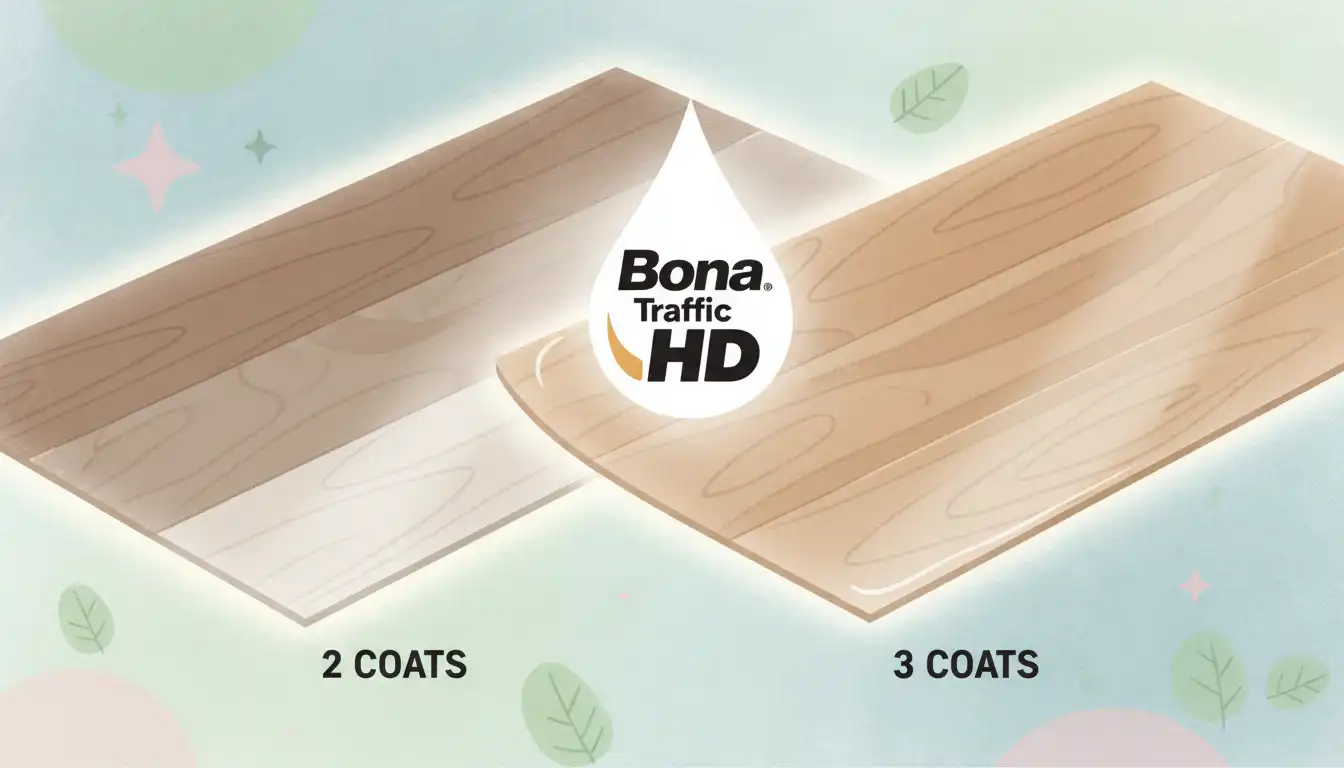
The Showdown: 2 Coats vs. 3 Coats Head-to-Head
Making an informed decision requires a direct comparison. This table breaks down the key differences to help you weigh the pros and cons based on what matters most for your home.
| Feature | 2 Coats of Bona Traffic HD (Over Sealer) | 3 Coats of Bona Traffic HD (Over Sealer) |
|---|---|---|
| Durability | Excellent for standard residential use. | Superior; commercial-grade protection ideal for high-traffic, pets, and kids. |
| Cost | More budget-friendly upfront. | Higher initial material and labor cost. |
| Application Time | Faster completion, typically a two-day process. | Requires an additional day for application and drying. |
| Appearance | Provides a full, rich finish with excellent clarity. | Enhances depth and can create a slightly higher build, leading to a smoother look. |
| Long-Term Value | Good. May require recoating sooner in high-traffic homes. | Excellent. Significantly extends the life of the finish, delaying costly refinishing. |
| Best Use Case | Bedrooms, formal living rooms, low-traffic homes. | Kitchens, hallways, entryways, homes with large dogs and active children. |
Critical Factors That MUST Influence Your Decision
Your choice should be tailored to your specific situation. Consider these factors carefully before you commit.
1. Foot Traffic is King
This is the most important variable. Be honest about your home’s activity level. An entryway, kitchen, or main hallway is subjected to constant wear. For these areas, the third coat is a wise and necessary investment.
2. Household Dynamics: The Pet and Kid Factor
The claws of a dog can be brutal on a hardwood finish. Likewise, the endless energy of children—with their toys, spills, and constant motion—puts immense stress on the floor. While no finish is completely scratch-proof, three coats of Traffic HD provide the best possible defense.
3. Your Aesthetic Goals
The number of coats can subtly influence the final look. A third coat adds more depth to the finish and can help even out the sheen for a more uniform appearance. The underlying color, determined by your choice of sealer, will be enhanced by this extra layer. Whether you opt for a clear, non-yellowing finish with Bona Classic Seal vs Natural Seal or a richer tone from a product like Bona Intense Seal, the topcoat strategy is key to the final result.
4. Wood Species Matters
Softer woods, such as pine or fir, are more susceptible to dents and deep scratches. An extra layer of finish provides an extra-hard shell, offering more protection against physical impacts. For classic hardwoods like White Oak, the sealer choice is foundational to the look, as detailed in guides for Bona ClassicSeal on White Oak.
The Pro’s Secret: Achieving Flawless Sheen Uniformity
Here is a critical benefit of a third coat that is rarely discussed: it perfects the final sheen. After two coats, minor imperfections like faint applicator marks or slight variations in film thickness can sometimes be visible in certain lighting. These are often unavoidable, even for skilled professionals.
A third coat acts as a “leveling” layer, flowing over these minor inconsistencies. It unifies the surface, resulting in a perfectly even, monolithic sheen that looks exceptionally professional. This final pass is often the secret to achieving that flawless, liquid-smooth appearance.
Making the Final Call: Your Simple Checklist
If you’re still undecided, answer these simple questions:
- Do you have pets, especially large dogs?
- Do you have young, active children?
- Is the floor in a high-traffic area like a kitchen, entryway, or main hallway?
- Is maximizing durability and longevity your absolute top priority?
- Do you prefer the peace of mind that comes with the highest level of protection available?
If you answered “yes” to two or more of these questions, the decision is clear. Opting for three coats of Bona Traffic HD is the right choice for your home.
Your Floor’s Future is in Your Hands
While two coats of Bona Traffic HD provide a strong and reliable finish, the third coat elevates your floor’s protection to a commercial standard. It’s a strategic investment in durability, longevity, and long-term beauty.
By carefully considering your lifestyle and traffic levels, you can confidently make a choice that ensures your hardwood floors remain a source of pride and beauty for years to come.
Frequently Asked Questions
Is a third coat of Bona Traffic HD necessary?
For most residential settings, two coats of Bona Traffic HD over a sealer are sufficient for excellent durability. A third coat is typically recommended for commercial or very high-traffic residential areas to provide an extra layer of protection.
What is the main benefit of applying a third coat?
The primary advantage of a third coat is increased durability and a longer lifespan for the finish, especially in areas with heavy foot traffic, pets, or children. It provides an additional protective layer that can help delay the need for a recoat.
Will three coats of Bona Traffic HD look different than two coats?
A third coat may result in a slightly thicker, more built-up appearance, and could potentially increase the sheen level. Some users have expressed concern that three coats might create a “plasticky” or cloudy look, so it’s a trade-off between aesthetics and maximum durability.
Should I use a sealer with Bona Traffic HD?
Yes, Bona recommends using a sealer before applying the finish coats. A sealer helps to prevent tannin bleed in certain wood species, like white oak, and provides a better foundation for the finish, maximizing its performance. Using a sealer is standard practice for both two and three-coat systems.
Is the third coat worth the additional cost?
Whether a third coat is worth the extra expense depends on your specific needs and budget. For a busy household or commercial space, the added longevity can be a worthwhile investment. However, for typical residential use, a properly applied two-coat system over a sealer is often considered a cost-effective solution that provides excellent protection.
