
Behr LRV: The #1 Secret to Avoiding a Costly Paint Mistake
It’s a scenario every homeowner dreads. You spend weeks deliberating, you collect a dozen paint chips, you finally pick a color, and you spend a weekend painting, only to step back and realize—you hate it. The color that looked like a soft, welcoming gray on the chip has turned your living room into a dark, dreary cave. Or the chic, crisp white you envisioned now feels sterile and blindingly bright. This is one of the most common and frustrating mistakes in home improvement, and it stems from a fundamental misunderstanding of how color truly works.
The name of the paint, whether it’s “Whispering Wheat” or “Ocean Kiss,” tells you very little about the most important factor: how it will interact with light in your home. The secret to getting it right lies in a small, often-overlooked number printed on the back of every paint swatch: the LRV. Understanding this single data point is the most powerful tool you have to prevent a costly and time-consuming painting disaster. Once you know how to use it, you will choose colors with confidence, precision, and predictable results every time.
You'll Learn About
What is LRV and Why Does It Matter More Than the Paint Name?
Beyond the poetic names and subtle undertones lies a simple, scientific measurement that dictates how a paint color will behave on your walls. This measurement is the Light Reflectance Value, or LRV. Mastering this concept is the key to unlocking predictable and beautiful results in your home.
Decoding LRV: A Simple Guide
Light Reflectance Value (LRV) is a measurement on a scale from 0 to 100 that indicates how much light a paint color reflects. Think of it as a percentage. A color with an LRV of 75 reflects 75% of the light that hits it, while absorbing the other 25%. On this scale, 0 represents absolute black (absorbing all light), and 100 represents pure white (reflecting all light). In reality, the blackest blacks have an LRV around 5, and the whitest whites top out around 94.
This number is crucial because it provides an objective measure of how light or dark a color will feel in a room, regardless of its hue (red, green, blue) or undertones (cool, warm). It cuts through the subjective nature of color names and tells you exactly how a color will function in your space. A high LRV will bounce more light around, making a room feel brighter and more open. A low LRV will absorb more light, creating a space that feels more intimate, cozy, or even dramatic.
Where to Find the LRV on Behr Paint Products
Behr makes it easy to find the LRV for their colors. On the back of most paint chips, you will find a series of numbers and codes. The LRV is clearly labeled. If you’re browsing colors online on Behr’s website, the LRV is typically listed in the color details section. Understanding all the information on the swatch can be helpful, as these numbers often provide a complete profile of the paint color.
For a deeper dive into what all those numbers mean, it’s useful to understand the entire system. Learning about this can help you decipher the color’s undertones and family, giving you a more complete picture. You can explore a full breakdown of these codes in our guide, Behr Paint Codes Explained, to become even more proficient in your color-selection process.
The LRV Sweet Spot: Choosing the Right Number for Your Space
There is no universally “good” or “bad” LRV; the ideal number depends entirely on the room’s function, lighting conditions, and the mood you want to create. By strategically choosing a color within a specific LRV range, you can solve common design problems and achieve your desired aesthetic with precision.
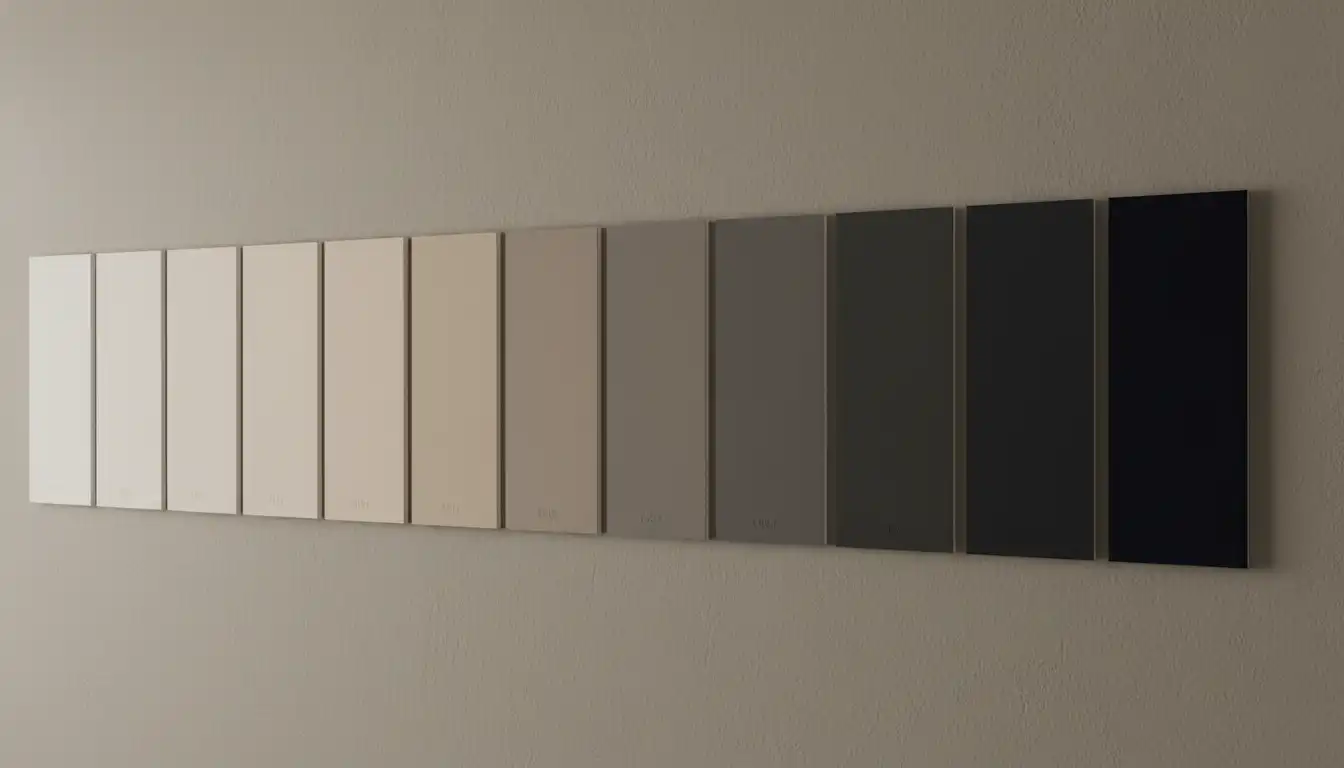
For Dark Rooms, Basements, and Hallways
The Challenge: Spaces that lack abundant natural light, such as basements, windowless hallways, or north-facing rooms, can easily feel confined and gloomy.
The Solution: Select a paint color with a high LRV, typically in the 65-85 range. These light colors are powerful tools for maximizing the limited light available. They work by reflecting a high percentage of both natural and artificial light back into the room, making the entire space feel brighter, larger, and more open. Off-whites, soft grays, and pale pastels in this range are excellent choices. Behr’s Swiss Coffee (LRV 84) is a popular warm white that excels in these situations.
For Bright, Sun-Drenched Rooms
The Challenge: A room flooded with intense natural light, like a south-facing living room, can cause high-LRV colors to look washed out or create an uncomfortable glare.
The Solution: Opt for a color in the mid-range, with an LRV between 50 and 65. These colors have enough depth to absorb some of the intense sunlight, reducing glare and preventing the color from appearing faded. They strike a perfect balance, maintaining a bright and airy feel without feeling sterile or stark. This range includes many versatile “greige” tones, muted blues, and soft greens that add character and warmth.
For Creating Cozy, Dramatic Spaces
The Challenge: Sometimes the goal isn’t to make a room feel bigger, but to create a sense of intimacy, comfort, or drama—perfect for a dining room, bedroom, or accent wall.
The Solution: Don’t be afraid to use a paint with a low LRV, typically below 30. These dark, rich colors absorb a significant amount of light. This causes the walls to visually recede, blurring the boundaries of the room and fostering a cozy, enveloping atmosphere. Deep navies, charcoal grays, forest greens, and rich burgundies can turn a simple room into a sophisticated and moody retreat. They are incredibly effective for accent walls, media rooms, or any space where you want to add a touch of drama.
Popular Behr Colors and Their LRV: A Cheat Sheet
Navigating the endless sea of paint chips can be overwhelming. To simplify your decision-making process, this table provides a quick reference to some of Behr’s most popular colors, organized by their Light Reflectance Value. Use it to find a color that not only matches your style but also performs perfectly in your space.
| Paint Color Name | Behr Color Code | LRV | Common Use Case |
|---|---|---|---|
| Ultra Pure White | 1850 | 94 | A very bright, clean white. Ideal for trim, ceilings, and modern spaces where a stark, gallery-like feel is desired. Can be too intense for walls in very sunny rooms. |
| Polar Bear | 75 | 90 | A bright, milky-white neutral with a soft, warm undertone. Excellent for making spaces feel cozy yet open. A versatile whole-home color. |
| Swiss Coffee | 12 | 84 | One of Behr’s most popular off-whites. It’s a warm, creamy white that feels soft and inviting without strong yellow undertones. Perfect for walls and trim in almost any room. |
| Silver Drop | 790C-2 | 70 | A very light, airy gray with a hint of green undertone. It provides a touch of color while keeping the space feeling bright. Works well in rooms that need brightening. |
| Agreeable Gray (Behr Equivalent: Toasty Gray) | N320-2 | 60 | A balanced, warm gray or “greige” that doesn’t lean too cool or too warm. It’s a go-to neutral for open-concept spaces and living rooms due to its versatility. |
| Silver City | MQ2-59 | 56 | A classic, mid-tone true gray. It offers noticeable depth without making a room feel dark. Excellent for bedrooms or living rooms where a calming, neutral backdrop is needed. |
| Blueprint | S470-5 | 20 | A deep, mid-tone blue that is both calming and energizing. It makes a stunning statement on an accent wall, in a home office, or on kitchen cabinets. |
| Cracked Pepper | PPU18-01 | 8 | A soft, sophisticated black. Use it to create a dramatic, high-impact accent wall, moody powder room, or to ground a space with a touch of modern elegance. |
The Hidden Factor No One Talks About: LRV and Artificial Lighting
Choosing a paint color based on daylight is only half the battle. The moment the sun sets, the artificial lights in your home take over, and they can drastically alter how a color appears. The secret to a color that looks great 24/7 is understanding the relationship between its LRV and the color temperature of your light bulbs.
Why Your Paint Color Changes at Night
Artificial light is measured in Kelvins (K), which describes its color temperature. This has nothing to do with heat output. Instead, it defines the hue of the light itself, ranging from warm to cool.
- Warm Light (2700K-3000K): This is the cozy, yellowish glow of a traditional incandescent bulb. It enhances warm colors (reds, oranges, yellows) and can make cool colors (blues, greens) appear slightly muted or dull.
- Cool Light (3500K-4500K): This light is whiter and more neutral, often found in kitchens and bathrooms. It renders colors more accurately than warm light and can make cool tones appear crisp and vibrant.
- Daylight (5000K+): This is a very bright, bluish-white light that mimics natural daylight. It’s excellent for task lighting in workshops or home offices but can feel harsh and sterile in living areas.
The Secret Formula: Matching LRV to Light Bulb Temperature
By pairing your paint’s LRV with the right light bulb, you can create a balanced and intentional atmosphere. High-LRV colors (70+) can look stark and clinical under cool or daylight bulbs. To counteract this, pair them with warm (2700K) bulbs to add softness and create a more inviting ambiance in the evening.
Conversely, low-LRV colors (below 30) can absorb too much warm light, making a room feel dim and shadowy. To keep a dark, moody room from feeling like a cave at night, use brighter, neutral-to-cool white (3000K-3500K) bulbs. This will ensure the rich color is properly illuminated and its true character is visible. Mid-range LRV colors are the most forgiving and tend to look good under a wider variety of light temperatures.
Beyond the Number: Sheen’s Impact on Light Reflection
While LRV is a fixed number, another factor can influence how bright a color feels in your room: the paint’s sheen. The finish you choose—from flat to high-gloss—plays a significant role in how light interacts with your walls.
Does Sheen Change the Official LRV?
It’s important to clarify that the official LRV of a paint color does not change with sheen. The value is calculated based on a standard matte finish. So, Behr Swiss Coffee will always have an LRV of 84, whether you buy it in eggshell or semi-gloss.
However, the sheen dramatically affects the *perceived* brightness of the color. While a matte finish diffuses light for a soft, uniform look, a glossier finish reflects it directly. This difference in reflection can make the same color feel lighter or darker.
How Sheen Affects Perceived Brightness
Higher sheens, such as satin and semi-gloss, create more specular reflection. This means they create shinier, more mirror-like spots where light hits the surface directly. This effect can make the wall color appear lighter and can help bounce more light around a room. This is why semi-gloss is a popular choice for trim and doors—it highlights the architectural details and adds a crisp brightness.
If you’re torn between two colors with very similar LRVs, consider how sheen can be used to your advantage. In a darker room, choosing the slightly lower LRV color but opting for an eggshell or satin finish instead of matte can provide a subtle boost in brightness. The subtle differences between whites can be especially impacted by sheen, a topic further explored in discussions like the one around Valspar Ultra White vs Pure White, where finish can alter perception.
The Final Swatch Test: Tying It All Together
You’ve learned the science behind LRV, identified the perfect numerical range for your room, and even considered the impact of lighting and sheen. Now it’s time for the final, non-negotiable step: testing the paint in your own space. A paint chip is simply not enough to make a final decision.
The process for confident color selection is simple:
- Define the goal for your room. Do you want it to feel bigger and brighter (high LRV), cozy and intimate (low LRV), or a balanced in-between (mid-LRV)?
- Select 2-3 candidate colors within your target LRV range. This is where you can focus on subtle undertones and personal preference.
- Purchase sample pots and create large swatches. Paint your samples on large poster boards or directly on the wall in 2’x2′ squares. This is crucial to see how the color truly looks at scale.
- Observe the swatches for at least 48 hours. Place your sample boards on different walls and look at them throughout the day and night. See how the color changes with the morning sun, the afternoon shade, and your artificial lighting in the evening. This is the only way to be certain you’ll love the color in every condition.
By leveraging the power of LRV, you transform paint selection from a game of chance into a predictable science. You are no longer just choosing a color; you are choosing how your room will feel. This knowledge empowers you to move beyond frustrating mistakes and start creating beautiful, intentional spaces with confidence.
