
Attic Furnace Insulation: Your #1 Guide to Slash Energy Bills
That furnace in your attic is a silent giant, working tirelessly to keep your home comfortable. But its location in an unconditioned attic creates a massive energy drain, silently inflating your heating and cooling bills season after season.
An uninsulated or poorly insulated attic forces your HVAC system into a constant, losing battle against extreme temperatures. Addressing this problem is one of the most effective ways to enhance your home’s energy efficiency, improve comfort, and reduce long-term strain on your heating and cooling equipment.
You'll Learn About
The High Cost of an Uninsulated Attic Furnace
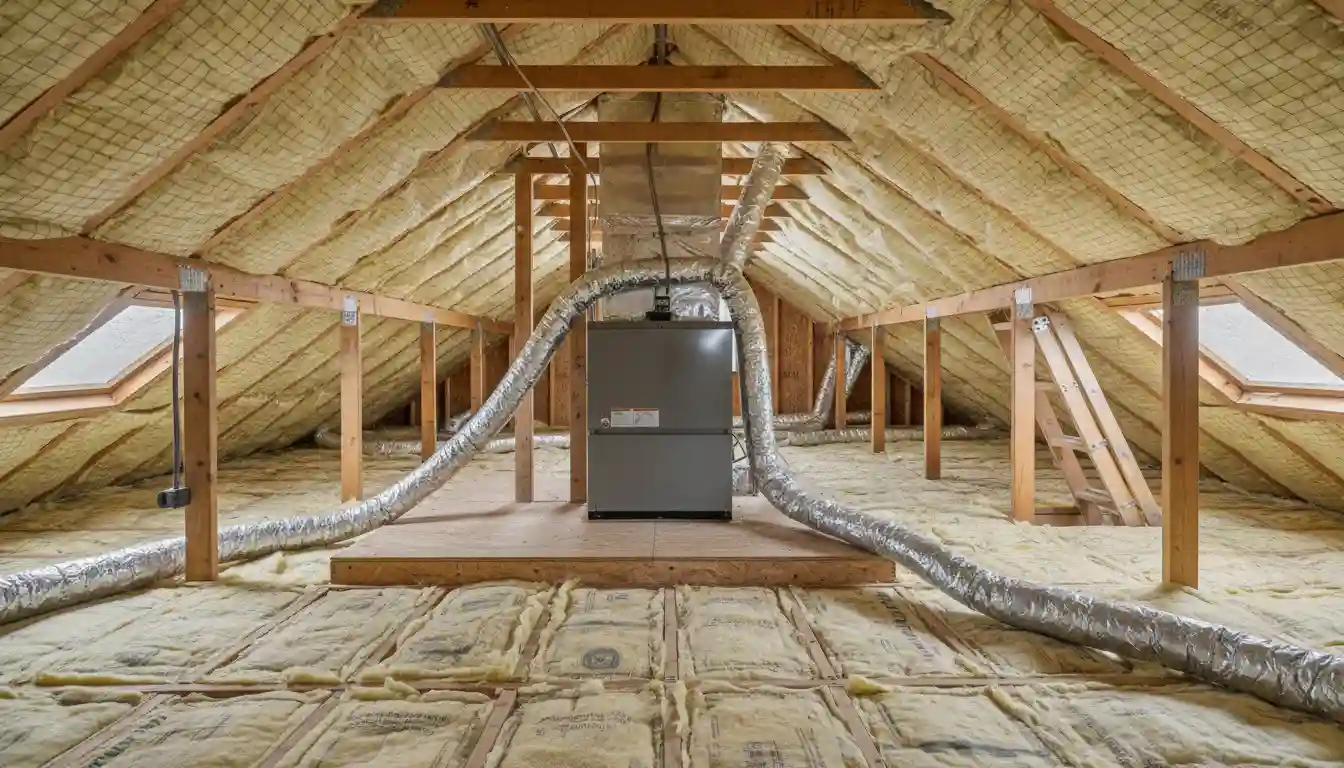
Placing a furnace and its ductwork in an unconditioned attic—a space that can bake in summer and freeze in winter—is a common but inefficient design. Without a proper thermal barrier, you are essentially paying to heat and cool the outdoors.
During winter, valuable heat radiates from the furnace and its ducts into the frigid attic air. In the summer, the blistering attic heat forces your air conditioner to work overtime. This constant inefficiency leads to high energy bills, inconsistent temperatures throughout your home, and premature wear on your HVAC system.
Furthermore, the significant temperature difference between the ductwork and the surrounding attic air can lead to condensation. This moisture can drip onto insulation, drywall, and structural supports, creating a risk of mold growth and water damage. In severe cases, this moisture can be related to problems like a furnace vent leaking water when it rains, compounding potential damage.
First Things First: Safety and Clearances
Before beginning any insulation project, safety must be the top priority. Furnaces, especially gas-powered models, are combustion appliances that generate significant heat and require adequate ventilation to operate safely.
Crucially, you must maintain proper clearance between the furnace, its flue pipe (exhaust vent), and any insulation materials. Building codes and manufacturer specifications mandate a minimum distance to prevent combustible materials like paper-faced insulation or wood from igniting. Always consult your furnace’s installation manual and local building codes to determine the exact clearance requirements for your unit.
Step-by-Step Guide to Insulating Around an Attic Furnace
Properly insulating an attic with a furnace involves more than just laying down some batts. It requires a systematic approach that prioritizes safety, air sealing, and choosing the right materials to create an effective thermal envelope.
Step 1: Prepare and Inspect the Area
Begin with a thorough inspection of the attic. Turn off all power to the furnace and any other attic appliances at the breaker box. Wear appropriate personal protective equipment (PPE), including an N95 mask, safety glasses, and gloves, to protect against dust and insulation fibers.
Clear the area around the furnace, providing yourself with ample space to work. Look for signs of existing issues like rodent infestations, water damage, or mold. These problems must be addressed before new insulation is installed.
Step 2: The Critical Task of Air Sealing
Insulation slows heat transfer, but it doesn’t stop air leaks. Air sealing is the single most important step to take before adding insulation. Warm, moist air from your living space leaking into a cold attic can lead to condensation and frost, undermining your insulation efforts.
Use caulk or expanding foam sealant to seal all gaps and penetrations in the attic floor. Pay close attention to areas around plumbing pipes, electrical wiring, the chimney, and recessed light fixtures. For the area around the furnace flue, use a high-temperature caulk and a metal flashing barrier to maintain safe clearances while blocking airflow.
Step 3: Choose the Right Insulation Material
Several types of insulation are suitable for attics, each with unique properties. For areas near a furnace, materials with a high fire-resistance rating, such as mineral wool, are an excellent choice.
| Insulation Type | Key Features | Pros | Cons |
|---|---|---|---|
| Fiberglass Batts | Pre-cut blankets of glass fibers. | Cost-effective, easy for DIY installation in standard joist spacing. | Can leave gaps if not cut perfectly; compressing it reduces R-value. |
| Blown-In Cellulose/Fiberglass | Loose-fill material blown into place. | Excellent for filling irregular spaces and creating a seamless blanket. | Requires specialized equipment to install; can settle over time. |
| Mineral Wool | Made from rock or slag fibers. | Highly fire-resistant, good sound dampening, moisture-resistant. | More expensive and denser than fiberglass. |
| Spray Foam | Liquid foam that expands and hardens. | Superior air sealing and high R-value per inch. | Most expensive option; requires professional installation. |
Step 4: Insulate the Attic Floor and Ductwork
The primary goal is to insulate the attic floor, which is the ceiling of your living space. If using batts, lay them between the joists, ensuring they fit snugly without being compressed. For optimal performance, a second layer should be laid perpendicular to the first, covering the joists and further reducing thermal bridging.
Do not forget the ductwork. All accessible supply and return ducts in the attic should be sealed with mastic sealant and wrapped with duct insulation (at least R-8). This ensures that the conditioned air traveling through them maintains its temperature until it reaches your rooms.
Step 5: Insulating the Furnace Enclosure
Many attic furnaces are housed within a small utility closet. Insulating the walls of this enclosure provides a significant boost in efficiency. This technique helps contain heat loss directly at the source. Use fire-resistant materials like mineral wool batts or rigid foam board covered with a fire-rated barrier like drywall.
Ensure that any combustion air vents for the furnace remain completely unobstructed. Blocking these vents can starve the furnace of the air it needs for proper combustion, creating a dangerous carbon monoxide risk.
Common Mistakes to Avoid
A successful attic insulation project depends on avoiding common pitfalls that can compromise safety and effectiveness.
- Ignoring Clearances: Never place combustible insulation closer to the furnace or flue than specified by the manufacturer. This is a serious fire hazard.
- Blocking Ventilation: Do not cover soffit or ridge vents with insulation. Proper attic ventilation is essential to manage moisture and heat buildup, which protects your roof structure.
- Compressing Insulation: Squeezing insulation into a space reduces its R-value and effectiveness. Cut it to fit properly around obstacles.
- Forgetting to Seal Leaks: Skipping the air sealing step is a critical error that allows conditioned air to escape, drastically reducing the insulation’s impact.
Frequently Asked Questions
Should the furnace unit itself be insulated?
No, you should not wrap the main furnace cabinet in insulation. The unit is designed to dissipate a certain amount of heat, and enclosing it can cause it to overheat, leading to a system shutdown or damage. Focus on insulating the space around it and the connected ductwork.
Is it better to create a conditioned attic?
In homes with HVAC equipment in the attic, creating a conditioned or semi-conditioned attic by insulating the roof deck (the underside of the roof) instead of the attic floor can be highly effective. This approach brings the furnace and ductwork inside the home’s thermal envelope, eliminating energy losses from the system. This is typically done with spray foam insulation and requires professional installation.
How does insulation impact attic ventilation?
Proper insulation works in tandem with good ventilation. While insulating the attic floor slows heat transfer into your home, ventilation allows hot, moist air to escape the attic itself. A well-insulated attic might even reduce the workload of an attic fan by lowering the overall heat load. When insulating, always use baffles to keep soffit vents clear and maintain a path for airflow.
A Final Word on Professional Help
While insulating an attic floor can be a DIY project, the presence of a furnace adds complexity and safety risks. If you are unsure about identifying proper clearances, working with combustion appliances, or choosing the right materials, hiring a professional insulation contractor is a wise investment.
By properly addressing your attic furnace insulation, you can stop the flow of wasted energy, make your home significantly more comfortable, and enjoy lower utility bills for years to come. It is a home improvement project that provides an immediate and lasting return on invite.
