
Wood Floors Upstairs: The #1 Mistake Silencing Your Home’s Peace
The dream of seamless, elegant wood flooring flowing through every level of a home is a powerful one. It speaks of timeless style, cleanliness, and increased property value. However, many homeowners dive into an upstairs wood floor installation only to discover a massive, unforeseen problem: noise that turns their peaceful sanctuary into an echo chamber.
That beautiful new floor meant to bring joy suddenly becomes the source of constant frustration. Every footstep, every dropped toy, every pet’s click-clacking nails reverberates through the ceiling below, creating a drumbeat that strains relationships and shatters tranquility. This single issue, often overlooked in the excitement of renovation, is the number one mistake that can ruin the experience of having wood floors upstairs.
You'll Learn About
Why the Appeal of Upstairs Hardwood Is So Strong
Before tackling the acoustic challenges, it’s important to acknowledge why homeowners desire wood floors on their second story in the first place. The benefits are significant and go far beyond simple aesthetics. Understanding these advantages solidifies why finding a solution to the noise problem is well worth the effort.
Unmatched Aesthetics and Increased Home Value
Hardwood floors offer a classic, luxurious look that few other materials can match. They create a continuous and cohesive design language when extended from the ground floor to the upper levels. This visual flow makes a home feel larger and more thoughtfully designed, which is a major factor in boosting its resale value.
A Healthier, More Hygienic Living Space
Unlike carpets, which can trap dust, pollen, pet dander, and other allergens, hardwood floors are remarkably easy to clean. For families with allergies or asthma, replacing upstairs carpeting can lead to a significant improvement in air quality and overall health. This is particularly important in bedrooms, where we spend a significant portion of our time.
Durability for the Long Haul
Well-maintained hardwood floors can last for a century or more. They are incredibly durable and can be sanded and refinished multiple times to erase signs of wear and tear. While the initial investment may be higher than carpeting, their longevity makes them a cost-effective choice over the life of the home.
The Core Problem: Understanding Sound Transmission
The primary reason wood floors are noisy is their rigidity. Unlike soft, sound-absorbing carpet, wood is a hard surface that readily transmits vibrations. There are two types of noise that become problematic with upstairs wood floors.
Impact Noise: This is the sound created by direct contact with the floor. It includes footsteps, furniture being moved, or an object being dropped. These impacts create vibrations that travel directly through the flooring, the subfloor, the joists, and into the ceiling of the room below.
Airborne Noise: This refers to sound that travels through the air, such as voices, music, or a television. While wood floors don’t amplify this noise, they do little to block it compared to thick carpeting and padding, which can absorb sound waves.
Solving the Noise Nightmare: Your Soundproofing Blueprint
The good news is that you can have beautiful, quiet wood floors upstairs. The solution lies in creating a system that decouples the finished flooring from the home’s structure, absorbing the impact vibrations before they can travel downstairs. Success depends on a multi-layered approach, starting from the joists up.
Step 1: The Foundation – Subfloor Preparation
Before a single plank is laid, the subfloor must be perfectly prepared. An uneven or damaged subfloor is a primary cause of squeaks and creaks, which will only be amplified by a hardwood installation. The subfloor should be clean, flat, and securely fastened to the floor joists. Take the time to screw down any loose panels to eliminate movement.
Step 2: The Unsung Hero – High-Performance Underlayment
This is the most critical step for sound reduction. Underlayment is a thin layer of material that sits between the subfloor and the wood flooring. For an upstairs installation, a standard, thin foam underlayment is not enough. You need an acoustic underlayment specifically designed to absorb impact noise.
The performance of these underlayments is measured with two key ratings: the Impact Insulation Class (IIC) and the Sound Transmission Class (STC). The IIC measures how well the material isolates impact sounds, while the STC measures its ability to block airborne noise. For upstairs applications, a higher IIC rating is paramount.
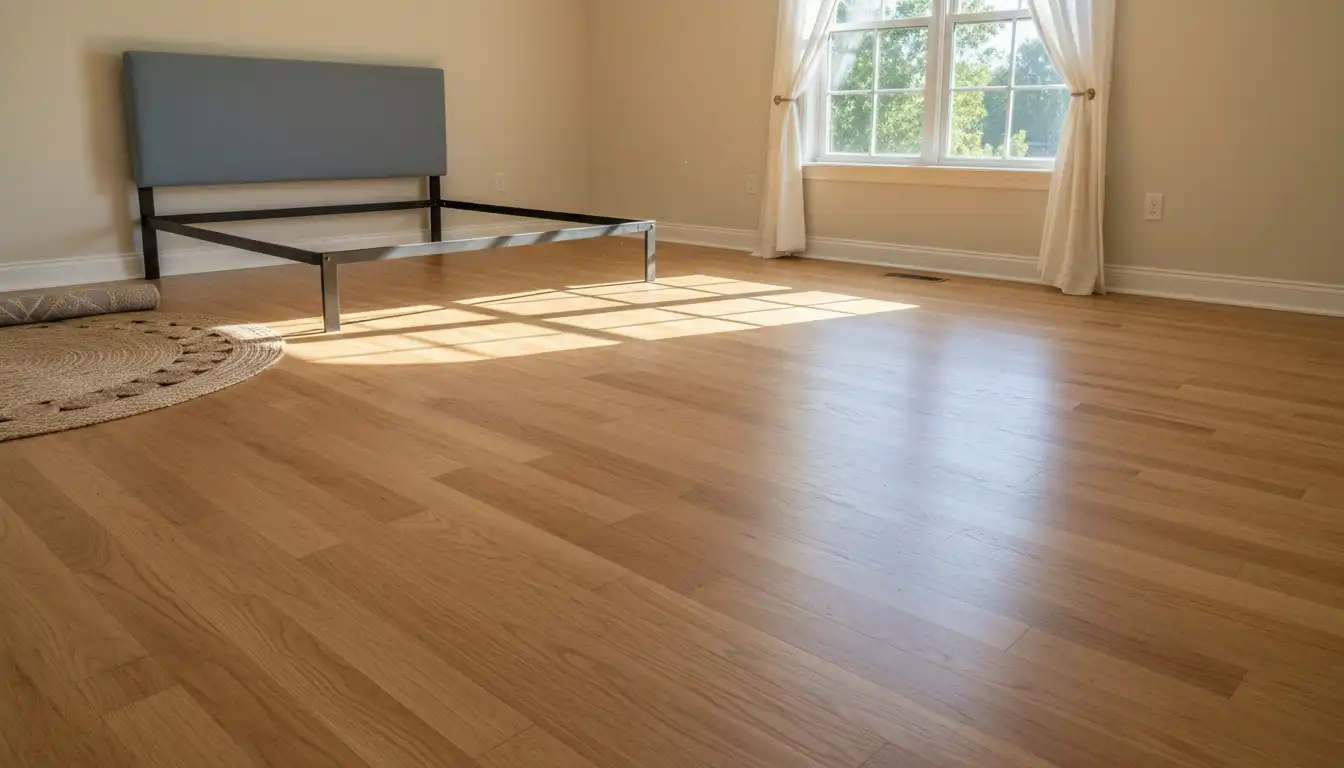
Different materials offer varying levels of soundproofing. Making the right choice here is the single most important decision for a quiet floor.
| Underlayment Material | Key Features | Soundproofing Quality | Best Use Case |
|---|---|---|---|
| Cork | Natural, eco-friendly, resistant to mold and mildew. | Excellent (High IIC) | Bedrooms and living areas where both sound and thermal insulation are desired. |
| High-Density Rubber | Superior sound damping, extremely durable. Made from recycled materials. | Superior (Highest IIC) | High-traffic areas, kids’ rooms, and multi-family dwellings where maximum noise reduction is essential. |
| Felt | Made from recycled fibers, dense and effective at sound absorption. | Very Good (High IIC) | A great all-around choice for significant sound reduction under most wood floor types. |
| Standard Foam | Basic cushioning, minimal sound reduction. | Poor (Low IIC) | Generally not recommended for second-floor applications due to poor acoustic performance. |
Step 3: The Secret Weapon – Insulating the Joist Cavities
For homeowners seeking the ultimate in soundproofing, there is an additional step that professionals take. Before the subfloor is sealed up, filling the cavities between the floor joists with sound-dampening insulation provides a massive boost in noise reduction. Materials like Rockwool or dense fiberglass batts are excellent for this.
This insulation works by absorbing both airborne sound and structural vibrations that travel through the joists. While it adds to the project’s cost and complexity, it is the most effective way to create a truly quiet floor assembly, transforming the feel of the entire home.
Choosing the Right Wood and Installation Method
The type of wood flooring and how it’s installed also play a role in the final acoustic performance. These choices should be made in conjunction with your soundproofing strategy.
Solid Hardwood vs. Engineered Hardwood
Solid hardwood is milled from a single piece of timber and is typically 3/4″ thick. It can be sanded and refinished many times. Engineered hardwood consists of a top layer of real wood bonded to a core of high-quality plywood. This construction makes it more dimensionally stable and less reactive to changes in humidity.
For upstairs installations, engineered hardwood often has an edge. Its stability makes it more suitable for a “floating” installation, which is the best method for soundproofing. Solid hardwood must be nailed or stapled down, creating thousands of physical contact points for sound to travel through.
The Floating Floor: Decoupling for Quiet
A floating floor installation is where the wood planks are attached to each other (usually with a click-lock system or glue along the edges) but not fastened to the subfloor below. The entire floor “floats” as a single unit on top of the acoustic underlayment.
This method effectively decouples the finished floor from the structure of the house. When someone walks on the floor, the impact is absorbed by the underlayment and is not directly transferred into the subfloor and joists. This is the preferred method for minimizing noise transmission.
Beyond the Floor: Harmonizing Your Upstairs Design
Once you’ve solved the technical challenges, you can focus on the aesthetics. Your upstairs flooring is a major design element that needs to work with other features of your home, especially the staircase.
Many homeowners wonder about having wood stairs in a different color than the floor. This can be a stunning design choice, using the staircase as a focal point. A darker stair tread with lighter wood floors upstairs can create a beautiful, intentional contrast.
The complexity of flooring and stair work also brings up another question: who handles this type of job? Understanding who builds stairs and installs flooring is key to hiring the right professional. Often, a skilled finish carpenter or a specialized flooring and stair company is the best choice for a cohesive, high-quality result.
The Cost of Quiet: Budgeting for Your Project
Installing hardwood floors upstairs is a significant investment. Factoring in soundproofing from the start is crucial for accurate budgeting. On average, homeowners can expect to pay between $8 to $25 per square foot for materials and installation.
Here’s a general breakdown:
- Materials: Engineered hardwood typically ranges from $6 to $12 per square foot. Solid hardwood can be $8 to $15 per square foot.
- Acoustic Underlayment: High-performance underlayment will add $0.75 to $2.50 per square foot.
- Labor: Installation labor averages $3 to $8 per square foot, depending on the complexity.
- Insulation (Optional): Adding insulation between joists can add another $1 to $2 per square foot in material and labor costs.
The Final Verdict: A Worthwhile Investment in Peace
Installing wood floors upstairs is more than just a flooring project; it’s an acoustic one. The allure of their beauty and value is undeniable, but it can be completely negated if the home’s tranquility is sacrificed. By prioritizing soundproofing and viewing the floor as a complete system—from the joists to the underlayment to the final planks—you can successfully achieve the best of both worlds.
By avoiding the common mistake of overlooking noise, you invest not only in the financial value of your property but in its livability. The result is a quiet, beautiful, and cohesive home that brings peace and enjoyment for decades to come. And if you’re considering other window treatments to go with your new floors, you might want to explore the design possibilities of mixing plantation shutters and blinds.
