
Don’t Add Wood Beams to an 8 Foot Ceiling Until You Read This
There’s an undeniable charm to wood beams. They evoke a sense of rustic history, warmth, and architectural character that can make a house feel like a home. Yet, for homeowners with standard 8-foot ceilings, the desire for this aesthetic is often met with a nagging fear: will wood beams make my room feel shorter, darker, and more cramped?
This is the number one concern, and it’s a valid one. A poorly executed beam installation can quickly turn a cozy dream into a claustrophobic reality. But the problem isn’t the beams themselves; it’s the approach. With the right knowledge, you can add stunning ceiling beams that actually make your space feel more expansive and thoughtfully designed, not less.
You'll Learn About
Why 8-Foot Ceilings Demand a Smarter Approach
An 8-foot ceiling is the standard in many homes for a reason—it’s functional and cost-effective. However, it doesn’t offer the grand canvas that taller or vaulted ceilings do. Adding any element overhead, especially something as visually prominent as a wood beam, requires careful consideration of proportion and “visual weight.”
A dark, bulky object overhead will naturally draw the eye and can create the illusion of a lower ceiling. The secret is to add texture and architectural interest without adding oppressive visual bulk. Counterintuitively, the right beams can draw the eye upward, creating an illusion of height and making the room feel taller and more open.
The Golden Rules: Choosing the Perfect Beams for a Low Ceiling
Success with wood beams on an 8-foot ceiling hinges almost entirely on selecting the right product. Forget the massive, solid timbers you might see in a grand lodge; your space requires finesse and a focus on proportion.
Size Matters (More Than You Think)
This is the most critical decision you’ll make. For standard 8-foot ceilings, low-profile beams are non-negotiable. Beams that are too deep (the vertical measurement from the ceiling down) will instantly lower your headroom and make the space feel compressed. As a rule of thumb, look for beams with a depth of no more than 4 to 6 inches.
Interestingly, you can be a bit more generous with the width (the horizontal measurement across the ceiling). A wider, shallower beam reads as substantial and intentional without physically encroaching on the room’s vertical space. A 3-inch deep by 6-inch wide beam, for example, often looks much better than a square 6×6 beam in this context.
Faux vs. Real Wood: The Ultimate Showdown for 8-Foot Ceilings
While the authenticity of real wood is tempting, it’s often the wrong choice for this specific application. Lightweight faux wood beams are the clear winner for 8-foot ceilings. Modern faux beams are crafted from high-density polyurethane and are molded from real wood timbers, capturing their grain and texture with incredible realism.
The advantages are immense. They are a fraction of the weight, meaning they can be installed directly onto your existing ceiling drywall without needing to reinforce joists. This dramatically cuts down on installation complexity and cost. Furthermore, they are hollow, which is perfect for discreetly hiding wiring for lighting. Real wood is incredibly heavy, expensive, and requires professional engineering and installation, making it impractical for most standard-height ceilings.
The Secret Weapon: Color and Finish
The color of your beams can make or break the entire project. Dark, heavy finishes like deep espresso or walnut can look stunning on a 14-foot vaulted ceiling but will feel oppressive on an 8-foot one. Instead, consider lighter and airier options.
Light wood tones, such as pine, light oak, or a gentle whitewash, can add rustic texture without absorbing all the light in the room. An even more powerful strategy is to paint the beams the same color as the ceiling. This technique adds incredible architectural detail and texture while creating a cohesive, seamless look that maximizes the feeling of height.
Strategic Placement: How to Lay Out Beams to *Raise* the Ceiling
Once you’ve chosen the right beams, their placement becomes the next critical step. A thoughtful layout can trick the eye and manipulate the perception of space in your room.
The Parallel Track: Elongating Your Space
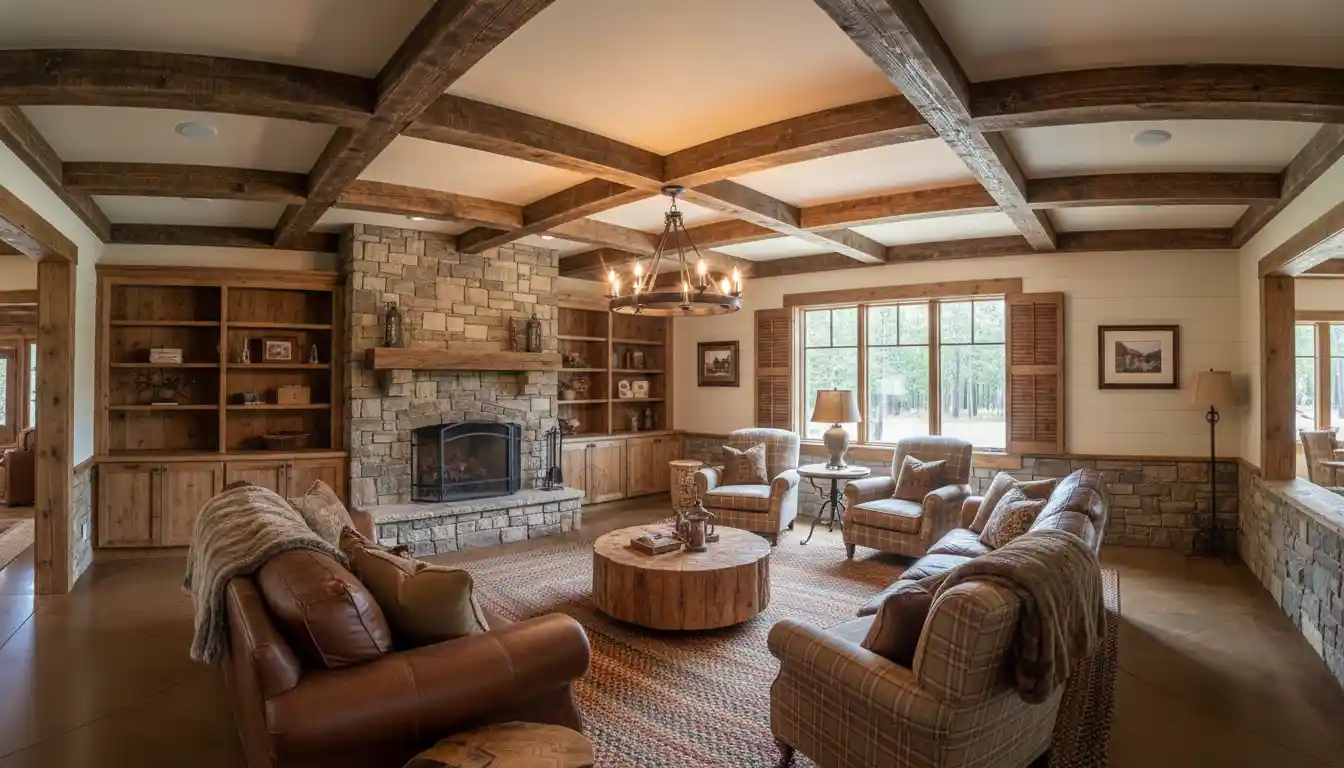
The most common and often most effective layout is to run parallel beams across the shorter dimension of the room. This draws the eye along the length of the beams, making the room feel longer and more spacious. It’s a classic look that works well in living rooms, kitchens, and bedrooms.
The Perimeter Trick: Creating an Illusion of Height
A less common but highly effective technique for low ceilings is to install beams only around the perimeter of the room. This creates a faux tray or coffered effect, adding a sophisticated architectural frame without cluttering the central airspace. The open center feels unobstructed and airy, making the ceiling itself appear higher than it is.
Spacing is Everything: Finding the Sweet Spot
Resist the urge to add too many beams. Placing them too close together (e.g., only two feet apart) can create a heavy, ladder-like effect that visually lowers the ceiling. For an 8-foot ceiling, wider spacing is almost always better. Aim for a distance of three to four feet between beams to keep the design feeling light and intentional, a stark contrast to the denser arrangements you might find in a 10 ft ceiling kitchen where space is more abundant.
The Installation Process: A Step-by-Step Guide for Faux Beams
One of the best parts about using lightweight faux beams is that installation is a very manageable DIY project. The process generally involves securing wood blocks to the ceiling joists and then fitting the hollow beam over them.
Step 1: Planning and Measurement
Begin by carefully planning your layout. Use a stud finder to locate the ceiling joists and mark them. A great trick is to use painter’s tape on the ceiling to create a full-scale mock-up of your beam placement. This allows you to visualize the spacing and proportions before making any permanent changes.
Step 2: Installing the Mounting Blocks
Cut 2×4 wood blocks to fit snugly inside the hollow faux beam. Secure these blocks to the ceiling by screwing them directly into the ceiling joists at intervals of about three to four feet. This provides a sturdy anchor for the beam.
Step 3: Cutting and Fitting the Beams
Measure the length of your ceiling and cut the faux beam to size. Polyurethane beams can be easily cut with a standard hand saw or miter saw. Ensure your cuts are straight for a seamless fit against the walls.
Step 4: Securing the Beams
Apply a line of construction adhesive to the top edges of the beam that will meet the ceiling. Lift the lightweight beam into place, fitting it over the mounting blocks. Secure the beam by driving screws through the sides of the beam into the wood blocks.
Step 5: Finishing Touches
Use a color-matched wood putty or caulk to fill the screw holes and any small gaps between the beam and the ceiling. If you have existing structural posts you’d like to match, consider wrapping beams with cedar or another wood for a cohesive finish throughout the space.
| Design Factor | Recommendation for 8-Foot Ceilings | Reasoning |
|---|---|---|
| Beam Type | Faux Wood (Polyurethane) | Lightweight, affordable, easy to install on existing drywall. |
| Beam Depth | 4″ – 6″ Maximum | Prevents encroaching on headroom and feeling oppressive. |
| Beam Width | 6″ – 8″ or Wider | Adds visual substance without sacrificing vertical space. |
| Color/Finish | Light Wood Tones or Ceiling Color | Reflects light and prevents a heavy, ceiling-lowering effect. |
| Spacing | 3 – 4 feet Apart (or Wider) | Keeps the design feeling open and avoids a “caged-in” look. |
Beyond the Beams: Design Choices That Complement Low Ceilings
To maximize the height-enhancing effect of your new beams, support them with other smart design choices. These elements work together to create a cohesive and spacious-feeling room.
Lighting is crucial. Avoid hanging pendant lights or chandeliers directly from the beams, as this will draw the eye down. Instead, opt for recessed lighting between the beams or use wall sconces to cast light upward, which makes the ceiling feel higher.
Similarly, choose low-profile furniture to increase the physical and visual distance between the floor and the ceiling. Lighter paint colors on the walls will also contribute to a brighter, more open atmosphere that lets your new ceiling feature truly shine.
The Cost Factor: Budgeting for Your 8-Foot Ceiling Beam Project
The cost difference between faux and real wood beams is significant. Faux wood beams typically range from $6 to $12 per linear foot, making them a highly affordable option. In contrast, real wood beams can cost $15 to $30 per linear foot or more, before factoring in the necessary structural work and professional labor.
When you consider the ease of a DIY installation for faux beams, the savings become even more pronounced. This project offers a high-impact aesthetic upgrade for a fraction of the budget of more drastic structural changes, like exploring the cost to raise 8-foot ceilings.
The Final Verdict: Are Wood Beams a Good Idea for 8-Foot Ceilings?
Absolutely, yes. The fear that wood beams will shrink a room with 8-foot ceilings is rooted in examples of poor execution, not a fundamental design flaw. When done correctly, they are a fantastic way to add character, warmth, and perceived height to a standard room.
The key is to follow the principles of proportion. Choose low-profile, lightweight faux beams. Opt for lighter colors or paint them to match the ceiling. Use wide, strategic spacing to create an open feel. By embracing these guidelines, you can confidently transform your flat, unremarkable ceiling into a stunning architectural feature that elevates your entire home.
