Who Draws Electrical Plans? The Shocking Truth for Your Renovation
You’ve finalized the layout for your dream kitchen remodel. The contractor is ready to demolish walls, and you’ve picked out the perfect countertops. But then, your contractor asks a question that stops you in your tracks: “Do you have the electrical plans?”
For most homeowners, this question opens a Pandora’s box of confusion. Who is supposed to create this critical document? Can your contractor just sketch something out? This moment of uncertainty is where many home projects stall, leading to delays, unexpected costs, and serious safety concerns.
You'll Learn About
Why You Can’t Just “Wing It” with Your Home’s Wiring
Attempting to manage your home’s electrical layout without a formal plan is a recipe for disaster. The risks go far beyond flickering lights or inconveniently placed outlets. Improperly designed electrical systems are a leading cause of residential fires.
Every electrical installation must comply with the National Electrical Code (NEC), a comprehensive set of standards designed to protect people and property. A professional electrical plan ensures every wire, outlet, and circuit breaker meets these stringent requirements. Without one, you risk failing your municipal inspection, which can halt your project and force expensive, time-consuming rework.
The Dangers of an Unplanned System
An electrical system is more than just wires in a wall; it’s the heart of a modern home. A poorly designed system can lead to overloaded circuits, which create fire hazards. It can also result in inadequate power for your appliances, causing them to function poorly or fail prematurely.
Furthermore, failing a building inspection means your project stops dead. You won’t be able to close up the walls until the electrical work is corrected and re-inspected. This not only delays your renovation but can also create friction with your contractor and dramatically increase labor costs.
The Key Players: Who Actually Draws Electrical Plans?
The responsibility for creating electrical plans falls to a few key professionals, each with a specific role depending on the project’s complexity. Understanding who does what is the first step to ensuring your home’s electrical system is safe, compliant, and functional. The answer is not always as straightforward as you might think.
Licensed Electricians: The Front-Line Experts
For smaller projects, a licensed electrician is often the go-to professional. They have the practical, hands-on knowledge to design and implement systems for straightforward jobs like finishing a basement, adding a new circuit for an appliance, or a simple room renovation.
In many cases, an experienced electrician can create a clear sketch or drawing that is sufficient for pulling a permit. They translate your needs into a functional layout that adheres to local codes, ensuring proper placement of outlets, switches, and fixtures for everyday use.
Electrical Engineers (PE): For Complex and Large-Scale Projects
When a project becomes more complex, you may need an Electrical Engineer (PE). These professionals have advanced degrees and a state-issued license, signifying a high level of expertise. An engineer is essential for new home construction, major additions, or projects involving heavy electrical loads.
Engineers perform critical load calculations to determine your home’s total power needs, which is vital when deciding between different service levels, such as whether you need to upgrade to a 200 amp service for modern appliances and EV chargers. Their stamp of approval on a plan is often a legal requirement for obtaining a building permit for large-scale work.
Architects and Residential Designers: The Big Picture Planners
Architects and residential designers are masters of space and flow. While they design the overall layout of your home, their role in electrical planning is typically collaborative. They will indicate the desired locations for lights, switches, and outlets to fit the home’s aesthetic and functional design.
However, they generally do not create the technical wiring diagrams themselves. Instead, they work closely with an electrician or an electrical engineer who translates their design vision into a code-compliant technical plan that the installation team can execute perfectly.
Certified Electrical Planners/Designers: The Specialized Middle Ground
A less-known but highly valuable professional is the certified electrical planner or designer. These individuals specialize exclusively in creating detailed electrical system layouts. They bridge the gap between an architect’s vision and an electrician’s technical implementation.
Hiring an electrical designer can be a smart move for complex kitchen renovations or homes with integrated smart technology. They focus on creating a highly efficient and user-friendly system, often thinking about details that others might overlook, ensuring your electrical plan is truly optimized for your lifestyle.
Choosing the Right Pro for Your Project: A Quick Guide
Selecting the right professional is crucial for your project’s success. The scope and complexity of your work will determine who you need to hire. This table breaks down common scenarios to help you make an informed decision.
| Project Type | Recommended Professional | Key Considerations |
|---|---|---|
| Adding a few new outlets or a ceiling fan | Licensed Electrician | Simple scope, a basic sketch is often sufficient for a permit. |
| Complete Kitchen or Bathroom Renovation | Licensed Electrician or Electrical Designer | Requires careful planning for GFCI outlets, dedicated circuits, and task lighting. |
| Basement Finishing or Major Addition | Licensed Electrician or Electrical Engineer | Load calculations may be needed to see if the main panel can handle the new circuits. |
| New Custom Home Construction | Electrical Engineer and/or Architect | PE-stamped plans are almost always required for permits and system-wide design. |
| Building from Prefabricated Kits | Electrical Engineer | Custom electrical plans are needed to adapt kit designs to local codes, such as with building from house kits. |
What’s Included in a Professional Electrical Plan?
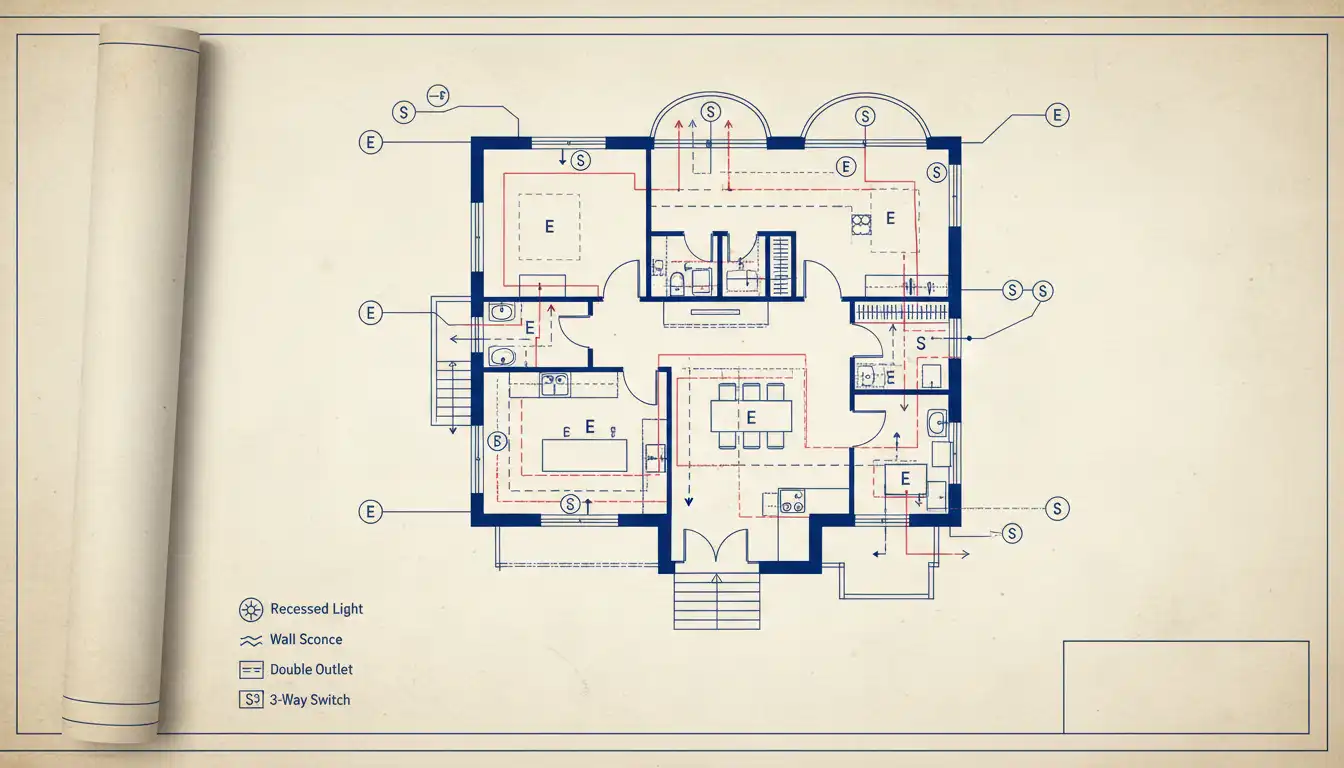
A professional electrical plan, or blueprint, is a technical document that uses standardized symbols to map out your entire electrical system. It’s the definitive guide for the installing electrician, ensuring every component is placed correctly and wired safely.
Key components of an electrical plan include: a floor plan layout showing walls and rooms, locations of all outlets, switches, and light fixtures, wiring paths and circuit mapping, the location of the main electrical panel and subpanels, and a panel schedule detailing what each circuit breaker controls.
The Hidden Value: How a Good Electrical Plan Saves You Money & Headaches
Many homeowners view the cost of a professional electrical plan as an extra expense. In reality, it is one of the smartest investments you can make in your renovation. A well-designed plan is a tool for preventing costly errors and ensuring long-term satisfaction.
Preventing Costly Change Orders
Without a clear plan, decisions are often made on the fly during construction. This frequently leads to “change orders,” which are requests to alter work that’s already been completed. Moving an outlet just a few feet after the drywall is up can cost hundreds of dollars in labor and materials.
A detailed electrical plan forces you to think through every detail upfront. This minimizes the chance of mid-project changes, keeping your budget on track and your timeline intact.
Future-Proofing Your Home for Smart Technology
Our electrical needs are evolving rapidly. A decade ago, planning for an electric vehicle charger was rare; today, it’s a wise consideration for any major renovation. A forward-thinking electrical plan can prepare your home for the future.
This includes running conduit to key locations for future wiring, planning for dedicated circuits for smart home hubs, and ensuring you have enough power capacity for tomorrow’s technology. Future-proofing your electrical system now saves you from having to open up walls later.
Ensuring Safety and Peace of Mind
Ultimately, the greatest value of a professional electrical plan is safety. It serves as a guarantee that your home’s electrical system has been designed to the highest standards, protecting your family and your investment. This detailed planning extends to every aspect of your home, including appliance installation in a modern kitchen, where even minor details can have safety implications—sometimes requiring very specific components, not unlike needing specialized tape for an oven door during a repair.
How to Find and Hire a Qualified Professional
Finding the right person to draw your electrical plans starts with knowing where to look. Your local building department is an excellent resource, as they can tell you what level of documentation is required for your permit and may offer lists of licensed professionals in your area.
When interviewing candidates, always ask to see their license and proof of insurance. Request a portfolio of similar projects and ask for references. A true professional will be happy to provide this information and will take the time to answer all your questions thoroughly.
Your Blueprint for Electrical Success
The question of “who draws electrical plans” has more than one right answer. The professional you need depends entirely on the size, scope, and complexity of your project. Whether it’s a licensed electrician, an electrical engineer, or a specialized designer, the key is to not skip this crucial step.
Investing in a professional electrical plan is an investment in your home’s safety, functionality, and future value. It is the essential first step that transforms a chaotic renovation into a smooth, successful project, giving you the peace of mind that the power in your home is in capable hands.