Step Up Into Front Door: The #1 Hazard Hiding in Plain Sight
The step leading to your front door is the first physical interaction a guest has with your home. It’s a transition from the public world to your private sanctuary, but for many homeowners, it’s an overlooked and dangerous design flaw.
A poorly designed or deteriorating front step is more than just an eyesore; it’s a significant safety hazard and a drag on your home’s curb appeal. This guide will help you identify the critical mistakes in your entryway and provide the ultimate solutions for creating a safe, welcoming, and beautiful front door step.
You'll Learn About
Why Your Front Step Is More Than Just a Welcome Mat
Many view the front step as a purely functional element, but its impact on your home’s safety, value, and overall impression is profound. Neglecting this small area can lead to significant consequences that ripple through your entire property.
The First Impression: Curb Appeal and Home Value
Your front entryway sets the tone for your entire home. A cracked, undersized, or awkwardly placed step can make an otherwise beautiful exterior feel unwelcoming and poorly maintained.
Conversely, a well-designed set of steps acts as a deliberate architectural feature, guiding visitors to the door and enhancing the home’s facade. This investment in curb appeal provides an immediate and significant return on your property’s value.
The Unseen Danger: Common Safety Hazards
The National Safety Council identifies falls as a leading cause of unintentional injury-related death at home, and stairs are a primary culprit. A single misstep can have devastating consequences, making the safety of your front entry paramount.
Common hazards include steps with inconsistent heights, treads that are too narrow, slippery surfaces from rain or ice, and a lack of secure handrails. Proper lighting is also crucial, as most falls happen in low-light conditions during the evening.
The Silent Destroyer: Water, Frost, and Structural Integrity
One of the most overlooked aspects of front step design is proper water management. A step that is not sloped correctly to drain away from the house can funnel water directly toward your foundation, leading to costly and catastrophic damage over time.
In colder climates, this trapped water can freeze and expand, a phenomenon known as frost heave. This process can crack concrete, dislodge stones, and create dangerous instability in the entire structure, turning a simple step into a major structural liability.
Diagnosing the Problem: Is Your Front Step a Failure?
Before you can fix the problem, you need to conduct a thorough assessment of your current entryway. Use this checklist to identify the specific weaknesses of your front door step.
The Stability Test: Cracks, Wobbles, and Sinking
Carefully inspect the step’s surface and foundation. Look for hairline fractures, significant cracks, or any signs that the step is pulling away from the house. A deteriorating foundation is a clear sign of a serious issue.
Stand firmly on the step and shift your weight. Any movement, wobbling, or rocking indicates instability that must be addressed immediately to prevent a complete failure and potential injury.
Sizing It Up: Is Your Landing Large Enough?
A common design mistake is an undersized top landing. A proper landing should be large enough for you to comfortably stand, turn, and open your door without having to step backward onto the stairs.
Ideally, the landing should be at least as wide as the door and have a depth of 36 to 48 inches. This provides a safe, stable platform for fumbling with keys, setting down groceries, or welcoming guests.
The Rise and Run Rule: Are Your Steps Awkward or Dangerous?
The “rise” (vertical height) and “run” (tread depth) of your steps must be consistent. Even a small variation between steps can disrupt a person’s rhythm and create a serious trip hazard.
Generally, a comfortable riser height is between 4 and 7 inches, while the tread depth should be at least 10 inches to accommodate a person’s entire foot. Steps that are too steep or too shallow are equally problematic and unsafe.
The Ultimate Fix: Designing and Building the Perfect Front Steps
Transforming your front entryway from a hazard into a highlight involves careful planning around materials and design principles. A successful project prioritizes safety, durability, and aesthetics in equal measure.
Choosing Your Champion: A Material Showdown
The material you choose for your steps is the most critical decision, impacting cost, maintenance, and style. Each option has distinct advantages and disadvantages that you must weigh against your climate, budget, and desired look.
| Material | Durability | Maintenance | Cost (DIY)
per sq ft (patio slab) |
Best For |
|---|---|---|---|---|
| Poured Concrete | Very High | Very Low | ~$5 – $15 | Modern, minimalist, and high-traffic homes. |
| Pressure-Treated Wood | Moderate | High (staining/sealing) | ~$3 – $8 | Rustic, traditional, and coastal style homes. |
| Natural Stone / Pavers | Very High | Low | ~$15 – $40 | Classic, upscale, and timeless curb appeal. |
| Composite Decking | High | Very Low | ~$8 – $20 | Low-maintenance durability with a clean, modern look. |
The Blueprint for Safety and Longevity
A perfect set of steps goes beyond just the materials. Integrating key design features is non-negotiable for creating a truly safe and long-lasting entryway that will serve your home for decades.
Proper drainage is the number one priority. The landing and each step tread must have a subtle slope—about 1/4 inch per foot—away from the house. This prevents water from pooling against your foundation and causing the devastating damage discussed earlier.
Step-by-Step Construction Insights
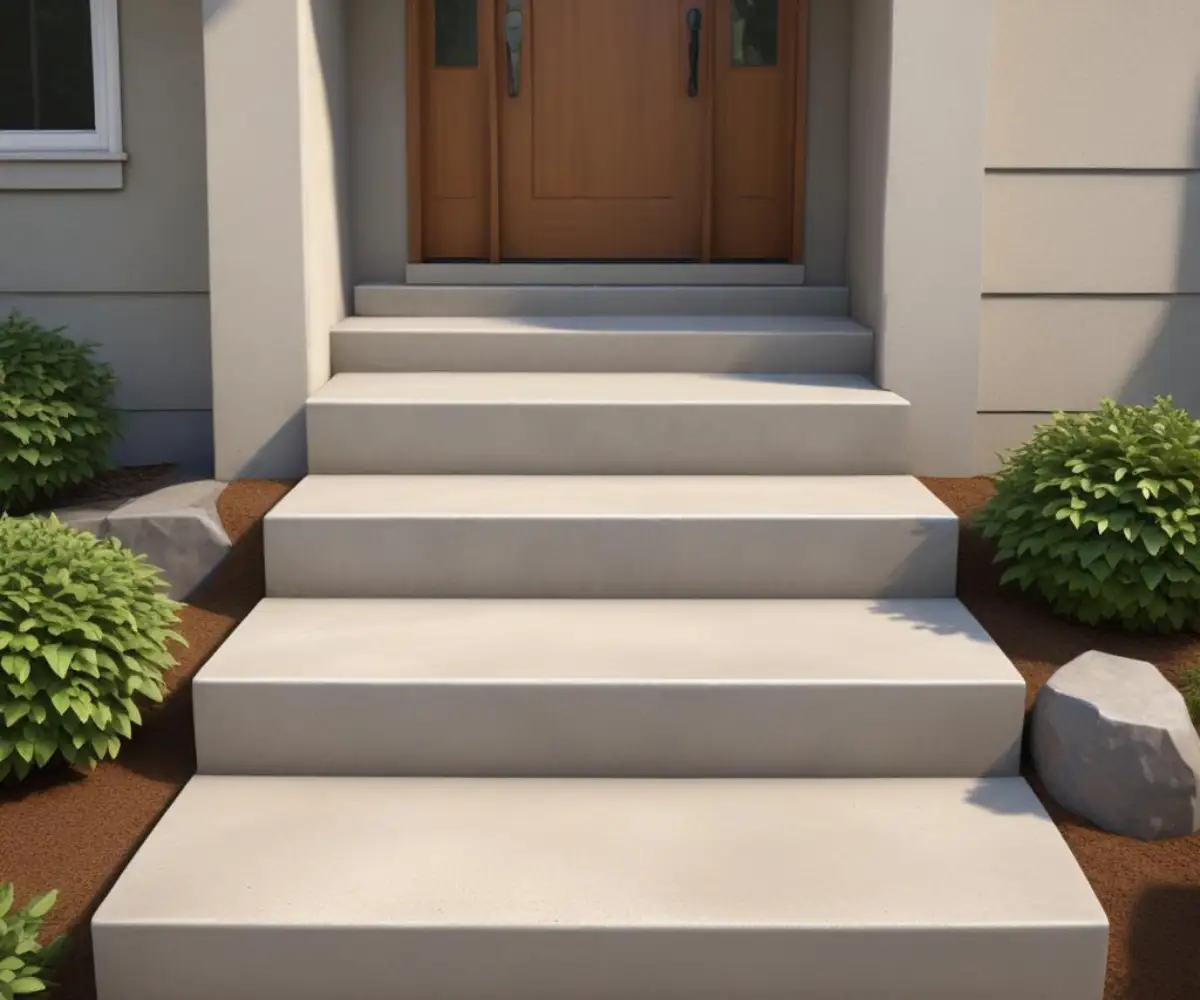
Whether you’re hiring a pro or tackling the project yourself, understanding the core construction process is vital. It starts with a solid, compacted gravel base that extends below the frost line to prevent shifting and heaving.
For concrete, proper formwork and reinforcement are key to preventing cracks. For wood or composite, ensuring the support structure is level and secure is paramount. This foundational work is where quality truly matters; a beautiful surface on a poor foundation is a project destined to fail.
Enhancing Safety and Style
Once the structure is sound, focus on the finishing touches that elevate both safety and design. Handrails are not optional for entryways with more than two steps; they are a crucial safety feature, especially for children and the elderly. Choose a style that complements your home’s architecture.
Incorporate texture on the step surfaces to provide grip, especially in wet or icy conditions. A broom finish on concrete, textured pavers, or high-quality composite boards with a non-slip rating are all excellent choices.
Beyond the Basics: Elevating Your Entryway Experience
With a safe and solid structure in place, you can turn your attention to details that infuse personality and create a truly standout entrance. These elements complete the transition from a functional step to a stunning entryway.
The Power of Integrated Lighting
Lighting is the most impactful upgrade for both safety and ambiance. Instead of relying on a single, harsh porch light, consider integrating low-voltage LED lighting directly into the steps.
Lights can be installed under the lip of each tread or on the vertical face of the risers. This technique clearly defines the staircase in the dark, eliminating trip hazards while casting a warm, welcoming glow that dramatically boosts nighttime curb appeal.
Smart Steps: The Future of Entryway Convenience
For those in colder climates, integrating a radiant heat system beneath your steps is a game-changing innovation. These automated systems use sensors to detect temperature and moisture, activating to melt snow and ice before it can accumulate.
This technology eliminates the need for shoveling and chemical de-icers, which can damage surfaces over time. It provides the ultimate in safety and convenience, ensuring your entryway is always clear and accessible, regardless of the weather.
Connecting Your Entryway to the Rest of Your Home
A well-designed front step should feel like a natural extension of your home’s interior. The goal is to create a seamless and harmonious transition from the outside world into your personal space.
Creating a Cohesive Design Language
The style and color of your steps should complement your front door, siding, and trim. This cohesive design language makes the entire home feel more intentional and thoughtfully planned.
This attention to detail should continue inside. A beautiful new entryway makes the entire home feel more inviting, and that feeling can be carried through with other thoughtful updates. Even a simple project like a French door plastic insert replacement can work to brighten the interior and connect it to the new, welcoming light from your entrance.
Conclusion: The First Step to a Better Home
Your step up into the front door is far more than a simple piece of construction. It is a critical component of your home’s safety, a powerful statement of its curb appeal, and a guardian of its structural integrity.
By diagnosing existing problems and committing to a thoughtful redesign focused on durable materials, proper drainage, and essential safety features, you can transform this overlooked area. You will create a welcoming, safe, and beautiful entryway that enhances your home’s value and your daily life.