
Pure Water Appliance Reviews: Don’t Buy Until You Read This!
You turn on the tap for a glass of water, but a nagging question lingers: Is this really clean? With news about aging infrastructure and contaminants like lead and “forever chemicals” (PFAS) in municipal water, that uncertainty is understandable.
A pure water appliance seems like the perfect solution for your home and family’s health. But the market is flooded with options, from simple pitchers to complex under-sink systems, all making bold claims. Choosing the right one can feel overwhelming, and making the wrong choice is a costly mistake.
You'll Learn About
The Unseen Problem: What’s Really In Your Tap Water?
While the U.S. generally has safe drinking water, “safe” doesn’t always mean “pure.” Municipal treatment plants use disinfectants like chlorine to kill bacteria, but these can leave behind byproducts and an unpleasant taste. More concerning are the contaminants that can enter the water after it leaves the plant.
Aging pipes can leach lead, a potent neurotoxin, into your water. Agricultural and industrial runoff can introduce pesticides, nitrates, and volatile organic compounds (VOCs). And emerging contaminants like PFAS are increasingly being detected in water supplies across the country, linked to a host of health issues.
Common Contaminants and Their Risks
Understanding what you’re up against is the first step. Key culprits include lead from old plumbing, chlorine and its byproducts from treatment, and forever chemicals like PFAS from industrial pollution. Other unwelcome guests can include arsenic, nitrates, sediment, and even microorganisms, depending on your water source.
Even if your local water report meets federal standards, it may not account for contaminants picked up on the way to your tap. This is why a point-of-use pure water appliance provides a critical final barrier for your family’s health and peace of mind.
Decoding the Technology: Types of Pure Water Appliances
Not all water purifiers are created equal. The technology they use determines which contaminants they can remove. Understanding the four main types is essential to matching an appliance to your specific water quality needs.
Reverse Osmosis (RO) Systems
Reverse osmosis is the gold standard for purification. These systems use a semipermeable membrane to force water through, leaving an astonishingly wide range of contaminants behind. RO is highly effective at removing heavy metals like lead and arsenic, dissolved solids, nitrates, and forever chemicals.
However, this thoroughness comes with downsides. The process is slow and creates wastewater (brine), though modern systems are becoming more efficient. More importantly, RO strips beneficial minerals like calcium and magnesium, which can affect the taste and, according to some studies, long-term health.
Water Distillers
Distillation mimics the earth’s natural hydrologic cycle: it boils water to create steam, leaving virtually all contaminants behind, then condenses the steam back into pure liquid water. This method is incredibly effective, removing heavy metals, bacteria, viruses, and dissolved solids. The result is 99.9% pure water.
The main drawbacks are speed and energy consumption. It can take several hours to produce a single gallon of distilled water, and the process requires electricity to heat the water. Like RO systems, distillers also remove all minerals, resulting in water with a “flat” taste that some people dislike.
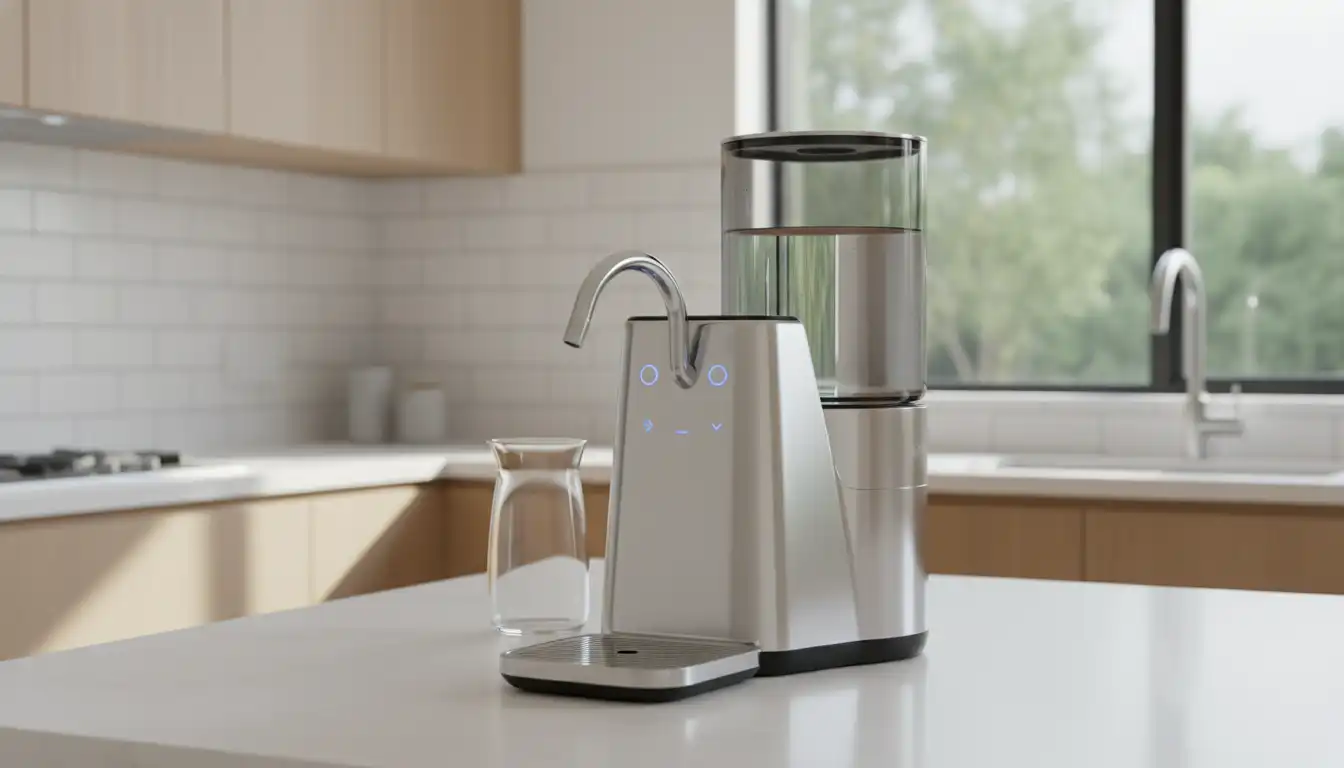
UV Purifiers
Ultraviolet (UV) purifiers are a targeted solution aimed at microbiological threats. As water passes through the unit, a powerful UV lamp disrupts the DNA of bacteria, viruses, and other pathogens, rendering them harmless. It’s a chemical-free way to disinfect water.
UV systems are excellent for well water users concerned about bacterial contamination. However, they do not remove chemical contaminants, heavy metals, sediment, or chlorine. For this reason, they are almost always paired with a pre-filter, like an activated carbon filter, to address other water quality issues.
Activated Carbon Filters
This is the most common type of water filtration, found in everything from popular water pitchers to faucet-mounted devices and refrigerator filters. Activated carbon works through adsorption, where contaminants stick to the surface of the carbon as water passes through. It is highly effective at improving taste and odor by removing chlorine.
While excellent for basic improvements, carbon filters have limitations. Their effectiveness against heavy metals, nitrates, and dissolved solids is limited unless specifically combined with other filtration media. They are a good first step but may not be a complete solution for more serious contamination concerns.
Comparison of Water Purification Technologies
Choosing the right system requires a clear understanding of what each technology excels at, its maintenance needs, and its cost. The table below provides a side-by-side comparison to help you make an informed decision.
| Technology | Primary Contaminants Removed | Pros | Cons | Average Cost & Maintenance |
|---|---|---|---|---|
| Reverse Osmosis (RO) | Heavy metals, nitrates, pesticides, fluoride, PFAS, dissolved solids | Extremely high purification level; removes the widest range of contaminants. | Wastes water; removes beneficial minerals; requires professional installation for under-sink models. | $200-$1000+ initial cost; annual filter changes ($50-$150). |
| Water Distiller | Heavy metals, bacteria, viruses, dissolved solids, nitrates | Produces 99.9% pure water; very reliable and consistent. | Slow process; high energy use; removes beneficial minerals; requires regular cleaning. | $100-$500+ initial cost; ongoing electricity cost. |
| UV Purifier | Bacteria, viruses, cysts, and other microorganisms | Chemical-free disinfection; low maintenance; does not alter water taste. | Does not remove chemical or physical contaminants; requires electricity. | $150-$600 initial cost; annual bulb replacement ($40-$80). |
| Activated Carbon | Chlorine, chloramine, VOCs, pesticides, improves taste and odor | Affordable; easy to install and use (pitchers, faucet mounts); improves water aesthetics. | Limited removal of heavy metals, fluoride, or dissolved solids; frequent filter changes. | $30-$200 initial cost; frequent filter changes ($15-$50 every 2-4 months). |
Key Factors to Consider Before You Buy a Pure Water Appliance
With a grasp of the technologies, the next step is to evaluate your personal needs. Answering these questions will narrow down the options and lead you to the perfect appliance for your home.
1. What Is Your Water Quality?
This is the most critical step. You can’t solve a problem you don’t understand. Obtain a copy of your local water utility’s Consumer Confidence Report (CCR). For a more accurate picture, especially if you have well water, invest in an independent water test kit to check for specific contaminants like lead, nitrates, or bacteria.
2. What Are Your Household Needs?
Consider your family’s size and water consumption. An under-sink RO system offers high-volume, on-demand purified water, while a countertop distiller might be sufficient for a single person or a small family. Think about where you want purified water—just at the kitchen sink, or for your refrigerator’s ice maker too?
The appliance should also fit your kitchen’s aesthetic. A sleek countertop unit can be a design element, just as choosing the right Vicostone quartz reviews can help you select countertops that elevate your space.
3. What Are the Long-Term Costs?
The initial purchase price is only part of the story. Factor in the ongoing costs of replacement filters, membranes, or UV bulbs. Calculate the annual expense to ensure it fits your budget. Also, consider the energy consumption of distillers or powered RO systems.
4. What Certifications Should You Look For?
To ensure an appliance lives up to its claims, look for certifications from third-party organizations like the NSF (National Sanitation Foundation) or WQA (Water Quality Association). Key NSF/ANSI standards to look for are 42 (for aesthetic effects like chlorine taste), 53 (for health effects like lead and cysts), and 58 (for reverse osmosis systems).
The Hidden Debate: Is “Too Pure” Water a Problem?
A topic that is often overlooked in consumer reviews is the consequence of drinking demineralized water. Systems like reverse osmosis and distillation are so effective that they strip away everything, including healthy minerals like calcium and magnesium that our bodies need.
Some health experts argue that long-term consumption of demineralized water can disrupt the body’s mineral balance. This “hungry” water may also leach small amounts of minerals from the food you cook with it. While the science is still debated, it’s a factor worth considering. For those concerned, some modern RO systems now include a remineralization stage that adds back a healthy blend of minerals before the water reaches your tap.
Proper hydration is a cornerstone of well-being, much like connecting with nature by tending to a garden. Ensuring your plants get the right nutrients is as important as ensuring your body does, a principle you can appreciate when reading Plant Lust reviews about nurturing healthy flora.
Installation & Maintenance: Avoiding Common Headaches
Once you’ve chosen your appliance, proper installation and maintenance are key to its performance and longevity. Leaks, low water pressure, and premature filter failure are common user complaints that can often be avoided.
DIY vs. Professional Installation
Simple countertop units and pitchers require no installation. However, under-sink RO systems or whole-house filters are more complex. While a skilled DIYer can often handle the job, improper installation can lead to leaks and costly water damage. For complex systems, professional installation is often worth the investment for peace of mind.
A flawless installation is as critical for a water system as it is for your home’s envelope. Preventing water ingress from a faulty pipe fitting is just as important as preventing it through your window frames, a topic explored in depth in these Ideal Majestic Windows reviews.
Solving Common Problems
If you notice low water flow from your RO system, check the water pressure in the storage tank and ensure the filters aren’t clogged. If your water starts to taste bad, it’s a clear sign that it’s time to change the filters or sanitize the system. Constant gurgling or draining noises can indicate an issue with the system’s check valve or pressure settings.
The Final Verdict: Which Pure Water Appliance is Right for You?
There is no single “best” pure water appliance for everyone. The ideal choice is a deeply personal one, balancing your specific water quality concerns, budget, and household needs.
For those seeking the highest level of purification against a wide array of contaminants, a certified reverse osmosis system is the undisputed champion. If your primary goal is eliminating microbiological threats from well water, a UV purifier paired with a sediment filter is the most effective solution. For budget-conscious households with decent municipal water, a quality activated carbon filter can significantly improve taste and remove chlorine at an affordable price. Ultimately, investing in the right pure water appliance is an investment in your health, giving you confidence and control over every glass you drink.
