
Living Room and Family Room Next to Each Other: The #1 Design Challenge?
You have two rooms, side-by-side, meant for relaxing. One is the “living room,” the other, the “family room.” Instead of feeling like a spacious luxury, the layout feels awkward, redundant, and confusing. This common architectural feature in many homes often leads to a significant design dilemma: creating two distinct, functional spaces that don’t feel like a furniture showroom or a chaotic, undefined zone.
The core of the problem lies in a lack of clear purpose and visual separation. Without defined roles, both rooms end up as underutilized sitting areas, collecting clutter and confusing guests. The result is a frustrating misuse of valuable square footage, where neither space achieves its full potential for comfort, entertainment, or style.
This guide tackles this challenge head-on. We’ll explore practical, designer-approved strategies to transform your adjacent living and family rooms from a confusing layout into a harmonious and highly functional part of your home. By defining each room’s purpose and using smart design techniques, you can create two beautiful, cohesive spaces that work together seamlessly.
You'll Learn About
The Core Conflict: Formality vs. Function
Historically, the living room was a formal space at the front of the house reserved for entertaining guests, often called a parlor. The family room, typically located near the kitchen, was the casual, everyday hub for the family to relax, watch TV, and play games. In modern open-concept homes, the lines have blurred, but the fundamental difference in purpose remains the key to solving this layout puzzle.
The first step is to assign a clear, primary function to each room. This decision will dictate every subsequent choice, from furniture and lighting to color and decor. Resisting the urge to make both rooms serve every purpose is crucial for creating a successful and uncluttered design.
Defining Your Living Room’s Purpose
The living room often serves as a more formal or semi-formal space. It’s the area guests first see, making it ideal for showcasing your personal style. Consider these potential functions:
- A “Conversation Zone”: Arrange seating to encourage interaction. Think two sofas facing each other or a collection of armchairs around a central coffee table. This setup is perfect for entertaining without the distraction of a television.
– A Quiet Retreat: Designate it as a tech-free zone for reading, listening to music, or quiet reflection. A comfortable chaise lounge, elegant floor lamps, and curated bookshelves can create a serene atmosphere.
– A Formal Entertaining Space: If you host often, this room can be your go-to for pre-dinner cocktails or post-dinner conversation. The furniture can be more sculptural and stylish, with less emphasis on plush, sink-in comfort.
Defining Your Family Room’s Purpose
The family room is the home’s workhorse, designed for durability, comfort, and daily life. Its function is typically more straightforward and centered around relaxation and media.
- The Media Hub: This is the natural home for the large-screen TV, gaming consoles, and sound system. The layout should prioritize comfortable viewing angles and feature durable, easy-to-clean furniture.
– The “Relax and Lounge” Area: Comfort is king. A large, deep sectional sofa, soft rugs, and plenty of throw blankets make it the perfect spot for family movie nights.
– A Play Zone: For families with young children, integrating smart storage for toys and games is essential. Think ottomans with hidden storage or stylish, accessible shelving.
Creating Visual Harmony and Separation
Once you’ve defined the function of each room, the next challenge is to make them feel like distinct spaces while maintaining a cohesive flow. The goal is to avoid a jarring transition, creating a design that feels intentional and connected. This is where strategic design choices in flooring, color, lighting, and furniture layout come into play.
Many homeowners struggle with this aspect, fearing that creating separation will make the overall space feel smaller or disjointed. However, subtle visual cues can define zones far more effectively than walls, enhancing the feeling of an organized and thoughtfully designed home.
Strategic Flooring: The Unseen Divider
Flooring is a powerful tool for unifying or delineating adjacent spaces. Using continuous flooring, such as hardwood or luxury vinyl plank, throughout both areas creates a seamless foundation. This approach visually expands the space and provides a clean, cohesive look that is easy to build upon.
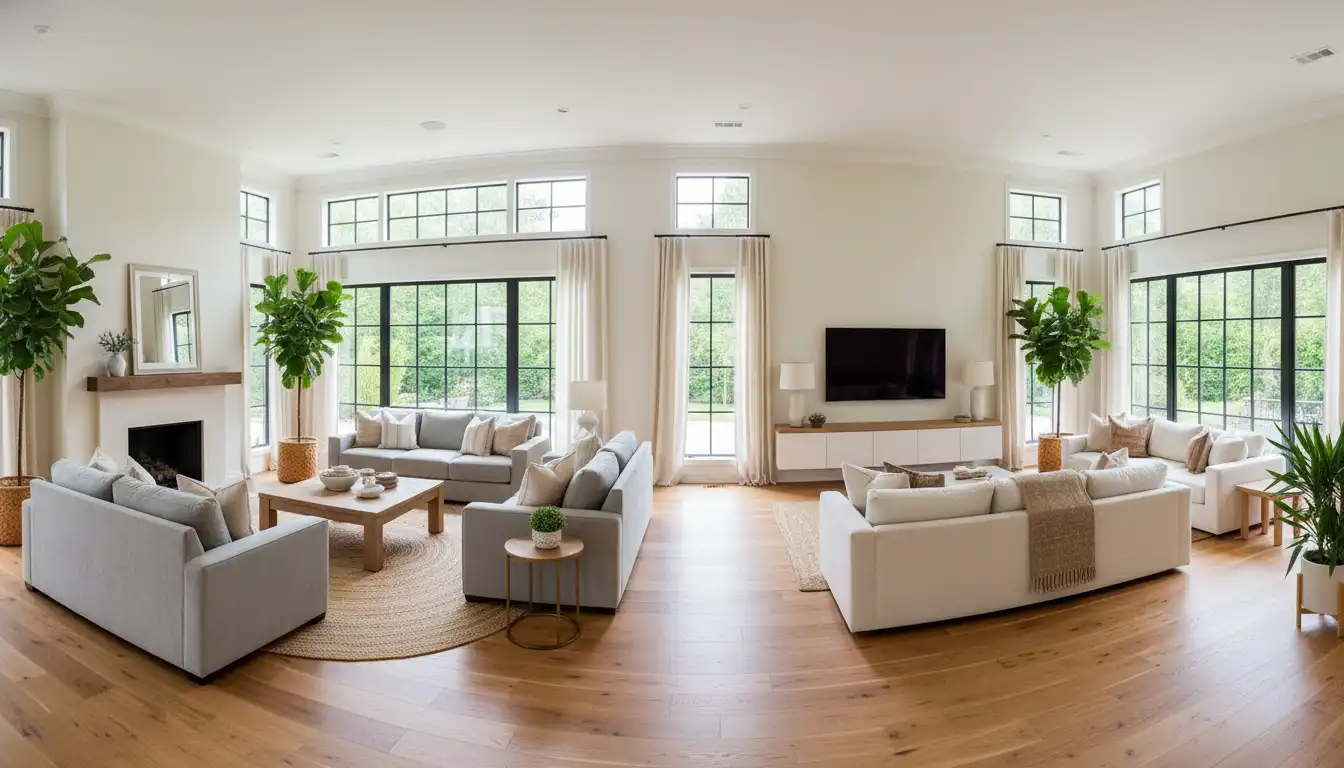
To create separation without installing different flooring types, use area rugs. A large rug in each room can anchor the furniture groupings and establish clear zones. In the living room, you might choose a more delicate or formal rug, while the family room benefits from a durable, high-pile rug that adds comfort and withstands heavy traffic. This is a simple yet incredibly effective way to signal a shift in function.
The Power of a Cohesive Color Palette
A well-planned color palette is essential for linking the two rooms. This doesn’t mean both rooms have to be the same color. Instead, choose a unified palette of two or three colors and use them in different proportions in each space.
For example, if your primary color is a soft gray, you could use it on the walls of the more formal living room. In the family room, you might use a complementary, slightly deeper shade on an accent wall and bring the soft gray in through textiles like pillows or throws. This creates a visual thread that connects the spaces while allowing each to have its own identity. This technique is more sophisticated than simply painting both rooms the same color, adding depth and designer intentionality. Considering how different window treatments might affect the light and color perception is also wise; exploring options like mixing plantation shutters and blinds can add another layer of coordinated texture and light control.
Furniture Layout: The Art of Zoning
The arrangement of your furniture is the most direct way to define the purpose of each room. It physically guides how the space is used and creates clear traffic paths.
In the living room, “float” your furniture away from the walls to create an intimate conversational grouping. Placing a sofa with its back to the family room can act as a subtle, low-profile divider. In the family room, arrange seating around the primary focal point, whether it’s the television or a fireplace. This functional grouping immediately communicates the room’s casual purpose.
It’s also important to consider the scale and style of the furniture. The living room can accommodate pieces with more delicate lines and finer fabrics. The family room requires robust, comfortable furniture, like a deep sectional or sturdy, oversized armchairs that can handle daily use.
| Design Element | Formal Living Room Strategy | Casual Family Room Strategy |
|---|---|---|
| Primary Function | Conversation, entertaining, quiet retreat | TV viewing, lounging, family activities |
| Furniture Style | More structured, sculptural, and stylish pieces | Plush, comfortable, and durable (e.g., sectional) |
| Layout Focus | Arrange seating for conversation (face-to-face) | Arrange seating for media viewing (facing a focal wall) |
| Color Palette | Can use lighter, more delicate colors | Use durable, forgiving colors and fabrics |
| Lighting | Layered with decorative elements (chandelier, sconces) | Focused on function (dimmable, task lighting) |
| Flooring/Rugs | Lower pile or statement rug | Durable, soft, high-pile area rug |
Lighting: Setting the Mood for Each Space
Lighting plays a critical role in differentiating the atmosphere of the two rooms. A layered lighting plan for each space will enhance its specific function and mood. Simply relying on a single overhead fixture in each room is a missed opportunity to add depth and character.
In the living room, aim for a sophisticated and versatile lighting scheme. A statement chandelier or a stylish pendant light can serve as a decorative focal point. Supplement this with wall sconces and table lamps to create a warm, inviting glow perfect for conversation. Dimmers are essential to adjust the mood for any occasion.
For the family room, the focus should be on practical, comfortable lighting. Recessed overhead lighting with dimmers provides good general illumination. It’s crucial to add task lighting, such as a floor lamp next to a reading chair or accent lighting that reduces glare on the television screen. The goal is to create a cozy, glare-free environment for relaxation and media consumption. The principles of creating distinct zones are surprisingly universal in home design, much like the considerations for a bathroom with two doors, where defining entry and purpose is key.
Achieving a Unified and Polished Look
The final layer of design involves creating a sense of continuity through decor and styling. While each room has its own function, they should feel like they belong to the same home. This is achieved through the repetition of certain elements across both spaces.
Repetitive Elements: The Key to Cohesion
Create a harmonious flow by repeating materials, finishes, or accent colors in both rooms. For example:
- Metal Finishes: Use the same metal finish (e.g., brushed brass, matte black) for light fixtures, curtain rods, and hardware in both rooms.
– Wood Tones: If you have a dark wood coffee table in the living room, incorporate a similar wood tone in the family room’s media console or side tables.
– Accent Colors: Carry an accent color from a throw pillow in the living room to a piece of artwork or a vase in the family room. This creates a subtle visual link.
This repetition doesn’t mean everything must match perfectly. In fact, avoiding a “matchy-matchy” look is key to a sophisticated design. The goal is coordination, not duplication. It’s a similar design principle to deciding on seating, where you might wonder about matching bar stools with and without backs; they don’t have to be identical to be cohesive.
Thoughtful Transitions: Bridging the Gap
Pay attention to the transitional space between the two rooms. If there’s a wide doorway or opening, ensure the sightlines are clear and uncluttered. A large piece of artwork on a connecting wall or a stylish console table can serve as a beautiful transitional element that draws the eye and connects the two areas.
By thoughtfully defining the purpose of each room and using cohesive design strategies, you can solve the puzzle of the adjacent living and family room. What was once an awkward and redundant layout can become one of the most functional and impressive features of your home, offering dedicated spaces for every aspect of your life, from formal entertaining to casual family relaxation.
