
Bathroom With Two Doors: Your Guide to a Flawless Design
The concept of a bathroom with two doors, often called a Jack and Jill or pass-through bathroom, presents a compelling design proposition. It promises space efficiency, convenience, and a clever solution for connecting two distinct areas of a home.
However, this popular layout walks a fine line between functional genius and a daily source of frustration. The core challenge revolves around a single, crucial element: privacy. Without careful planning, the convenience it offers can be completely overshadowed by awkward encounters and a lack of personal space.
This comprehensive guide explores the intricate world of the two-door bathroom. We will dissect its benefits, confront its notorious problems, and provide actionable, modern solutions that ensure your dual-entry bathroom is a resounding success, not a design regret.
You'll Learn About
What Exactly Is a Bathroom with Two Doors?
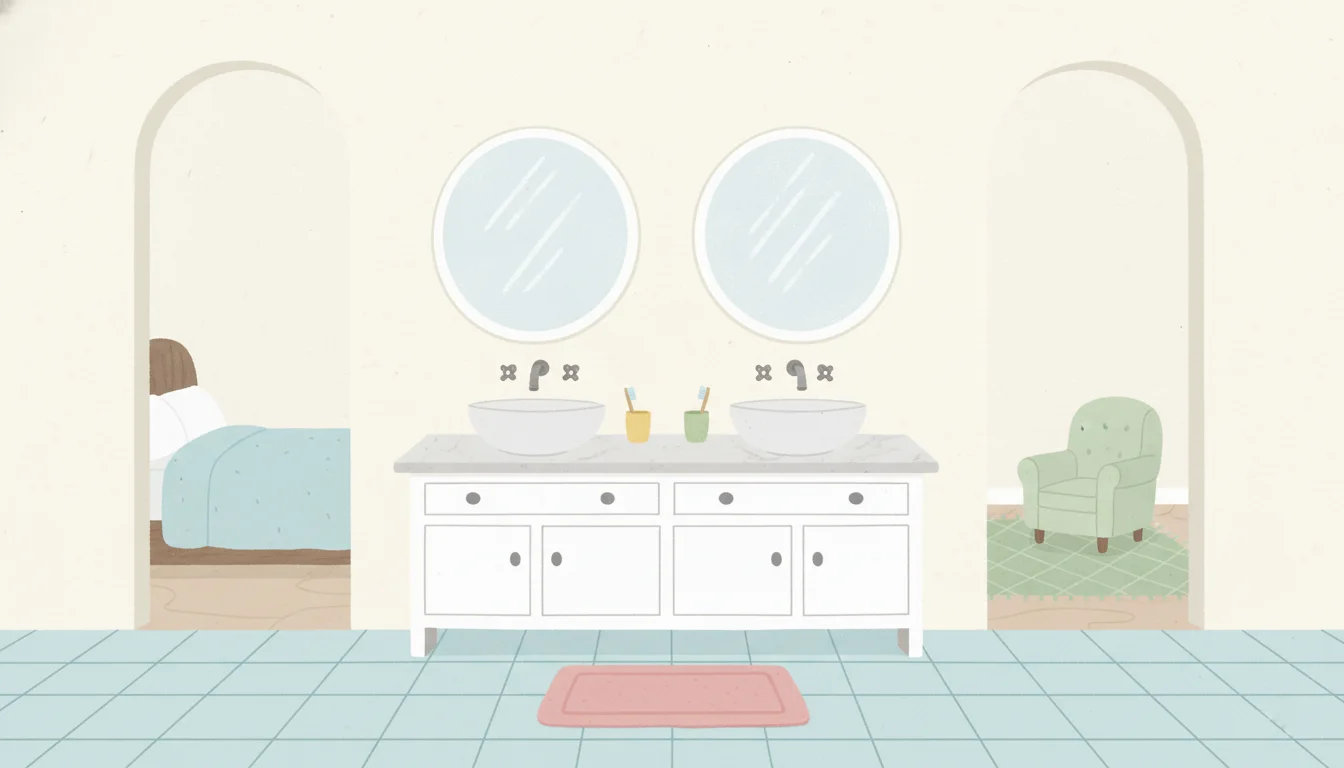
A bathroom with two doors is a single bathroom that has two separate entrances. This design allows it to serve as a bridge between two rooms or a room and a hallway, providing shared access without requiring users to enter a more private space, like a bedroom, to get to it.
The most common application is the “Jack and Jill” bathroom, which is situated between two bedrooms, with each bedroom having its own door into the shared space. Another popular configuration connects a bedroom to a main hallway, granting both private en-suite access and general access for guests.
The Core Purpose: Shared Access and Smart Design
The primary driver behind this design is maximizing utility and saving space. By serving two areas, it can eliminate the need for an additional full or half-bath, reducing construction costs and freeing up valuable square footage for other uses.
This layout is particularly favored in family homes, where it can provide a dedicated bathroom for children, or in guest suites, where it offers flexible access. It is a strategic choice aimed at improving the flow and functionality of a home’s floor plan.
The Alluring Benefits: Why Homeowners Love This Layout
The enduring popularity of the two-door bathroom isn’t without reason. When implemented thoughtfully, this design offers significant advantages that enhance a home’s livability and value.
Space Efficiency and Cost Savings
The most tangible benefit is economic. Building one shared bathroom is significantly less expensive than building two separate, private bathrooms. This includes savings on plumbing, fixtures, tiling, and ventilation.
Furthermore, it is an incredibly efficient use of square footage. In homes where space is at a premium, a Jack and Jill layout can provide full bathroom amenities to two bedrooms within a footprint that would be impossible for two separate en-suites.
Unmatched Convenience for the Right Household
For families with children, a shared bathroom between two kids’ rooms is a classic and practical solution. It teaches sharing, simplifies routines, and keeps the morning chaos contained to a single, designated space.
In a guest area, a bathroom connecting the bedroom to a hallway means guests have a private en-suite, while others can still access the bathroom from the hall without disturbing them. This flexibility is a hallmark of thoughtful home design.
Enhanced Property Value and Appeal
A well-executed two-door bathroom can be a strong selling point. For the right buyer, typically a family, it signals a home that is designed with practical, everyday living in mind. It can make a four-bedroom house feel like it has three full baths, boosting its appeal on the market.
The Harsh Reality: Common Problems and User Nightmares
Despite the benefits, a poorly planned two-door bathroom can become a significant source of daily annoyance. Addressing these potential pitfalls head-on during the design phase is critical to success.
The Privacy Predicament: Unwanted Intrusions
This is the number one complaint. The fear of someone walking in unexpectedly is a constant concern. This issue is amplified when guests are visiting, as they may not be familiar with the bathroom’s unique configuration.
Equally frustrating is the uncertainty of whether the bathroom is occupied. This often leads to tentative knocking or avoiding the bathroom altogether until you are sure it’s free, defeating its purpose of convenience.
The Lock Conundrum: Trapped or Exposed?
Standard door locks are notoriously problematic in this setup. If a person locks both doors from the inside and forgets to unlock the second door upon leaving, the next person is locked out of their own bathroom access.
This scenario is especially common with children and can lead to frustration and the need to constantly police the doors. The wrong locking mechanism can render the bathroom unusable or completely compromise its security.
Acoustic Nightmares: When Sound Travels Too Freely
Bathrooms are sources of noise, from running water to the flush of a toilet. With two doors, sound has two potential escape routes, often leading directly into bedrooms where peace and quiet are paramount.
A standard hollow-core door offers very little in terms of a sound barrier. This lack of acoustic privacy can be uncomfortable and disruptive, particularly for light sleepers or those with different daily schedules.
Traffic Jams and Inefficient Flow
If the bathroom is too small or poorly laid out, it can feel more like a hallway than a functional room. Two doors can limit the usable wall space, making it difficult to place vanities, storage, and towel racks effectively.
During peak morning hours, a single shared bathroom can become a bottleneck for two people trying to get ready simultaneously. Without a smart layout that separates tasks, the space can feel cramped and chaotic.
The Ultimate Solutions: Transforming Your Two-Door Bathroom
The good news is that every one of these problems has a modern, effective solution. By investing in the right hardware, design, and materials, you can create a dual-entry bathroom that is both convenient and completely private.
Mastering the Lock: Innovative Privacy Solutions
The lock is the single most important component for a successful two-door bathroom. Standard bedroom locks are not sufficient. You must upgrade to a system designed for this specific challenge.
A simple yet effective upgrade is an indicator lock. These commercial-style locks display “Vacant” or “Occupied” on the exterior, providing a clear visual cue that instantly solves the “is it in use?” problem. Another excellent option is a communicating lock, where a single turn of the knob on the inside automatically locks both doors simultaneously.
For a high-tech solution, consider interconnected smart locks. These can be programmed so that when one door is locked electronically from the inside, the other door also locks. They can even be integrated with smart lighting to signal on the outside that the room is in use, offering an elegant and foolproof system.
Designing for Peace: Advanced Acoustic Proofing
Controlling sound is essential for maintaining tranquility in the adjoining rooms. The first step is to replace hollow-core doors with solid-core doors. The added mass is highly effective at blocking airborne noise.
To further enhance soundproofing, install high-quality door seals and a bottom sweep on both doors. This closes the gaps around the door frame where sound most easily travels. Applying acoustic sealant, a flexible caulk, in the gap between the door jamb and the wall during installation adds another layer of defense.
Finally, the bathroom’s exhaust fan can be a powerful ally. A noisy fan is a nuisance, but a modern, whisper-quiet model provides gentle white noise that can mask other sounds. Upgrading the fan is a smart investment, and a full unit upgrade is often simpler than homeowners think, providing both superior ventilation and acoustic benefits.
Smart Layouts That Actually Work
A successful layout focuses on compartmentalization. The most effective design places the toilet and the shower/tub in a separate, small room with its own door. The double vanity area is left open to the two main doors.
This “split” configuration allows one person to shower in complete privacy while another person can still access the sinks and mirrors. It effectively doubles the functionality of the space and eliminates most of the morning traffic jams.
Regardless of the layout, ensure there is ample clearance around both doorways. The path through the bathroom should feel open and unobstructed, not like a tight squeeze. This is crucial for maintaining a sense of space and flow, which are vital for a home’s overall air quality and comfort, just as features like a retractable screen door improve ventilation in other living areas.
| Locking Solution | Privacy Level | Cost | Best For |
|---|---|---|---|
| Standard Knob Locks | Low | $7–$25 | Not recommended; high risk of lockouts. |
| Dual Deadbolts | Medium | ~$21 | Better security, but still requires unlocking two doors. |
| Indicator Locks | High | $5–$10 | Clear visual “Occupied/Vacant” status for guests and kids. |
| Communicating Lock | Very High | ~$527 | Single interior knob locks/unlocks both doors simultaneously. |
| Interconnected Smart Locks | Excellent | $505 | Foolproof electronic system, can be integrated with lighting. |
Is a Two-Door Bathroom Right for Your Home? A Checklist
Before committing to this design, consider your specific lifestyle and needs. What works for one family may be a poor choice for another.
This layout is ideal for:
- Siblings: It provides a shared, dedicated space for children’s bedrooms.
- Guest Suites: Offers flexible private and hallway access.
- Master Suite + Nursery: Allows parents easy access to an adjoining nursery or office.
You should probably avoid this layout if:
- Roommates are the primary users: Privacy concerns and differing schedules can cause conflict.
- It’s the only bathroom on a floor: Constant shared use can exacerbate traffic and privacy issues.
- You value absolute quiet and privacy: Even with soundproofing, it will never be as private as a single-entry bathroom.
Alternatives to the Traditional Two-Door Layout
If the potential drawbacks seem too great, there are other space-saving designs to consider. The “split bathroom,” where the toilet is in one small, separate room and the sink and shower are in another, offers excellent functionality for multiple users.
Another option is to create two smaller, separate bathrooms. A compact three-quarter bath (sink, toilet, shower) and a small half-bath (sink, toilet) can sometimes fit into a similar footprint as one large Jack and Jill, offering true privacy at a slightly higher cost.
A Design of Intentionality
A bathroom with two doors is not a feature to be taken lightly. It is a powerful design tool that, when executed with foresight and precision, can add immense value and convenience to a home. Its success hinges entirely on proactively solving the inherent challenges of privacy, sound, and security.
By investing in a high-quality, interconnected locking system, installing solid-core doors with proper acoustic seals, and choosing a smart, compartmentalized layout, you can eliminate the common frustrations associated with this design. The result will be a space that is celebrated for its cleverness and functionality, serving your home flawlessly for years to come.
