
Blueberry Bush in Front Yard: The Edible Landscape You Need
Is your front yard living up to its full potential? For many homeowners, the answer is a resounding no. The default landscape often consists of a predictable lawn and a few uninspired foundation shrubs, offering little in the way of excitement or utility.
This common approach misses a golden opportunity to create a space that is not only beautiful but also productive. It’s time to transform that boring patch of green into a stunning, four-season showcase that feeds both your family and the local ecosystem.
The solution is simpler and more elegant than you might imagine: the humble blueberry bush. By strategically landscaping your front yard with blueberry bushes, you can create a vibrant, edible oasis that boosts curb appeal and provides a delicious harvest right outside your door.
You'll Learn About
Why Your Front Yard is Crying Out for Blueberry Bushes
Moving edible plants to the front yard can feel like breaking an unwritten rule, but blueberry bushes are the perfect candidates to challenge that old-fashioned notion. They aren’t just a food source; they are premier ornamental shrubs that offer a dynamic display of color and texture throughout the year.
Forget the idea of a messy, unruly fruit patch. With the right selection and placement, blueberries can outperform traditional landscaping shrubs like boxwoods or forsythia in almost every category.
A Plant for All Four Seasons
One of the greatest assets of the blueberry bush is its year-round visual interest. In the spring, the branches become covered in delicate, bell-shaped flowers that range from pure white to a soft pink, attracting early-season pollinators.
Summer brings lush, green foliage that serves as the perfect backdrop for the clusters of developing berries, which transition from green to pink to a deep, dusky blue. In autumn, blueberry bushes put on a spectacular show, with leaves turning brilliant shades of crimson, fiery orange, and bright yellow. Even in winter, the intricate network of reddish or yellowish twigs adds structure and color to a dormant landscape.
Beauty Meets a Bountiful Harvest
The most obvious benefit is, of course, the fruit. Imagine stepping out your front door on a summer morning to gather a bowl of fresh, antioxidant-rich blueberries for your breakfast. The taste of homegrown berries is vastly superior to anything you can buy in a store.
This dual-purpose nature—ornamental beauty and delicious fruit—makes the blueberry bush one of the most efficient and rewarding plants you can grow. It maximizes the value of your garden space, providing both aesthetic enjoyment and a healthy food source.
Surprisingly Low Maintenance and Hardy
Once established in the correct conditions, blueberry bushes are remarkably self-sufficient. They are long-lived perennials that will produce fruit for decades with minimal fuss. They are also relatively resistant to many pests and diseases that plague other fruit-bearing plants.
Their hardiness and adaptability make them a sustainable choice for the modern landscape, requiring fewer interventions and resources than many purely ornamental shrubs.
Choosing the Perfect Blueberry Varieties for Landscaping
Not all blueberry bushes are created equal when it comes to landscape design. Selecting the right varieties is crucial for achieving the desired size, shape, and aesthetic. Understanding the different types will help you make an informed choice for your front yard masterpiece.
It is also vital to remember that most blueberry varieties require at least one other different variety nearby for successful cross-pollination and robust fruit production. Always plan to plant at least two different cultivars that bloom around the same time.
Types of Blueberry Bushes
Northern Highbush (Vaccinium corymbosum): These are the most popular type, growing between 4 and 7 feet tall. They offer a classic shrub shape, stunning fall color, and large, flavorful berries. They are ideal for creating hedges or as foundation plantings.
Southern Highbush (Hybrids): Bred for warmer climates, these are a great choice for those in the southern U.S. They have lower chill-hour requirements and many varieties are evergreen or semi-evergreen in mild winters.
Lowbush (Vaccinium angustifolium): These are low-growing, spreading plants, typically under 2 feet tall. They make an excellent, productive groundcover for sunny spots and have intense, sweet little berries.
Half-High (Hybrids): A cross between Highbush and Lowbush varieties, these typically grow 3 to 4 feet tall. Their compact size makes them perfect for smaller yards, containers, or lining walkways.
Rabbiteye (Vaccinium ashei): Native to the southeastern U.S., these are large, vigorous bushes that can reach 10 feet or more. They are more tolerant of heat and less-than-ideal soil conditions, making them a tough and reliable choice for southern gardens.
Top Blueberry Varieties for Ornamental Value
The table below highlights several varieties known for their exceptional landscape qualities, including compact form, vibrant fall color, and attractive foliage. Consider these top performers when planning your edible front yard.
| Variety Name | Type | Mature Size (H x W) | Key Ornamental Features | USDA Zone |
|---|---|---|---|---|
| ‘Top Hat’ | Half-High | 2 ft x 2 ft | Extremely compact, perfect for containers or borders. Bright red fall color. | 3-7 |
| ‘Sunshine Blue’ | Southern Highbush | 3 ft x 3 ft | Semi-evergreen with blue-green foliage. Hot pink flowers. Tolerates higher pH. | 5-10 |
| ‘Pink Icing’ | Half-High | 4 ft x 4 ft | Stunning new growth emerges pink and turquoise. Fiery orange-red fall color. | 5-10 |
| ‘Bluecrop’ | Northern Highbush | 5 ft x 5 ft | Classic, reliable producer with an upright form and brilliant scarlet fall foliage. | 4-7 |
| ‘Patriot’ | Northern Highbush | 4 ft x 4 ft | Spreading habit, large dark green leaves that turn fiery orange and red in fall. | 3-7 |
| ‘Pink Popcorn’ | Northern Highbush | 5 ft x 5 ft | A novelty with unique berries that ripen to a creamy pink color. Bright red fall color. | 4-8 |
Designing Your Edible Oasis: Front Yard Blueberry Bush Ideas
Incorporating blueberry bushes into your front yard landscape is all about thoughtful placement and design. Treat them as you would any other ornamental shrub, focusing on their mature size, shape, and seasonal features. The goal is to create a cohesive and intentional design where the edible aspect is a delightful bonus.
By integrating them into established landscape archetypes, you can ensure they look polished and purposeful, enhancing your home’s curb appeal while you wait for the delicious harvest.
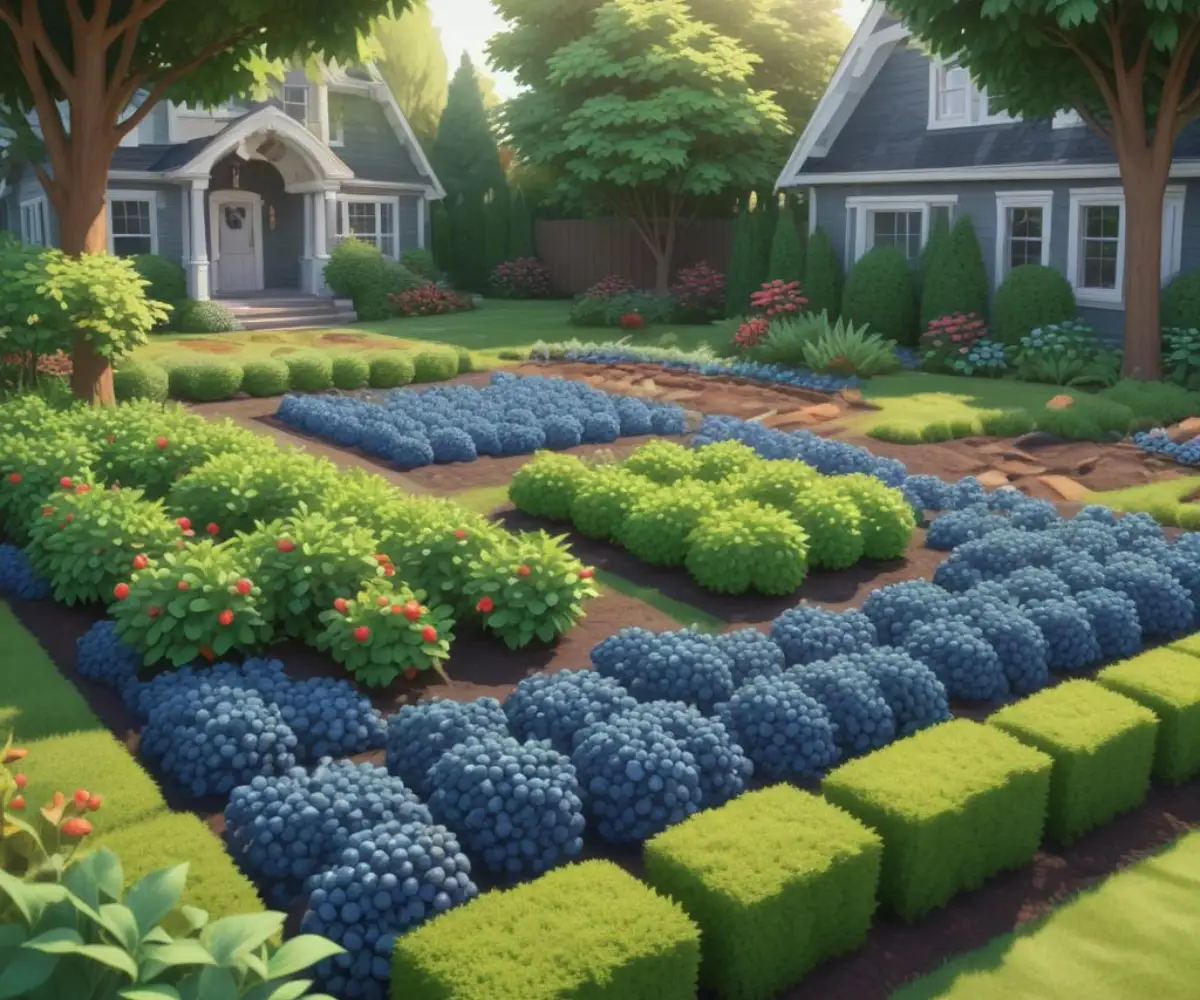
As Elegant Foundation Plantings
Swap out tired boxwoods or spireas for a row of mid-sized blueberry bushes like ‘Patriot’ or ‘Bluecrop’. Planted along the foundation of your house, they soften the hard lines of the architecture and provide year-round visual interest.
Their summer foliage creates a lush green backdrop, while their fall color can echo the tones of your home’s brick or siding. This placement also keeps them conveniently close for harvesting.
Create a Living Edible Hedge
Use taller Highbush or Rabbiteye varieties to create a beautiful and productive hedge along your property line or driveway. A blueberry hedge offers more seasonal interest than a traditional evergreen hedge and provides a sense of privacy during the growing season.
Space the plants about 3-4 feet apart to allow them to grow together into a continuous screen. The annual bounty of berries is a wonderful way to meet and share with neighbors.
As a Standalone Specimen or in Mixed Borders
A single blueberry bush with a particularly striking form or fall color can serve as a stunning focal point in a garden bed. Prune it carefully to encourage a graceful, open shape that showcases its structure.
Alternatively, incorporate blueberries into a mixed border with other acid-loving companion plants. They pair beautifully with azaleas, rhododendrons, mountain laurel, ferns, and hostas, creating a layered and textured garden design with continuous blooms and interest.
The Secret to Success: Soil, Sun, and Planting Right
Blueberry bushes have one non-negotiable demand: acidic soil. This is the single most critical factor for their health and productivity. Failing to provide the right soil environment is the number one reason these plants struggle in a home landscape.
Fortunately, creating the perfect conditions is straightforward with a bit of preparation. Getting the soil right from the start will save you countless headaches and ensure your bushes thrive for years to come.
The Acid Test: Getting the pH Perfect
Blueberries require a soil pH between 4.5 and 5.5. Most typical garden soils are much more alkaline than this. Before you even think about planting, you must test your soil’s pH with a simple home test kit available at any garden center.
To lower the pH and make the soil more acidic, you will need to amend it. The best materials for this are elemental sulfur, sphagnum peat moss, or finely shredded pine bark. Work these amendments thoroughly into the planting area several months before planting, if possible.
Step-by-Step Planting Protocol
Once your soil is prepared, planting is easy. Dig a hole that is twice as wide as the root ball but no deeper. You want the top of the root ball to be slightly higher than the surrounding soil level, as blueberries have shallow roots and dislike being planted too deep.
Gently tease apart the roots on the outside of the root ball and place the plant in the hole. Backfill with a mixture of your amended native soil and compost. Water deeply after planting and apply a 2-3 inch layer of acidic mulch, such as pine needles, pine bark, or oak leaves, to retain moisture and continue acidifying the soil.
Sunlight and Water Requirements
Blueberry bushes need at least six to eight hours of direct sunlight per day to produce a robust crop of fruit. While they can tolerate partial shade, fruit production will be significantly reduced.
Their shallow, fibrous root systems require consistent moisture, especially during the first few years and during fruit development. Water them deeply once or twice a week, ensuring the soil stays moist but not waterlogged. A thick layer of mulch is essential to help maintain even soil moisture.
Long-Term Care: Pruning and Nurturing Your Landscape Stars
To keep your blueberry bushes looking their best and producing well, a little annual maintenance goes a long way. Pruning is perhaps the most important task, as it encourages new, fruitful growth and maintains a tidy, attractive shape. Planning for these tasks can be part of a larger front yard project.
When you’re planning your front yard layout, it’s wise to consider practical elements like outdoor lighting or power for your maintenance tools, which might even involve understanding obscure details down to what blank wall plates are for when setting up weatherproof electrical boxes.
Pruning for Beauty and Berries
For the first two to three years, do very little pruning, only removing any dead, damaged, or crossing branches. This allows the plant to establish a strong root system. Once mature, the goal of pruning is to selectively remove the oldest, least productive canes (stems) to make way for new, vigorous ones.
The best time to prune is in late winter or early spring when the plant is dormant. Annually, remove about 20% of the oldest, woodiest canes, cutting them right back to the base. This opens up the center of the bush to sunlight and air circulation, improving fruit quality and reducing disease risk.
Fertilizing for Health and Harvest
Feed your blueberry bushes in early spring as new growth begins. Use a fertilizer specifically formulated for acid-loving plants, such as one for rhododendrons or azaleas. Avoid general-purpose fertilizers, as they can be too strong and may contain the wrong form of nitrogen.
Apply the fertilizer around the dripline of the plant, not directly against the crown, and water it in well. A light application in late spring can also be beneficial, but do not fertilize after mid-summer, as this can encourage tender new growth that may be damaged by an early frost.
The Unspoken Benefit: Creating a Front Yard Ecosystem
Beyond the visual appeal and the delicious fruit lies a more profound benefit of landscaping with blueberry bushes: you are creating a habitat. In a world of sterile lawns and non-native ornamental plants, a front yard featuring blueberries becomes a vibrant ecological hub.
This approach transforms your property from a simple decoration into a contributing part of the local food web, offering benefits that extend far beyond your property line. Integrating hardscaping elements, like a pathway made after laying pavers directly on soil, can help you access and enjoy this mini-ecosystem.
A Haven for Pollinators and Wildlife
The early spring flowers of the blueberry bush are a crucial food source for native bees and other pollinators emerging from winter dormancy. By planting them, you are directly supporting the health of these vital insect populations.
The berries themselves are, of course, a favorite of many bird species, including robins, bluebirds, and cedar waxwings. While you may want to net your bushes to protect your harvest, consider leaving a few bushes uncovered or sharing the bounty. Watching birds feast on the berries adds another layer of life and activity to your garden.
The Joy of a Connected Landscape
A front yard with edible plants becomes a conversation starter. It connects you with your neighbors, your food, and the natural world in a way a simple lawn never could. The act of tending to and harvesting from your front yard provides a deep sense of satisfaction and place.
This choice reflects a modern understanding of landscaping, where beauty, productivity, and ecological responsibility are not mutually exclusive but are instead woven together to create a space that is truly life-sustaining. Integrating other features, such as a small decorative fence or porch, can frame this landscape beautifully, though its structural needs are very different from a deck where one might be focused on whether you can use a 4×6 for a deck post.
Your Front Yard Transformation Awaits
It’s time to rethink the traditional front yard. By choosing to landscape with blueberry bushes, you are making a powerful statement. You are choosing a landscape that is dynamic, productive, ecologically beneficial, and beautiful in all four seasons.
From the delicate spring flowers and juicy summer berries to the blazing fall foliage and sculptural winter branches, the blueberry bush is a landscaping superstar hiding in plain sight. Embrace the potential of edible landscaping and turn your front yard into a source of pride, conversation, and delicious, healthy fruit for years to come.
