Granite Fireplace Surround Cost: Don’t Get a Quote Until You Read This
Fireplace is the heart of a home, a natural gathering spot for family and a stunning focal point for any room. The dream is a beautiful, elegant hearth that radiates warmth and style. The reality often begins with a confusing and frustrating question: what will a granite fireplace surround cost?
You search online for answers and find a dizzying range of prices with little explanation. This ambiguity is a significant problem for homeowners trying to budget accurately, leading to sticker shock and projects that spiral out of control.
The core issue is that the final price is not just about the stone. It’s a complex calculation involving the type of granite you choose, the intricate work of shaping it, and the precision required for a flawless installation. This guide breaks down every factor to empower you with the knowledge to plan your budget and negotiate a fair price.
You'll Learn About
Deconstructing the Cost: What You’re Really Paying For
Understanding the total cost of a granite fireplace surround requires looking at three distinct categories of expense. These are the material itself, the fabrication process, and the final installation. Each component has its own set of variables that can dramatically affect the final invoice.
Failing to account for all three is the most common budgeting mistake. A low price on a slab can be quickly offset by high fabrication or installation fees. A truly accurate estimate considers the entire scope of the project from start to finish.
Material Costs: Not All Granite Is Created Equal
The single biggest variable is the granite slab itself. Granite is graded into tiers or levels based on its rarity, origin, and the complexity of its patterns. A common, widely available granite will cost significantly less than an exotic stone sourced from a single quarry across the globe.
Level 1 (Entry-Level) granite features simple, uniform patterns and common colors like gray, beige, and black. It is readily available and the most budget-friendly option. Higher levels introduce more dramatic veining, unique color combinations, and rare minerals, which increases the price accordingly.
Slab thickness also plays a role. While thicker slabs are common for countertops, a fireplace surround often doesn’t require the same bulk. Discussing options like a thinner 3/4-inch granite slab with your fabricator can be a cost-effective choice without compromising on the look.
Fabrication: The Art and Science of Shaping Stone
Fabrication is the process of turning a raw slab into a custom-fitted fireplace surround. This is where skilled craftsmanship comes in and where costs can quickly add up. The work involves precision cutting for the firebox opening, creating seams if needed, and finishing the edges.
The edge profile you select has a major impact on fabrication costs. A simple, squared-off “eased” edge is standard and typically included in the base price. More decorative edges like a beveled, bullnose, or intricate ogee edge require more time, specialized tools, and skill, which will be reflected in the price.
Installation: The Final, Crucial Step
Installing heavy granite slabs around a fireplace is not a DIY project. It requires a team of experienced professionals to transport the stone without breaking it, prepare the area, and mount it securely and perfectly level. Installation costs cover the skilled labor, delivery, specialized adhesives, and on-site adjustments.
Your installer will also be responsible for ensuring the surrounding walls can support the weight and that all clearances meet local building codes for safety. This final step is critical for both the beauty and the long-term safety of your fireplace.
Estimated Granite Fireplace Surround Cost Breakdown
To give you a clearer picture of potential expenses, the table below provides a general estimate. Prices can vary significantly based on your location, the complexity of your project, and the specific stone and fabricator you choose. Use this as a starting point for your budget.
| Component | Low-End Estimate | Mid-Range Estimate | High-End Estimate |
|---|---|---|---|
| Granite Material (Per Sq. Ft.) | $40 – $60 | $60 – $100 | $100 – $250+ |
| Fabrication (Per Project) | $500 – $900 | $900 – $1,500 | $1,500 – $3,000+ |
| Professional Installation (Per Project) | $400 – $700 | $700 – $1,200 | $1,200 – $2,500+ |
| Tear-Out & Disposal (Optional) | $200 – $400 | $400 – $600 | $600 – $1,000+ |
| Total Estimated Project Cost | $1,100 – $2,600 | $2,600 – $4,300 | $4,300 – $8,000+ |
Beyond the Sticker Price: Hidden Costs That Wreck Budgets
Many homeowners are surprised when the final bill is higher than the initial quote. This is often due to a series of “hidden” costs that were never discussed upfront. Being aware of these potential expenses is the key to creating a realistic budget.
These are not attempts by contractors to be deceptive, but rather variables that cannot be priced until work has begun. A good contractor will alert you to these possibilities ahead of time. It is your job to ask about them before signing a contract.
The Tear-Out and Disposal Trap
Your quote for the new granite surround may not include the cost of removing the old one. Whether it’s brick, tile, or an old wooden mantel, this demolition takes time and labor. Furthermore, the disposal of that heavy debris can incur additional fees.
Always ask if the removal and disposal of your existing surround are included in the estimate. Getting this in writing can prevent a significant surprise charge at the end of the project. This is a critical detail to confirm.
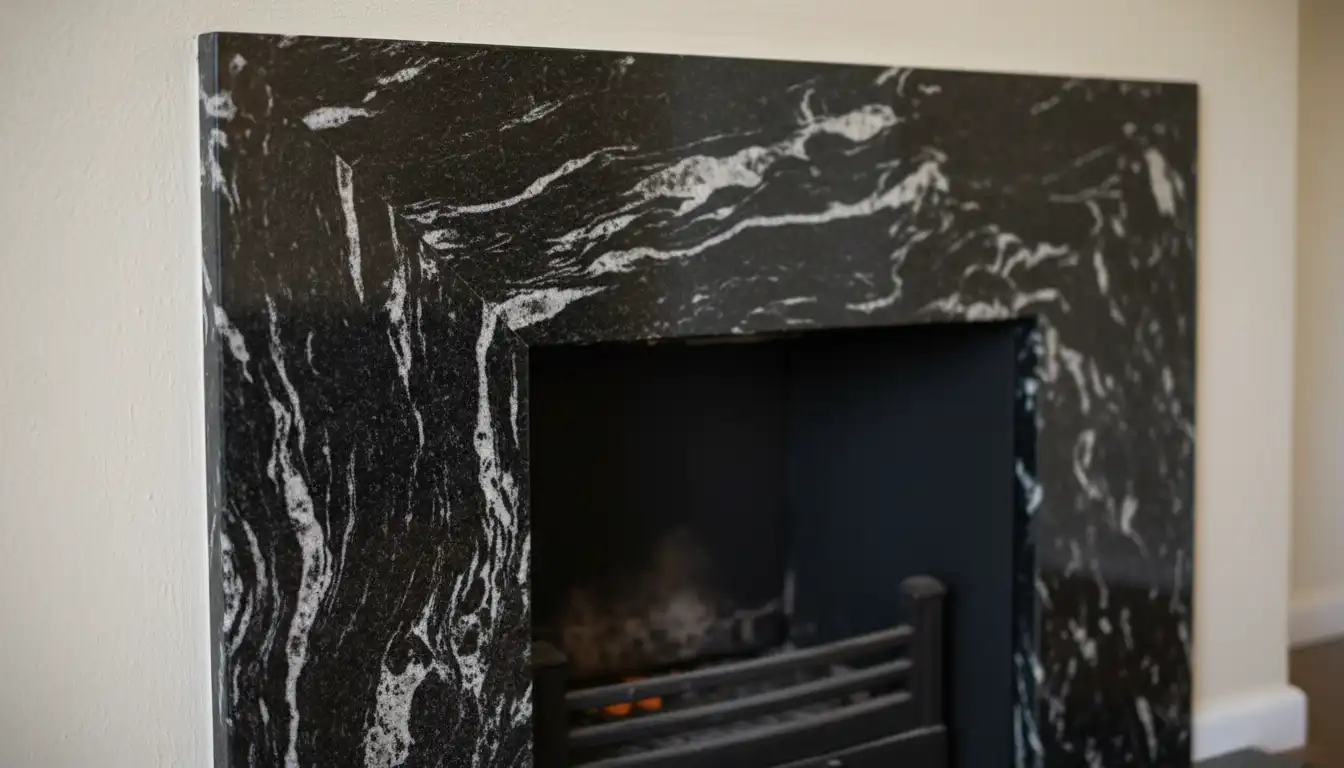
Wall Preparation and Structural Surprises
What lies beneath your old surround is a total unknown until it’s removed. The wall behind it might be damaged and require drywall repair and painting. In older homes, the framing may need to be reinforced to support the immense weight of the granite.
These structural preparations are outside the scope of a standard installation but are absolutely necessary for a safe and lasting result. It’s wise to hold back a contingency fund of 10-15% of your total budget to cover potential repairs like this.
Long-Term Maintenance: The Cost of Sealing
Granite is a porous stone, which means it can absorb stains if not properly sealed. While not a large upfront cost, sealing your granite surround is a recurring maintenance expense that protects your investment. Most surrounds will need to be resealed every 1-3 years.
Some installers include the initial sealing in their price, but others charge extra. Ask about the recommended sealing schedule for your specific stone and factor this minor but important long-term cost into your decision.
Your Game Plan for Getting a Fair Price
Navigating the quoting process can be intimidating, but with a clear strategy, you can ensure you get a fair price for high-quality work. The goal is to receive detailed, itemized quotes that allow for an apples-to-apples comparison. This prevents you from being swayed by a low number that omits key services.
Approach this as you would any major investment: with diligence, research, and a clear set of questions. A reputable professional will appreciate an informed customer and will be happy to provide the details you need to make a confident decision.
Step 1: Get Accurate Measurements
Before you call a single contractor, take detailed measurements of your fireplace. Measure the height and width of the firebox opening, the width of the side legs, the height of the header, and the dimensions of the hearth. Sketching it out with clear labels will ensure every fabricator is quoting for the exact same size project.
Step 2: Insist on Itemized Quotes from Multiple Sources
Never settle for the first quote you receive. Contact at least three different stone fabricators in your area. Specifically ask for an itemized quote that breaks down the cost of the material, fabrication, tear-out, and installation separately. This is the only way to truly compare offers and spot any outliers.
Step 3: Ask the Right Questions
Use this checklist of questions when speaking with potential installers: Is the cost of the slab included? Does your quote include tear-out and disposal? Is the initial sealing of the stone part of the price? What edge profiles are included in the base price? What is your warranty on installation and materials?
Smart Design Choices to Control Your Granite Fireplace Cost
You can significantly influence the final cost of your project through smart design decisions made at the planning stage. Often, a few small adjustments can result in hundreds, or even thousands, of dollars in savings without compromising the overall aesthetic. These choices put you in control of the budget.
The key is to focus on the elements that drive up labor and material costs. Simplicity in design is often the most effective cost-control measure. An elegant, understated design can be just as impactful as an overly ornate one.
The Power of the Remnant
A fireplace surround typically requires much less stone than a kitchen island. This makes it a perfect project for using a “remnant”—an unused piece left over from a larger countertop job. Stone yards sell these smaller pieces at a significant discount. Visiting a fabricator and asking to see their remnant inventory can uncover a beautiful, high-end piece of granite for a fraction of the full slab cost.
Slab vs. Tile: A Major Cost Decision
For the ultimate luxurious look, a solid granite slab is unmatched. However, using granite tiles is a much more budget-friendly approach. Granite tiles can be installed by a skilled tile setter, and the material cost is substantially lower. While you will have grout lines, this can be a very effective way to get the beauty of granite on a tighter budget.
Keep the Edge Profile Simple
As mentioned earlier, complex edge profiles require more labor and increase fabrication costs. Choosing a simple, clean edge like a flat polish or a slight bevel will almost always be the most economical option. It provides a modern, timeless look that complements the natural beauty of the stone without adding unnecessary expense.
Considering the Alternatives
While granite is a fantastic choice, it’s worth knowing the other options available. Understanding the alternatives ensures you’re making the most informed decision for your home’s style and your budget. Each material has its own unique properties and price point.
Some homeowners find that another material better suits their decor. For those who love the look of marble but worry about its delicate nature, exploring a tougher alternative can be a wise move. Materials like Winter Storm Quartzite offer a similar aesthetic with superior durability, providing a great balance of beauty and practicality.
A Worthwhile Investment in Your Home
The cost of a granite fireplace surround is more than just a number; it’s an investment in the value, beauty, and comfort of your home. While the process can seem complex, it is manageable when you break it down into its core components: material, fabrication, and installation.
By understanding what drives the cost, asking pointed questions, and getting detailed, itemized quotes, you can avoid common pitfalls and budget with confidence. A stunning granite fireplace is an achievable goal, and with this knowledge, you are now equipped to make it a reality.