Deep Skylight Problems? Your Ultimate Fix for a Brighter Home
You envisioned a cascade of natural light flooding your room, creating a bright, airy space. Instead, you have a deep, narrow tunnel that seems to swallow more light than it delivers, leaving the room feeling disappointingly dim. This is the frustrating reality for many homeowners with deep skylights, where a significant attic space separates the roof from the ceiling below.
This tunnel, known as a light well or shaft, is a critical component that often goes overlooked. Its design, shape, and finish can make the difference between a radiant, sun-drenched room and a gloomy space with a spotlight effect directly underneath the opening. The problem isn’t the skylight itself, but the long, inefficient journey the light must take to reach your living space.
Deep light wells can suffer from significant light loss, create unwanted heat transfer leading to higher energy bills, and even develop moisture issues if not properly constructed. Fortunately, these common problems have elegant and effective solutions. By optimizing the design of the light well, you can transform a dim light shaft into a powerful channel for brilliant, natural sunlight.
You'll Learn About
Why Your Deep Skylight Is a Light Thief (And How to Stop It)
The primary culprit behind a disappointing deep skylight is an improperly designed light well. When sunlight enters the skylight, it begins a journey down the shaft. If that shaft has straight, parallel walls, the light bounces multiple times before reaching your room, losing intensity with each reflection. This is what creates a focused, spotlight-like effect rather than a wide, even distribution of light.
Furthermore, the material and color of the light well’s interior play a massive role. Dark or even off-white surfaces absorb light, trapping it within the shaft. Over time, these surfaces can accumulate dust and grime, further diminishing their reflective properties and worsening the problem. The result is a skylight that fails to live up to its promise of brightening your home.
Beyond light loss, deep skylights present a significant thermal challenge. The large surface area of the light well, passing through an unconditioned attic space, can act as a thermal bridge. This allows precious heat to escape during the winter and unwanted heat to penetrate your home in the summer, leading to uncomfortable temperature swings and inflated energy bills. Addressing the design of the well is not just about light; it’s about your home’s overall efficiency.
The Anatomy of a Light Well: Straight vs. Splayed
Understanding the shape of your light well is the first step toward reclaiming lost sunlight. Light wells are typically constructed in one of two ways: with straight, perpendicular walls or with angled, splayed walls. While a straight shaft is often easier and cheaper to construct, it is the least effective for light distribution.
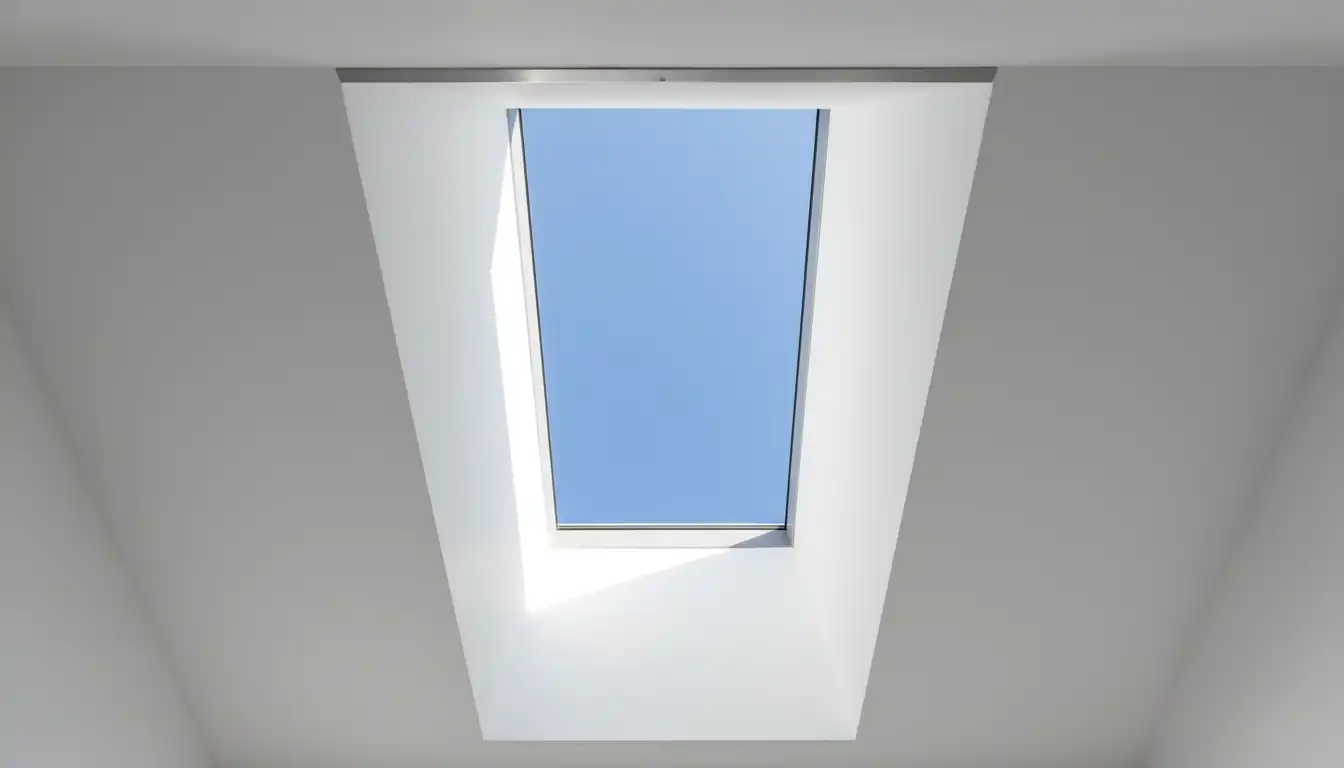
A splayed light well, where one or more walls are angled outwards, is the key to maximizing light. This design widens the opening at the ceiling level, allowing light to spread across a much larger area of the room. By angling the walls, you reduce the number of light bounces required for the sun’s rays to reach the living space, preserving brightness and creating a more ambient glow.
Even splaying just the top and bottom walls of the shaft can make a dramatic difference. For the ultimate light infusion, a four-sided splay creates the widest possible aperture, distributing light evenly throughout the room and making the ceiling feel more open and architecturally interesting. This strategic shaping transforms the light well from a simple tunnel into a sophisticated light-delivery system.
Unlocking the Light: A 3-Step Solution for Deep Skylights
Reclaiming the full potential of your deep skylight involves a multi-faceted approach focusing on the shape, surface, and insulation of the light well. These steps will not only amplify the natural light but also improve your home’s energy efficiency and comfort.
Step 1: Reshape the Light Well for Maximum Dispersion
The most impactful change you can make is to modify the shape of the light shaft from a straight box to a splayed design. This project typically involves reframing the well in the attic space and installing new drywall, but the payoff is immense. Widening the base of the well allows light to enter the room from a broader angle, eliminating harsh shadows and illuminating corners.
If a full four-sided splay isn’t possible due to structural obstacles like pipes or ductwork in the attic, don’t be discouraged. A single-sided or two-sided splay can still significantly improve light distribution. Prioritize splaying the side of the light well that is closest to the center of the room to cast light further into the space.
This is a job for a professional with knowledge of framing and drywall finishing. Proper execution is crucial to ensure the structure is sound and seamlessly integrated with your existing ceiling. While it’s an investment, reshaping the light well is the definitive solution to the “spotlight” effect of a deep, straight skylight shaft.
Step 2: Optimize the Surface for Ultimate Reflectivity
Once the shape is optimized, the next critical element is the interior surface of the light well. The goal is to make the walls as reflective as possible to bounce the maximum amount of light down into your room. The standard choice is a high-quality white paint, but the specific finish can make a difference.
While some believe a glossy finish reflects more light, it can also create glare and highlight imperfections in the drywall. A flat or matte white paint is often the best choice, as it provides high reflectivity while diffusing the light for a softer, more even glow. Ensure you use a high-quality primer to create a uniform base before applying your topcoats.
For spaces that need an extraordinary amount of light, or for very deep shafts, consider highly reflective materials beyond paint. Products like specialized reflective films or even carefully installed mirrors can turn your light well into a highly efficient sun tunnel. While mirrors are a more complex installation, they offer the highest level of light transfer available.
Step 3: Insulate Thoroughly to Stop Energy Loss
A deep light well is a potential weak point in your home’s thermal envelope. The walls of the shaft must be insulated just as thoroughly as the rest of your attic to prevent energy loss. Poor insulation here is a common problem that leads to drafts, condensation, and higher utility bills.
Rigid foam insulation is the preferred material for insulating skylight shafts. Unlike fiberglass batts, rigid foam provides a continuous thermal barrier that is highly resistant to air and moisture penetration. This is crucial for preventing condensation from forming on the cold surfaces of the well during winter, which can lead to mold and drywall damage. Use at least two-inch thick XPS foam sheets for optimal R-value and to interrupt thermal bridging through the wood framing.
All seams between foam boards should be sealed with high-quality tape or spray foam to create an airtight barrier. Properly insulating the light well not only makes your home more comfortable but also protects the structure from moisture-related issues. Don’t let a poorly insulated shaft undermine your home’s efficiency; it’s a critical component of a high-performing skylight system. If you are concerned about heavy snow loads impacting your skylight’s integrity and thermal performance, it is wise to understand the potential problems, which you can learn more about in our guide on whether you should clear snow from your skylight.
Deep Skylight vs. Solar Tube: Which Is Right for You?
When dealing with a significant distance between the roof and ceiling, homeowners often weigh the options between a traditional deep skylight and a solar tube (or sun tunnel). While both deliver natural light, they do so in very different ways and have distinct advantages.
A deep skylight, when optimized with a splayed and reflective light well, provides a genuine window to the sky. It creates a sense of openness and architectural drama that a solar tube cannot replicate. However, it requires more significant structural work and careful attention to insulation. In contrast, a solar tube is a much simpler and often more affordable solution for bringing light into smaller or more challenging spaces. For an in-depth look at maximizing light with this alternative, see our article on solar tube placement.
The choice often comes down to aesthetic preference, budget, and the specific needs of the room. A deep skylight is a premium architectural feature, while a solar tube is a highly efficient daylighting device. The table below outlines the key differences to help you decide.
| Feature | Deep Skylight (with Splayed Well) | Solar Tube (Sun Tunnel) |
|---|---|---|
| Light Quality | Provides a broad, natural view of the sky. Light changes with the weather and time of day. | Delivers bright, diffused light. Light is consistent but doesn’t offer a direct sky view. |
| Aesthetic Impact | High. Creates a dramatic architectural feature and a feeling of openness. | Low. The interior diffuser looks similar to a standard ceiling light fixture. |
| Installation Complexity | High. Requires framing, drywall, and finishing for the light well. | Moderate. Requires a smaller roof opening and less interior finishing. |
| Cost | Higher. Involves more materials and labor for the shaft construction. | Lower. Generally more budget-friendly for both materials and installation. |
| Energy Efficiency | Good, if the light well is properly and thoroughly insulated. | Excellent. The sealed tube minimizes heat transfer. |
| Best For | Living rooms, kitchens, and large spaces where aesthetics are a priority. | Hallways, bathrooms, closets, and laundry rooms where bright, functional light is needed. |
Advanced Solutions for Challenging Spaces
Sometimes, even with a perfectly splayed and painted light well, a room may have unique challenges that require more creative solutions. North-facing rooms, for example, receive less intense, cooler light. In these spaces, every bit of captured sunlight counts, and enhancing the light well becomes even more critical.
In addition to maximizing reflectivity, consider the strategic use of color in the room itself. Lighter paint colors on the walls and ceiling will help bounce the natural light from the skylight further into the space. Mirrors placed on walls opposite the skylight can also dramatically increase the brightness and create an illusion of a larger, more open area.
For homeowners who are also plant lovers, a deep skylight can pose a unique problem. While it provides natural light, the intensity might not be sufficient for certain plants, especially during winter months. Integrating supplemental lighting can be a smart solution. If you find your supplemental lighting isn’t working as expected, our guide on what to do when a grow light is not turning on can provide valuable troubleshooting steps.
Conclusion: From a Dim Tunnel to a Bright Feature
A deep skylight does not have to be a source of frustration. The common problems of light loss and energy inefficiency are not inherent to the skylight itself but are a result of a poorly designed light well. By focusing on the three key areas—shape, surface, and insulation—you can transform a dim, underperforming light shaft into a powerful asset for your home.
Reshaping the well with splayed walls will broaden the light’s distribution, illuminating the entire room instead of just a small patch of floor. Painting the interior with a highly reflective, matte white paint ensures that a maximum amount of light completes its journey from the roof to your living space. Finally, properly insulating the shaft with rigid foam will safeguard your home’s thermal barrier, making it more comfortable and energy-efficient year-round.
By implementing these solutions, your deep skylight will finally deliver on its promise, flooding your home with the bright, beautiful, and free sunlight you always wanted. It will become more than just a window on the roof; it will be a stunning architectural feature that enhances your home’s value and your quality of life.