
Crown Molding in Shower: The #1 Mistake You Can’t Afford
A beautifully finished shower is the centerpiece of a luxury bathroom. You’ve selected the perfect tile, elegant fixtures, and a seamless glass door. Yet, the transition where the tiled walls meet the ceiling often looks abrupt and unfinished, creating a visual weak point in an otherwise flawless design.
Many homeowners dream of adding crown molding to cap off the shower enclosure, lending it a polished, architectural feel. The problem is a critical one: this is the wettest, most humid environment in your home. One wrong choice here doesn’t just look bad—it invites a hidden disaster of mold, rot, and decay that can compromise your entire bathroom.
This guide confronts the number one mistake homeowners make and provides the expert-backed solutions to install crown molding in your shower safely and beautifully. You can achieve that high-end, fully custom look without risking the structural integrity of your space. It’s not about if you can do it; it’s about how you do it correctly.
You'll Learn About
Why Standard Crown Molding Is Forbidden in a Shower
The core of the problem lies in the material. For centuries, crown molding has been crafted from wood or, more recently, medium-density fiberboard (MDF). While perfect for a living room or bedroom, these materials are the absolute worst choice for a high-humidity area.
Wood and MDF are porous. They act like a sponge, absorbing the constant steam and moisture from your shower. This absorption leads to a cascade of failures that are both unsightly and unsafe.
The Science of Moisture Damage on Wood and MDF
When wood or MDF molding gets wet, it begins to swell and warp. The beautifully crisp edges of your molding profile will soften and deform. Over time, the material itself will start to break down and rot, crumbling away from the wall.
This process also affects the finish. Paint will bubble, peel, and flake off as moisture pushes its way out from behind. No amount of sealing or high-quality paint can permanently protect a porous material from the direct, daily assault of shower steam and condensation.
The Unseen Danger: Mold and Mildew
The most significant risk is not what you can see, but what you can’t. The dark, damp space behind the molding is an ideal breeding ground for mold and mildew. Once mold takes hold, it can spread into the drywall and framing, leading to serious health concerns and a costly remediation project.
Using the wrong material for crown molding in a shower isn’t just a cosmetic error; it’s a structural and health hazard. The only way to succeed is to choose a material that is 100% waterproof and non-porous from the start.
The Solution: Your Guide to Waterproof Crown Molding
To safely add architectural detail to your shower, you must use a crown molding made from a synthetic, waterproof material. These modern alternatives are specifically engineered to withstand constant moisture without warping, rotting, or supporting mold growth. They offer the same aesthetic appeal as wood but with the durability required for a wet environment.
There are three primary materials to consider, each with its own set of advantages. Selecting the right one depends on your budget, style preferences, and installation comfort level.
Cellular PVC: The Professional’s Top Choice
Cellular PVC is a type of plastic polymer that is completely impervious to water. It will not swell, rot, or degrade, no matter how much moisture it’s exposed to. This makes it the number one choice for shower applications.
PVC molding is lightweight, flexible, and easy to cut and install using standard woodworking tools. It holds paint exceptionally well, allowing you to match your ceiling color or create a custom look. Its closed-cell structure means there’s nowhere for mold to grow, ensuring a clean and healthy installation for years to come.
High-Density Polyurethane: The Premium Alternative
Polyurethane molding is another excellent waterproof option. It is denser and more rigid than PVC, which allows for sharper, more intricate details in the molding profiles. If you are looking for a very ornate or historically accurate design, polyurethane is often the superior choice.
Like PVC, it is completely waterproof and resistant to mold and mildew. However, its rigidity can make it slightly more challenging to install on walls that aren’t perfectly flat. It also tends to be more expensive than its PVC counterpart.
Polystyrene: The Budget-Friendly Option
For those on a tighter budget, polystyrene molding offers a lightweight and easy-to-install waterproof solution. It is typically the least expensive of the three and is simple to cut with a miter saw or even a hand saw with a fine-toothed blade.
The primary drawback of polystyrene is its relative softness. It can be dented or damaged more easily than PVC or polyurethane. While perfectly suitable for an area that won’t see any physical contact, you should handle it with care during installation.
| Material | Waterproofing | Durability | Cost (Per Linear Foot) | Key Feature |
|---|---|---|---|---|
| Cellular PVC | Excellent (100% Waterproof) | High | ≈ US $3.00 – $7.00 / ft | Best all-around choice for durability and ease of use. |
| Polyurethane | Excellent (100% Waterproof) | Very High | ≈ US $4.00 – $9.00 / ft | Ideal for crisp, high-definition and ornate details. |
| Polystyrene | Excellent (100% Waterproof) | Medium | ≈ US $1.00 – $3.00 / ft | Most budget-friendly and lightweight option. |
Installation Done Right: A Step-by-Step Waterproofing Guide
Choosing the right material is only half the battle. A flawless, long-lasting installation depends entirely on using the correct adhesives and sealants to create an impenetrable waterproof barrier. Even a tiny gap can allow water to seep behind the molding, undermining the entire project.
Follow these steps meticulously to ensure your shower crown molding looks great and performs perfectly for years to come. Do not cut corners on preparation or materials.
Step 1: Prepare the Surface
Your installation surface, whether it’s tile or a solid surface panel, must be perfectly clean, dry, and free of any soap scum or residue. Use a good-quality bathroom cleaner or isopropyl alcohol to wipe down the area where the molding will be installed. A clean surface is essential for proper adhesion.
Step 2: Use the Right Adhesive and Sealant
This is the most critical step. Do not use standard painter’s caulk or wood glue. You must use a high-quality, 100% waterproof construction adhesive designed for kitchens and baths to attach the molding to the wall and ceiling.
For sealing the gaps, you need 100% silicone sealant. Unlike acrylic or latex caulk, silicone does not break down in the presence of water and remains flexible, preventing cracks from forming as your home settles. Choose a paintable silicone if you plan to paint the molding after installation.
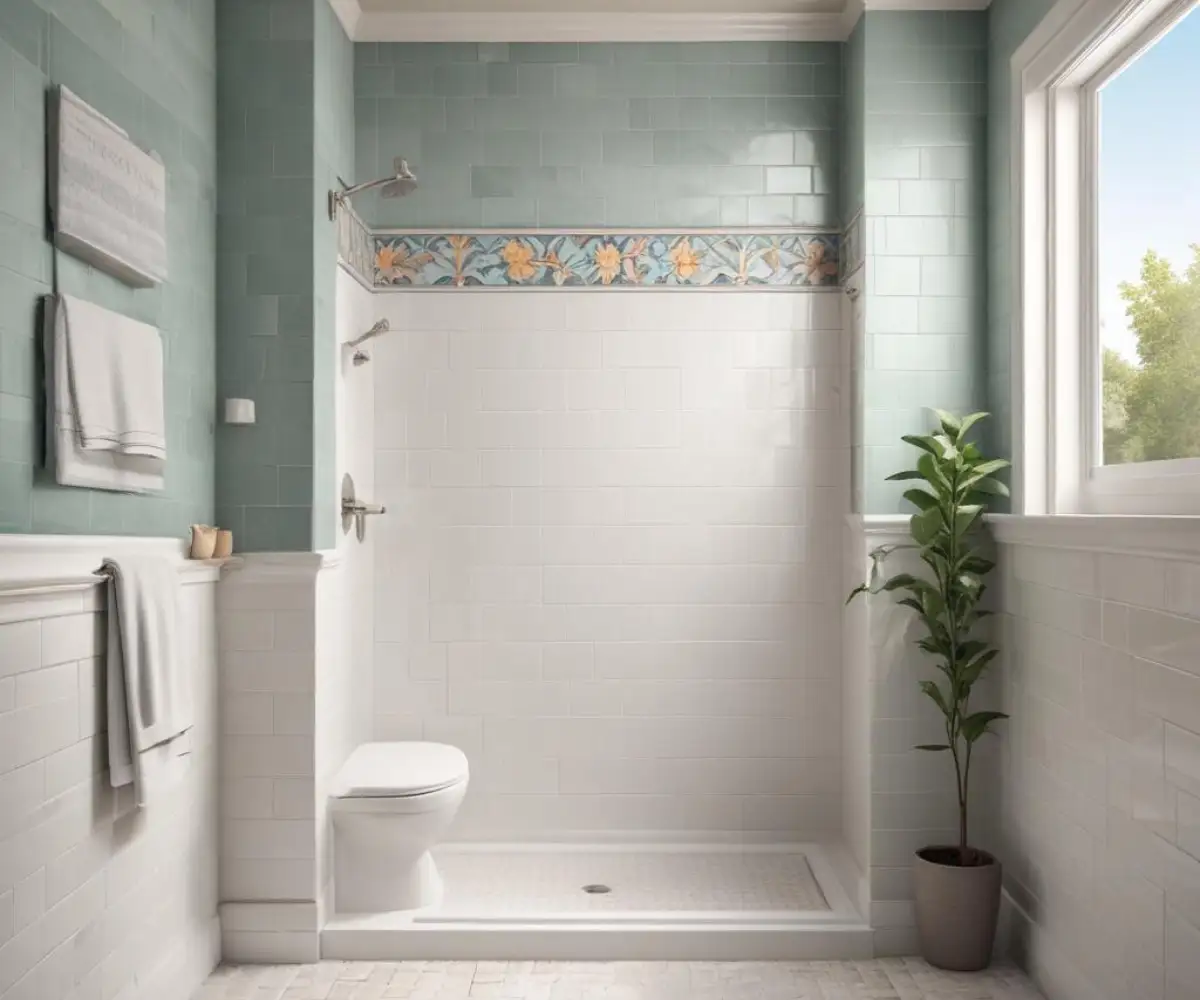
Step 3: Measure and Cut with Precision
Measure each wall section carefully. When cutting synthetic molding, use a sharp blade on your miter saw to get clean, crisp cuts. While the material is forgiving, a bad crown molding job often starts with imprecise cuts. Take your time to ensure your corners fit together snugly.
Step 4: The Pro Technique: Adhesive and Mechanical Fasteners
Apply a continuous bead of waterproof construction adhesive to the back of the molding along the top and bottom edges that will make contact with the ceiling and wall. Press the molding firmly into place. For an extra-secure hold, use a brad nailer with stainless steel nails to tack the molding into the ceiling joists and wall studs while the adhesive cures. Stainless steel is crucial to prevent rust.
Step 5: Seal Every Seam Meticulously
This is your final line of defense against water intrusion. Apply a neat, continuous bead of 100% silicone sealant along the top edge where the molding meets the ceiling and the bottom edge where it meets the tile. Also, apply sealant to all corner joints and seams between pieces of molding.
Smooth the bead of sealant with a wet finger or a caulk-smoothing tool to create a clean, watertight seal. This step prevents the kind of gaps that lead to homeowners needing to know how to fix crown molding separating from the ceiling, a problem magnified by moisture.
Designing with Shower Crown Molding
Beyond its functional benefits, waterproof crown molding is a powerful design tool. It elevates the bathroom from a purely utilitarian space to one of architectural interest and luxury. It can make the ceiling feel higher, which is a common concern with crown molding on 8-foot ceilings, by drawing the eye upward.
Choose a molding profile that complements your bathroom’s style. A simple, clean-lined profile works well in modern or transitional spaces, while a more ornate design can enhance a traditional or classic aesthetic. Painting the molding the same color as the ceiling creates a subtle, seamless look, while a contrasting color can turn it into a bold statement piece.
The Final Verdict: Is Crown Molding in a Shower a Good Idea?
Yes, installing crown molding in a shower is an excellent idea, but only if executed correctly. The elegance and finished look it provides can transform your bathroom into a spa-like retreat. It turns an ordinary shower enclosure into a custom architectural feature that adds significant visual appeal and value to your home.
The key to success is non-negotiable: you must use 100% waterproof materials like PVC or polyurethane and install them with waterproof adhesive and 100% silicone sealant. By avoiding the catastrophic mistake of using wood or MDF, you can confidently and safely achieve the high-end bathroom design you’ve envisioned.
