Cost of Plumbing in Concrete Slab? The Price Will Stun You
You have a brilliant idea for a home renovation—a new island sink in the kitchen, a spa-like bathroom in the basement, or maybe a convenient laundry room relocation. But there’s a problem, a big, solid one: your concrete slab foundation. The thought of jackhammers, dust, and staggering costs can bring any exciting project to a screeching halt.
Installing new plumbing in an existing concrete slab is one of the more intimidating home improvement projects. It’s complex, messy, and involves a unique combination of demolition, plumbing expertise, and concrete work. But understanding the process and the costs involved is the first step to turning that brilliant idea into a reality.
You'll Learn About
The Core of the Cost: Breaking Down the Expenses
The total price tag for under-slab plumbing isn’t a single number but a sum of several distinct services and materials. Each stage of the project comes with its own set of costs. Here’s a detailed look at what you can expect to pay for.
Concrete Cutting & Removal
This is often the most daunting part for homeowners. It involves using powerful saws to cut precise trenches in your floor, followed by jackhammering to break up the concrete. The cost is heavily influenced by the length and depth of the trenches needed and the thickness of your slab.
Expect to pay between $5 to $35 per linear foot just for cutting the concrete, with costs increasing for thicker or reinforced slabs. Removal of the debris and disposal fees add to this price. For a deeper dive into this specific expense, it’s worth exploring the cost to cut a basement concrete floor for plumbing, as it is a significant part of the overall budget.
Plumbing Labor & Materials
Once the trenches are open, the plumber gets to work. Labor is a major factor, with licensed plumbers charging anywhere from $45 to $200 per hour. The total time will depend on the complexity of the installation—a simple drain line is much quicker than plumbing for a full bathroom.
Material costs include the pipes themselves (typically PVC or ABS for drain lines), fittings, vents, and primer/cement. While the raw materials for a small project might only be a few hundred dollars, the expertise required for proper installation is what you’re paying for. Proper slope for drainage is critical and non-negotiable for a functional system.
Excavation & Backfill
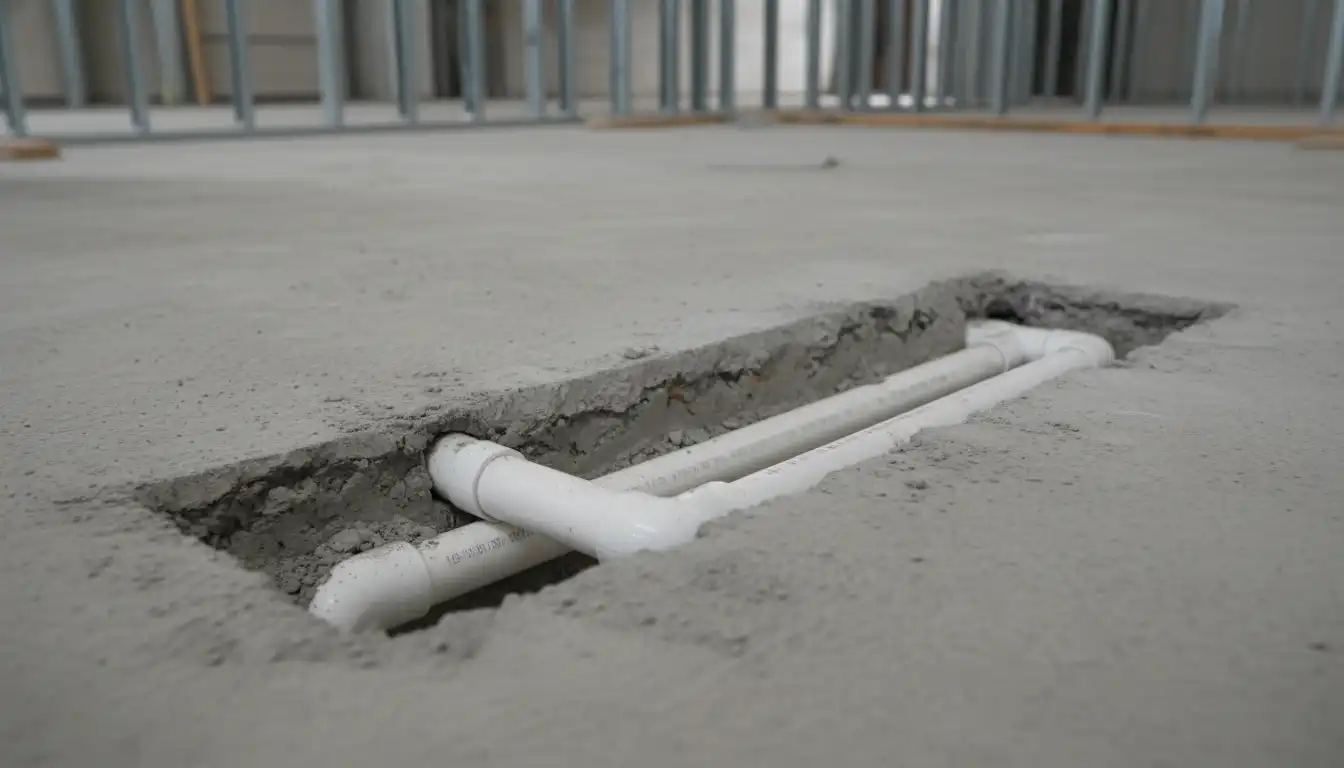
After the concrete is removed, the plumber or a laborer must dig into the soil or gravel beneath to create the correct slope for drain lines. This trench must be deep enough to accommodate the new pipes. Once the plumbing is installed and inspected, the trench is backfilled with gravel and compacted to provide a stable base for the new concrete.
Concrete Repair & Finishing
Pouring new concrete into the trenches is the final major step. The cost includes the concrete itself, the labor to pour and finish it, and ensuring it’s level with the surrounding floor. A smooth, professional finish is crucial, especially if you plan to install flooring like tile or vinyl directly on top.
Permits & Inspections
Nearly all under-slab plumbing work requires a permit from your local building department. This ensures the work is done to code, which is vital for safety and functionality. The inspector will need to approve the installation before the trenches can be backfilled and covered with concrete.
Cost Breakdown Table: A Snapshot of Expenses
To provide a clearer picture, here is a table summarizing the potential costs for a moderately sized project, such as adding a small bathroom or relocating a kitchen sink several feet.
| Expense Component | Low-End Estimate | Average Cost | High-End Estimate |
|---|---|---|---|
| Concrete Cutting & Removal (per 10 ft) | $300 | $650 | $1,500+ |
| Plumbing Labor (per project) | $800 | $2,500 | $5,000+ |
| Plumbing Materials (Pipes, Fittings) | $200 | $500 | $1,000+ |
| Excavation & Backfill | $200 | $400 | $800+ |
| Concrete Repair & Finishing | $300 | $700 | $1,200+ |
| Permits & Inspection Fees | $150 | $300 | $500+ |
| Estimated Total | $1,950 | $5,050 | $10,000+ |
Hidden Factors That Can Skyrocket Your Bill
While the table above provides a baseline, several hidden variables can dramatically impact the final cost. These are the critical details that professionals plan for but homeowners often overlook.
The Unseen Dangers: Post-Tensioned Slabs
One of the most critical factors is whether you have a post-tensioned (PT) slab. These slabs contain high-strength steel cables that are tightened after the concrete is poured, creating a stronger foundation. Accidentally cutting one of these tensioned cables can be catastrophic, causing explosive damage to your foundation and posing a serious safety risk.
If you have a PT slab, work should only be performed by specialists. It requires hiring a company to X-ray or use ground-penetrating radar (GPR) to map the exact location of the cables before any cutting begins. This preliminary step can add $1,000 or more to the project but is absolutely essential for safety and structural integrity.
What Lies Beneath: Locating Private Utilities
Before any cutting, it’s common practice to call 811 to have public utilities marked. However, this service does not locate utilities that run *within* your home’s footprint under the slab. Your builder may have run electrical conduits, gas lines, or even other water lines through the concrete.
Hiring a private utility locator to scan the area is a wise investment to prevent a disastrous and costly accident. The process is similar to locating PT cables and is a critical safety precaution, especially when cutting a concrete slab for electrical conduit is a possibility.
Project Scope and Reinforcement
The bigger your project, the higher the cost. Plumbing for a full bathroom with a toilet, sink, and shower requires far more trenching and pipework than a single drain line for a sink. Furthermore, if your slab is extra thick (over 4-6 inches) or contains rebar or wire mesh, the cost and time required for concrete cutting will increase significantly.
The Installation Process: A Step-by-Step Overview
Understanding the workflow can help demystify the process and set realistic expectations for the disruption to your home.
1. Planning and Layout: A professional plumber will map out the precise location for the new pipes, ensuring correct placement and calculating the necessary slope for drain lines.
2. Preparation: The work area is cleared, and plastic sheeting is often used to contain the dust that will be generated during cutting.
3. Concrete Cutting: Using a wet saw to minimize dust, contractors cut the outlines of the trenches. This is followed by breaking and removing the concrete chunks.
4. Trenching and Plumbing: The plumber digs into the dirt below the slab, lays the new pipes, and ensures all connections are secure and properly sloped.
5. Inspection: The municipal inspector examines the open trenches and plumbing to ensure everything is up to code. This approval must be received before proceeding.
6. Backfill and Concrete Pour: The trenches are filled with gravel, compacted, and a vapor barrier may be installed. Finally, new concrete is poured and troweled smooth to match the existing floor.
DIY vs. Hiring a Pro: A Realistic Look
The complexity and high stakes of under-slab plumbing make it a job best left to professionals. While a handy homeowner might be tempted to rent a concrete saw and save on labor, the risks are substantial. An improperly sloped drain can lead to constant clogs and backups.
More importantly, the safety risks associated with cutting concrete—especially a post-tensioned slab or one with hidden utilities—are immense. A licensed plumber not only has the expertise but also carries the necessary insurance to cover any unforeseen damage. For a project like adding a new sink, understanding details like bathroom vanity plumbing through the floor is just one piece of a much larger, more complex puzzle.
How to Save Money on Your Under-Slab Plumbing Project
While this is an expensive project, there are ways to manage the costs without cutting corners on safety or quality.
Get Multiple, Detailed Quotes: Always get at least three itemized quotes from reputable, licensed plumbers. This allows you to compare not just the final price but the breakdown of costs for labor, materials, and concrete work.
Plan for Efficiency: When designing your renovation, try to locate new plumbing fixtures as close to existing drain lines as possible. Shorter trench lines mean lower costs for cutting, excavation, and materials.
Do the Prep Work Yourself: You can save on labor costs by handling some of the non-specialized work yourself. This includes moving furniture, removing old flooring (like carpet or laminate), and clearing the work area completely before the professionals arrive.
A Solid Investment in Your Home’s Functionality
Installing plumbing in an existing concrete slab is a significant undertaking, but it is far from impossible. By understanding the detailed cost components, being aware of hidden complexities like post-tensioned slabs, and hiring qualified professionals, you can successfully navigate this challenging project.
The result is a home that is more functional, more valuable, and perfectly suited to your needs—a reward that is built on a solid foundation of careful planning and expert execution.