
Can You Mix Satin and Brushed Nickel? Your #1 Designer Secret
You’re standing in the hardware aisle, facing a wall of fixtures. In one hand, you have a sleek satin nickel faucet, and in the other, a faucet in a subtly different brushed nickel. They look almost identical, yet you know there’s a difference. The problem is, your existing cabinet pulls are brushed nickel, but the new light fixture you love only comes in satin. This is a common design dilemma that can halt a project in its tracks. Will mixing them look like a careless mistake or a sophisticated, layered design choice?
The fear of creating a disjointed space is real. Many homeowners default to matching everything perfectly, which can lead to a flat, uninspired look. The subtle differences between satin and brushed nickel—one smoother and shinier, the other more textured and matte—are just pronounced enough to cause hesitation. This article will demystify the process, providing a clear roadmap to mixing these two popular finishes with confidence and intention.
You'll Learn About
The Subtle Showdown: Satin Nickel vs. Brushed Nickel Explained
Before you can mix finishes like a pro, it’s crucial to understand what makes them distinct. Though they belong to the same silver-toned family, their manufacturing processes create unique visual and textural characteristics. Understanding these nuances is the first step toward making them work together harmoniously in your home.
What is Brushed Nickel?
Brushed nickel gets its signature look from a specific manufacturing technique. The process involves treating the nickel with a wire brush, which etches very fine, directional lines into the surface. This brushing effect gives the finish a slightly textured, handcrafted appearance that diffuses light rather than reflecting it directly. The result is a soft, matte look that is excellent at hiding fingerprints and water spots, making it a highly practical choice for high-traffic areas like kitchens and bathrooms. The texture can sometimes give it a slightly warmer, more traditional feel.
What is Satin Nickel?
In contrast, satin nickel achieves its smooth, velvety appearance through a different process, typically electrolysis or by applying a protective lacquer. This method results in a surface that is completely uniform, with no visible texture or brush marks. Satin nickel has a gentle, low-gloss sheen that is more reflective than brushed nickel but less so than polished chrome. Its smooth surface provides a sleeker, more contemporary vibe. While still durable, its flawless finish can be more prone to showing smudges compared to its brushed counterpart.
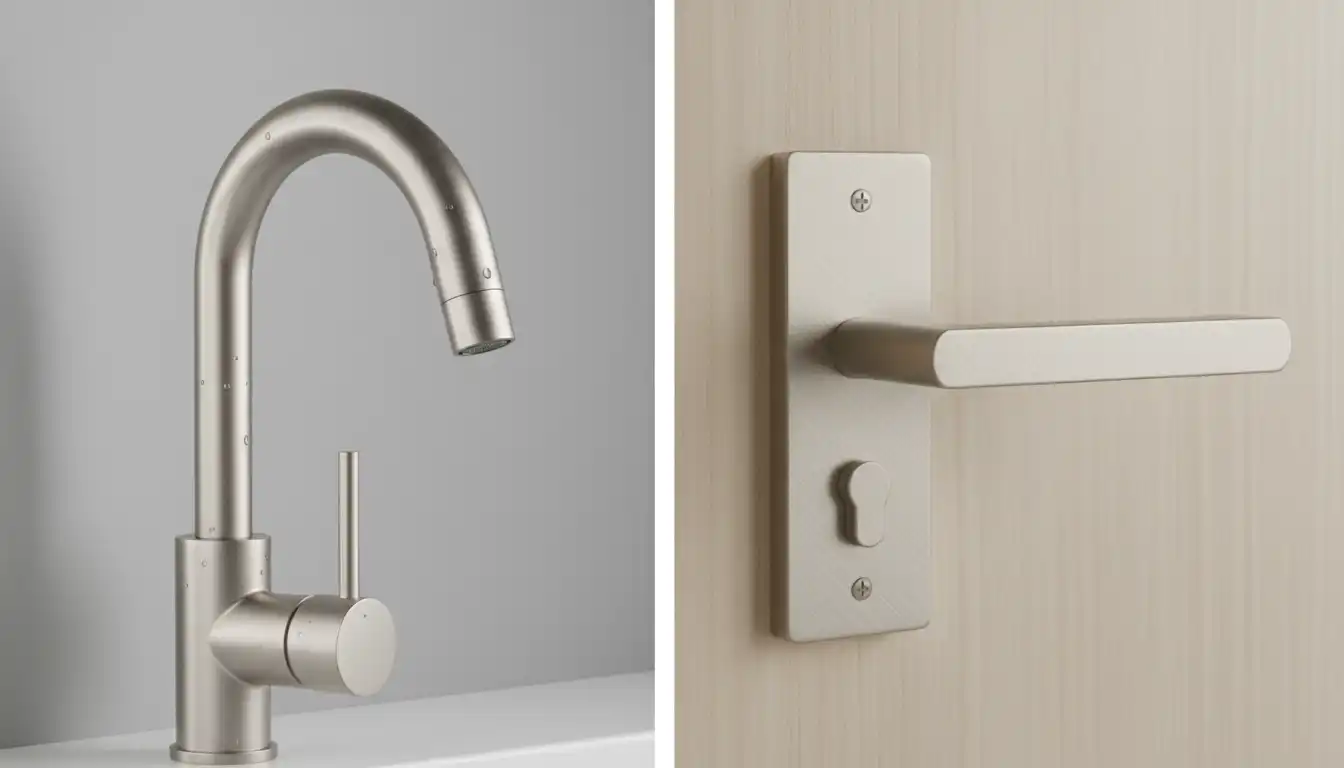
The core difference lies in texture and sheen. Brushed nickel is defined by its fine lines and matte finish, while satin nickel is characterized by its smooth surface and soft luster. These distinctions, while subtle, play a significant role in how each finish interacts with light and contributes to the overall aesthetic of a room.
| Feature | Satin Nickel | Brushed Nickel |
|---|---|---|
| Surface Texture | Smooth, uniform, and velvety with no visible lines. | Slightly textured with fine, directional brush marks. |
| Sheen Level | Low-gloss, soft luster that gently reflects light. | Matte, non-reflective finish that diffuses light. |
| Overall Vibe | Modern, sleek, and contemporary. | Transitional, rustic, or traditional; has a handcrafted feel. |
| Maintenance | Easy to clean, but can show fingerprints more readily. | Excellent at hiding fingerprints and water spots. |
| Color Tone | Often perceived as a slightly cooler, brighter silver. | Can have a slightly warmer, more golden undertone. |
The #1 Design Myth: Can You Mix Satin and Brushed Nickel?
Let’s address the main question directly: Yes, you can absolutely mix satin and brushed nickel. The long-held design “rule” that all metal finishes must match is outdated. In fact, mixing metals is a hallmark of sophisticated, professionally curated interiors. It adds depth, texture, and a sense of history to a space, making it feel collected over time rather than installed in a single day.
The reason this specific combination works so well is that satin and brushed nickel are part of the same “finish family.” Their shared nickel base and similar silver coloring create a cohesive foundation. The variation in their texture and sheen provides just enough contrast to be interesting without clashing. Instead of looking like a mistake, a well-executed mix of these two finishes reads as a deliberate and thoughtful design choice.
The Designer’s Playbook: How to Mix Nickel Finishes Flawlessly
Successfully mixing satin and brushed nickel isn’t about random placement; it’s about strategy. By following a few key principles, you can ensure your mixed-metal design looks intentional and harmonious. These techniques provide a framework for creating a balanced and visually appealing space.
Strategy 1: The Separation by Plane Technique
One of the most effective methods for mixing similar finishes is to assign them to different physical planes. This creates a clear, organized visual hierarchy. For instance, use one finish for all vertical surfaces and the other for all horizontal surfaces. This separation ensures the finishes don’t compete directly with each other.
A classic example in a kitchen would be using brushed nickel for all cabinet pulls and knobs (vertical plane) and a satin nickel faucet (horizontal plane). This approach feels deliberate and structured. In a bathroom, you could use satin nickel for the faucet and shower controls, while the drawer pulls and towel bars are brushed nickel. This clear division makes the mix look purposeful.
Strategy 2: The 80/20 Dominance Rule
To avoid a chaotic look, it’s essential to establish a dominant finish. The 80/20 rule is a simple way to achieve this. Choose one finish—either satin or brushed nickel—to be the star of the show, making up roughly 80% of the metal elements in the room. The other finish should be used as a complementary accent, appearing in about 20% of the applications.
For example, if you select satin nickel as your dominant finish, your faucets, main light fixtures, and door handles would all be satin nickel. The brushed nickel could then appear as an accent on smaller items like cabinet hinges or picture frames. This creates a cohesive look with just enough variation to add interest without overwhelming the eye.
Strategy 3: Unifying Through a Third Element
Sometimes, the most successful mixed-metal designs incorporate a neutral third element to bridge the gap between the two primary finishes. This third player can act as a mediator, making the combination of satin and brushed nickel feel even more intentional. Black is an incredibly effective bridging element.
Consider how a brushed nickel faucet with black hardware on the cabinets can create a striking, layered effect. The black provides a bold contrast that makes the subtle differences between the nickel finishes feel secondary and part of a larger, more complex design story. Similarly, stainless steel appliances can serve as a neutral backdrop that helps both nickel finishes coexist peacefully.
Strategy 4: Leverage Lighting and Location
The way light interacts with each finish should guide your placement decisions. Brushed nickel’s matte surface is forgiving and doesn’t show every smudge, making it ideal for high-touch items like cabinet pulls and door levers. Its textured finish also prevents harsh glare from bright lights.
Satin nickel, with its smoother, more lustrous surface, can add a touch of elegance. Use it where you want a subtle highlight, such as a graceful gooseneck faucet or a statement pendant light. Always test samples in your room’s specific lighting conditions, as natural and artificial light can alter the perceived warmth and coolness of each finish.
Common Mistakes to Avoid (And How to Fix Them)
While mixing satin and brushed nickel is a great design strategy, there are a few common pitfalls to be aware of. Avoiding these errors will ensure your space looks curated and professional, not accidental and mismatched.
The “Too Close, Yet So Far” Error
Placing satin and brushed nickel items directly adjacent to each other without any visual separation can backfire. When they are too close, the subtle differences in texture and sheen can become more obvious and potentially look like a failed attempt at matching. For example, a satin nickel soap dispenser sitting right next to a brushed nickel faucet might draw unwanted attention to their slight variations.
The Fix: Employ the “Separation by Plane” technique. Ensure there is some distance or a change in surface between the two finishes. If the faucet is brushed nickel, choose a soap dispenser in a contrasting material like ceramic or glass to create a deliberate break.
Ignoring the Surrounding Undertones
Even though both are nickel, one finish might appear slightly warmer or cooler depending on the manufacturer and the lighting in your room. A brushed nickel with a subtle golden undertone could clash with very cool gray walls, while a cooler satin nickel might not harmonize with creamy, warm cabinets. The hardware doesn’t exist in a vacuum; it’s part of a larger color palette.
The Fix: Always view finish samples in the room where they will be installed. Hold them up against your wall color, countertops, and cabinet finishes. This is especially important when dealing with tricky combinations, such as figuring out the perfect hardware for painted cabinets with stained doors, where multiple tones are already at play.
The Lack of Repetition
Using just a single piece of your chosen “accent” finish can make it look like an afterthought or a replacement part. For a mixed-metal scheme to feel intentional, each finish needs to appear in at least two places in the room. This repetition creates a sense of rhythm and balance.
The Fix: If you use a satin nickel light fixture as an accent in a predominantly brushed nickel bathroom, repeat the satin nickel finish elsewhere. This could be on the toilet lever, the frame of a mirror, or even the legs of a small vanity stool. This simple repetition tells the brain that the choice was deliberate.
Beyond Nickel: A Note on Cohesive Design
Mastering the mix of satin and brushed nickel is an excellent gateway to the broader world of mixing metals. A truly dynamic space often incorporates more than just two finishes. Your stainless steel appliances, for instance, already introduce a third metal into your kitchen. The key is to maintain a sense of balance and intention.
Understanding how to pair hardware with more distinct finishes can build your confidence. For example, knowing what cabinet hardware to match Brizo Luxe Gold teaches you about balancing warm and cool tones, a principle that applies to all metal combinations. Each finish contributes to the room’s overall narrative, creating a rich and layered environment that reflects your personal style.
The Final Verdict: Should You Mix Satin and Brushed Nickel?
The answer is a resounding yes. Mixing satin and brushed nickel is not a design faux pas; it is a sophisticated technique that adds depth, character, and a custom feel to any room. By moving beyond the outdated notion that everything must match, you open the door to a more dynamic and personalized space.
Remember the core strategies: establish a dominant finish, separate finishes by plane, use each finish at least twice, and consider the surrounding context. By following these guidelines, you can confidently combine these similar-yet-distinct finishes to create a cohesive and stylish home that looks like it was curated by a professional.
