Painted Cabinets With Stained Doors: Your #1 Guide to This High-End Look
The quest for a kitchen that feels both custom and timeless is a common design goal. Many homeowners find themselves stuck between the clean, bright appeal of painted cabinetry and the rich, natural warmth of stained wood.
Choosing one often feels like sacrificing the other, leading to a space that can feel either too sterile or too heavy. The fear is creating a kitchen that lacks personality or, worse, looks dated within a few years.
What if the solution wasn’t choosing one over the other, but artfully combining them? The trend of pairing painted cabinets with stained doors offers a sophisticated, layered aesthetic that can elevate any kitchen. This guide explores the secrets to mastering this look without creating a disjointed mess.
You'll Learn About
Why This Two-Tone Trend Is Dominating Kitchen Design
Mixing finishes is more than just a fleeting trend; it’s a strategic design choice that offers significant benefits. It provides an immediate sense of depth and visual interest, breaking up the monotony of a single-color cabinet scheme.
This approach allows you to create a clear focal point, such as a richly stained island surrounded by light, painted perimeter cabinets. It’s also a clever way to introduce texture, contrasting the smooth surface of paint with the organic grain of wood.
Furthermore, it can be a budget-savvy move. You can refresh existing cabinets with paint while investing in new, high-quality stained doors for a specific area, achieving a high-end custom look for a fraction of the cost.
The Core Challenge: Achieving Flawless Cohesion
The primary pitfall in designing a two-tone kitchen is the risk of clashing undertones. Every paint color and every wood stain has a subtle underlying color temperature—either warm (yellow, orange, red) or cool (blue, gray, violet).
A cool gray paint paired with a warm, yellow-toned oak stain can look jarring and unintentional if not handled correctly. The key to success lies in identifying these undertones and choosing a pair that either shares a common temperature or creates a deliberate, balanced contrast.
Beyond color, the inherent properties of the materials themselves play a crucial role. The sheen of your paint finish, from matte to semi-gloss, will interact differently with the luster of the wood stain, affecting how light reflects and how the eye perceives the space.
Step 1: Mastering the Art of Undertones
Before committing, you must become a student of color theory. Always get large physical samples of your chosen paint colors and wood stains. View them together in your actual kitchen space throughout the day.
Natural morning light, direct afternoon sun, and artificial evening light can dramatically alter how colors appear. Place the samples vertically, just as they would be installed, to see how they interact with each other and your home’s lighting.
Consider the relationship between finish sheens. A low-sheen matte paint can make a satin-finished stained wood door appear richer and more vibrant, creating a subtle, sophisticated contrast in texture that adds immense depth.
Strategic Placement: Where to Paint and Where to Stain
The arrangement of your painted and stained elements is critical to the overall success of the design. There are several proven configurations, each offering a distinct aesthetic and functional advantage.
The goal is to create a sense of balance and intention. The placement should feel deliberate, guiding the eye through the space and highlighting architectural features or creating specific zones within the kitchen.
The Classic: Painted Uppers, Stained Lowers
This is arguably the most popular and foolproof method for combining finishes. Using a lighter paint color for the upper cabinets makes the kitchen feel taller and more open, reflecting light around the room.
Grounding the space with stained lower cabinets adds warmth and durability. This approach is practical, as lower cabinets tend to see more wear and tear, and a stained finish can be more forgiving of scuffs and scratches than paint.
The Focal Point: The Stained Island
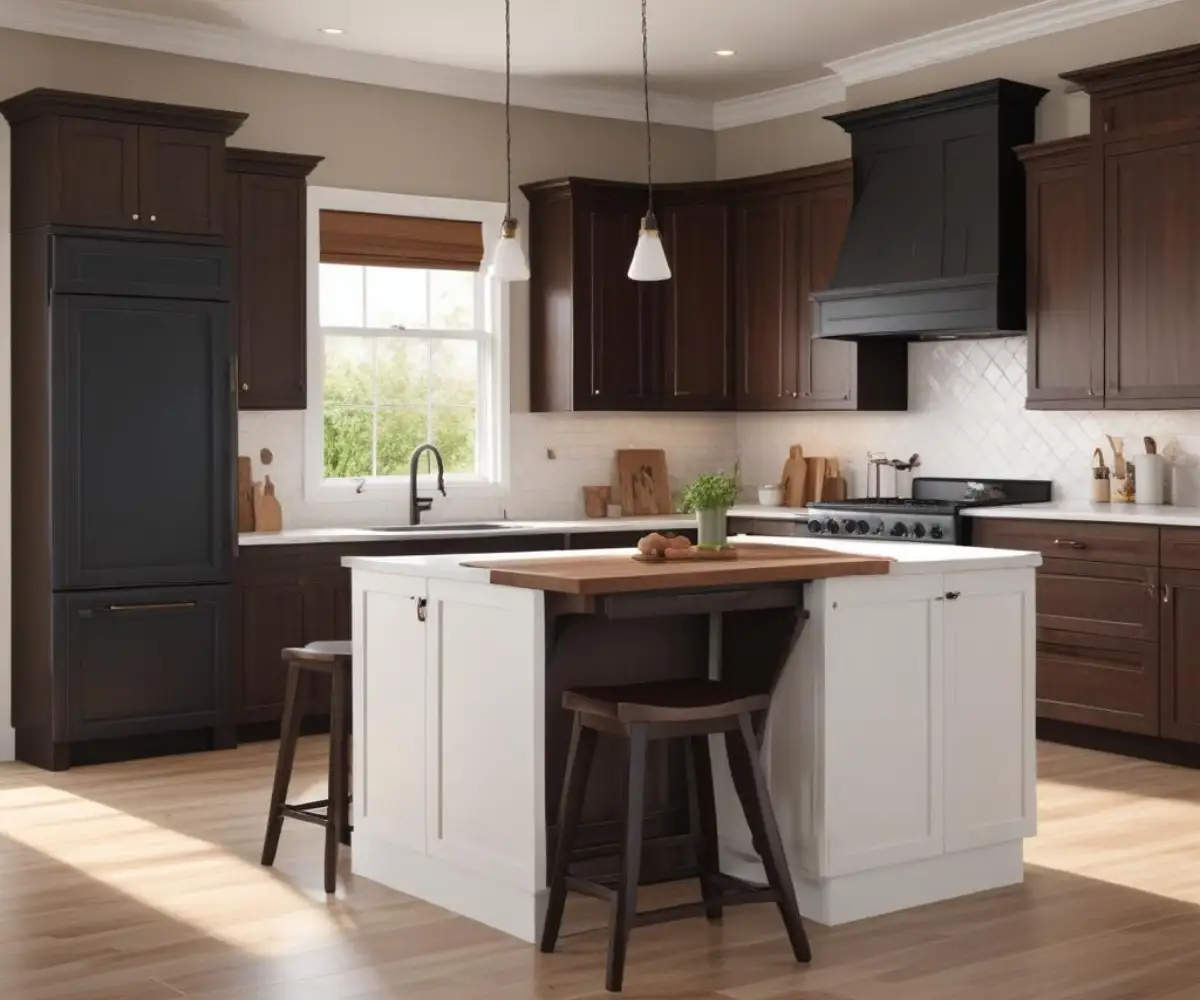
If you want to make a bold statement, consider a stained wood island as the centerpiece of your kitchen. This turns the island into a piece of fine furniture, drawing the eye and creating a natural gathering spot.
Surrounding the stained island with painted perimeter cabinets in a complementary neutral color allows the island to truly shine. This layout works exceptionally well in open-concept spaces where the kitchen island is visible from other rooms.
The Framed Look: A Truly Custom Approach
For a high-end, bespoke aesthetic, consider mixing finishes on the same cabinet. This can involve painting the cabinet boxes and frames while leaving the inset door panels with a natural stain.
Alternatively, the reverse—a stained frame with a painted inset door—can be equally stunning. This detailed approach requires precision and skilled craftsmanship but results in a uniquely textured and visually complex design that feels truly one-of-a-kind.
The Unifying Elements: Tying It All Together
With your cabinet finishes chosen, the next step is to select the “bridge” elements that will connect them. Your countertops, backsplash, hardware, and flooring are not afterthoughts; they are the essential glue that holds your two-tone design together.
These components must be chosen with both the painted and stained finishes in mind. The right choices will create a harmonious and cohesive palette, while the wrong ones can make the space feel busy and disconnected.
Choosing Your Countertop
Your countertop is a large horizontal surface that directly interacts with both upper and lower cabinets. A common strategy is to choose a countertop material that contains flecks or veining of both your chosen paint and stain colors.
For example, a quartz countertop with a creamy white base and subtle warm brown veining can beautifully unite white painted uppers and walnut-stained lowers. Alternatively, a solid color countertop can provide a quiet, neutral resting point between the two cabinet finishes.
Selecting the Perfect Hardware
Cabinet hardware is the jewelry of the kitchen, and it plays a vital role in a two-tone scheme. The hardware finish must complement both the paint color and the wood stain. For instance, finding the right cabinet hardware to match Brizo Luxe Gold can add a touch of warmth that connects a cool-toned paint with a warm wood.
Don’t be afraid to mix finishes in a thoughtful way. A popular strategy involves using one style of hardware (e.g., knobs) on uppers and another (e.g., pulls) on lowers, unified by the same metallic finish. Considering how a brushed nickel faucet with black hardware can create a sophisticated, mixed-metal palette is a key design secret.
The Backsplash Connection
The backsplash serves as the primary visual link between your upper and lower cabinets. It’s crucial to select a material that doesn’t compete with the two distinct cabinet finishes. A simple, classic tile in a neutral shade is often the safest and most elegant choice.
The installation is just as important as the material. A poorly planned backsplash can leave an unsightly gap. Understanding how to fix the situation when your backsplash doesn’t reach cabinets is essential for a professional and polished final look.
Wood Species and Stain Selection: The Hidden Details
Not all woods are created equal. The species of wood you choose for your stained doors will have a massive impact on the final look, primarily due to its inherent grain pattern and how it absorbs stain.
The texture of the wood grain—from the prominent, open grain of Oak to the smooth, subtle grain of Maple—becomes a major design element. This texture must be balanced against the solid block of your chosen paint color to avoid visual overload.
| Wood Species | Grain Pattern | How It Takes Stain | Best Paired With |
|---|---|---|---|
| Oak | Prominent, open, and textured | Absorbs stain deeply, enhancing the grain | Warm whites, deep greens, and navy blues |
| Maple | Subtle, fine, and smooth | Can be blotchy with dark stains; best with light to medium tones | Soft grays, greiges, and bold black for contrast |
| Cherry | Smooth with a fine, straight grain | Stains beautifully and darkens naturally over time | Creamy off-whites and muted, earthy tones |
| Walnut | Rich, straight grain with some waves | Naturally dark; needs only a light stain or clear coat | Bright whites, light blues, and charcoal grays |
Long-Term Care: Maintaining Your Two-Finish Kitchen
A two-tone kitchen requires a two-pronged approach to maintenance. Painted and stained surfaces have different needs, and understanding them is key to keeping your kitchen looking pristine for years to come.
For painted cabinets, use a soft, damp cloth with a mild detergent for cleaning. Avoid harsh abrasives or chemical cleaners that can dull or damage the paint. Keep touch-up paint on hand for inevitable nicks and chips.
Stained wood doors should be cleaned with a wood-safe cleaner and polished periodically to maintain their luster. Wipe up spills promptly, especially water, to prevent damage to the finish. Be mindful of direct sunlight, which can cause some wood species to fade over time.
Your Blueprint for a Flawless Two-Tone Kitchen
Successfully combining painted cabinets with stained doors is a masterclass in balance. It requires careful consideration of undertones, strategic placement, and the thoughtful selection of unifying elements.
By mastering the interplay of color and texture, you can create a kitchen that is rich with character, depth, and personal style. This is not just a trend, but a timeless design strategy that results in a truly custom, high-end space.
Move beyond the one-note kitchen. Embrace the dynamic beauty of mixed finishes to design a space that is uniquely yours, perfectly blending the best of both worlds.