
Can Pottery Barn Furniture Be Refinished? The Ultimate Guide
You bought a Pottery Barn table, dresser, or bed frame years ago. It was the centerpiece of your room, a piece you truly loved. But now, life has happened. Scratches from keys, water rings from glasses, and a finish that looks more tired than timeless have taken their toll.
The question looming in your mind is a big one: can you salvage it? Can Pottery Barn furniture actually be refinished, or is attempting a DIY revival a one-way ticket to ruining an expensive piece? This is the core problem for countless homeowners who find their once-loved furniture looking worn and dated.
The answer is yes, you absolutely can give your furniture a second life. However, success depends entirely on one critical factor: knowing what your furniture is made of. This guide will break down the entire process, from investigation to execution, ensuring you can refinish your piece with confidence.
You'll Learn About
Why Refinishing Pottery Barn Furniture Is a Hot Topic
The challenge with refinishing Pottery Barn items is that the brand uses a wide variety of materials. You can’t assume every piece is solid wood. Their collections often feature a mix of solid wood, engineered wood like MDF (Medium-Density Fiberboard), and wood veneers. This construction variability is a key point to consider when you ask, is Pottery Barn worth the price?
Understanding these materials is the first step. Solid wood is the ideal candidate for a full refinishing—you can sand it down aggressively and re-stain it. Wood veneer, a very thin layer of real wood glued to a core of MDF or particleboard, is far more delicate. Sanding through that thin layer is an irreversible mistake. MDF pieces without a veneer cannot be stained at all and must be painted.
The First Crucial Step: Identifying Your Furniture’s Material
Before you pick up a single piece of sandpaper, you need to become a detective. Determining your furniture’s construction is non-negotiable. One wrong move on a veneered piece can ruin it permanently.
Start by looking up the original product description on Pottery Barn’s website. They are generally transparent about materials, often listing “kiln-dried solid pine wood, poplar wood, engineered hard wood/pine veneers and MDF.” If you can’t find the listing, use these physical inspection techniques:
Examine the Grain Pattern: Look closely at the edges of a tabletop or drawer front. On solid wood, the grain pattern will wrap around and continue from the top surface to the side. On a veneered piece, the grain will stop abruptly at the edge, and you might see a thin line or a different grain pattern on the side.
Check the Underside: Flip the piece over or look inside a drawer. Manufacturers often don’t finish the unseen parts, which can reveal the core material. If you see particleboard or MDF, you’re dealing with a veneer.
Look for Repetition: Veneers are often cut from the same piece of wood, leading to repetitive or “book-matched” grain patterns on large surfaces. Solid wood has a more random, unique grain.
| Material Type | How to Identify It | Refinishing Feasibility | Pro-Tip |
|---|---|---|---|
| Solid Wood | Wood grain wraps around edges; heavy; unique, non-repeating patterns. | Excellent | Can be fully stripped, sanded, stained, or painted. Your options are wide open. |
| Wood Veneer | Grain pattern stops at edges; may see a thin line or seam; often lighter than solid wood. | Possible, but requires extreme care. | Avoid aggressive sanding. Use a chemical stripper and light, fine-grit hand sanding. |
| MDF/Laminate | No visible wood grain; smooth, sometimes plastic-like feel; often found on backing or shelves. | Painting only. | Must use a high-quality bonding primer for paint to adhere properly. |
Your Step-by-Step Guide to Refinishing Pottery Barn Pieces
Once you’ve identified your material, you can choose the right approach. Each material requires a completely different technique to achieve a professional-looking result.
Refinishing Solid Wood Pottery Barn Furniture
If you’ve confirmed your piece is solid wood, congratulations! You have the most straightforward project ahead of you. This is where you can truly transform the look of your furniture.
First, strip the old finish using a chemical stripper, following the product’s safety instructions. Then, sand the surface smooth, starting with a medium-grit paper (like 120-grit) and moving to a fine grit (220-grit) for a flawless finish. After wiping away all dust, you can apply your new stain and seal it with multiple coats of a protective topcoat like polyurethane.
Refinishing Veneered Pottery Barn Furniture: A Delicate Operation
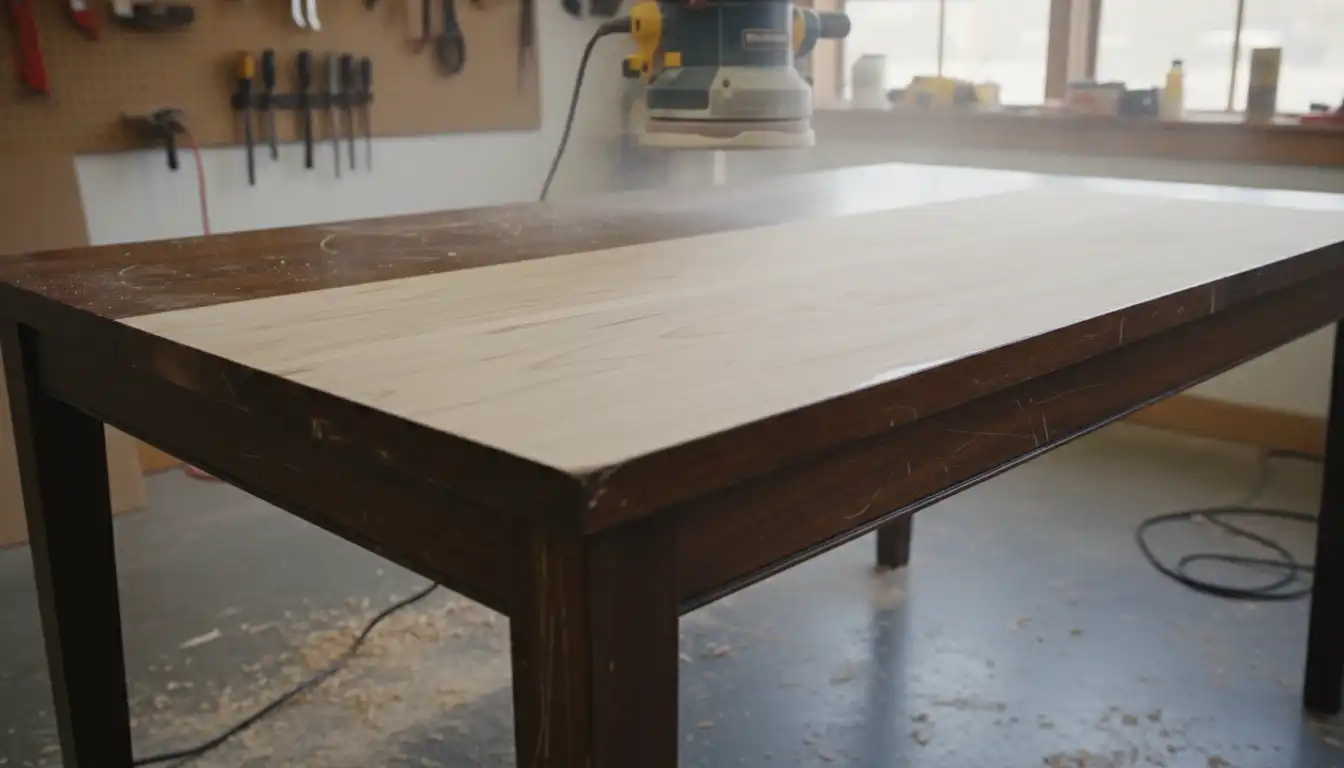
This is where most DIY projects go wrong. The key to refinishing veneer is to preserve the ultra-thin wood layer at all costs. Do not use a power sander. You will sand through the veneer in seconds.
The safest method is to use a chemical stripper to gently remove the old finish. This does most of the heavy lifting without abrasion. After stripping, if any light sanding is needed to smooth the surface, use 220-grit sandpaper or higher and apply only very light pressure by hand. Your goal is to scuff the surface, not remove wood. Once clean, you can apply a new stain and a protective topcoat. An alternative for veneers is to use a gel stain, which is thicker and sits more on the surface rather than penetrating deeply, which can be more forgiving.
What About MDF and Laminated Pieces?
For pieces made primarily of MDF or those with a laminate (non-wood) finish, traditional refinishing is off the table. The only way to update these pieces is with paint. Success here hinges entirely on proper prep work.
You must start by cleaning the surface thoroughly and then applying a bonding primer. A shellac-based primer is an excellent choice as it’s designed to stick to glossy, hard-to-paint surfaces. After the primer has cured, you can paint with high-quality furniture paint and finish with a durable topcoat for protection.
A Look at Popular Collections: To Refinish or Not to Refinish?
Different Pottery Barn collections often have different construction methods, which can give you a clue about their refinishing potential. For instance, the robust Benchwright collection often draws inspiration from early 20th-century worktables and frequently uses solid woods, making it an excellent candidate for a full refinishing project.
In contrast, other collections may lean more heavily on veneers to achieve a specific look at a certain price point. Outdoor collections, such as those discussed in reviews of the Indio line, have finishes designed to withstand the elements and may require special consideration. As a general rule, older Pottery Barn pieces, much like classic Old Meeting House furniture, are more likely to be made of solid wood and are prime candidates for restoration.
Gearing Up: Your Essential Refinishing Toolkit
Having the right tools is just as important as having the right technique. Before you begin, gather these essentials to ensure your project goes smoothly and safely.
Safety First: Get chemical-resistant gloves, safety glasses, and a respirator mask, especially when working with strippers and stains.
For Stripping and Prep: A quality chemical stripper, plastic scrapers, mineral spirits for cleanup, and clean rags are must-haves.
For Sanding: A selection of sandpaper in various grits (120, 180, 220), a sanding block for even pressure, and tack cloths to remove dust.
For Finishing: High-quality brushes or foam applicators, your choice of stain or paint, a durable primer if painting, and a protective topcoat like polyurethane or furniture wax.
Frequently Asked Questions
Can Pottery Barn furniture be refinished?
Yes, Pottery Barn furniture can be refinished, but the process depends on the specific piece. Many items are made with a combination of solid wood, MDF (medium-density fiberboard), and veneers, which can make aggressive sanding or stripping a challenge. It’s recommended to start with a light sanding and consider painting over the existing finish for a simpler update.
Is it better to paint or stain refinished Pottery Barn furniture?
Painting is often the easier and safer option for refinishing Pottery Barn furniture, especially if the piece has veneers or is made of MDF. Stripping and re-staining can be more complex due to the multi-layered factory finish and the mix of materials. However, some people have successfully stripped and stained their solid wood or veneered pieces to achieve a new look.
What kind of paint should I use on Pottery Barn furniture?
For a durable and smooth finish, it’s recommended to use a high-quality wood primer and paint. Some DIYers have had success with Sherwin Williams ProClassic or Benjamin Moore Advance paint. Using a paint sprayer can help achieve a more professional, factory-like finish.
How do I prep Pottery Barn furniture for refinishing?
Proper preparation is key to a successful refinishing project. Start by thoroughly cleaning the furniture to remove any dirt or grime. Next, you’ll want to lightly sand the surface to scuff it up and help the new paint or primer adhere. If there are any scratches or dings, you can use wood filler to repair them before priming and painting.
Are there any challenges to refinishing Pottery Barn furniture?
The primary challenge when refinishing Pottery Barn furniture is dealing with their factory finish, which can be difficult to remove. Additionally, because many pieces are not 100% solid wood, you need to be careful not to damage the veneer when sanding or stripping. Some people have also noted that the carvings or decorative elements can be made from materials other than wood, which may react differently to strippers.
The Final Verdict: Is It Worth Refinishing Your Pottery Barn Furniture?
Ultimately, refinishing your Pottery Barn furniture is not only possible but also incredibly rewarding. It allows you to breathe new life into a piece you already own, customize it to fit your evolving style, and save a significant amount of money compared to buying new.
The key to success is not brute force, but careful investigation and a tailored approach. By correctly identifying whether your furniture is solid wood, veneer, or MDF, you can choose the right method and tools to achieve a beautiful, lasting finish. Your well-loved but worn-out furniture has the potential to become a stunning centerpiece in your home once again.
