
Bluestone Countertop for Outdoor Kitchen: The Durable Luxury Choice
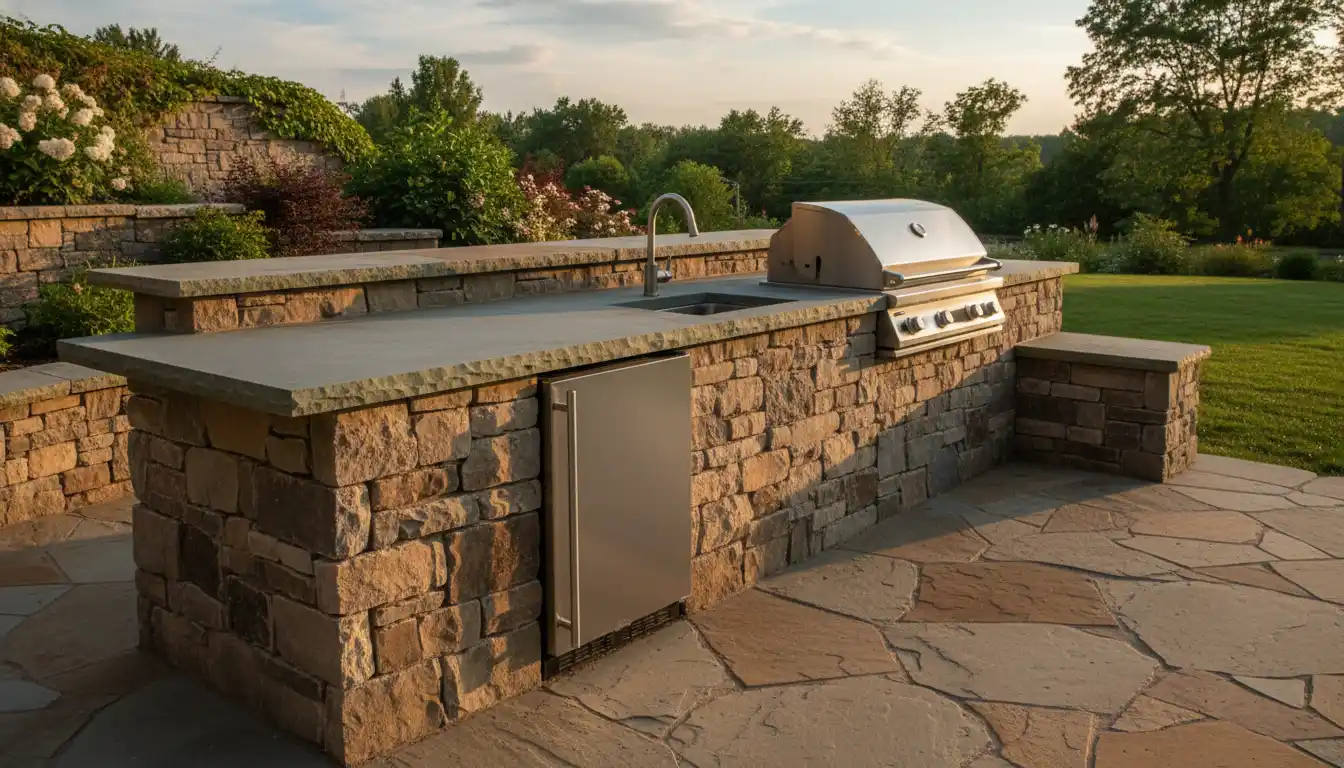
Building the perfect outdoor living space is a dream for many homeowners, but it often comes with a specific headache: choosing materials that can survive the elements while looking high-end. You want a surface that handles hot pans, resists fading in the sun, and doesn’t crack when winter freezes over. A bluestone countertop for your outdoor kitchen is the ideal solution for those seeking a natural, timeless aesthetic that stays cooler than granite, provided you choose a “thermal” finish and seal it correctly.
While granite often dominates the conversation, bluestone offers a unique, earthy charm that blends seamlessly with patios and garden landscapes. However, it is not without its quirks. In this guide, we will explore why bluestone might be the superior choice for your project, the specific type you must buy to avoid wobbly wine glasses, and the maintenance secrets that keep it looking pristine for decades.
You'll Learn About
Understanding the Material: What is Bluestone?
Bluestone is a sedimentary rock, specifically a feldspathic sandstone, found primarily in the northeastern United States (Pennsylvania and New York). It is formed by the deposition of sand and minerals over millions of years, resulting in a stone that is dense, heavy, and incredibly durable. Unlike the uniform look of manufactured quartz, every slab of bluestone is unique, featuring subtle variations in texture and hue.
Thermal vs. Natural Cleft: The Critical Choice
If you take only one piece of advice from this article, let it be this: Do not use “Natural Cleft” bluestone for countertops.
Natural cleft bluestone is split along its natural fault lines. This creates a rustic, uneven surface that is beautiful for patio pavers but disastrous for a countertop. It leaves you with ridges and bumps that make cutting boards wobble and glasses tip over. Instead, you must specify Thermal Bluestone. Thermal bluestone is saw-cut to a uniform thickness and then heat-treated with a flame to create a textured, non-slip, but perfectly flat surface. This finish provides the grip and look of stone without the topographical hazards.
The Color Palette: Blue vs. Full Color
When selecting your slabs, you will generally find two color categories. “Blue Select” is more uniform, offering those signature deep blue-grey tones that look sleek and modern. “Full Color” or “Variegated” bluestone includes a mix of blue, grey, green, lilac, and rust/brown tones. For an outdoor kitchen, “Full Color” often hides pollen, dust, and minor crumbs better than the solid blue options, making it a lower-maintenance aesthetic choice.
The Core Problems with Outdoor Countertops
Outdoor kitchens face assaults that indoor kitchens never see. Understanding these challenges is key to seeing why bluestone is a strong contender.
The Heat Problem
Have you ever leaned against a black granite countertop in the middle of July? It can be hot enough to burn skin. Dark, dense igneous rocks absorb massive amounts of solar radiation. Bluestone, being a sedimentary rock with a slightly lighter matte finish, generally stays cooler to the touch than polished black granite. This makes it much more comfortable for guests to lean on while you grill.
The Porosity and Stain Risk
The primary “con” of bluestone is its porosity. It acts like a hard sponge. If you spill red wine, burger grease, or lemon juice on unsealed bluestone, it will absorb the liquid and leave a stain. Acidic foods can also “etch” the stone, leaving a dull mark. This is a solvable problem (as we will discuss in the maintenance section), but it is a reality that owners must accept.
Freeze-Thaw Durability
In colder climates, water that seeps into a stone can freeze, expand, and crack the material. This is known as the freeze-thaw cycle. Low-quality bluestone or stone installed incorrectly can flake (spall). However, high-grade thermal bluestone is exceptionally dense and has been used for sidewalks in freezing cities for a century. It is built to survive the winter, provided it is sealed to limit water absorption.
Why Bluestone is the Superior Solution
Despite the porosity issue, bluestone remains a top-tier choice for several compelling reasons that go beyond just looks.
Aesthetics and Natural Integration
If your patio, pool deck, or walkways are already paved with bluestone, using it for the countertop creates a cohesive, custom look that feels like it grew out of the landscape. It bridges the gap between the hardscape and the cooking area. It lacks the “plastic” shine of polished granite, offering a matte, organic texture that feels luxurious and grounded.
Cost-Effectiveness
While prices vary by region, bluestone is often more affordable than premium exotic granites or quartzites. Since it is quarried domestically in the US, shipping costs can be lower for North American homeowners. You are paying for a solid slab of natural stone, often at a price point comparable to mid-range concrete pours, but without the risk of concrete’s hairline cracks.
Ease of Fabrication
Bluestone is softer than granite, which makes it easier for fabricators to cut and shape. This allows for unique custom edges or complex shapes without skyrocketing labor costs. You can easily integrate features like a Neptune box on house mounting point for nearby utilities or custom cutouts for smokers and grills.
Installation and Design Best Practices
To ensure your bluestone countertop lasts a lifetime, you need to follow specific design rules during installation.
Choosing the Right Thickness
Standard indoor counters are often 1.25 inches (3cm) thick. For outdoor bluestone, you should aim for a minimum of 1.5 inches, with 2 inches being the gold standard. The extra mass provides visual weight that suits the outdoors and adds structural integrity against impact.
Selecting the Edge Profile
The edge profile changes the character of the kitchen. A “Rock Face” or chiseled edge is very popular for bluestone; it looks rugged and natural, hiding chips well. However, it can be rough on clothing if you lean against it. A “Thermal Edge” or “Eased Edge” is smoother and more practical for high-traffic cooking zones. It’s similar to how you might choose a low profile double curtain rod for a streamlined interior look—sometimes the subtle, clean edge is the better functional choice.
Seam Placement and Overhangs
Bluestone slabs are typically smaller than giant granite slabs. You will likely have seams. Ensure your installer places seams away from the sink or grill cutouts where the stone is weakest. If you plan for a seating overhang, any projection over 8-10 inches will likely require steel support brackets underneath to prevent snapping.
Maintenance and Care: The Solution to Stains
This is where many homeowners hesitate, but bluestone maintenance is manageable if you follow the right protocol.
The Sealing Schedule
You must seal bluestone countertops. Use a high-quality penetrating (impregnating) sealer, ideally one containing silane or siloxane. Unlike topical sealers that sit on top like a plastic film (and eventually peel), penetrating sealers soak into the pores to repel water and oil from within. You should apply this sealer upon installation and re-apply it every 1-3 years. A simple water droplet test will tell you when it’s time: if water stops beading up, it’s time to seal.
Daily Cleaning Protocols
For day-to-day cleaning, avoid harsh chemicals. A mild dish soap and water are sufficient. Do not use vinegar, lemon-based cleaners, or ammonia, as these can eat away at the sealer and etch the stone. If you do encounter a stubborn organic stain (like leaf tannins), a poultice or a specialized stone cleaner is safer than attacking it with acid.
Handling Efflorescence
Sometimes, a white powdery substance appears on the surface. This is efflorescence—salts migrating to the surface from moisture. It is not a stain. It usually brushes off or washes away. It’s a natural process that highlights the stone’s breathability and usually decreases over time.
Bluestone vs. The Competition
To help you decide, here is a quick comparison of how bluestone stacks up against other popular outdoor materials.
| Feature | Thermal Bluestone | Polished Granite | Concrete | Soapstone |
|---|---|---|---|---|
| Surface Temperature | Moderate (Cooler) | High (Hot in Sun) | Moderate | High (Retains Heat) |
| Porosity | High (Needs Sealing) | Low to Medium | High (Needs Sealing) | Zero (Non-Porous) |
| Scratch Resistance | Moderate | High | Low | Low (Scratches easily) |
| Aesthetic Style | Natural, Matte, Earthy | Shiny, Speckled, Modern | Industrial, Custom | Rustic, Dark, smooth |
| Maintenance Level | Medium (Seal yearly) | Low (Seal rarely) | High (Wax/Seal often) | Medium (Oil for look) |
Final Verdict
A bluestone countertop for an outdoor kitchen is a statement piece. It says you value natural beauty and are willing to care for it. While it requires more attention than a bulletproof granite slab, the reward is a surface that feels organic, stays cooler in the summer sun, and develops a beautiful patina over time. Just remember to verify your contractor is using thermal finish slabs and has a plan for regular sealing. Careful planning in the renovation phase, much like checking skipp renovation reviews before a major indoor remodel, ensures you get a result that adds value and enjoyment to your home for years to come.
