
Backsplash Doesn’t Reach Cabinets? Fix That Awkward Gap Now
There it is. That frustrating, awkward gap between the top of your beautiful backsplash and the bottom of your upper cabinets. It’s a small detail, but it can make an entire kitchen look unfinished and disjointed.
You’re not alone in this design dilemma. This is a surprisingly common issue that can happen for a variety of reasons, from miscalculation to settling foundations. The good news is that you don’t have to live with it.
This guide will walk you through why this gap happens and provide a host of professional-level solutions to fix it, ensuring your kitchen looks as seamless and polished as you envisioned.
You'll Learn About
Why Your Backsplash Stops Short: Uncovering the Common Causes
Understanding the root of the problem is the first step to finding the perfect solution. That gap is often the result of a few common issues that can occur during a kitchen renovation or even in a brand-new build.
Typically, the standard height between a kitchen countertop and the upper cabinets is about 18 inches. However, this can vary, and that’s where the trouble often begins.
The Culprits Behind the Gap
Several factors can lead to a backsplash that doesn’t quite meet the mark. Miscalculations during the planning phase are a primary cause; sometimes, the exact dimensions are overlooked until the tiles are already on the wall. Using standard-sized tiles without planning for the specific height can easily result in an awkward leftover space.
Another common reason is uneven surfaces in the home. Older houses, in particular, can have floors and ceilings that aren’t perfectly level, leading to a non-standard distance between the counter and cabinets. Even newly installed cabinets can be slightly off, creating a gap that is wider on one end than the other.
The “Gap Problem”: More Than Just an Eyesore
While the visual disruption is the most obvious problem, that empty space can create functional headaches as well. It’s not just about aesthetics; it’s about the practicality of your kitchen workspace.
That exposed strip of drywall becomes a prime target for cooking splatters. It’s a grease and grime trap that is much harder to clean than a proper tile or stone surface. Wiping down painted drywall repeatedly can cause the paint to degrade and stain over time, creating a permanently dirty appearance.
Furthermore, a backsplash that stops short disrupts the visual flow of the kitchen. It can make the space feel smaller and less cohesive. A properly terminated backsplash, on the other hand, creates a clean, intentional line that elevates the entire room’s design.
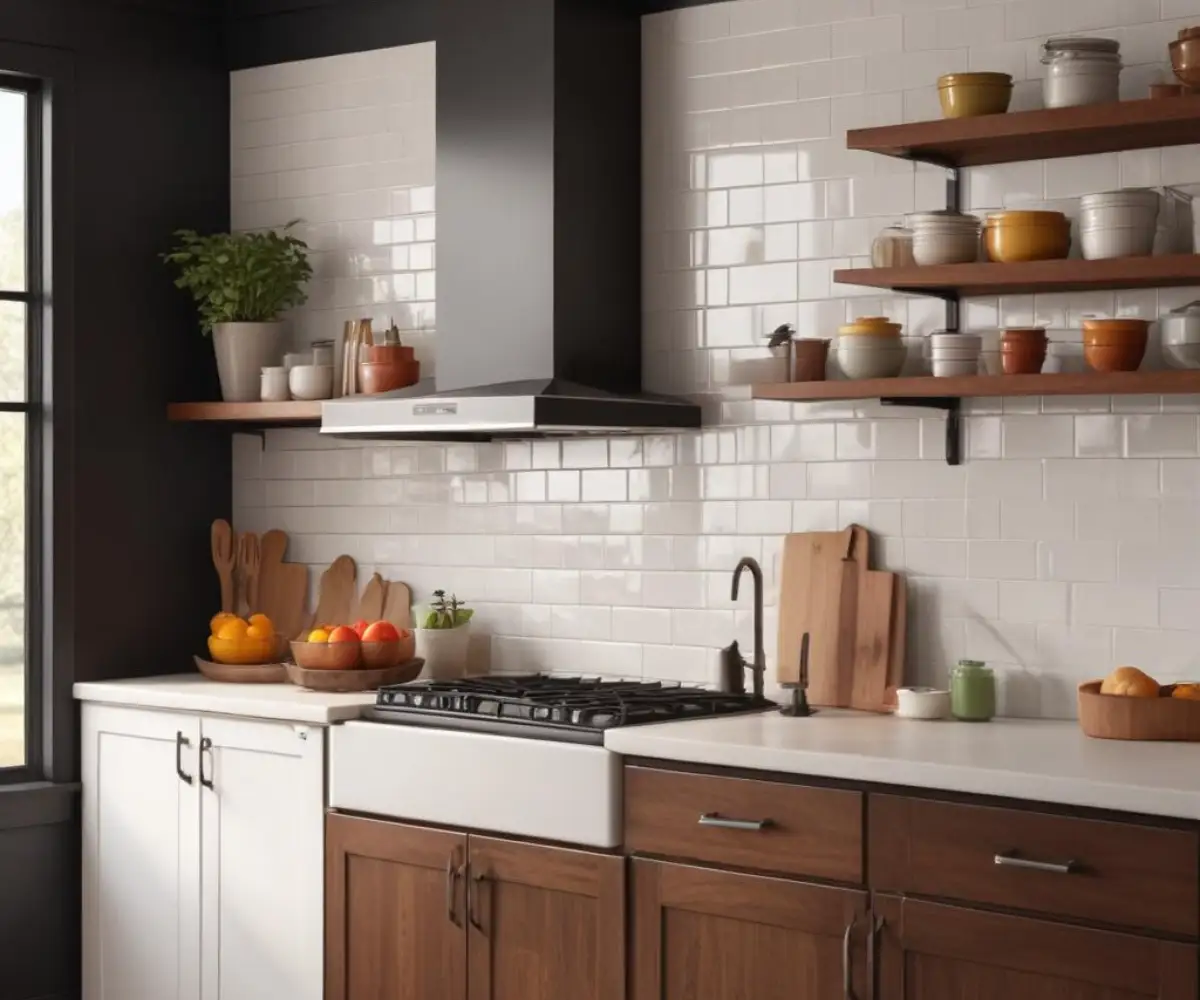
Closing the Gap: 7 Pro Solutions for a Seamless Finish
Fixing the gap is achievable, with options ranging from quick cosmetic fixes to more involved tiling work. The best choice for you will depend on the size of the gap, your budget, your DIY skill level, and your kitchen’s style.
1. Add a Decorative Border or Accent Tile
One of the most elegant solutions is to fill the space with a decorative trim piece. A pencil liner, chair rail, or a thin strip of mosaic tile can turn a design flaw into a deliberate, high-end feature. Choose a material and color that complements your existing tile and countertops.
This approach works best for uniform gaps and adds a layer of texture and interest. It’s a fantastic way to introduce a new material, like metal or contrasting stone, into your design scheme.
2. Install an Extra Row of Tiles
If the gap is large enough, adding another row of your main tile can be a straightforward fix. The primary challenge here is perfectly matching your existing tile and grout color. If your backsplash has been installed for a while, the original grout may have faded or discolored slightly.
If an exact match isn’t possible, consider creating an intentional accent. Use a tile of the same size but in a complementary color or a slightly different shade to create a subtle, two-toned look.
3. Use a Metal Schluter Strip for a Modern Edge
For a clean, contemporary finish, a Schluter strip is an excellent choice. This is a metal trim piece designed to protect tile edges, but it can also be used to cap the top of a backsplash and fill a small gap. It provides a crisp, defined line that looks incredibly sleek.
Schluter strips come in various finishes, including brushed nickel, chrome, matte black, and brass, making it easy to match your cabinet hardware or faucet for a cohesive look.
4. Embrace the Gap with a Floating Shelf
Why hide the gap when you can make it a functional and stylish part of your kitchen? Installing a narrow floating shelf within the space is a brilliant design solution. This not only closes the visual gap but also provides a perfect spot for spices, small plants, or decorative objects.
This solution makes the space look completely intentional. When considering this option, it’s helpful to understand the installation process, and you might wonder if you should install floating shelves before or after the backsplash for the best results in future projects.
5. Paint a “Faux Border”
If you’re looking for a budget-friendly and simple DIY fix, paint can be your best friend. Use a high-quality, scrubbable kitchen paint in a color that either matches your walls or creates a bold contrast. Carefully tape off the top of the tile and the bottom of the cabinets to create crisp, clean lines.
This method won’t offer the protection of tile but can be a very effective and immediate visual solution, especially for very small or uneven gaps.
6. Install a Panel or Molding
A piece of decorative wood or PVC molding can be cut to size and installed within the gap. Paint it to match your cabinets for a custom, built-in look, or match it to the wall color to let it blend in. This is a particularly effective solution for traditional or farmhouse-style kitchens.
This method can cover even very irregular gaps, as the molding can be scribed to fit the contours of an uneven wall or cabinet line.
7. Use Color-Matched Caulk for Tiny Gaps
For very small gaps (less than 1/4 inch), a high-quality, color-matched caulk can be the simplest solution. Many manufacturers offer caulk that is specifically designed to match their grout colors. This will create a clean, flexible seal that blends seamlessly with the rest of your backsplash.
Proper application is key. Use painter’s tape to ensure a straight line and smooth the bead of caulk with a wet finger or a caulking tool for a professional finish.
Comparison of Backsplash Gap Solutions
Choosing the right fix involves balancing cost, effort, and the final look. Here’s a breakdown of the options to help you decide.
| Solution | Cost Estimate | DIY-Friendliness | Visual Impact |
|---|---|---|---|
| Decorative Border Tile | Moderate | Intermediate | High (Adds a design element) |
| Extra Row of Tile | Moderate | Intermediate | High (Seamless if matched well) |
| Metal Schluter Strip | Low | Beginner-Intermediate | Medium (Modern and clean) |
| Floating Shelf | Moderate | Beginner-Intermediate | High (Functional and stylish) |
| Painted Border | Very Low | Beginner | Low (Simple cosmetic fix) |
| Wood/PVC Molding | Low-Moderate | Beginner | Medium-High (Creates a built-in look) |
| Color-Matched Caulk | Very Low | Beginner | Low (Best for very small gaps) |
The Unspoken Rule of Backsplash Height: Planning for Perfection
The best way to deal with a gap is to prevent it from happening in the first place. Meticulous planning is the secret to a flawless backsplash installation. Measure everything three times before a single tile is purchased or installed.
Always conduct a “dry layout” of your tiles. Lay them out on the counter or floor to see exactly how they will fit between the countertop and cabinets. This allows you to plan your cuts and identify any potential height issues before you start applying mortar. This proactive step saves immense frustration later.
It’s also crucial to consider non-standard elements in your kitchen. For instance, dealing with a quartz backsplash around a window requires careful planning to ensure all lines are clean and heights are consistent. The rule is simple: install upper cabinets first, then measure the exact space for your backsplash.
What About Uneven Gaps or Outlets?
Sometimes the problem is more complex than a simple, uniform gap. If your cabinets or countertops aren’t level, the gap may be wider at one end. In these cases, a combination of solutions might be necessary. A decorative tile border, for instance, can be skillfully cut to taper and disguise the unevenness.
Outlets can also complicate things. If an outlet falls partially within the gap, it can look particularly awkward. This is where creative solutions are paramount. For tricky situations, finding the right outlet covers for an uneven backsplash can provide a clean, professional-looking finish that integrates the outlet seamlessly.
A Pro Tip for Grout Matching
When adding new tile, matching old grout is notoriously difficult. Grout color changes slightly as it cures and ages. To get the best match, take a small, spare piece of your old grout (or carefully chip a tiny amount from an inconspicuous area) to the store to compare it directly with color charts.
If a perfect match proves impossible and the difference is noticeable, consider another option. Re-grouting the entire backsplash is more work, but it guarantees a perfectly uniform color and a brand-new finish.
Your Kitchen’s Finishing Touch
A backsplash that doesn’t reach the cabinets is a common design hiccup, but it doesn’t have to be a permanent flaw in your kitchen. From simple cosmetic fixes to more structural design additions, there is a solution for every skill level and budget.
By addressing the gap, you’re not just fixing a mistake; you’re adding a final, professional touch that completes your kitchen’s design. A seamless transition from countertop to cabinet makes the entire space feel more cohesive, polished, and thoughtfully designed.
