
60-Inch Vanity: One Mirror or Two? The Answer Isn’t So Simple
You’ve settled on the perfect 60-inch vanity. It’s a classic size, offering ample counter space and often accommodating two sinks, making it a cornerstone of many master and family bathrooms. But now you face the pivotal design question that stumps countless homeowners: do you choose one large mirror or two separate ones?
This decision seems simple on the surface, but it fundamentally impacts your bathroom’s style, functionality, and perceived space. The wrong choice can disrupt visual harmony, while the right one elevates the entire room from merely functional to truly stunning.
You'll Learn About
The Core of the Dilemma: Space, Style, and Sinks
The heart of this debate lies in how you want your bathroom to feel and function. A 60-inch vanity is unique because it’s the most common size for a double-sink setup, which naturally creates a question of division or unity. Do you emphasize the two separate zones with two mirrors, or create a seamless, expansive look with one?
Your choice will ripple through other design decisions, including lighting placement, storage options, and even your daily routine. Let’s break down the compelling arguments for each approach to help you find the perfect solution for your home.
The Case for One Large Mirror: A Statement of Unity
Opting for a single, expansive mirror over a 60-inch vanity is a powerful design move. It’s a classic choice favored in both modern and transitional homes for its ability to create a clean, uncluttered, and spacious feel.
Aesthetics of a Single Mirror
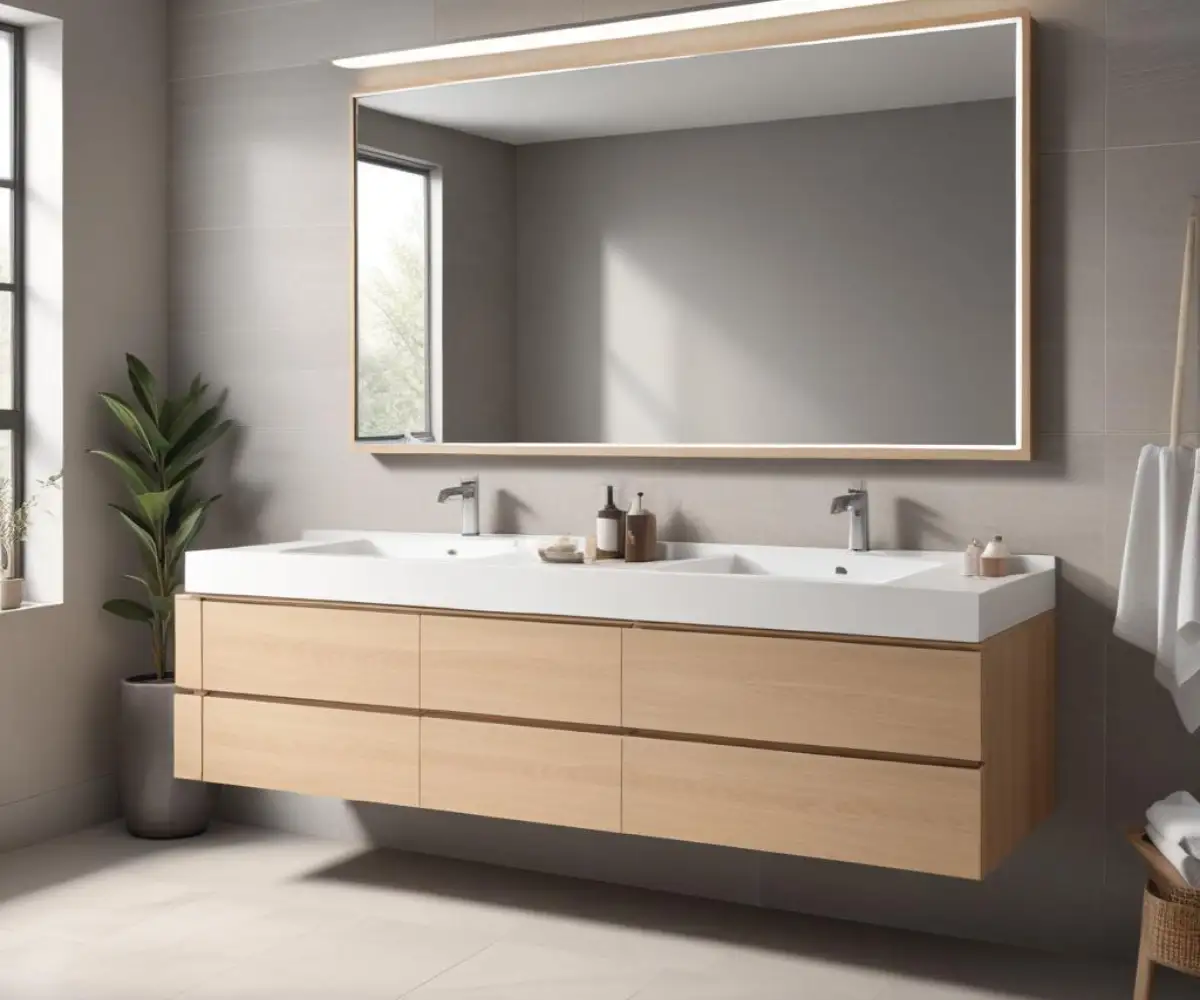
A large mirror provides an unbroken reflective surface that can dramatically enhance a bathroom. It creates the illusion of depth, making smaller bathrooms feel significantly larger and more open. This is especially effective if you can position the mirror to reflect a window, doubling the natural light in the room.
Stylistically, a single mirror offers a grand, hotel-like aesthetic. It acts as a powerful visual anchor for the vanity wall, creating a simple yet sophisticated focal point. For minimalist or contemporary designs, a large, frameless mirror that spans the width of the vanity is the quintessential choice for a seamless look.
Functional Advantages
Functionally, one large mirror is incredibly practical. It offers a wide, continuous field of view, which is beneficial for everything from getting ready in the morning to checking an outfit. For couples who often use the vanity at the same time, a single mirror provides ample shared space without feeling confined to a smaller, personal mirror.
Cleaning can also be simpler with one continuous pane of glass, as there are fewer edges and frames to worry about. From a cost perspective, purchasing one large, high-quality mirror can often be more budget-friendly than buying two smaller, well-made framed mirrors.
The Case for Two Mirrors: A Symphony of Symmetry
Choosing two separate mirrors is a deliberate design statement that brings a sense of custom elegance and architectural interest to the bathroom. This approach is perfect for creating balance and defining personal space, especially over a double-sink vanity.
Aesthetics of a Double Mirror Setup
Two mirrors create a pleasing sense of symmetry and order. By centering one mirror over each sink, you establish two distinct zones, which can make the space feel more organized and intentional. This look is a hallmark of traditional, farmhouse, and transitional styles, where the frames of the mirrors can be used to add texture, color, and personality.
This approach also offers far more creative flexibility. You are not limited to a simple rectangle; you can play with shapes like ovals, arches, or circles to soften the lines of the bathroom and add a unique decorative element. The space between the mirrors also provides an opportunity for a stylish wall sconce or a small piece of art.
Functional Advantages
The primary functional benefit of two mirrors is the creation of personal stations. In a shared bathroom, this “psychological separation” can be a subtle but powerful tool for reducing morning congestion and friction. Each person has their own dedicated space for their routine.
This setup is also the most practical solution if you need more storage. You can opt for two separate medicine cabinets, which provide invaluable hidden storage for toiletries, keeping your countertop clutter-free. This is often a deciding factor for those who prioritize organization and utility in their bathroom design.
The Hidden Factor: Your Wall’s Infrastructure
Beyond aesthetics and sink layout, there’s a critical, practical element that many homeowners overlook: the existing electrical layout of your wall. This can be the single most important factor in your decision, as it dictates your lighting options, which are intrinsically linked to your mirror choice.
Before you fall in love with a specific look, take a close look at your vanity wall. Where are the junction boxes for your lights? Is there a single box centered over the vanity, or are there boxes wired for sconces on either side of where a mirror would hang? Moving electrical wiring can be a costly and complicated part of a renovation.
If you have a single overhead light fixture, a large mirror is often the most straightforward choice. If your wall is wired for three sconces, a two-mirror setup is a natural fit. Don’t let your design dreams clash with the reality of your home’s construction; let your wall’s layout guide your decision for a smoother and more budget-friendly project.
Making Your Decision: A Side-by-Side Comparison
To help simplify the choice, consider this direct comparison of the key attributes for each option. Think about which factors are most important for your lifestyle, your design goals, and your bathroom’s specific layout.
| Feature | One Large Mirror | Two Separate Mirrors |
|---|---|---|
| Aesthetics | Expansive, seamless, modern, minimalist | Symmetrical, custom, traditional, defined |
| Sense of Space | Makes the room feel larger and brighter | Creates distinct, organized zones |
| Functionality | Shared, flexible viewing area | Defines personal space for two users |
| Storage | Limited to a single, wide medicine cabinet | Allows for two separate medicine cabinets |
| Lighting | Works best with a single light bar or side sconces | Ideal for sconces between and beside mirrors |
| Cost | Often more budget-friendly | Can be more expensive, especially with frames |
| Best For | Smaller bathrooms, single-sink vanities, modern designs | Shared bathrooms, maximizing storage, traditional/farmhouse styles |
Key Factors to Guide Your Final Choice
You’ve weighed the pros and cons, but how do you apply them to your specific situation? Walk through these final deciding factors to land on the perfect mirror configuration for your 60-inch vanity.
1. Your Sink Configuration is Paramount
The number and placement of your sinks should be your primary guide.
- Double Sink: This is where the debate is most relevant. Both one large mirror and two separate mirrors are excellent options. Your choice will come down to your preference for a unified look versus defined personal spaces.
- Single Centered Sink: One large mirror is almost always the best choice here. It creates a balanced and harmonious focal point. Two smaller mirrors would look unbalanced and awkward.
- Single Offset Sink: Similar to a centered sink, one large mirror that spans most of the vanity is ideal. It helps to visually balance the asymmetry of the sink placement.
2. Lighting and Mirrors Go Hand-in-Hand
Your lighting plan is not a separate decision; it’s part of the mirror decision. Sconces placed on either side of a mirror provide the most flattering, shadow-free light. If you love the look of sconces, you need to ensure your mirror choice leaves enough wall space for them.
A two-mirror setup is perfectly suited for three sconces: one on each outer side and one in the middle. If you prefer a single, long vanity light bar, a large mirror is the natural companion. In some cases, a vanity light wider than your mirror can create a professional, high-end look.
3. Be Honest About Your Storage Needs
Countertop clutter is the enemy of a peaceful bathroom. If you know you need significant storage for daily-use items, then two mirrored medicine cabinets are likely the most practical solution. While you can find 60-inch single medicine cabinets, they are less common and can be more expensive.
Don’t sacrifice essential functionality for a purely aesthetic choice you might regret later. A well-organized bathroom with ample storage will always feel more luxurious than a cluttered one.
4. Measure Twice, Buy Once
Proper proportion is key. As a general rule, your mirror or mirrors should not be wider than the vanity itself. For a single mirror, aim for a width that is a few inches narrower than the 60-inch vanity. For two mirrors over a double sink, each mirror should be centered over its sink and generally not be wider than the sink basin below it.
Pay attention to height as well. Ensure the mirror is high enough to provide a clear view but not so high that it feels disconnected from the vanity. Consider how lighting, such as recessed lights over the vanity, might interact with the top of the mirror.
The Final Verdict: There Is No Wrong Answer
Ultimately, the choice between one or two mirrors for your 60-inch vanity is a personal one. There is no single “correct” answer in the world of design. The best solution is the one that fits the unique needs of your space, your family, and your personal style.
By considering the interplay of sink layout, aesthetics, storage requirements, and your existing lighting infrastructure, you can move beyond the simple question of “one or two?” You can make an informed, confident decision that will create a bathroom that is not only beautiful but perfectly tailored to your life.
