
48 Bar Height Guide: Spectator Counters & Tall Stool Solutions
Designing a kitchen island, home bar, or entertainment space requires precise attention to vertical dimensions. While most homeowners are familiar with standard counter and bar heights, a less common but distinct option exists: the 48-inch tier. Often found in commercial pubs, stadium boxes, and luxury game rooms, this elevation creates a unique social dynamic and visual separation.
48 bar height is technically known as “spectator height” or “stadium height” and is significantly taller than the standard 42-inch residential bar. This extra elevation is designed to accommodate people standing comfortably while conversing with those seated, or to provide an unobstructed view over the heads of people sitting in front of the counter. However, choosing this height introduces specific challenges regarding seating availability, safety, and ergonomics that every homeowner must understand before breaking ground.
You'll Learn About
Understanding the “Spectator” Difference
The term “bar height” is often used loosely, but in the world of interior design and construction, inches matter immensely. A variation of six inches effectively changes the category of furniture you need to buy and how the space functions.
Defining the Dimensions
To grasp why 48 inches is an outlier, we must compare it to the standard tiers of residential design. Most kitchen counters sit at 36 inches to match appliances. Standard elevated breakfast bars rise to 42 inches. The 48-inch counter is the “extra tall” tier, primarily used to create a visual block or a standing-leaning station.
| Counter Type | Height from Floor | Required Seat Height | Common Use Case |
|---|---|---|---|
| Standard Counter | 36 Inches | 24 – 26 Inches | Kitchen prep, family meals |
| Standard Bar | 40 – 42 Inches | 28 – 30 Inches | Breakfast bars, casual drinking |
| Spectator Height | 46 – 48 Inches | 34 – 36 Inches | Game rooms, view-blocking tiers |
The “Hide-the-Mess” Factor
One of the primary drivers for installing a 48-inch riser in an open-concept kitchen is visual privacy. In a large room where the kitchen is fully visible from the living area, a standard 42-inch bar might not be tall enough to hide dirty dishes, small appliances, or a faucet neck. Pushing the height to 48 inches ensures that the “business” side of the kitchen remains completely concealed from guests relaxing on the sofa.
The Social Dynamic: Standing vs. Sitting
The “spectator” designation comes from the line of sight. At 48 inches, the counter is roughly chest-to-shoulder height for an average adult standing next to it. This creates a “leaning” culture rather than a sitting one. It mimics the feel of a busy commercial pub where patrons stand and mingle. If you are building a space intended for high-energy socializing, such as a man cave or a home sports bar, this height encourages movement and keeps eye levels aligned between standing and seated guests.
The Critical Challenge: Finding 34-Inch Stools
Before you commit to building a 48-inch high bar, you must address the most significant hurdle: the furniture supply chain. This is the single biggest pain point for homeowners who build “spectator” counters without prior research.
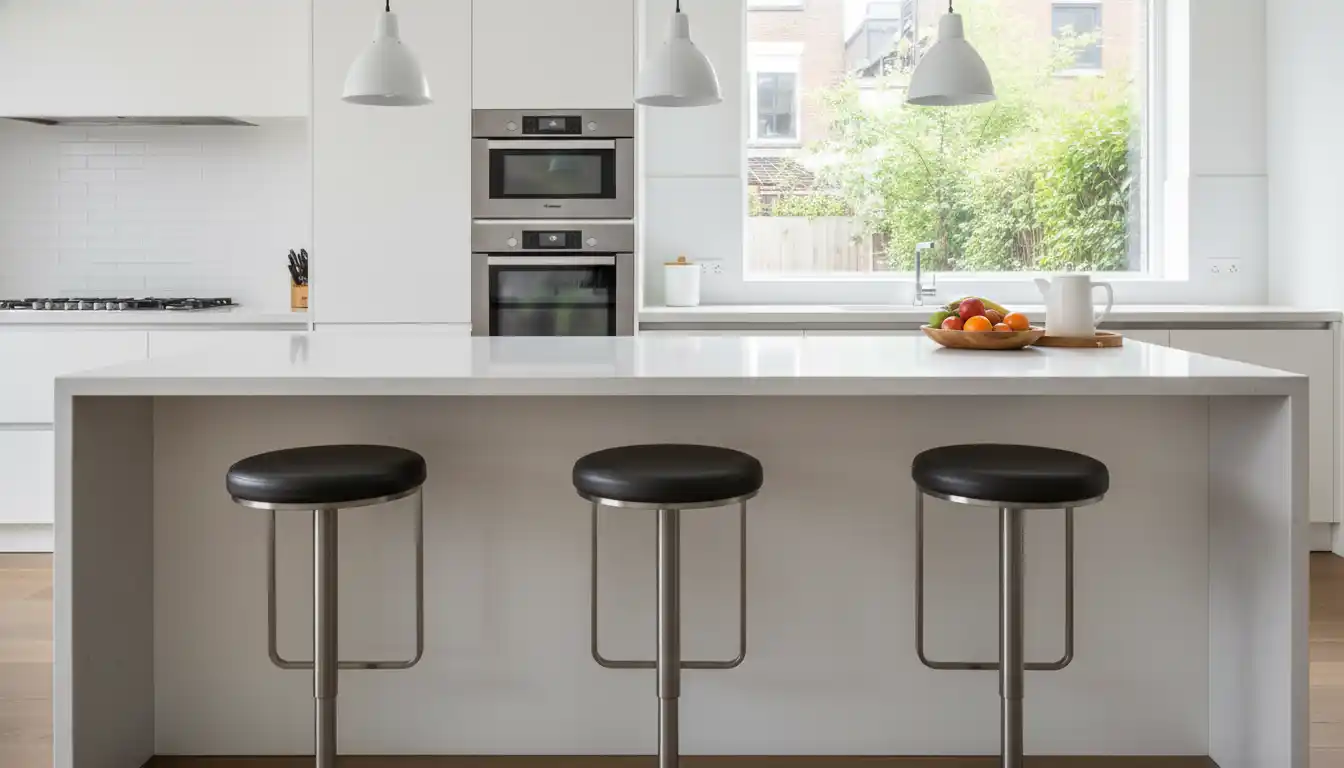
The Gap in the Market
Walk into any major furniture retailer, and you will find hundreds of 24-inch counter stools and 30-inch bar stools. You will likely find zero 34-inch stools. Because 48 inches is not a standard residential height, mass manufacturers rarely produce seating for it. Homeowners often finish their beautiful renovations only to realize they cannot find chairs that fit.
Custom vs. Commercial Options
To furnish a 48-inch bar, you typically have to look at commercial restaurant suppliers or high-end custom furniture makers. These seats are often listed as “extra tall” or “spectator stools.” Be prepared for a higher price point and fewer stylistic choices. If you try to use a standard 30-inch bar stool at a 48-inch counter, the counter will sit at the user’s neck level, which is ergonomically disastrous for eating or drinking.
Measuring for Comfort (The 10-12 Inch Rule)
The golden rule of bar ergonomics is to maintain a 10 to 12-inch gap between the top of the seat and the underside of the counter. For a 48-inch bar, this mathematically requires a seat height of 36 to 38 inches. However, because spectator stools are rare, many people compromise with 34-inch stools. This results in a 14-inch gap, which can feel slightly low but is often the only viable option without going fully custom.
Design & Construction Considerations
Building a wall or island to a height of 48 inches requires structural forethought. It is not merely about stacking a few more bricks or extending a stud; the physics of the structure changes.
Structural Stability & Brackets
A 48-inch pony wall (knee wall) acts as a lever. If you have a heavy granite or quartz countertop with an overhang for seating, the leverage placed on the wall is significant. Standard stud framing may need reinforcement to prevent wobble. When securing the base of the wall to the subfloor, using high-quality adhesives and fasteners is non-negotiable. If you are installing flooring around the bar base, ensuring a seamless transition is key—similar to the precision required when deciding between Bostik Best vs Multigrip for hardwood stability. A wobbly 48-inch wall is a major safety hazard.
Ergonomics & Safety: The Tipping Hazard
The higher the stool, the higher the center of gravity. Spectator stools are more prone to tipping over than standard chairs. This is a crucial consideration if your household includes children or elderly family members. The climb to get into a 34-inch seat is significant; it often requires stepping up onto a footrail that is quite high off the ground. Ensure your chosen stools have a wide, heavy base to counteract the tipping risk.
Lighting and Electrical Code
Electrical outlets are typically required on kitchen islands. At 48 inches, the outlets will be positioned higher than usual. Ensure your electrician is aware of the height early in the process so the wiring rough-in is accurate. Furthermore, pendant lighting needs to be adjusted. Standard pendant lengths may leave the lights hanging too high above the counter, disrupting the intimacy of the space. You will likely need extra-long downrods to bring the light source closer to the surface.
Is It Right for You? Pros and Cons
Deciding on a 48-inch bar height is a commitment to a specific lifestyle and aesthetic. It is not a “one size fits all” solution.
Visual Privacy Benefits
If your home features a panoramic view, the extra height can be a strategic advantage. For instance, in a sunroom bar overlooking a garden, the elevation allows you to gaze out effortlessly. You can sip your morning coffee while watching Asiatic lily sprouts emerging in the spring, with a view that clears the window sill completely. The height commands attention and dominates the room, making it a focal point.
Accessibility Drawbacks
The major downside is accessibility. A 48-inch counter is unusable for wheelchair users and difficult for children. It effectively zones that area of the kitchen as “adults only.” If you plan to age in place, climbing onto a spectator stool may become difficult or dangerous over time. Resale value can also be affected, as potential buyers may view the non-standard height as a renovation project they need to fix.
Alternatives and Compromises
If you love the idea of a high bar but are worried about the logistics, consider these hybrid approaches.
The Double-Tier Island
The most popular compromise is a split-level island. The working side remains at 36 inches for prep work, while the guest side is raised to 42 or 48 inches. This gives you the messy-kitchen concealment without sacrificing the workspace ergonomics. However, keep in mind that split-level islands are trending downward in modern design, which favors single-level, expansive surfaces (flat islands).
Man Caves and Garage Bars
The 48-inch height shines brightest in utility spaces. In a garage workshop bar, where you might be tinkering with projects or maintaining equipment, the height is a massive asset. For example, if you are working on small engine repair and wondering why a snowblower auger stops when it hits snow, a 48-inch workbench allows you to inspect the machinery at eye level without bending over, while still serving as a drinking spot for buddies after the work is done.
In conclusion, while “48 bar height” offers a distinct, commanding presence and excellent visual screening, it requires a commitment to sourcing specialized furniture and careful structural planning. It is the gold standard for “spectator” viewing but can be a logistical headache for a standard family kitchen. Weigh the pros and cons of the “stadium view” against the comfort and availability of standard bar heights before pouring that concrete or framing that wall.
Frequently Asked Questions: 48-Inch Bar Height Guide & Spectator Solutions
1. What is considered “spectator height” or “stadium height” in counter design?
Spectator height, often referred to as stadium height, describes counters or tables that stand approximately 46 to 48 inches tall. This is significantly higher than the standard commercial bar height of 40 to 42 inches. These extra-tall counters are designed to provide a clear line of sight over obstructions, such as balcony railings or rows of seating in front of the viewer, making them popular in home theaters, pool halls, and outdoor decks.
2. What is the ideal stool seat height for a 48-inch counter?
For a 48-inch counter, you require an “extra tall” or spectator height bar stool with a seat height ranging from 34 to 36 inches. The general ergonomic rule is to maintain 10 to 12 inches of clearance between the top of the seat and the underside of the counter surface to ensure adequate legroom and comfortable eating or drinking posture.
3. Can I use standard bar stools for a 48-inch high table?
No, standard bar stools typically have a seat height of 30 inches, which is too low for a 48-inch counter. Using a standard stool would leave a gap of 18 inches between the seat and the counter, causing the user to sit uncomfortably low—often at chin-level with the table surface—which strains the shoulders and arms.
4. Why are 48-inch counters frequently used on outdoor decks and patios?
Designers often utilize 48-inch counters on decks to ensure that seated guests can see over standard deck railings. Since most safety railings are 36 to 42 inches high, a standard table height would obstruct the view. The elevated spectator height allows for an unobstructed sightline of the landscape while seated.
5. Are extra tall spectator stools safe and stable?
Yes, provided they are constructed correctly. Because the center of gravity is higher on a 34-36 inch stool, quality spectator stools are designed with a wider base and heavier frame to prevent tipping. When shopping, look for stools with splayed legs or a heavy weighted base to ensure maximum stability for the taller height.
6. How do I correctly measure my counter to confirm I need spectator stools?
Measure from the floor directly to the top surface of the counter or tabletop. If this measurement falls between 46 and 48 inches, you definitely need spectator height stools. If the measurement is closer to 42 inches, you should look for standard bar height stools (30-inch seat) instead.
7. Is a footrest necessary for tall spectator stools?
Yes, a footrest is ergonomically essential for stools of this height. Without a footrest, the user’s feet would dangle nearly three feet off the ground, cutting off circulation under the thighs and causing lower back strain. A sturdy footrest allows the user to balance their weight and sit comfortably for extended periods.
8. How much width spacing should be allowed per person at a 48-inch counter?
You should allocate 24 to 30 inches of width per stool to allow guests to get on and off the high seats comfortably without bumping elbows. Because spectator stools often have wider bases for stability, measuring effectively is crucial to ensure you do not overcrowd the counter space.
9. Are adjustable-height stools a good option for 48-inch counters?
Adjustable air-lift stools can be a solution, but you must check their maximum extension specifications carefully. Many standard adjustable stools top out at 32 or 33 inches, which is still too short for a spectator counter. You must specifically search for “extra tall” adjustable models that are rated to extend up to 35 or 36 inches.
10. Where is the best place to find 34-36 inch seat height stools?
Extra tall stools are considered a niche furniture category and are rarely found in standard big-box retail stores. You will typically find the best selection at specialized bar stool retailers, home theater furniture suppliers, or custom furniture manufacturers who cater specifically to non-standard or commercial heights.
Conclusion
Opting for a 48-inch spectator height transforms a standard kitchen or bar into a dynamic social hub designed for engagement. By elevating the surface, you facilitate seamless interaction between standing and seated guests while creating a bold architectural statement that effectively hides countertop clutter from the rest of the room. However, success with this height depends on the careful selection of extra-tall spectator stools, which must provide a seat height of approximately 34 to 36 inches to maintain ergonomic comfort.
Ultimately, while the 48-inch tier offers superior views and a professional pub-like atmosphere, it requires a commitment to specialized furniture and safety considerations for children. When planned with these specific dimensions in mind, a stadium-height bar becomes an unparalleled feature for entertaining and high-energy social spaces.
