2 Hot Wires No Neutral? The Shocking Truth Lurking in Your Walls
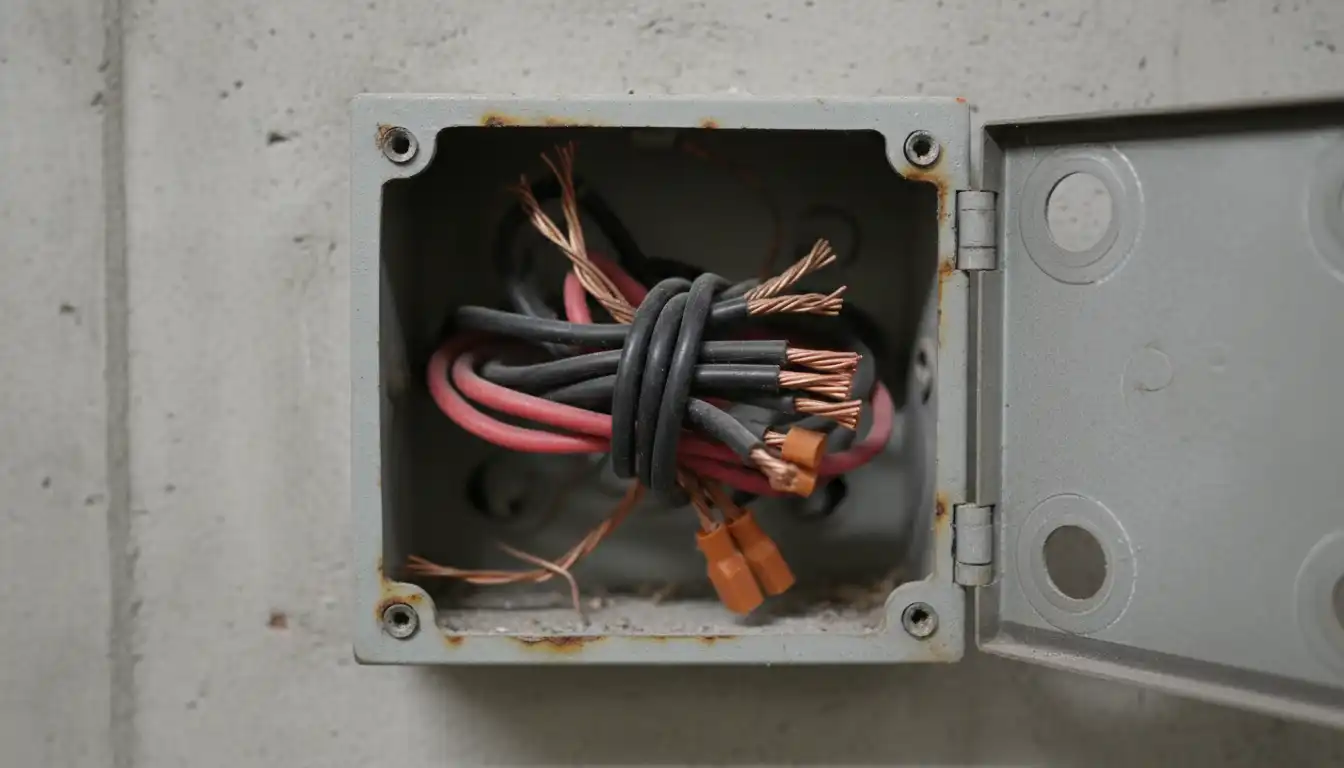
You open an electrical box, ready for a simple project, and stop dead in your tracks. Inside are two hot wires, typically black and red, and a bare copper ground wire, but something crucial is missing: there is no white neutral wire.
This confusing and intimidating discovery is more common than you might think, especially in homes with high-power appliances. Misunderstanding this setup can lead to destroyed electronics, electrical fires, and serious personal injury.
Before you touch anything, it is critical to understand what you are dealing with. This wiring is not a mistake; it is a dedicated power circuit with a very specific purpose.
You'll Learn About
What “2 Hot Wires, No Neutral” Actually Means
When you find two hot wires and a ground but no neutral, you are almost certainly looking at a dedicated 240-volt circuit. Unlike the standard 120-volt outlets that power most of your devices, a 240-volt circuit delivers twice the electrical potential.
A typical 120V circuit uses one hot wire to deliver power, one neutral wire to return that current to the panel, and a ground wire for safety. In a 240V setup, two separate hot wires are used. Each wire carries 120 volts, but they are on opposite phases from your home’s electrical panel, creating a 240-volt potential between them.
In this configuration, the appliance itself completes the circuit between the two hot wires, and the ground wire is present only as a critical safety feature to protect against faults.
Why This Powerful Wiring Exists in Your Home
You might wonder why such a powerful circuit is necessary. The answer lies in efficiency and the demands of modern appliances. Certain devices require more power than a standard 120V circuit can safely provide.
By using 240 volts, these appliances can run more efficiently and draw less current (amps) than they would on a 120-volt circuit, reducing heat buildup in the wires. This is the standard and safest way to power a wide range of household workhorses.
Common appliances that use a “2 hot wires, no neutral” 240V circuit include electric clothes dryers, water heaters, central air conditioners, electric ranges and ovens, well pumps, and increasingly, high-speed electric vehicle (EV) chargers.
The Hidden Dangers: What Happens If You Misuse This Circuit?
The single most dangerous mistake a homeowner can make is to assume this is a standard circuit and try to wire a regular 120-volt outlet to it. The consequences are immediate and severe. You absolutely cannot use the ground wire as a neutral.
The neutral wire is a current-carrying conductor designed to be a safe return path for electricity. The ground wire is a safety line, intended to carry current only during a fault, tripping the breaker and preventing shock. Forcing the ground to act as a neutral can energize the metal casings of all appliances on that circuit, creating a lethal shock hazard.
If you connect a 120-volt device to the two hot wires, you will send 240 volts through a component designed for 120 volts. This will instantly destroy the device, often with a loud pop, smoke, and a significant risk of fire. Understanding the fundamentals of your home’s wiring is paramount, especially if you live in a property where you’ve discovered an old house no ground wire situation, as that presents its own unique set of electrical risks.
Identifying Your Wires: A Step-by-Step Safety Check
Disclaimer: Working with 240-volt circuits is dangerous. This guide is for identification purposes only. If you have any doubt, turn off the breaker and call a licensed electrician immediately.
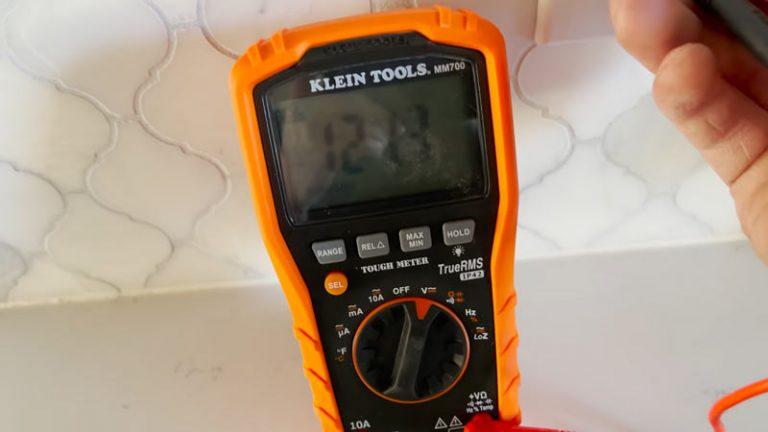
To confirm what you are looking at, you will need a multimeter. First, locate the circuit breaker that controls the wires and turn it off decisively. It should be a double-pole breaker, which looks like two standard breakers connected together.
With the power off, carefully use your multimeter set to measure AC voltage. Test between the two hot wires (e.g., black and red)—it should read approximately 240 volts. Then, test from each hot wire to the ground wire; each should read approximately 120 volts. This confirms you have a 240-volt circuit.
Understanding Circuit Voltages
The relationship between the wires in a residential electrical panel is the key to understanding these readings. The panel receives two 120-volt “legs” of power from the utility that are 180 degrees out of phase with each other.
A standard 120-volt circuit connects one hot leg to the neutral bus bar. Measuring a 240-volt circuit connects both hot legs, and the difference in their phases results in a combined 240 volts of potential.
Your Options: What Can You Do With a 240V Circuit?
Once you have confirmed you have a 240V circuit, you have three primary options. The choice depends entirely on your needs and your comfort level with electrical work.
Option 1: Use It As Intended
The simplest option is to use the circuit for its intended purpose. You can install a proper 240-volt receptacle for a heavy-duty appliance. This is a great choice for a garage workshop needing power for a large air compressor or welder, or for installing a modern EV charger.
Option 2: Safely Abandon the Wires
If you have no use for the circuit, you cannot simply leave the wires exposed. The safest course of action is to abandon them in place. This involves twisting a secure wire nut onto the end of each individual wire, ensuring no copper is exposed.
After capping each wire, neatly fold them into the electrical box and install a blank cover plate. This protects the wires from accidental contact and clearly signals that the box does not contain a usable outlet. Proper safety procedures are vital in all electrical work; a simple mistake can be devastating, much like the danger that arises if you cut extension cord with hedge trimmer and don’t take immediate, correct action.
Option 3: Convert it to a 120V Circuit (With Professional Help)
Converting a 240V circuit to a 120V circuit is possible but is an advanced task that should be left to a qualified electrician. It is not as simple as just using one of the hot wires. The process involves significant changes inside your main electrical panel.
An electrician will turn one of the hot wires (usually the red one) into a neutral wire. This involves re-marking the wire with white electrical tape at both the outlet box and inside the panel. Crucially, they must then move that wire from the double-pole breaker to the neutral bus bar in the panel, and replace the 240V breaker with a smaller 120V breaker.
Comparing 120V and 240V Home Circuits
Understanding the fundamental differences between these two common circuit types is crucial for any homeowner. The table below breaks down the key characteristics of each.
| Feature | Standard 120V Circuit | Standard 240V Circuit |
|---|---|---|
| Voltage Potential | 120 Volts | 240 Volts |
| Wires Used | 1 Hot, 1 Neutral, 1 Ground | 2 Hot, 1 Ground (No Neutral) |
| Typical Breaker | Single-Pole (15 or 20 Amp) | Double-Pole (30, 40, or 50+ Amp) |
| Common Uses | Lights, standard outlets, small appliances | Dryers, ovens, water heaters, EV chargers |
| Receptacle Type | Standard rectangular 3-prong outlet | Large, round, or uniquely shaped 3 or 4-prong outlet |
When a Missing Neutral Is a Sign of a Deeper Problem
In some rare cases, what appears to be a 240V circuit could be a sign of a dangerous fault in a different type of circuit. One such scenario is a Multi-Wire Branch Circuit (MWBC), where two separate 120V circuits share a single neutral wire.
If that shared neutral wire breaks or becomes disconnected, the two 120V circuits can behave like a 240V circuit, causing voltage to surge and fluctuate wildly. This can damage appliances and create a serious fire risk. This is another reason why having a professional diagnose an unusual wiring situation is so important.
Properly diagnosing electrical problems requires careful troubleshooting. Sometimes, what seems like a major wiring fault could be a simpler issue, just as when a photocell light turns on and off, the problem is often the sensor itself, not the underlying circuit. However, with unidentified wires, you must always assume the most dangerous scenario until proven otherwise.
Don’t Risk It: Why Calling an Electrician is Your Safest Bet
While the desire to solve home improvement challenges yourself is understandable, electrical work carries risks that other DIY projects do not. The potential for electric shock, arc flash, and fire is real and present, especially with 240-volt circuits.
An electrician can identify your circuit with 100% certainty in minutes. They can advise you on the best and safest course of action, whether it’s installing a new 240V outlet, converting the circuit to 120V, or safely abandoning it.
Ultimately, the cost of hiring a professional is a small price to pay for the peace of mind that comes with knowing your home’s electrical system is safe, correct, and up to code. When you find two hot wires and no neutral, the message is clear: proceed with caution and expert guidance.
Conclusion
the absence of a neutral wire isn’t a mistake—it’s an intentional design for 240V dedicated circuits. High-power loads, like water heaters or baseboard heaters, pull power across two “hot” legs rather than returning it through a neutral.
While this setup is efficient, it leaves no room for error. Attempting to bridge these wires for standard 120V devices or misidentifying the ground can lead to catastrophic failure. Success starts with identifying your circuit’s specific requirements; when in doubt, a multimeter and a professional electrician are your best tools for ensuring safety over guesswork.