
Wrighton Furniture: Unlock the Secrets of This Hidden Gem Now!
Discover why Wrighton Furniture is quickly becoming one of the industry’s best-kept secrets. Known for its craftsmanship, unique designs, and remarkable value, this hidden gem is winning over homeowners and interior enthusiasts who crave something beyond the ordinary.
Whether you’re furnishing a new space or refreshing a familiar one, Wrighton Furniture offers pieces that blend style, durability, and character—making it a brand worth exploring. Unlock the story behind its growing popularity and see what sets it apart from the rest.
You'll Learn About
The Problem: Is That Old Sideboard a Priceless Hidden Treasure?
Many homes contain a piece of inherited or thrifted furniture, sitting quietly in a corner. It might be a sideboard, a dressing table, or a set of drawers, often overlooked as just “old furniture.” The common problem is not recognizing the potential history and value locked within these unassuming pieces.
You might possess a genuine design classic from a celebrated British manufacturer without even knowing it. This lack of knowledge can lead to improper care, disastrous DIY paint jobs, or selling a valuable item for a fraction of its true worth. The key is learning to identify the markers of quality and heritage that separate treasure from simple hand-me-downs.
Who Were F. Wrighton & Sons? A Legacy of British Craftsmanship
The story of F. Wrighton & Sons Ltd is a tale of exceptional British manufacturing. Founded in the 1920s, the company established its main factory in Walthamstow, London, and quickly built a reputation for high-class, quality furniture. They were not just cabinet makers; they were creators of sophisticated interiors, producing everything from bedroom suites to award-winning kitchen designs.
Wrighton’s commitment to excellence was so profound that they were chosen to furnish parts of the prestigious Queen Elizabeth II ocean liner, a testament to their status in the industry. During World War II, the company even pivoted to manufacturing aircraft parts, including for the De Havilland Mosquito, showcasing their versatility and precision engineering. This history is embedded in every piece of furniture they produced, representing a standard of craftsmanship that is rare in today’s market.
Is It a Wrighton? 5 Key Steps to Positive Identification
Identifying a true piece of Wrighton furniture can feel like a detective story. With the right clues, you can confidently determine if your furniture is part of this distinguished lineage. Here are five critical steps to guide your investigation and confirm the authenticity of your piece.
Look for the Mark: The Gold Stamp of Quality
The most definitive way to identify Wrighton furniture is to find the manufacturer’s mark. Look for a distinctive gold stamp, often featuring the “Wrighton” name in a flowing, elegant script. This mark is typically found in discreet locations to preserve the clean exterior of the piece.
Thoroughly check the inside of the top drawers of chests and sideboards. You might also find the mark on the back panel of the furniture. Locating this gold stamp is the strongest evidence you have a genuine F. Wrighton & Sons product.
Signature Design Cues: The Wrighton ‘Look’
Wrighton furniture, especially from the mid-century period, has a distinct aesthetic. Their designs are celebrated for their clean, minimalist lines, a hallmark of the Danish modern style that influenced British furniture makers of the era. The focus was on form and function, avoiding unnecessary ornamentation.
Materials were chosen with care, with a heavy preference for high-quality wood veneers like teak and walnut. These woods were prized for their warm tones and beautiful grain patterns. Look for characteristic features such as sleek, tapering legs, minimalist handles often made of brass, and sometimes bi-fold cabinet doors that enhance their streamlined appearance.
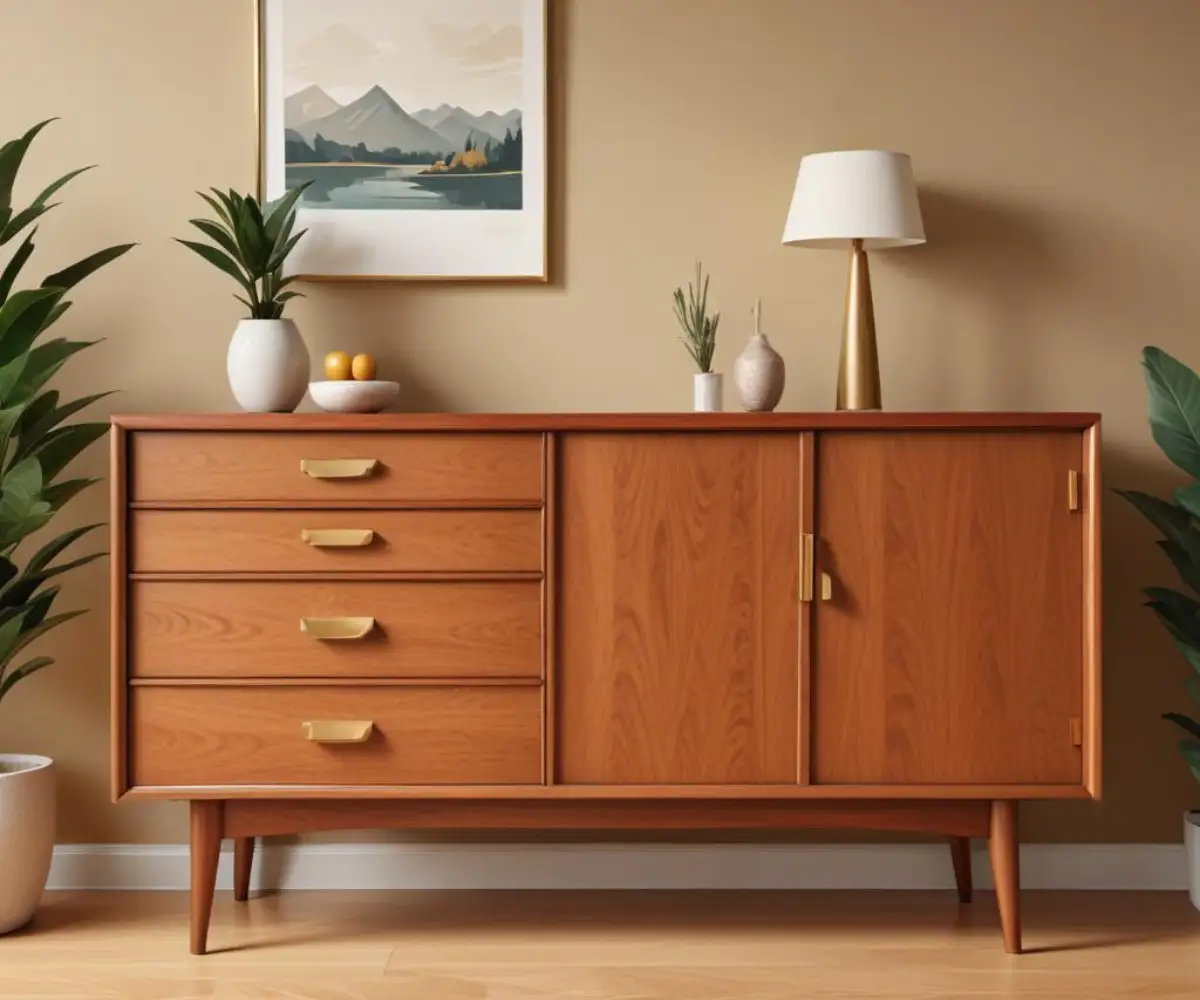
Construction & Joinery: A Tale of Lasting Quality
The quality of Wrighton furniture extends beyond its surface appearance. The construction methods speak volumes about the brand’s commitment to durability. Unlike modern flat-pack furniture, Wrighton pieces were built to last for generations.
Examine the drawers for signs of superior craftsmanship, such as dovetail joints, which create a strong, interlocking connection that resists being pulled apart. The carcasses and frames were often made from solid wood, providing a sturdy foundation for the elegant veneers. This robust construction is a reliable indicator of high-quality vintage furniture.
The Weight Test: Substance Over Style
One of the simplest yet most effective tests is to assess the weight of the furniture. Authentic mid-century pieces made from solid wood and thick, high-quality veneers are inherently heavy and substantial. This is a direct result of the dense, durable materials used in their construction.
If you try to move a sideboard or chest of drawers and it feels surprisingly light, it might be a more modern reproduction made from cheaper materials like particleboard. A genuine Wrighton piece will have a satisfying heft to it, reflecting its solid build and the quality of the timber used.
The Wrighton in Your Home: Styling for the 21st Century
Integrating vintage furniture into a modern home can create a space that is both stylish and full of character. Wrighton’s timeless designs make their pieces particularly versatile, capable of complementing a wide range of contemporary interiors. The key is to create a dialogue between the old and the new.
The Living Room Centrepiece
A Wrighton sideboard is a perfect statement piece for a modern living room. Its clean lines and warm wood tones provide a beautiful contrast to more contemporary elements. Use it as a media unit, placing a sleek, modern television on top, or as a display surface for art, plants, and collected objects.
The generous storage is ideal for hiding away clutter, maintaining a minimalist aesthetic. Pair it with a plush, modern sofa and a geometric rug to create a balanced and inviting living space. The result is a room that feels curated and personal, blending the best of mid-century design with modern comfort.
The Elegant Dining Room
In the dining room, a Wrighton piece can add a touch of sophisticated history. A long, low sideboard offers the perfect solution for storing dinnerware, linens, and serving pieces. Its surface can be used as a buffet for gatherings or as a stylish bar area for mixing cocktails.
Pairing a vintage wooden sideboard with modern dining chairs and a minimalist table creates a dynamic and interesting contrast. This blend of styles prevents the room from feeling like a museum piece, instead creating a fresh and contemporary dining experience that honors classic design.
Beyond the Obvious: Creative Uses
Don’t be afraid to think outside the box when placing your Wrighton furniture. A small chest of drawers can make an excellent entryway console, providing storage for keys and mail. In the bedroom, a dressing table can be repurposed as a chic desk for a home office nook.
Even the bathroom can benefit from a touch of mid-century elegance, with a smaller cabinet potentially being adapted into a unique vanity unit. When undertaking such creative projects, ensuring every detail is perfect is crucial. Considering aspects like the finish of your surfaces, such as exploring the Sir Grout cost for professional tiling and grout work, can elevate the entire space to match the quality of your vintage furniture.
Preserving the Legacy: A Guide to Care and Restoration
Proper care and thoughtful restoration are essential to preserving the beauty and value of your Wrighton furniture. These pieces were built to last, but decades of use require a gentle and informed approach to maintenance. Understanding the right techniques will ensure your furniture remains a stunning feature in your home for years to come.
Gentle Cleaning: The Do’s and Don’ts
When it comes to cleaning vintage wood furniture, less is always more. Avoid using harsh chemical cleaners, silicone-based polishes, or excessive water, as these can damage the original finish and the wood veneer. The best approach is simple and gentle.
For regular dusting, use a soft, dry microfiber cloth. For a more thorough cleaning, lightly dampen a cloth with water and a tiny drop of mild soap. Always wipe in the direction of the wood grain and immediately dry the surface with a separate clean, dry cloth. This prevents moisture from seeping into the wood and causing damage.
To Restore or Not to Restore?
The decision to restore a piece of vintage furniture is a significant one that can impact its value and authenticity. Sometimes, the minor scratches and signs of age, known as patina, add to the character of the piece and should be preserved. A light refresh is often better than a full-blown restoration.
For finishes that are in relatively good condition, a simple application of a quality wax or reviving polish can bring back the luster and protect the wood. For pieces with significant damage, such as deep scratches or large areas of missing veneer, a professional restorer should be consulted. A botched restoration attempt can devalue a piece far more than honest wear and tear.
Common Repairs and Their Solutions
Over time, vintage furniture may develop minor issues that can often be addressed with simple repairs. Loose joints or wobbly legs can frequently be fixed by carefully tightening screws or re-gluing the joint with wood glue and clamping it until dry. For sticky drawers, rubbing a bit of wax on the runners can help them slide smoothly again.
Small chips in the veneer can be a more delicate issue. This often requires specialized glue and careful clamping to re-adhere the piece. Tackling these small repairs as they arise prevents them from becoming larger, more significant problems down the line.
| Feature | Wrighton Furniture (Original) | Modern Reproduction |
|---|---|---|
| Materials | Solid wood frames with high-quality, thick-cut veneers (Teak, Walnut) | Particleboard or MDF with thin, often synthetic, laminate or veneer |
| Construction | Traditional joinery such as dovetail and mortise-and-tenon joints | Simplified construction using screws, staples, and cam locks |
| Weight | Heavy and substantial due to dense, solid materials | Lightweight and easier to move |
| Hardware | Often solid brass or bespoke metal pulls with an aged patina | Lighter, mass-produced hardware, often from plated alloys |
| Patina & Age | Develops a rich patina over time; shows signs of history and use | Uniform finish that lacks the depth and character of aged wood |
| Long-Term Value | Tends to hold or increase in value as a desirable antique | Depreciates in value quickly; low resale potential |
The Investment Potential: Is Wrighton Furniture Valuable?
The market for mid-century modern furniture has seen a significant resurgence in recent decades. Design enthusiasts and collectors appreciate the clean aesthetics, high-quality materials, and superior craftsmanship of the era. Wrighton furniture, as a prime example of British mid-century design, is highly regarded and can be a worthwhile investment.
The value of a specific piece is determined by several factors. Condition is paramount; furniture that has been well-cared for and retains its original finish will always command a higher price. Rarity and the specific design of the model also play a crucial role. A large, elegant sideboard from a desirable range will naturally be worth more than a more common, smaller piece.
Prices can range from a modest sum for a small item to several hundred or even thousands of pounds for rare and exceptional pieces in pristine condition. You can find Wrighton furniture through vintage dealers, at auction houses, and on online marketplaces. Always research recent sale prices of comparable items to get a good sense of the current market value before buying or selling.
Expanding Your Vintage Collection: What to Look for Next
Once you’ve discovered the appeal of Wrighton furniture, you may be inspired to expand your collection of vintage pieces. Exploring other renowned British manufacturers from the same era can be a rewarding journey. Brands like G-Plan and Ercol are famous for their own iconic designs and commitment to quality, offering a wide range of styles to discover.
A well-rounded home and garden reflects quality both indoors and out. As you curate your interior with timeless furniture, consider how that same principle of durability and thoughtful design applies to your outdoor spaces. Maintaining exterior features, like a sturdy wood fence on top of a concrete block wall, ensures your entire property is a testament to lasting quality and style.
Frequently Asked Questions (FAQ)
Navigating the world of vintage furniture can bring up many questions. Here are answers to some of the most common inquiries about Wrighton furniture to help you on your journey as a collector and caretaker of these fine pieces.
How can I be sure my Wrighton furniture is authentic?
The most reliable method is to locate the maker’s mark, which is usually a gold stamp with the “Wrighton” name inside a drawer or on the back. Beyond the mark, look for the key characteristics of quality: heavy construction, real wood veneers, and traditional joinery like dovetail joints. These features are difficult and costly to replicate and are strong indicators of an authentic vintage piece.
What is the best way to clean a teak Wrighton sideboard?
The best approach is gentle and minimal. Dust regularly with a soft, dry cloth. For grime, use a slightly damp cloth, wiping with the grain, and dry it immediately. Avoid all-purpose sprays and silicone-based polishes, as they can build up on the surface and damage the finish over time. For a deeper clean or to restore luster, use a specialized teak oil or wax sparingly, following the product instructions carefully.
Is it worth it to have my Wrighton furniture professionally restored?
This depends entirely on the condition of the piece and your goals. If the furniture has significant structural damage or badly damaged veneer, a professional restoration can bring it back to life and is often a worthwhile investment. However, if the piece only has minor wear and a lovely patina, a full restoration might diminish its character and historical value. It’s often best to consult with a reputable restorer to get an expert opinion before proceeding.
Where did F. Wrighton & Sons make their furniture?
F. Wrighton & Sons Ltd was a London-based company. Their primary factory, known as the Brampton Works, was located on Billet Road in Walthamstow, a district in East London that was once a major hub for the British furniture industry. This is where their celebrated mid-century modern pieces were designed and manufactured.
A Timeless Addition to Any Home
Wrighton furniture represents more than just a place to store belongings; it is a piece of British design history. These beautifully crafted items embody a commitment to quality, elegance, and functional design that has allowed them to transcend trends and remain stylish for over half a century. From their solid construction to their graceful lines, each piece tells a story of an era when furniture was made to last a lifetime.
By learning to identify, care for, and thoughtfully integrate these pieces into your home, you become a custodian of that legacy. An investment in a piece of Wrighton furniture is an investment in timeless style and enduring quality. Just as investing in a quality piece of furniture prepares your home’s interior for a lifetime of style, being ready for the changing seasons outdoors is equally important. Thinking ahead, for instance, about tools for winter like the robust performance of a Toro S120 snowblower ensures your entire property, inside and out, is cared for with quality in mind.
