
Winter Storm Quartzite: Your Guide to Marble’s Tougher Rival
Choosing the perfect countertop is a defining moment in any home renovation. You want a surface that not only captivates with its beauty but also stands up to the rigors of daily life. For many, the elegant, sweeping veins of marble are the dream, yet the reality of its delicate nature—the constant fear of stains and scratches—can be a significant deterrent.
This is the central problem for discerning homeowners: finding a material that delivers the stunning aesthetic of high-end marble without its notorious maintenance demands. Enter Winter Storm quartzite, a natural stone that offers a compelling solution. This guide will explore how this remarkable material provides the visual drama you crave with the resilience your home and garden lifestyle demands.
You'll Learn About
What Exactly is Winter Storm Quartzite?
Understanding the material beneath the beauty is crucial for making a confident investment in your home. Winter Storm quartzite is not just a pretty surface; it’s a testament to the transformative power of nature, offering a unique blend of elegance and strength that few other materials can match.
The Geology Behind the Beauty
Winter Storm is a true quartzite, a natural metamorphic rock. Its journey begins as sandstone, which, under immense heat and pressure deep within the Earth’s crust, undergoes a remarkable transformation. The individual quartz grains recrystallize and fuse, creating an incredibly dense and hard stone.
This geological process is what gives quartzite its signature strength and durability. Unlike engineered stones, every slab of Winter Storm quartzite is entirely natural, meaning each piece has a unique pattern and story written over millions of years. This ensures your countertop is a one-of-a-kind work of art.
Decoding the “Winter Storm” Aesthetic
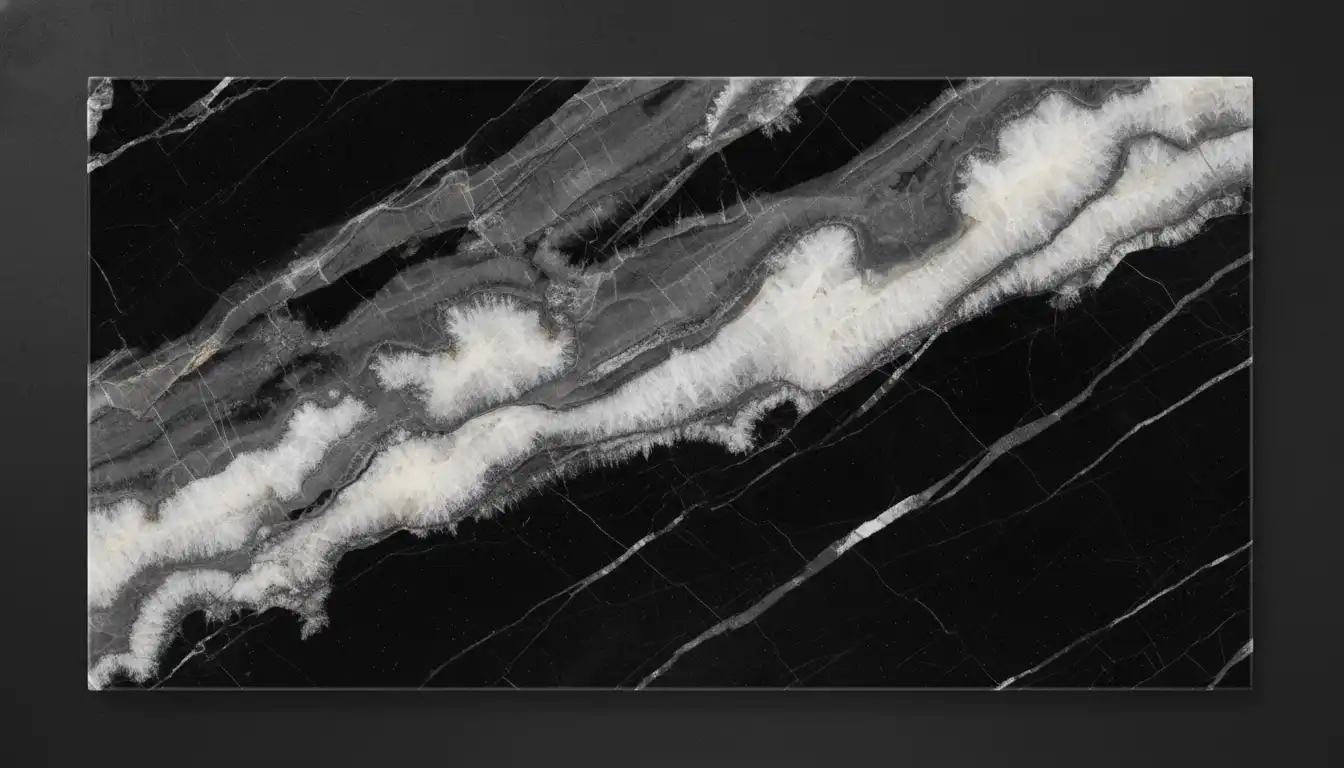
The name “Winter Storm” perfectly captures the stone’s dramatic appearance. It typically features a cool white or light grey background, serving as a canvas for bold, sweeping veins of dark grey and black. The patterns evoke the dynamic, powerful beauty of a winter blizzard or a dramatic, frosted sky.
The movement in the stone can range from linear and directional to chaotic and swirling, offering a variety of moods to suit different design schemes. The interplay between the light background and dark veining creates a stunning visual contrast that makes it a captivating focal point in any room.
The Quartzite vs. Marble vs. Granite Showdown
Navigating the world of natural stone can be confusing. Homeowners are often caught between the classic beauty of marble and the trusted durability of granite. Winter Storm quartzite emerges as a powerful contender, often bridging the gap by offering the best attributes of both.
Durability: The Hardness Test
A stone’s hardness is a critical factor in its ability to resist everyday wear and tear. Measured on the Mohs scale, quartzite typically ranks around a 7. This makes it significantly harder than marble, which usually sits between a 3 and 4 on the scale.
In practical terms, this means Winter Storm quartzite is highly resistant to scratches and chipping. While materials like marble can be easily scratched by knives or abrasive cookware, quartzite holds up remarkably well, making it an excellent choice for busy kitchens where life happens.
Porosity and Staining: A Homeowner’s Concern
Porosity refers to the tiny pores within a stone that can absorb liquids, leading to stains. Marble is notoriously porous, quickly soaking up spills like red wine or coffee. While Winter Storm quartzite is naturally less porous than marble, it is not completely impervious.
To guard against staining, quartzite requires a quality sealer to be applied upon installation and periodically thereafter. When properly sealed, it becomes highly resistant to stains, offering peace of mind that a simple spill won’t result in a permanent blemish. This makes its maintenance profile much closer to that of granite.
Maintenance and Upkeep Compared
The long-term enjoyment of your countertop depends on its maintenance requirements. Marble demands constant vigilance, as acidic substances like lemon juice or vinegar can easily etch the surface, dulling its finish. Granite is more forgiving but still requires consistent sealing to prevent stains.
Winter Storm quartzite strikes an ideal balance. With its robust hardness and proper sealing, it requires minimal daily upkeep. A simple cleaning with mild soap and water is all that’s needed to keep it looking pristine, allowing you to enjoy its beauty without constant worry.
| Feature | Winter Storm Quartzite | Marble (e.g., Carrara) | Granite (e.g., Uba Tuba) |
|---|---|---|---|
| Hardness (Mohs Scale) | ~7 | 3-4 | 6-7 |
| Composition | Metamorphic Sandstone | Metamorphic Limestone | Igneous Rock |
| Scratch Resistance | Very High | Low | High |
| Etch Resistance (from acid) | High | Very Low | Very High |
| Stain Resistance (Sealed) | High | Low | High |
| Maintenance Level | Low (Periodic Sealing) | High (Constant Care) | Low (Periodic Sealing) |
Designing Your Home with Winter Storm Quartzite
The versatility of Winter Storm quartzite allows it to elevate a wide range of interior styles. Whether your home is modern and minimalist or classic and traditional, this stone can serve as a stunning and functional centerpiece. Its dramatic patterning and neutral color palette provide a perfect foundation for countless design possibilities.
Kitchen Countertops: The Star of the Show
In the kitchen, Winter Storm quartzite truly shines. Its durability makes it more than capable of handling the demands of a high-traffic cooking space. The stone’s dramatic veining creates an immediate focal point, especially when used for a large island.
It pairs beautifully with a variety of cabinet colors. For a crisp, modern look, match it with white or light grey cabinets. To create a bold, high-contrast design, pair it with black or dark navy cabinetry. The stone also complements natural wood tones, adding a touch of organic elegance to the space. Achieving a seamless look with your new countertops often involves other adjustments; for a flush installation of your range, you might find that moving the gas pipe behind the oven is necessary for that perfect fit.
Bathroom Vanities and Walls: A Touch of Luxury
Winter Storm quartzite can transform a bathroom into a spa-like retreat. As a vanity top, its durability and resistance to moisture (when sealed) make it a practical and beautiful choice. The sweeping veins add a sense of movement and luxury to the space.
For a truly high-impact design, consider using large slabs for shower walls or as a full-height backsplash behind the vanity. Fabricators can often “bookmatch” adjacent slabs, creating a stunning, symmetrical pattern that turns your bathroom into a work of art.
Beyond the Counter: Fireplace Surrounds and Feature Walls
The application of Winter Storm quartzite isn’t limited to horizontal surfaces. Its beauty and heat resistance make it an exceptional material for fireplace surrounds. A floor-to-ceiling fireplace clad in this dramatic stone creates an unforgettable focal point in a living room or great room.
Similarly, it can be used to create a stunning feature wall in an entryway, dining room, or behind a bed. This application showcases the stone’s natural artistry, adding texture, pattern, and a profound sense of luxury to any area of your home.
The Essential Guide to Care and Maintenance
While Winter Storm quartzite is remarkably durable, proper care is essential to preserve its beauty for decades. Understanding the simple, routine steps required for its maintenance ensures your investment remains as stunning as the day it was installed. Fortunately, its upkeep is straightforward and requires far less effort than more delicate stones.
Sealing: Your First Line of Defense
Sealing is non-negotiable for quartzite. Although it is less porous than marble, it can still absorb liquids if left unsealed. A high-quality penetrating sealer creates an invisible barrier, preventing spills from seeping into the stone and causing stains.
Your fabricator should apply the initial seal upon installation. You can check if it needs resealing with a simple “water test”: puddle a small amount of water on the surface and wait a few minutes. If the water beads up, the seal is strong; if it darkens the stone, it’s time to reseal.
Daily Cleaning Made Simple
For everyday cleaning, a gentle approach is best. Simply wipe the surface with a soft cloth using a pH-neutral cleaner specifically designed for stone, or a solution of mild dish soap and warm water. This is sufficient to remove crumbs and daily grime without damaging the sealer.
It is critical to avoid harsh or acidic chemicals. Cleaners containing vinegar, lemon juice, bleach, or ammonia can break down the sealer and even etch the stone’s surface over time. Abrasive powders or scrubbing pads should also be avoided, as they can dull the polished finish.
Tackling Spills and Preventing Stains
The key to preventing stains is to act quickly. Wipe up spills, especially from acidic or highly pigmented substances like wine, coffee, citrus, and oil, as soon as they happen. This prevents them from having time to potentially penetrate the sealer.
While ensuring your countertops are pristine, it’s also a good time to review other home safety systems. For instance, updating your smoke detectors can be a crucial upgrade, and many homeowners now replace a wired smoke detector with a wireless model for modern convenience.
Cost and Finding the Perfect Slab
Investing in Winter Storm quartzite is a significant decision, and understanding the associated costs and selection process is key to a successful project. As a premium natural stone, its price reflects its durability, rarity, and unique beauty. Planning your budget and knowing what to look for will empower you to make an informed choice.
Understanding the Price Tag
Winter Storm quartzite is generally considered an upper-mid to high-end countertop material. The price per square foot can vary significantly based on several factors, including your geographic location, the specific slab’s rarity, and the complexity of the fabrication and installation.
Key factors that influence the final cost include the thickness of the slab (3cm is standard for kitchens), the intricacy of the edge profile you choose, and the number of cutouts required for sinks and cooktops. It’s wise to get quotes from several reputable fabricators to ensure a competitive price.
Tips for Selecting Your Winter Storm Slab
Choosing your slab is one of the most exciting parts of the process. Always view the full slabs in person at a stone yard. Small samples cannot capture the full movement and variation of the stone, and what you see in a large piece may be very different.
When planning a major kitchen remodel that includes new countertops, it’s also wise to consider the underlying infrastructure. If you’re in an older home, you might need to address outdated electrical systems; understanding your homeowner’s insurance policy regarding things like knob and tube wiring and State Farm’s guidelines is essential before you begin.
Common Misconceptions and Pro Tips
The natural stone industry can be complex, and misinformation is common. Arming yourself with expert knowledge will help you navigate the process, avoid potential pitfalls, and ensure you get a genuine, high-quality product. Addressing these common points of confusion is vital for a successful renovation.
Is It *Really* Quartzite? The Glass Test
One of the biggest challenges in the market is the mislabeling of stones. Some softer stones, like marble or dolomite, are occasionally sold as “soft quartzite.” To ensure you are getting a true, hard quartzite like Winter Storm, you can perform a simple test.
Ask for a sample of your chosen slab. Using the edge of the stone sample, try to scratch a piece of glass. A true quartzite is harder than glass and will easily scratch it. If the stone crumbles or fails to leave a significant scratch, it may be a softer material.
Working with Fabricators: Questions to Ask
Your fabricator is your partner in this project, and their expertise is crucial. A skilled fabricator can make or break the final result. Be sure to ask them key questions before committing:
Inquire about their experience working specifically with Winter Storm or similar hard quartzites. Ask how they plan to lay out the templates on the slab to best feature the veining and where seams will be placed. A good fabricator will work with you to ensure the most beautiful parts of the stone are highlighted.
The Truth About Heat Resistance
Winter Storm quartzite has excellent heat resistance, a direct result of the intense heat it endured during its formation. You can place hot pots and pans on the surface without fear of burning or melting it. This is a significant advantage over engineered quartz, which can be damaged by high heat.
However, it is still a best practice to use trivets or hot pads. This is not to protect the stone itself from heat, but to avoid the slight risk of thermal shock—a rare phenomenon where a sudden, extreme temperature change could theoretically cause a fissure. It also protects your sealer from unnecessary wear.
In conclusion, Winter Storm quartzite stands out as an exceptional choice for homeowners seeking the dramatic beauty of marble paired with the robust durability needed for a busy household. Its natural formation gives it a unique character that cannot be replicated, ensuring your space will be truly one-of-a-kind. By understanding its properties and committing to simple maintenance, you can enjoy this stunning natural stone for a lifetime.
Its ability to resist scratches, stains, and heat makes it a practical and powerful solution to the common countertop conundrum. By choosing Winter Storm quartzite, you are not just selecting a surface; you are investing in a piece of geological art that will be the enduring heart of your home.
Final Words
Winter Storm Quartzite offers the perfect marriage of high-drama aesthetics and heavy-duty performance. By choosing this stone, you aren’t just selecting a countertop; you are choosing a surface that rivals marble’s legendary beauty while delivering the rugged durability required for a modern, active kitchen.
The Quartzite Advantage
-
Superior Strength: With a hardness that surpasses granite, it easily resists the scratches and chips that often plague softer stones like marble.
-
Etch Resistance: Unlike marble, Winter Storm Quartzite is highly resistant to the dull “etch” marks caused by lemon juice, wine, and other acidic household spills.
-
Natural Artistry: Each slab features a unique, crystalline structure with cool white backgrounds and striking grey veining that creates a “frozen” landscape effect in any room.
Ultimately, Winter Storm Quartzite is the ideal investment for those who refuse to compromise between form and function. It provides the “wow factor” of a luxury natural stone without the high-maintenance “babysitting” that marble requires. When you install Winter Storm, you’re not just finishing a renovation—you’re installing a timeless centerpiece that will look as pristine in a decade as it does on day one.
