Window Film for Privacy But Lets Light In: Stop Sacrificing Sunlight for Seclusion
There’s a classic homeowner’s dilemma that plays out in living rooms, bathrooms, and front entryways across the country. You crave bright, sun-filled spaces, but you also value your privacy from the outside world. For too long, the solution involved a frustrating compromise: heavy curtains that block views but also plunge rooms into darkness, or blinds kept permanently shut, defeating the purpose of having a window in the first place.
This constant trade-off between light and privacy feels outdated and unnecessary in a modern home. You shouldn’t have to choose between feeling exposed to your neighbors and living in a dimly lit cave. There is a better way to achieve both seclusion and a beautifully illuminated home, and it’s simpler and more stylish than you might think.
The solution is privacy window film, a versatile and elegant material that transforms any glass surface. It’s designed specifically to solve this problem by obscuring the view from the outside while allowing soft, natural light to filter through, brightening your space without compromising your peace of mind.
You'll Learn About
Unlocking Your Options: A Guide to Different Privacy Films
Not all privacy films are created equal. Understanding the different types is the key to finding the perfect balance of style, privacy, and light for each room in your home. From subtle frosting to bold decorative statements, there’s a film for every need.
Frosted Window Film
Frosted window film is the most popular choice for 24/7 privacy. It mimics the look of etched or sandblasted glass, creating a smooth, translucent surface that completely obscures visibility from both inside and out. While it blocks direct views, it excels at diffusing sunlight, scattering it softly throughout the room to create a bright, glare-free environment. This makes it a perfect choice for moisture-prone areas like bathrooms; however, special care is always needed for a wood window in a shower to prevent moisture damage. Its clean, minimalist aesthetic fits seamlessly with any decor style.
Decorative and Patterned Film
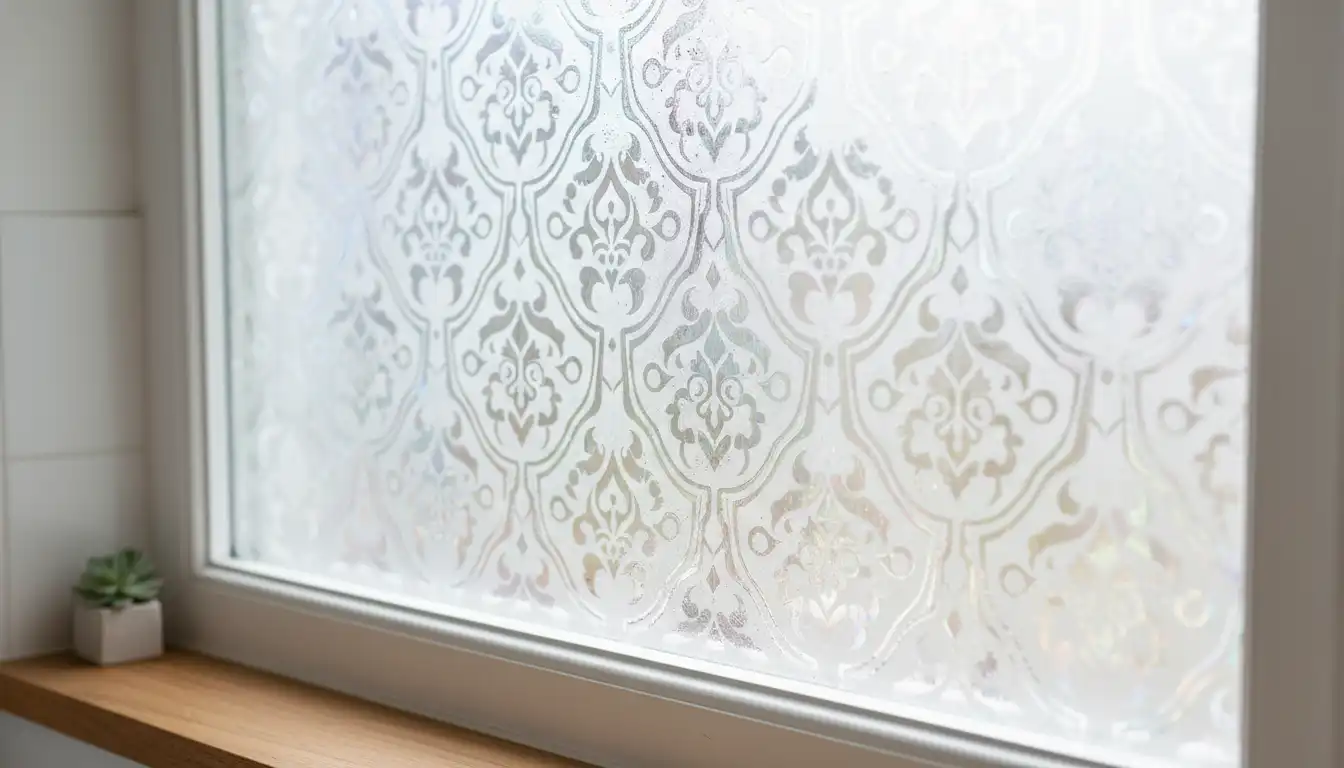
For those who want to turn a window into a design feature, decorative film is the answer. Available in a vast array of patterns—from modern geometric shapes and classic stripes to intricate floral designs and stained-glass effects—this film adds personality and style. The level of privacy depends on the specific design; some patterns offer more obscurity than others. A modern geometric pattern can completely transform a space, much like updating an outdated half-moon window might rejuvenate a room’s entire feel.
One-Way Mirror Film
Also known as reflective film, one-way mirror film offers excellent daytime privacy. It works on a light differential, creating a mirror-like appearance on the brighter side of the glass. During the day, anyone outside sees their reflection, while you can see out clearly. However, it is crucial to understand that this effect reverses at night. When your lights are on inside, and it’s dark outside, people will be able to see in, and your view out will be of your own reflection. Because of this, it’s best for daytime-only privacy needs.
Blackout and Whiteout Film
For situations demanding absolute privacy and light blocking, blackout and whiteout films are the ultimate solution. Blackout film blocks nearly 100% of light, making it ideal for bedrooms, home theaters, or any space where complete darkness is desired. Whiteout film provides the same level of total privacy but with a clean, bright white finish, maintaining a sense of space while obscuring all views.
The Hidden Benefits: More Than Just Privacy
While the primary reason for choosing window film is often privacy, its advantages extend far beyond simply blocking views. These additional benefits contribute to a more comfortable, secure, and energy-efficient home, making window film a truly multi-functional upgrade.
Protects Your Interior from UV Rays
One of the most significant yet often overlooked benefits is UV protection. Most high-quality window films are designed to block up to 99% of harmful ultraviolet (UV) rays. These are the rays responsible for causing your hardwood floors, furniture, carpets, and artwork to fade over time. By installing window film, you create an invisible shield that preserves the color and integrity of your home’s interior, protecting your investments from sun damage.
Increases Energy Efficiency
Window film can also have a noticeable impact on your energy bills. Many films, especially solar control and reflective types, are designed to reject a significant amount of solar heat. By reducing heat gain through your windows during hot summer months, the film helps keep your home cooler, lessening the strain on your air conditioning system. This translates to lower energy consumption and a more comfortable indoor temperature year-round.
Reduces Glare and Improves Comfort
Bright sunlight is beautiful, but the resulting glare on television screens, computer monitors, and tablets can be incredibly frustrating. Window film softens and diffuses harsh light, significantly reducing glare without sacrificing natural brightness. This makes rooms more comfortable and functional, whether you’re working from home, watching a movie, or simply relaxing.
Adds a Layer of Safety and Security
An unexpected benefit of window film is its ability to improve the safety of your glass. In the event of accidental breakage or an impact from severe weather, the film’s strong adhesive helps to hold shattered glass pieces together. This can prevent dangerous shards from scattering, reducing the risk of injury and making cleanup safer. Some thicker security films are even designed to deter intruders by making the glass more difficult to penetrate.
Your Step-by-Step Guide to Choosing the Perfect Film
Selecting the right window film requires a clear understanding of your specific needs for each space. By evaluating factors like privacy levels, light transmission, and aesthetic goals, you can confidently choose a film that delivers the perfect combination of function and style for any room in your house.
Step 1: Assess Your Privacy and Light Needs
The first step is to determine how much privacy you need. For a bathroom or a ground-floor bedroom, you’ll likely want a high level of privacy that completely obscures the view. In this case, a frosted, whiteout, or densely patterned film is ideal. For a living room or kitchen, you may prefer a film that blurs the view without blocking it entirely, allowing for more light. Look for the Visible Light Transmission (VLT) rating on film packaging. A lower VLT percentage means less light gets through and privacy is higher, while a higher VLT allows more light.
Step 2: Consider the Room’s Function and Lighting
Think about how and when you use the room. For spaces where nighttime privacy is critical, avoid one-way mirror films, as their effect reverses after dark. Frosted and decorative films provide consistent, 24-hour privacy regardless of the lighting conditions. It’s also a great solution for adding privacy to a window behind a range where traditional curtains would be a fire hazard and difficult to keep clean.
Step 3: Match the Film to Your Home’s Aesthetic
Window film should complement your home’s decor. A simple frosted film offers a clean, modern look that suits almost any style. Decorative films, on the other hand, can be used to make a statement, add a pop of color, or reinforce a design theme. Before committing, it’s always a good idea to order samples to see how different patterns and textures look in your space and with your lighting.
| Film Type | Privacy Level (Day/Night) | Light Transmission | Best For |
|---|---|---|---|
| Frosted Film | High / High | High (Diffused) | Bathrooms, Bedrooms, Front Doors |
| Decorative Film | Varies / Varies | Medium to High | Living Rooms, Sidelights, Offices |
| One-Way Mirror Film | High / Low | Medium | Daytime privacy in offices, street-facing rooms |
| Blackout/Whiteout Film | Complete / Complete | None | Home Theaters, Nurseries, Light-sensitive areas |
DIY Installation or Call in the Pros? A Realistic Breakdown
Once you’ve chosen your film, the next decision is whether to install it yourself or hire a professional. While DIY installation is budget-friendly and achievable for many, a flawless, bubble-free finish often requires an expert touch, especially on large or hard-to-reach windows.
The DIY Route: Tips for Success
Modern static cling window films are designed to be user-friendly, making DIY installation a popular option. For a successful project, preparation is key. Start by thoroughly cleaning the glass surface to remove any dust, grime, or residue, as even the smallest speck can create a bubble. Use a simple solution of water and a few drops of baby shampoo in a spray bottle to wet the glass and the adhesive side of the film. This solution allows you to slide the film into the perfect position before squeegeeing out the water and bubbles, working from the center outwards. Finally, use a sharp utility knife to trim the excess film for a clean, precise fit.
When to Hire a Professional
While DIY is tempting, there are times when calling a professional is the smarter choice. For very large windows, specialty-shaped glass, or hard-to-reach areas like skylights, professionals have the tools and experience to ensure a perfect application. They can handle challenging installations without the risk of creases, bubbles, or misalignment. A professional job often comes with a warranty, providing peace of mind that your investment is protected and will look great for years to come.
Common Questions & Expert Answers About Privacy Film
Even after deciding on window film, many homeowners have lingering questions about its durability, effectiveness, and maintenance. Getting clear, expert answers can help you feel confident in your decision to enhance your home’s privacy and comfort.
How long does window film last?
The lifespan of window film depends on its quality, the climate, and the window’s exposure to direct sunlight. Generally, professionally installed, high-quality films can last for 15 to 20 years or even longer. DIY-grade films may have a shorter lifespan but still offer many years of effective performance when applied correctly.
Will window film damage my windows?
Modern, high-quality window films are designed to be safe for most types of residential glass. However, it’s important to use the correct type of film for your windows. For dual-pane or Low-E windows, some heavy, heat-absorbing films can increase the risk of thermal stress. Always check the manufacturer’s specifications or consult a professional to ensure the film is compatible with your specific window type.
How do you clean windows with film applied?
Cleaning windows with film is simple. Wait about 30 days after installation for the film to fully cure. After that, you can clean the surface using a soft, lint-free cloth or a rubber squeegee and a gentle, ammonia-free cleaning solution. Avoid using abrasive scrubbers or harsh chemicals, as they can scratch or damage the film’s surface.
A Brighter, More Private Home Awaits
Privacy window film offers a sophisticated and practical solution to the age-old conflict between privacy and natural light. It empowers you to reclaim your space, creating a secure and secluded environment without sacrificing the bright, airy atmosphere you love. With added benefits like UV protection, glare reduction, and improved energy efficiency, it is one of the smartest and most cost-effective upgrades you can make to your home.
By choosing the right film and ensuring proper installation, you can transform your windows from sources of vulnerability into features that enhance both the beauty and comfort of your living space. Stop compromising and start enjoying a home that is both perfectly private and brilliantly lit.