
Blue Tint on New Windows? The Surprising Reason It’s a Good Thing
You’ve just invested in beautiful, brand-new windows. The installation is complete, and you step back to admire your home’s upgraded curb appeal. But then you notice it—a subtle, almost imperceptible blue tint to the glass. Your heart sinks a little. Is this a defect? Was there a mistake in the order? It’s a common concern that can leave homeowners feeling confused and even disappointed.
This faint blue or sometimes greenish hue is not a sign of a problem. In fact, it’s often an indicator of a high-performance, energy-efficient window that is working exactly as it should. Understanding the science behind this tint can turn that initial worry into appreciation for the advanced technology protecting your home.
You'll Learn About
Decoding the Blue Tint: The Role of Low-E Coatings
The primary reason for the blue tint on new windows is a feature called a Low-E (Low-Emissivity) coating. This is an ultra-thin, transparent layer of metallic oxides applied to the glass surface during manufacturing. Its purpose is to filter out specific wavelengths of light, namely ultraviolet (UV) and infrared (IR) rays, while allowing visible light to pass through.
Think of it as a smart filter for sunlight. It blocks the invisible parts of the solar spectrum that you don’t want—the heat from infrared rays and the fabric-fading effects of UV rays—while letting in the natural daylight that brightens your home. This technology is a cornerstone of modern, energy-efficient window design, helping to keep your home cooler in the summer and warmer in the winter.
Why Does a Metallic Coating Look Blue?
The specific color of the tint is a byproduct of the metals used in the Low-E coating, which most commonly include silver. The number of silver layers can influence the tint’s visibility and performance. For instance, a coating with three layers of silver (a triple-stack) might have a more noticeable tint than one with a single layer, but it will also offer superior solar control.
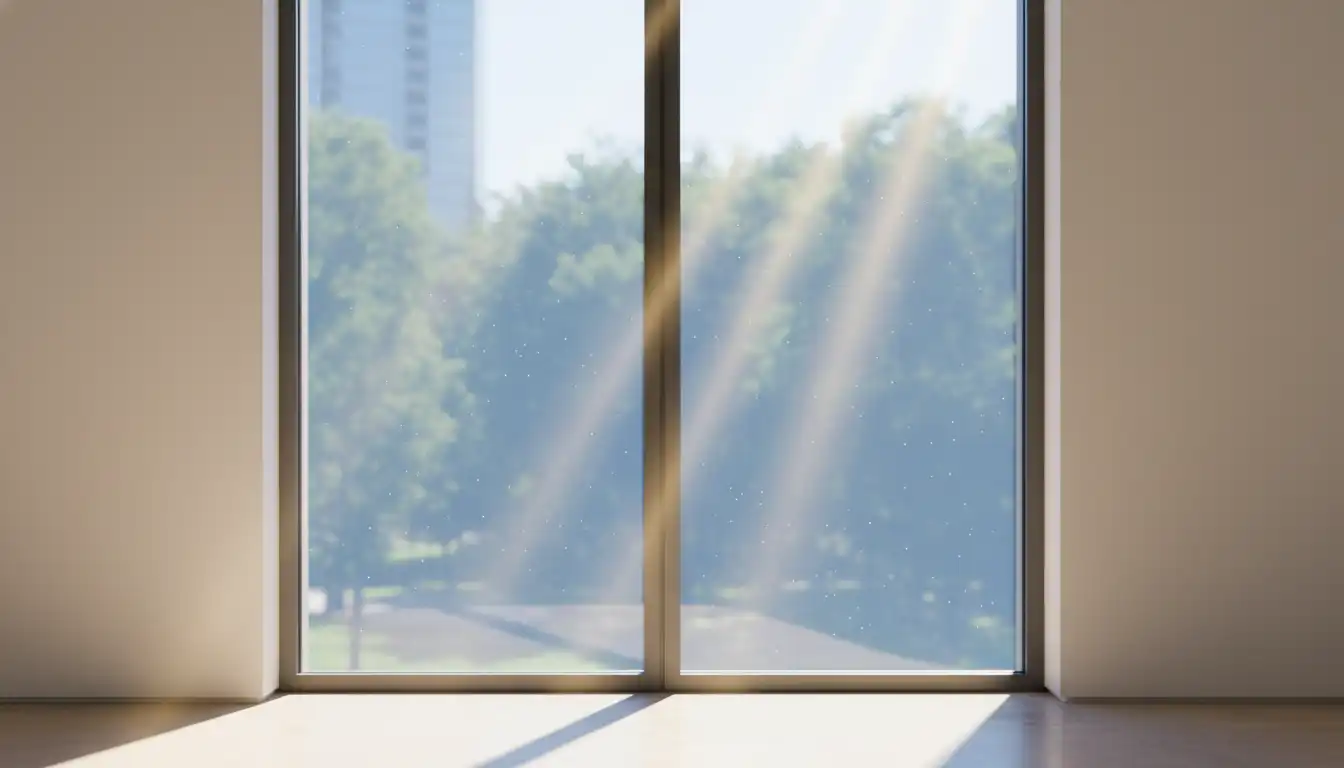
This faint hue is a natural optical effect caused by the coating reflecting certain parts of the light spectrum. While often perceived as blue, the tint can sometimes appear slightly green or gray depending on the specific formulation of the coating, the viewing angle, and the lighting conditions. The appearance can be more pronounced on an overcast day or when the sun is at a particular angle.
Not a Defect, But a Feature: The Benefits of That Tint
Seeing that slight color on your glass is visual confirmation that your windows are equipped with advanced technology. This isn’t just a simple pane of glass; it’s a high-performance barrier that enhances your home’s comfort and efficiency in several key ways.
Embracing this feature means recognizing the value it adds. From substantial energy savings to protecting your valuable interiors, the benefits are far-reaching. Let’s explore why this subtle tint is one of the best features of modern windows.
Enhanced Energy Efficiency and Lower Utility Bills
The most significant advantage of Low-E coatings is their impact on your home’s energy consumption. By reflecting infrared heat, these windows minimize heat transfer. In the summer, they reflect the sun’s heat away from your home, reducing the load on your air conditioning system. In the winter, they reflect your home’s internal heat back into the room, preventing it from escaping outside.
This dual-action performance leads to a more stable indoor temperature year-round and can result in significant savings on your heating and cooling bills. Your HVAC system won’t have to work as hard, which also extends its lifespan.
Protection from Harmful UV Rays
Ultraviolet radiation is a major cause of fading in furniture, carpets, hardwood floors, and artwork. The metallic particles in Low-E coatings are specifically designed to block a large percentage of these damaging UV rays. That subtle blue tint is a sign that your valuable interiors are being protected from premature aging and sun damage.
This level of protection is something that older, uncoated windows simply cannot provide. It’s an essential feature for maintaining the vibrancy and longevity of your home’s furnishings. This is especially important during a new construction walk through, where you want to ensure all installed features are performing as expected to protect your brand-new interior.
Improved Indoor Comfort
Beyond energy savings, Low-E windows contribute directly to a more comfortable living environment. By reducing hot spots and cold drafts near windows, they create a more consistent temperature throughout your home. You can comfortably sit next to a window on a hot, sunny day or a cold winter night without feeling the extreme temperatures from outside.
This technology also significantly reduces glare from the sun, making it easier to watch TV or work on a computer without being bothered by harsh reflections. It’s a subtle but constant improvement to your daily life.
How to Confirm Your Windows Have a Low-E Coating
If you’re curious and want to verify that the blue tint is indeed from a Low-E coating, there’s a simple test you can perform. It’s a quick and easy way to see the technology in action and gain peace of mind.
This method works by observing the reflections of a flame on the different surfaces of the window’s glass panes. The presence of the metallic Low-E coating will alter the color of one of the reflections, making it stand out from the others.
The Flame Test: A Simple Verification
For this test, you’ll need a match or a lighter. Please exercise extreme caution when performing this test and keep the flame away from any flammable materials.
-
Hold the lit match or lighter close to the surface of the window glass.
-
Observe the reflections of the flame in the glass. For a standard double-pane window, you will see four distinct reflections (two for each pane of glass).
-
Look closely at the colors of the reflected flames. If your window has a Low-E coating, one of the four flames will appear to be a different color from the other three. It will often look slightly bluish, greenish, or even reddish, depending on the coating.
If all four reflections are the same color, your window likely does not have a Low-E coating. The different colored flame is the reflection off the coated surface, confirming the presence of this energy-saving feature.
Understanding Different Types of Low-E Coatings
Not all Low-E coatings are created equal. They can be categorized based on their manufacturing process and their performance characteristics. The two primary types are hard-coat and soft-coat Low-E, and their application often depends on the climate where the windows will be installed.
Furthermore, coatings are designed for either solar control or passive heating, making them suitable for different environmental needs. Understanding these distinctions can help you appreciate the specific technology used in your windows.
Hard-Coat vs. Soft-Coat Low-E
The manufacturing process determines whether a coating is a “hard-coat” or “soft-coat.”
-
Hard-Coat (Pyrolytic): This coating is applied to the glass while it is still hot, fusing it to the surface. This creates a very durable coating that is more resistant to scratches. Hard-coat Low-E is generally less effective at reflecting heat and may have a slightly more noticeable tint.
-
Soft-Coat (MSVD): Applied in a vacuum chamber after the glass has cooled, this process involves sputtering multiple layers of metallic particles onto the glass. Soft-coat Low-E offers superior solar performance and is less visible, but it is more delicate and must be protected within the sealed space of a double-pane window.
The vast majority of modern residential windows use soft-coat Low-E technology due to its higher performance.
Solar Control vs. Passive Low-E
Low-E coatings are also tailored for different climates:
-
Solar Control Low-E: Designed for warmer climates, this type of coating has a lower Solar Heat Gain Coefficient (SHGC). It is excellent at reflecting external heat to keep the home cool and reduce air conditioning costs. This is the type that is most often associated with a subtle blue or green tint.
-
Passive Low-E: Ideal for colder climates, this coating allows more of the sun’s short-wave infrared energy to pass through the glass, helping to heat the home passively during the winter. It still reflects the home’s long-wave internal heat back inside, preventing heat loss.
| Coating Characteristic | Solar Control Low-E | Passive Low-E |
|---|---|---|
| Primary Climate | Warm to Hot Climates | Cold to Mixed Climates |
| Main Function | Blocks solar heat from entering | Allows solar heat to enter; prevents indoor heat from escaping |
| Summer Performance | Excellent (reduces cooling costs) | Good (still reflects some heat) |
| Winter Performance | Good (reflects indoor heat) | Excellent (allows passive solar heating) |
| Typical Tint | More likely to have a subtle blue/green tint | Generally clearer appearance |
Other Potential Causes for a Blue Hue
While Low-E coatings are the most common reason for a blue tint, there are a couple of other factors that could be at play, although they are far less frequent. It’s helpful to be aware of these possibilities to rule them out.
These alternatives include protective films left over from installation or the type of gas used between the window panes. Distinguishing between these can help ensure your windows are performing optimally.
Protective Shipping Film
New windows are often shipped with a thin, protective plastic film on the glass to prevent scratches and damage during transport and installation. This film is frequently tinted blue. If you’re seeing a very obvious, vibrant blue color, check the corners and edges of the glass to see if this film is still in place.
This film is meant to be removed after installation is complete. Peeling it off should reveal the true, much subtler tint of the Low-E coating underneath. Leaving this film on can actually trap heat and damage the window seals over time, so it’s important to remove it.
The Role of Argon Gas
Many energy-efficient windows are filled with an inert gas, such as argon, between the panes of glass. Argon is denser than air and acts as an excellent insulator, further reducing heat transfer. Argon gas itself is completely clear and colorless.
However, argon gas is almost always used in conjunction with Low-E coatings. Therefore, while the gas doesn’t cause the tint, its presence is a strong indicator that the window is a high-performance unit that also includes a Low-E coating, which is the actual source of the hue. The combination of these two technologies creates a highly insulating window.
When to Be Concerned (and When Not To)
In almost all cases, a faint, uniform blue, green, or gray tint on new windows is a positive sign of quality and performance. It is something to be expected and even appreciated. The uniformity of the color across the entire pane is a key indicator that this is an intentional feature.
However, there are rare instances where discoloration might signal a problem. It’s crucial to distinguish between the intentional, subtle tint of a Low-E coating and other visual anomalies that could indicate a genuine defect in the window.
Signs of a Potential Problem
You should contact your window supplier or installer if you notice any of the following issues:
-
Hazy or Foggy Appearance Between Panes: If the cloudiness is *between* the layers of glass, it indicates a seal failure. This allows moisture to enter the space, compromising the insulating gas and the Low-E coating.
-
Noticeable Splotches or Streaks: The Low-E tint should be perfectly uniform. Any blotches, streaks, or oily-looking patterns could point to a manufacturing defect in the coating.
-
A Very Dark or Mirror-Like Finish: While some Low-E coatings are more reflective than others, an excessively dark or mirror-like appearance on a residential window might be incorrect for your needs, as it can significantly reduce the amount of natural light entering your home.
In these cases, a professional evaluation is warranted. For those who appreciate unique aesthetic choices, a subtle blue hue can be a beautiful design element, much like the coveted color of a Sweet Madame Blue Rose in a garden. However, when it comes to structural elements, consistency is key, unlike the deliberate variety you might find in newel post placement.
Conclusion: Embrace the Blue
That subtle blue tint on your new windows is not a flaw to be worried about. It is the signature of modern window technology working to make your home more comfortable, energy-efficient, and protected. It signifies an investment in quality that will pay dividends for years to come in the form of lower energy bills and a well-preserved interior.
So, the next time you look at your new windows, don’t see a blue tint—see a sophisticated, high-performance shield. Appreciate that subtle hue as a quiet reminder of the advanced engineering that is constantly working to enhance your home and garden living space.
