
Why Are Closet Systems So Expensive? The Hidden Costs Revealed
You’ve decided to finally organize your closet. You start browsing online, excited by the possibilities of clean lines, designated shoe shelves, and drawers that glide effortlessly. Then you see the price tag, and the excitement quickly turns to sticker shock. How can a collection of shelves, drawers, and hanging rods cost thousands of dollars?
It’s a common frustration for homeowners looking to upgrade their storage. The leap in price from a simple wire rack to a complete closet system can seem astronomical. This article breaks down the key factors that drive up the cost, revealing exactly what you’re paying for when you invest in a quality closet system.
You'll Learn About
The Anatomy of Closet System Costs: Deconstructing the Price Tag
The final price of a closet system isn’t arbitrary. It’s a calculated sum of materials, skilled labor, and the level of personalization you choose. Understanding these components is the first step to seeing the value behind the expense.
Material Quality: The Foundation of Durability and Price
The single biggest factor influencing the cost of a closet system is the material it’s made from. The quality of these materials directly impacts the system’s longevity, appearance, and ability to withstand the weight of your wardrobe without bowing or sagging.
Most systems are built from engineered wood like Medium-Density Fiberboard (MDF) or particleboard, which is then covered with a durable laminate or melamine finish. While these are cost-effective and stable, higher-end systems often use premium plywood or even solid wood, which significantly increases the price due to material cost and the craftsmanship required to work with it.
Don’t forget the hardware. The difference between standard metal rods and premium, thick-gauge steel or aluminum rods with a polished chrome or matte black finish is substantial. Likewise, the quality of drawer slides, hinges, and handles contributes significantly to both the cost and the user experience.
Labor and Installation: The Hidden Engine of Expense
A significant portion of the cost of a custom closet system is allocated to labor. This isn’t just about the final installation; it’s a multi-step process involving skilled professionals. It starts with a design consultation, where a specialist measures your space and helps create a layout tailored to your needs.
Next comes the manufacturing process. Unlike off-the-shelf kits, custom components are precisely cut, drilled, and finished to your closet’s exact dimensions. This custom fabrication requires specialized machinery and skilled operators, adding to the overall expense. Finally, professional installation ensures every component is perfectly level, secure, and functions correctly, a process that can take a full day or more.
Customization vs. Off-the-Shelf: The Tailored Fit Tax
The journey from a basic, one-size-fits-all kit to a fully custom-designed closet is where costs can escalate rapidly. An off-the-shelf system from a big-box store is affordable because it’s mass-produced. A custom system, like those from well-known brands like California Closets, is priced higher because it’s a bespoke solution.
Every drawer you add, every cabinet door, and every specialty accessory increases the price. The ability to specify the exact height of a hanging rod for long dresses or the precise width of a shelf for your shoe collection is the luxury you are paying for. This level of personalization ensures not an inch of space is wasted, but it comes at a premium.
Beyond the Basics: Features That Inflate the Bottom Line
Once the basic structure of shelving and hanging rods is established, a host of add-ons and premium features can dramatically increase the total cost. These elements transform a functional closet into a luxurious and highly organized space.
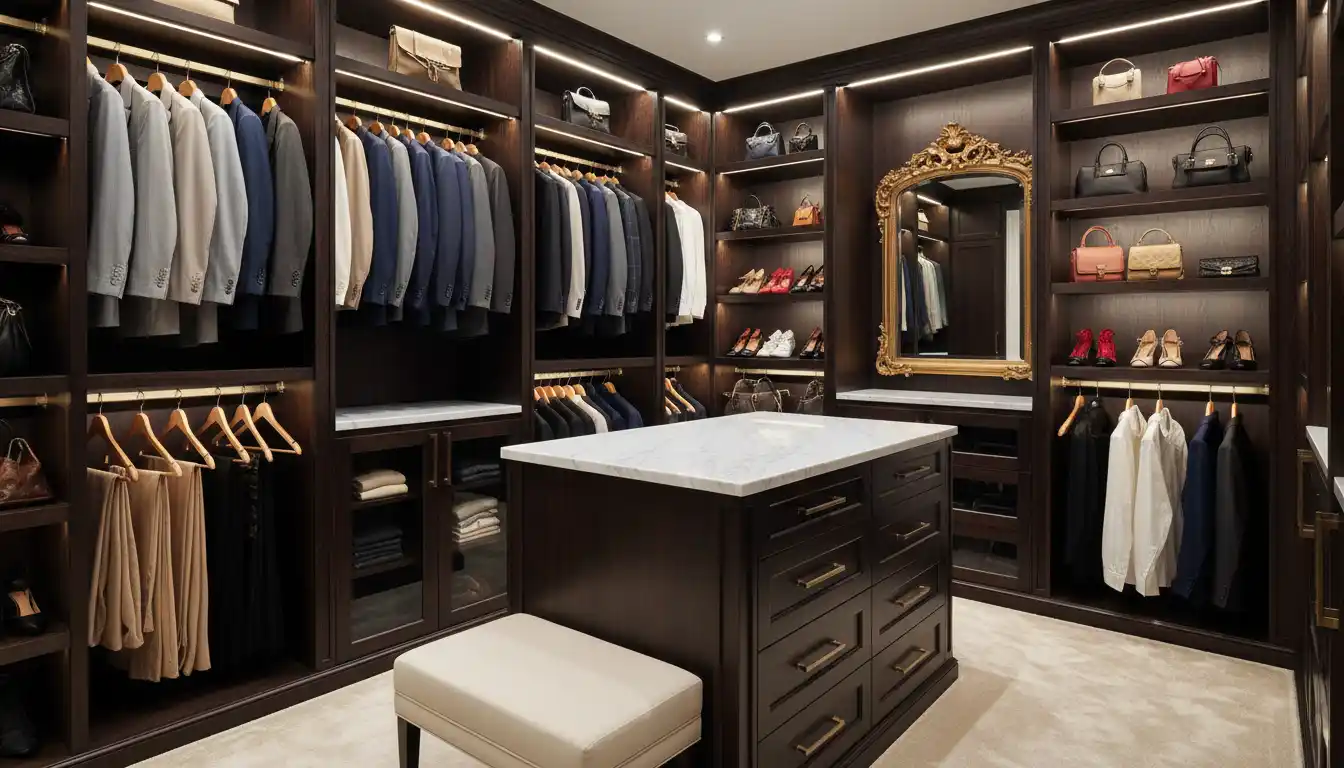
Integrated Lighting: From Utility to Luxury
One of the most impactful upgrades is integrated lighting. LED strip lighting along shelves, puck lights in cubbies, or motion-activated lights in drawers not only add a high-end feel but also improve functionality, making it easier to see your clothes and accessories. However, this feature requires professional electrical work and specialized components, adding hundreds or even thousands to the final cost.
Doors, Drawers, and Hardware: The Finishing Touches
The details matter, and they come with a price. Opting for drawers instead of open shelving is a significant cost driver. High-quality drawers with dovetail construction and soft-close hardware are far more expensive than basic stapled boxes. Adding custom fronts, such as shaker-style or flat panels with glass inserts, further increases the cost.
The same applies to hardware. Simple, standard pulls are often included, but upgrading to designer handles or knobs in brass, matte black, or crystal can add a surprising amount to the budget. These small touches contribute to a polished, furniture-grade appearance.
Specialty Accessories: The Little Things Add Up
Custom closet companies offer a dazzling array of accessories designed to organize specific items. Each one enhances functionality but also adds to the total price. Popular and costly additions include:
- Pull-out valet rods for staging outfits.
- Velvet-lined jewelry trays with custom dividers.
- Tilt-out hampers to conceal laundry.
- Shoe fences or glass-front shoe shelves for display.
- Sliding belt and tie racks for easy access.
While individually these items may not seem exorbitant, incorporating several into a design will quickly inflate the overall cost.
| Feature | Basic DIY System (e.g., Wire/Melamine Kit) | Mid-Range System (e.g., Elfa/Modular) | High-End Custom System |
|---|---|---|---|
| Materials | Wire shelving, particleboard with basic laminate | Epoxy-coated steel, thicker melamine, some wood veneer options | Commercial-grade melamine, plywood, solid wood, premium finishes |
| Design & Consultation | None (self-designed) | Free in-store or online design tools | Professional in-home design consultation included |
| Labor & Installation | DIY (your time) | DIY or professional installation for an added fee | Professional installation included in the price |
| Hardware | Basic, standard-grade rods and brackets | Better quality drawer slides, more finish options | Soft-close drawers and hinges, premium pulls, high-end metals |
| Accessories | Minimal to none | A la carte selection of basic accessories | Fully integrated accessories (lighting, valet rods, custom trays) |
| Estimated Total Cost (8-foot closet) | $200 – $600 | $800 – $2,500 | $3,000 – $10,000+ |
Is It a Rip-off? The Value Proposition of High-End Closets
After seeing the cost breakdown, it’s natural to wonder if expensive closet systems are truly worth the investment. The answer lies in shifting the perspective from a simple expense to a long-term value proposition for your home and your daily life.
Increased Home Value and Appeal
Well-designed, high-quality storage is a major selling point in real estate. Potential buyers see custom closets as a luxury feature that indicates a well-maintained and upgraded home. Unlike trendy decor, a functional and durable closet system adds tangible value and can provide a significant return on investment when it’s time to sell.
Longevity and Durability: Buying It Once
There’s a fundamental difference in durability between a cheap wire rack and a professionally installed system. Inexpensive solutions often sag, chip, or break under the strain of a full wardrobe. A high-quality system, built with commercial-grade materials and expert craftsmanship, is designed to last for the life of the home, saving you the cost and hassle of future replacements.
The “Quality of Life” Factor: The Price of Organization
Perhaps the most underrated benefit is the impact on your daily routine. An organized closet saves time, reduces stress, and makes getting ready each day a more pleasant experience. Knowing exactly where everything is and having a designated spot for each item eliminates the mental clutter that comes from a chaotic space. This daily convenience is an invaluable return on investment that goes beyond monetary calculations.
Smart Strategies to Get a High-End Look for Less
You don’t have to spend a fortune to achieve a functional and beautiful closet. With some strategic planning, you can get the look and feel of a high-end system without the premium price tag.
The Hybrid Approach: Mix and Match Systems
One of the smartest ways to save is by using a more affordable base system and upgrading key visual components. For instance, you could build the “bones” of your closet with a versatile system and then add custom doors or high-end hardware. Many people look for IKEA PAX alternatives or similar modular systems that can be elevated with a few thoughtful upgrades.
Phase Your Installation
You don’t have to build your dream closet all at once. Start with the essentials—the main shelving and hanging sections. You can live with that for a while and then add drawers, doors, or specialty accessories as your budget allows. This phased approach makes the total cost more manageable over time.
DIY with High-Impact Upgrades
If you have some basic DIY skills, you can achieve a custom look for much less. Start with a more basic kit from a brand like ClosetMaid or Rubbermaid. After installation, you can add trim molding, a fresh coat of paint, and beautiful new hardware to give it a built-in, furniture-like appearance. Comparing options like Rubbermaid vs ClosetMaid can help you find the right starting point for your project.
Think About Layout First
Maximizing storage is often more about smart design than expensive components. An efficient layout can double your usable space without adding costly accessories. For example, even in a compact space, a smart layout can make all the difference, as seen in clever designs for a 5 foot wide walk in closet.
The Final Verdict: Are Expensive Closet Systems Worth It?
Ultimately, whether an expensive closet system is “worth it” depends on your budget, priorities, and long-term goals. The high price tag is a direct result of superior materials, skilled labor, and deep customization. It’s an investment in your home’s value, in a product that will last for decades, and in the daily calm that comes from a truly organized space.
By understanding what drives the cost, you can make an informed choice. You can decide where to spend and where to save, ensuring you get the best possible solution for your home and lifestyle.
