
White vs Cream Cabinets: The #1 Mistake That Dates Your Kitchen
The choice between white and cream kitchen cabinets seems simple, but it’s one of the most high-stakes decisions in a remodel. This single choice dictates the mood, perceived size, and timelessness of your space. Get it right, and the kitchen is a bright, welcoming hub; get it wrong, and you’re left with a room that feels sterile, dingy, or instantly dated.
Many homeowners focus only on the surface-level appeal, not realizing the complex interplay of light, undertones, and surrounding finishes. The costliest mistake is failing to understand how a cabinet color will behave in your specific environment. This guide breaks down the critical factors to ensure your decision results in a kitchen you’ll love for years.
You'll Learn About
The Core Dilemma: It’s a Matter of Light and Undertone
The fundamental difference between white and cream is how they handle light and color. White cabinets act like a mirror, reflecting the color temperature of your lighting and the hues of adjacent surfaces. Cream cabinets, with their inherent warm undertones, absorb some light and cast a soft, ambient glow.
This distinction is crucial. A pure white cabinet can make a kitchen feel larger and cleaner. A cream cabinet provides immediate warmth and character. The mistake lies in not accounting for the hidden undertones—the subtle hints of yellow, beige, or gray in cream, and the cool blue or stark tones in pure white—that can clash with your countertops, flooring, and wall color.
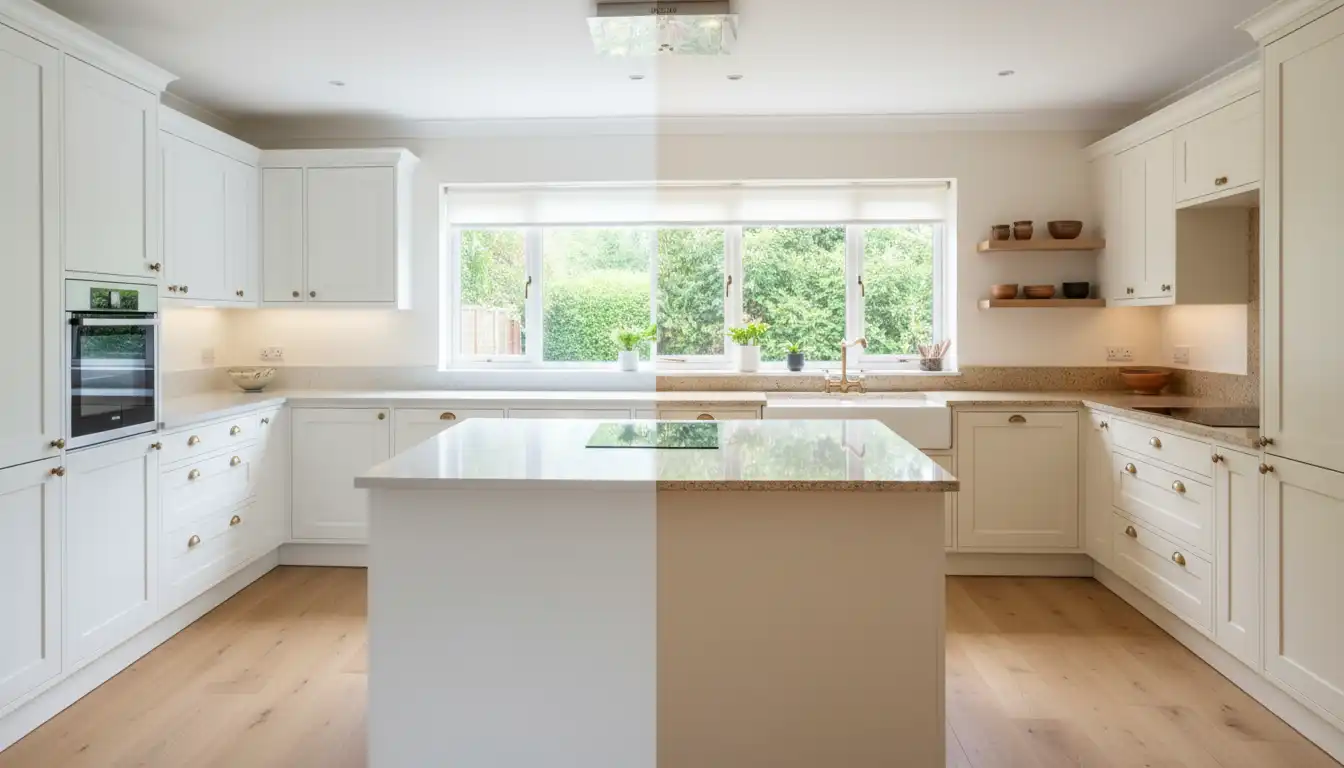
White Kitchen Cabinets: The Crisp and Timeless Classic
White cabinets are a perennial favorite for good reason. They offer a clean, bright, and versatile backdrop that works with nearly any design style, from ultra-modern to classic farmhouse. Their popularity is also a significant asset for home resale value.
The Allure of Pure White
The primary benefit of white cabinets is their ability to maximize light. In smaller or darker kitchens, white surfaces reflect both natural and artificial light, creating an open and airy feeling. This light-bouncing effect makes the entire room feel more spacious and awake.
This versatility provides a blank canvas for your design. Bold hardware, dramatic countertops, or a colorful backsplash can all take center stage against the neutral backdrop of white cabinetry. It offers endless possibilities for personalization over time.
The Hidden Downside: Avoiding the “Sterile” Look
The biggest challenge with white kitchens is preventing them from feeling cold or clinical. Without enough texture and warmth, an all-white space can resemble a laboratory more than the heart of the home. Homeowners often wonder, will I regret painting my house white, and this same concern applies tenfold to kitchens where hard surfaces dominate.
To counteract this, it’s essential to layer in natural materials. Wood floors, a butcher block island, woven light fixtures, and warm-toned metal hardware (like brass or bronze) are all effective ways to introduce warmth and prevent the space from feeling stark.
Cream Kitchen Cabinets: The Epitome of Warmth and Elegance
Cream cabinets offer a softer, more inviting alternative to pure white. With undertones ranging from subtle beige to rich buttery yellow, cream infuses a kitchen with a sense of comfort and history. This color is particularly well-suited for traditional, transitional, and country-style homes.
The Enduring Charm of Cream
Cream cabinets excel at creating a cozy and welcoming atmosphere. They provide a gentle warmth that pure white lacks, making the kitchen feel like a comfortable gathering space. This inherent warmth makes them more forgiving; they tend to hide fingerprints and smudges better than their stark white counterparts.
This color also pairs beautifully with natural materials. Stone countertops with warm veining, rustic wood beams, and terracotta floor tiles all harmonize wonderfully with the soft, rich tones of cream cabinetry.
The Critical Mistake: Preventing the “Dingy” Effect
The primary risk with cream cabinets is choosing a shade with the wrong undertone for your space. In a room with cool-toned lighting or finishes, a cream with a strong yellow undertone can look sallow or dated. It’s crucial to test samples in your kitchen’s specific lighting conditions.
Proper coordination is key. If your countertops have cool gray veins, a yellow-based cream can look dirty next to them. The goal is to create a harmonious palette where the undertones of the cabinets, counters, and backsplash all complement one another.
The Deciding Factor: How Your Home’s Elements Dictate the Choice
The best choice between white and cream is rarely about personal preference alone. It’s a decision that should be driven by the existing—or planned—elements of your kitchen. The lighting, countertops, and flooring are not just accessories; they are active participants in how your cabinet color will be perceived.
Let There Be Light: Natural and Artificial Lighting
The type and temperature of your lighting is the single most overlooked factor in this decision. Natural light changes throughout the day, casting cool, blue-toned light in the morning and warm, yellow light in the evening. Artificial light, measured in Kelvins (K), has an even more dramatic impact.
Cool-toned LED bulbs (4000K–5000K) can make a warm cream cabinet look sickly, while making a pure white cabinet look crisp and modern. Conversely, warm-toned bulbs (2700K–3000K) will enhance the coziness of cream cabinets but can make a stark white look yellowish or dull. Before finalizing your choice, test cabinet samples under your actual light fixtures at different times of the day.
Countertops and Backsplash: The Unforgiving Partners
Your countertops and backsplash are in direct contact with your cabinets, making their relationship critical. Mismatched undertones here will create a jarring and unprofessional look. For white cabinets, high-contrast countertops like black granite or soapstone create a timeless, graphic look. Pairing them with white quartz is also popular for a seamless aesthetic, though it requires careful matching of the whites. Exploring options like those in a Cambria Torquay vs Swanbridge comparison can help you find a quartz with the right vein color and base tone.
Cream cabinets, on the other hand, shine next to countertops with warm or earthy tones. Natural stone, butcher block, or quartzes with beige and gold veining are excellent choices. Placing a yellow-toned cream cabinet next to a cool, blue-white Carrara marble is a classic design mistake that makes both elements look worse.
Flooring and Wall Color: Setting the Foundation
Your flooring and wall color set the stage for your cabinets. A cool gray floor, for instance, will likely clash with a warm, yellow-based cream cabinet. Similarly, a warm-toned travertine floor might not be the best partner for stark, cool-white cabinets unless balanced carefully with other elements.
The wall color should serve as a bridge. For both white and cream cabinets, a common strategy is to choose a shade of off-white for the walls. However, the undertones must align. Learning about the nuances of off-whites, such as in a Dove Wing vs Seapearl analysis, can help you select a complementary shade that doesn’t fight with your cabinetry.
| Feature | White Cabinets | Cream Cabinets |
|---|---|---|
| Overall Vibe | Bright, Clean, Modern, Airy | Warm, Cozy, Elegant, Traditional |
| Best For Styles | Modern, Minimalist, Coastal, Farmhouse | Traditional, French Country, Farmhouse, Transitional |
| Key Challenge | Can feel sterile or cold if not warmed up with texture. Shows dirt easily. | Can look dated or dingy if undertones clash with lighting and finishes. |
| Ideal Countertops | High-contrast (black granite, soapstone), pure white quartz, marble with cool veining. | Natural stone (granite, marble with warm veins), butcher block, warm-toned quartz. |
| Best Hardware Finishes | Matte Black, Polished Nickel, Chrome, Satin Brass. | Aged Brass, Oil-Rubbed Bronze, Copper, Polished Nickel. |
| Lighting Synergy | Versatile, but reflects the light’s color temperature. Looks crispest in neutral to cool light (3500K-5000K). | Shines in warm light (2700K-3000K), which enhances its cozy feel. Can look yellow in cool light. |
The Ultimate Litmus Test: How to Choose With Confidence
Reading about color theory is one thing; seeing it in your space is another. The only way to make a confident decision is to test large samples in the environment where they will live. Tiny paint chips are not sufficient for a decision of this magnitude.
The Power of Samples
Order large sample doors of your top two or three choices. Place them vertically in your kitchen, where the cabinets will be installed. Observe them over at least 48 hours to see how they look in the morning light, at midday, in the evening, and under your artificial lighting at night.
Pay close attention to how the light interacts with the color. Does the cream turn unpleasantly yellow under your LEDs? Does the white feel too glaring when the afternoon sun hits it? This real-world test is invaluable.
The Undertone Secret
While observing your samples, place them directly against your other fixed elements: your flooring, your countertop sample, and your backsplash tile. This is where undertone clashes become obvious. A cream cabinet might look beautiful on its own but reveal a pinkish undertone when placed next to your beige floor tile.
Look for harmony. The colors don’t need to match, but they need to feel like they belong to the same family. If a combination feels “off” or makes one of the elements look dirty, it’s a clear sign that the undertones are fighting.
Final Verdict: Is There a “Better” Choice?
There is no universal “better” choice between white and cream kitchen cabinets. The right answer is entirely contextual, depending on your home’s architecture, your lighting, your design goals, and the surrounding finishes. The superior choice is the one that creates the most harmonious and functional space for you.
White cabinets are ideal for those seeking a bright, highly versatile, and timelessly modern kitchen. However, they demand a conscious effort to incorporate warmth and texture to avoid a clinical feel. Cream cabinets are perfect for creating an instantly warm, inviting, and elegant space, but they require a meticulous approach to coordinating undertones to ensure the final look is sophisticated, not dated. The ultimate mistake is not in choosing one color over the other, but in failing to test it against the unique backdrop of your own home.
