
White Dove and Chantilly Lace: The Perfect Pair or a Total Disaster?
Choosing the right white paint feels like it should be simple. In reality, it is a notoriously difficult decision that can leave homeowners paralyzed with indecision.
You stand in front of a wall of a thousand seemingly identical white swatches, each with a poetic name. You pick two, hope for the best, and end up with trim that makes your walls look yellow and dingy. This is a frustratingly common problem.
Two of the most popular and beloved whites from Benjamin Moore, White Dove (OC-17) and Chantilly Lace (OC-65), are often at the center of this debate. One is soft and creamy, the other is crisp and clean. The critical question is, can they be used together, or will they create a clashing, chaotic mess? This guide provides the definitive answer.
You'll Learn About
Decoding the Undertones: White Dove vs. Chantilly Lace
The secret to successfully pairing white paints lies in understanding their undertones. Every white paint has subtle hints of other colors that become apparent in different lighting conditions. Getting the undertones right is the difference between a harmonious space and a design catastrophe.
Benjamin Moore White Dove (OC-17): The Soft, Inviting White
White Dove is one of Benjamin Moore’s most popular colors for a reason. It is a soft, warm white that feels inviting and gentle without being overly yellow or creamy. Think of it as a timeless off-white that works beautifully in almost any setting.
Its primary undertone is a touch of gray (greige), which grounds the color and prevents it from feeling stark. In certain light, especially warm afternoon sun, you might also detect a subtle hint of creaminess. With a Light Reflectance Value (LRV) of 85.38, it reflects a significant amount of light while still having enough substance to feel cozy.
Benjamin Moore Chantilly Lace (OC-65): The Crisp, Luminous White
On the other end of the spectrum is Chantilly Lace. This color is renowned for being one of Benjamin Moore’s cleanest, brightest whites. It is exceptionally neutral, reading as a pure, crisp white with very little visible undertone.
If you look closely in cool, northern-facing light, you might perceive a faint touch of gray or blue, but it is incredibly subtle. With a high LRV of 92.2, Chantilly Lace is brilliant at reflecting light, making it a powerful tool for making spaces feel larger, brighter, and more open. It is the go-to choice for a modern, clean aesthetic.
The Verdict: Do White Dove and Chantilly Lace Actually Work Together?
Yes, absolutely. White Dove and Chantilly Lace create a stunning and sophisticated pairing. The combination is a designer favorite for crafting interiors that feel both bright and welcoming, a balance that is often difficult to achieve.
The magic is in their contrast. The clean, crisp nature of Chantilly Lace provides a sharp, defined edge when used on trim, which in turn highlights the soft, creamy warmth of White Dove on the walls. This contrast makes the White Dove look intentional and rich, not muddy or yellowed. Conversely, the softness of White Dove prevents the Chantilly Lace trim from feeling too sterile or clinical.
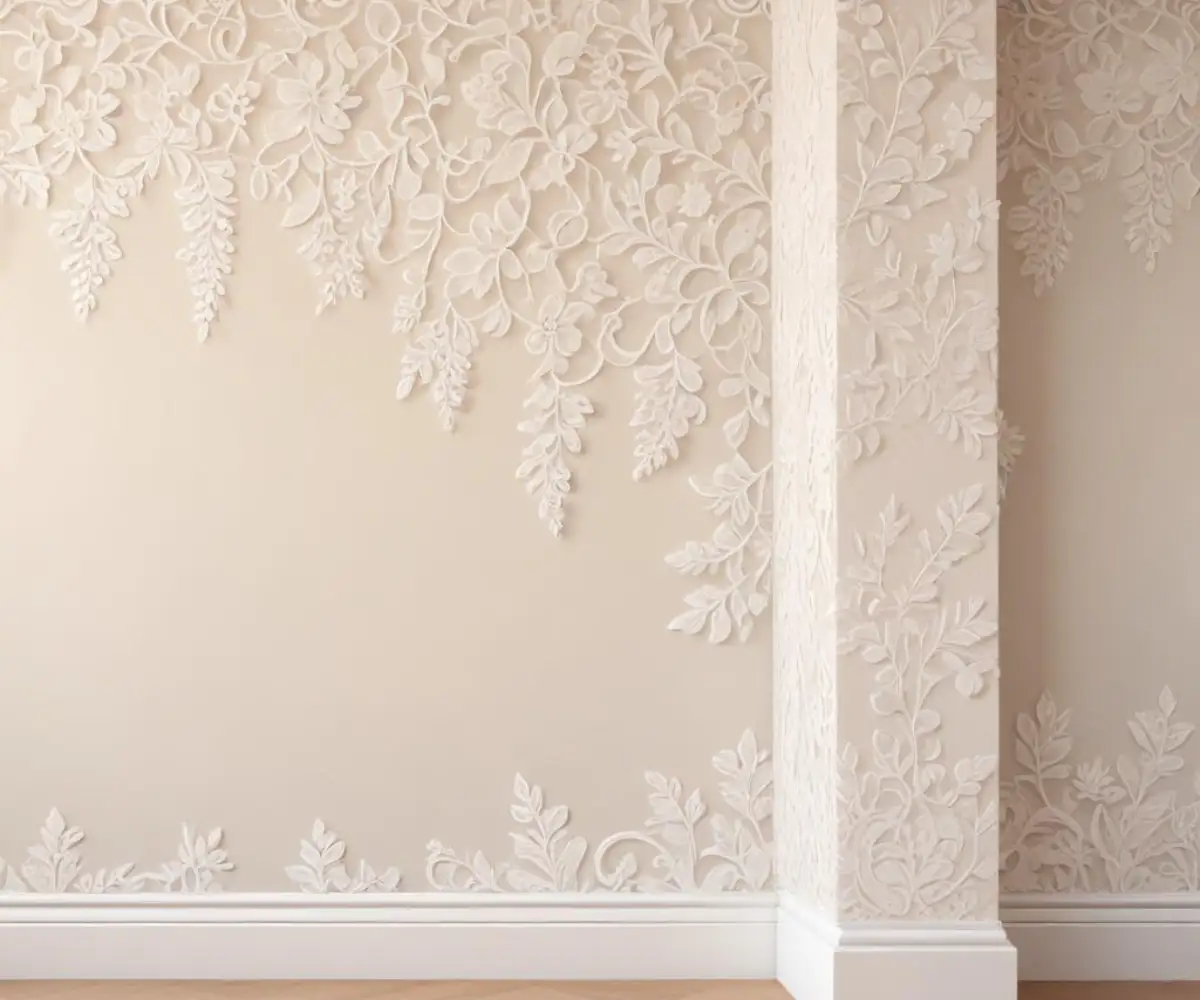
3 Proven Ways to Combine White Dove and Chantilly Lace
While this pair is versatile, the application strategy is key. How you assign these colors to your walls, trim, cabinets, and ceilings will define the overall mood of the room. Here are the most effective and fail-proof combinations.
Combination 1: The Classic – White Dove Walls with Chantilly Lace Trim
This is the most popular and timeless application of this duo. Using White Dove on the walls creates a soft, inviting backdrop that is perfect for living rooms, bedrooms, and main living areas. It envelops the room in a gentle warmth.
Using Chantilly Lace for the trim, baseboards, doors, and window casings provides a crisp, clean frame. This sharp contrast makes the architectural details of your home pop and gives the entire space a polished, finished look. It is a classic for a reason and a foolproof way to use these colors.
Combination 2: The Modern Farmhouse – White Dove Cabinets with Chantilly Lace Walls
In the kitchen, flipping the script can have a major impact. Using White Dove for your kitchen cabinets gives them a beautiful warmth, making the heart of your home feel welcoming. It is a perfect choice for shaker-style cabinets, adding character without being overpowering.
Pairing these cabinets with Chantilly Lace on the walls and trim keeps the space feeling exceptionally bright, open, and clean. This strategy is excellent for kitchens that lack abundant natural light, as the high LRV of Chantilly Lace will maximize brightness.The contrast between the warm cabinets and clean walls is effortlessly chic.
Combination 3: The Subtle Reverse – Chantilly Lace Walls with White Dove Trim
For a brighter, more contemporary, or minimalist aesthetic, consider using Chantilly Lace on the walls. This will create a gallery-like effect, making your space feel expansive and airy. It is an excellent canvas for art and modern furnishings.
In this scenario, using White Dove on the trim provides a subtle, soft transition rather than a stark one. This “reverse” combination is less common but incredibly sophisticated. It prevents the all-white space from feeling cold by introducing a quiet layer of warmth at the edges of the room.
Quick Comparison: White Dove vs. Chantilly Lace
Choosing between two incredible whites can be daunting. The decision often comes down to the specific feeling you want to evoke in your space. For more comparisons on popular whites, exploring options like the difference between BM Swiss Coffee and SW Alabaster can provide a broader perspective.
| Feature | Benjamin Moore White Dove (OC-17) | Benjamin Moore Chantilly Lace (OC-65) |
|---|---|---|
| LRV (Light Reflectance Value) | 85.38 | 92.2 |
| Primary Undertone | Soft Greige (Gray + Beige) | Neutral / Faintly Cool Gray |
| Overall Vibe | Warm, Soft, Inviting, Cozy | Crisp, Bright, Clean, Modern |
| Best For Walls | Creating a welcoming, cozy atmosphere. | Making a room feel larger and brighter. |
| Best For Trim | A softer, lower-contrast look. | A sharp, clean, high-contrast look. |
| Pairs Best With | Warm wood tones, earthy colors, brass hardware. | Cool tones, black accents, chrome/nickel hardware. |
The One Thing You Absolutely Cannot Ignore: Lighting
No paint color exists in a vacuum. The single most important factor that will influence how White Dove and Chantilly Lace look in your home is your lighting—both natural and artificial. This is a non-negotiable part of the decision process.
In a north-facing room with cool, indirect light, the gray undertones in White Dove will be more pronounced. Chantilly Lace will remain bright but can feel a bit stark. In a south-facing room with warm, direct sunlight, White Dove will appear creamier and warmer, while Chantilly Lace will look like a brilliant, pure white. Your artificial lighting matters just as much. Warm white LEDs (around 2700K) will enhance the cozy feel of White Dove, while cool white LEDs (3500K+) will emphasize the crispness of Chantilly Lace.
What Nobody Tells You: The Wrong Surfaces for This Pair
While this combination is gorgeous, it is not foolproof with every fixed element. The primary challenge arises when pairing it with existing stone or tile that has competing undertones. The soft warmth of White Dove can look dingy or yellow next to a very cool, blue-white Carrara marble countertop.
Similarly, a stark white appliance or ultra-modern fixture might make White Dove appear “off.” Before committing, hold your paint samples directly against your countertops, backsplash, and flooring. The goal is harmony, and ensuring the undertones of your hard surfaces align with your paint is critical for a cohesive design.
Choosing the Right Paint Sheen for a Professional Finish
The sheen, or finish, of your paint is just as important as the color. A different sheen can dramatically alter how a color is perceived and how durable it is. Here is the best practice for this specific color combination.
For the Chantilly Lace trim, doors, and baseboards, a satin or semi-gloss finish is the professional standard. These sheens are more durable and easier to clean, which is essential for high-traffic areas. They also provide a subtle luster that reflects light and beautifully highlights the architectural details.
For the White Dove walls, an eggshell or matte finish is ideal. An eggshell finish offers a soft, low-sheen look that is still wipeable and durable enough for most living spaces. A matte finish provides a more contemporary, velvety look that excels at hiding minor wall imperfections but is less scrubbable.
The #1 Mistake Homeowners Make (And How to Avoid It)
The biggest error you can make when choosing any paint color, especially whites, is relying on the tiny paper swatch from the paint store. It is completely inaccurate. The only way to know for sure how these colors will look is to test them properly in your own home.
Do not paint a small splotch directly on your current wall, as the old color will influence your perception. Instead, paint a large sample (at least two coats) on a white poster board or a Samplize peel-and-stick swatch. Move this sample around the room throughout the day and observe it in the morning light, afternoon sun, and with your lights on at night. This is the only way to see the true character of the colors and their interplay with your unique lighting.
So, Is This Elite Combination Right for Your Home?
The pairing of White Dove and Chantilly Lace is a timeless, sophisticated choice that strikes the perfect balance between warmth and brightness. It is an ideal solution for anyone looking to create an inviting yet clean and updated space.
By using White Dove on walls for a soft, welcoming feel and Chantilly Lace on trim for a crisp, defining border, you can achieve a designer-level look that is both classic and fresh. Just remember to test the colors in your own lighting to ensure you love the result. Your dream interior is just a few coats of paint away.
The Conclusion
Choosing the right white isn’t about finding the “purest” shade; it’s about becoming a detective of undertones. The reason those two swatches looked right in the store but wrong on your wall is that every white has a hidden color bias.
The Secret Life of White
The most common issue is color clash, often caused by one of these three primary undertones:
-
Yellow/Creamy Whites: These are warm and inviting, but they can make bright white trim look stark, dirty, or even dingy.
-
Gray/Taupe Whites: These are sophisticated and calming, but they can sometimes make a room feel a bit cold or flat without enough natural light.
-
Blue/Green Whites: These are clean and crisp, perfect for modern spaces, but they must be carefully matched to your lighting; otherwise, they risk looking icy or institutional.
Your Path to the Perfect Shade
To escape the cycle of frustrating repaints, adopt a process based on testing, not guessing:
-
Test in Context: Never judge a white by a tiny swatch. Buy sample pots and paint large swatches (at least $12″\times 12″$) directly onto the wall.
-
Observe the Light: Observe the swatches at different times of the day—morning, noon, and evening—and under both natural light and your artificial lighting (which is typically warm or cool). Light is the single biggest factor in how a white appears.
-
Use Your Existing Materials: Hold the white swatch next to your fixed elements—your flooring, your countertops, and, most importantly, the existing trim color. The right white will complement these undertones, not fight them.
By recognizing that white is simply a light shade of another color, you move past the paralysis of a thousand options and gain the power to select the shade that harmonizes perfectly with your home’s unique light and furnishings.
