
Medicine Cabinet Hinge Side: The #1 Mistake You’re Making
It seems like a trivial decision. Left or right? Yet, the direction your medicine cabinet door opens can subtly sabotage your daily routine. It’s a small detail with a surprisingly large impact on bathroom functionality and flow.
Choosing the wrong swing direction can lead to a daily dance of dodging the door, blocking your light source, or making it awkward to grab what you need. This decision is about more than just convenience; it’s about designing a space that works with you, not against you.
You'll Learn About
The Golden Rule of Cabinet Swing: Hinge Placement is Everything
Before you even think about installing that new cabinet, you need to understand the fundamental principle of door swing. The single most important rule is this: the cabinet door should swing outwards, with the hinged side closest to the wall or a corner.
This ensures the door opens away from your primary workspace over the sink. Following this rule prevents the door from becoming an obstacle, allowing you to freely use the faucet and countertop even when the cabinet is open. An incorrectly hung door can block your view, your light, and your access, turning a simple task like brushing your teeth into a frustrating maneuver.
Step 1: Determine the Primary User’s Dominant Hand
Consider who will be using the medicine cabinet most often. If the primary user is right-handed, a cabinet that is hinged on the left and opens to the right can feel more natural. This allows them to reach inside with their dominant hand without obstruction.
While this is a secondary consideration to physical obstructions, it adds a layer of ergonomic refinement to your bathroom design. The goal is to create a frictionless experience where every movement feels intuitive.
Unlocking the Perfect Swing: A 3-Step Bathroom Layout Analysis
A successful installation hinges on a careful analysis of your unique bathroom layout. Don’t leave this to chance. Taking a few moments to map out your space will prevent years of daily annoyance.
Step 2: Identify Key Obstructions and Clear Zones
Stand directly in front of your sink and identify all potential obstacles within the door’s future swing path. The most common culprits are tall faucets, wall sconces, and even nearby towel rings. Open an imaginary door in the air to visualize its arc.
Pay close attention to your light source. If your main vanity light is a single fixture above the mirror, the door should swing away from it to avoid casting a shadow on your face and inside the cabinet. Proper planning ensures you’re never left in the dark.
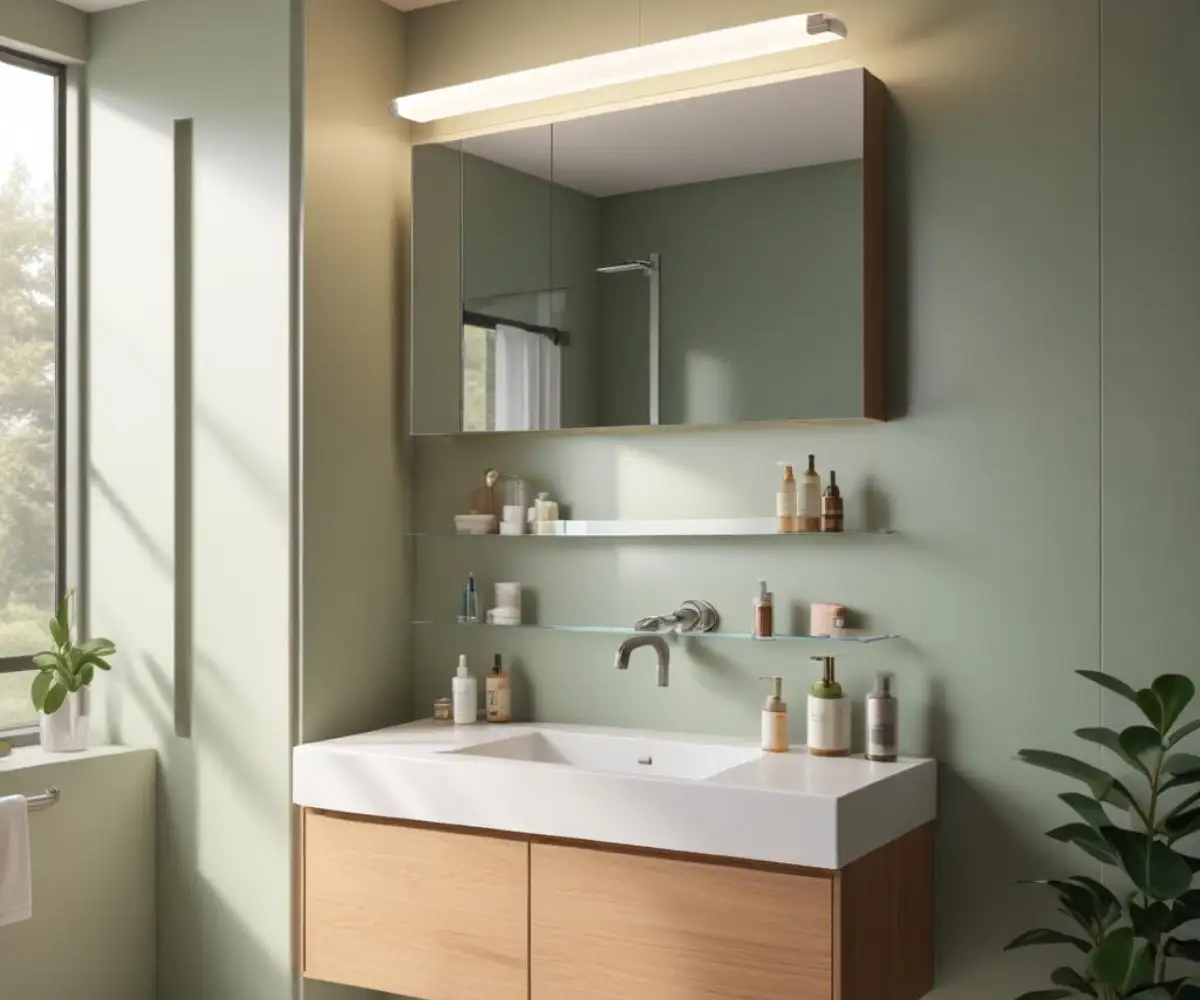
Step 3: Consider Your Bathroom’s Traffic Flow
Think about how you move around the bathroom. The medicine cabinet door should never open into a primary walkway or obstruct the entry door. In smaller bathrooms, this is especially critical to prevent creating a bottleneck.
If your toilet is situated right next to the vanity, ensure the cabinet door won’t swing out and interfere with that space. A well-planned swing direction respects the room’s overall traffic patterns and contributes to a feeling of spaciousness, even in a compact area.
The Showdown: Comparing Hinge Placement Scenarios
The “correct” side for your hinges is entirely dependent on your bathroom’s specific configuration. There is no one-size-fits-all answer. The table below breaks down the most common layouts and the ideal hinge placement for each.
| Scenario | Best Hinge Placement | Reasoning |
|---|---|---|
| Cabinet is in a corner with a wall to the right | Right Side | The door swings toward the wall, keeping the sink area completely open and unobstructed. |
| Cabinet is in a corner with a wall to the left | Left Side | The door opens against the adjacent wall, maximizing access to the sink and countertop. |
| Light sconces are on both sides of the cabinet | Either Side (Reversible) | Choose the side that swings away from your dominant hand or main traffic path. |
| A tall faucet is in the center of the sink | Either Side | Ensure the door’s width is not so large that it hits the faucet when fully open. |
| Two cabinets over a double vanity | Hinges on the Outer Edges | This creates a pleasing symmetry, and the doors open outwards, away from the shared central space. |
Beyond the Standard Swing: Exploring Smarter Opening Styles
While a traditional side-hinged door is the most common, modern design offers innovative solutions for tricky spaces. If your layout presents unique challenges, one of these alternatives might be the perfect fit.
For Tight Vertical Spaces: The Sliding Door Cabinet
Sliding door medicine cabinets are a game-changer for bathrooms where swing clearance is non-existent. They offer a sleek, modern aesthetic and eliminate the issue of a door projecting into the room.
The primary trade-off is that you can only access half of the cabinet’s contents at any given time. However, for minimalist designs or exceptionally tight quarters, they provide a stylish and practical solution.
For Unobstructed Access: The Lift-Up Door
Lift-up or top-hinged doors open vertically, similar to cabinetry in a modern kitchen. This style completely removes any side obstructions, making it an excellent choice for cabinets positioned between two wall sconces or in a narrow alcove.
Be mindful of the user’s height. The door needs to be easily reachable to close from its open position. They also require sufficient vertical clearance above the cabinet to open fully.
For Maximum Visibility: The Tri-View Cabinet
A tri-view cabinet features three mirrored panels, with the two side panels opening towards the center. This design not only provides expansive storage but also allows you to see the sides of your head—a feature many people find indispensable.
The swing dynamics are different here, as the doors open inward. This generally poses fewer conflict issues with faucets and walls, making them a very forgiving option for many bathroom layouts.
Installation Insights: How to Guarantee a Flawless Swing
The perfect door swing is not just about planning; it’s about execution. A flawless installation process ensures your cabinet operates smoothly for years to come, without sagging, sticking, or falling out of alignment.
The Foundation of a Perfect Swing
A door can only swing correctly if the cabinet itself is installed perfectly level and plumb. This process starts long before the cabinet is placed on the wall. It begins with ensuring you have the correct framing in place. A properly prepared wall is the first and most critical step, and understanding the medicine cabinet rough opening is essential to creating a stable foundation for your installation.
Preventing Door Sag and Misalignment
Over time, a poorly secured cabinet can shift, causing the door to sag and no longer close properly. This is more than a minor annoyance; it’s a sign of potential failure. You must ensure the cabinet is anchored securely to the wall studs, using the appropriate hardware for its weight.
If you ever notice the cabinet pulling away from the wall, it needs immediate attention. Knowing how to fix a cabinet falling off the wall is not just a repair skill—it’s crucial knowledge for preventing a dangerous situation and maintaining the integrity of your door’s alignment.
The Final Touch for a Professional Look
Once your cabinet is securely mounted and you’ve confirmed the door swings freely without any obstructions, the final step is to address the aesthetics. Even with the most careful installation, small imperfections can remain.
A clean, professional finish makes all the difference. Learning how to properly address any visible space between the cabinet and the drywall ensures a seamless, built-in look. Properly fixing that gap around a recessed medicine cabinet is the finishing touch that elevates the entire project.
The Overlooked Factors That Define Your Experience
Beyond the technical aspects of installation lie the subtle, human elements of design. The way your medicine cabinet opens has a psychological impact on your daily routine, contributing to a sense of ease or one of constant, low-grade frustration.
Designing for Your Subconscious
Your morning and evening routines are built on muscle memory. A cabinet that opens in an unintuitive direction forces a moment of cognitive dissonance every time you use it. It’s a small “hitch” in your flow that, when repeated daily, can make your space feel less comfortable.
By optimizing the door swing, you are designing for your subconscious. You are removing a point of friction, creating a seamless interaction between you and your environment that enhances the tranquility of your personal space.
Future-Proofing for Value and Accessibility
Thoughtful design details accumulate to create significant value. A medicine cabinet that is logically placed and easy to use contributes to a universally accessible bathroom design. This is a key selling point for future homebuyers, who will notice and appreciate a space that is intelligently laid out.
Furthermore, consider investing in a cabinet with high-quality, six-way adjustable hinges. This allows for micro-adjustments over time, compensating for the natural settling of a home and ensuring the door remains perfectly aligned for its entire lifespan. It’s a small feature that provides long-term peace of mind.
Making the Final Decision for Your Space
The direction your medicine cabinet opens is a detail worth obsessing over. It’s a defining element in the daily ergonomics of your bathroom. By taking the time to analyze your layout, identify obstructions, and consider your own habits, you can make a choice that enhances your space.
Ultimately, the best direction is the one that removes obstacles from your path. It’s the choice that makes your daily routine smoother, safer, and more intuitive. Your bathroom should be a sanctuary, and a perfectly hung medicine cabinet is a small but crucial step toward achieving that goal.
