What To Do With a Dirt Backyard Rental: 11 Ideas to Hide the Mud
That sinking feeling of walking into a new rental property and seeing a backyard that’s nothing but a patch of dirt is all too common. It feels unusable, messy, and frankly, a bit depressing. You envision muddy footprints tracked through your home, dust coating your windows, and a space you can’t even enjoy for a simple morning coffee.
The core of the problem isn’t just the dirt itself, but the constraints of being a renter. You don’t want to invest thousands of dollars into a property you don’t own, and you’re limited by the terms of your lease. This guide is designed to solve that exact problem, offering temporary, budget-friendly, and landlord-approved solutions to transform that dirt patch into a functional and beautiful outdoor oasis you can be proud of.
You'll Learn About
Why a Dirt Backyard Is a Renter’s Nightmare
A dirt backyard presents a unique set of challenges that go beyond simple aesthetics. It directly impacts your quality of life in the rental, creating daily frustrations that can make a house feel less like a home. Understanding these core issues is the first step toward finding the right solutions.
The Constant Battle with Mud and Dust
The most immediate problem with a dirt yard is the mess. After a rainstorm, it becomes a mud pit, making it impossible to use the space without getting dirty. Worse yet, this mud gets tracked indoors by pets and people, leading to constant cleaning and potential damage to floors and carpets. In dry weather, the problem flips to dust, which can coat outdoor furniture, get into your house, and aggravate allergies.
A Lack of Usable Living Space
An outdoor area should be an extension of your home—a place to relax, entertain, or play. A dirt lot offers none of this. You can’t comfortably set up chairs, a dining table, or a play area for children without everything becoming filthy. This effectively shrinks your usable living space, confining you indoors and preventing you from enjoying the benefits of having a yard.
The “Rental Trap” Dilemma
As a renter, you’re caught in a difficult position. You want a nice, usable yard, but you’re hesitant to spend significant money on landscaping that you’ll have to leave behind when you move. Furthermore, many lease agreements have strict rules about making permanent changes to the property, which can make ambitious projects like laying sod or building a permanent patio impossible.
Before You Begin: The Renter’s Pre-Project Checklist
Before buying a single plant or paver, it’s crucial to lay the proper groundwork—both literally and figuratively. Taking a few preparatory steps can save you from headaches, financial loss, and disputes with your landlord down the line. This checklist ensures your project starts on the right foot.
Step 1: Document the “Before”
Your first action should be to take detailed photos and videos of the backyard in its current state. Capture every angle of the dirt patch, the condition of any existing fences, and the state of the property’s exterior walls. This documentation serves as your proof of the yard’s original condition, protecting your security deposit when it’s time to move out.
Step 2: Scrutinize Your Lease Agreement
Comb through your rental agreement for any clauses related to landscaping, yard maintenance, or property alterations. Some leases explicitly forbid any changes, while others may outline specific rules or require written permission for any projects. Understanding these limitations upfront will guide your choices and prevent you from violating your contract.
Step 3: Communicate with Your Landlord (The Right Way)
Open and strategic communication with your landlord is your most powerful tool. Instead of asking “Can I fix the dirt backyard?” frame your proposal as a benefit to them. Present your ideas as temporary, easily removable improvements that will enhance the property’s appeal for future tenants. Emphasize that you are willing to bear the cost for these reversible upgrades. By showing that your project is a win-win, you are much more likely to get an enthusiastic “yes.” Always get any permissions in writing via email or a formal letter to avoid any misunderstandings.
Cover It Up: Instant, No-Dig Ground Cover Solutions
The quickest way to solve a dirt yard problem is to cover it. These solutions require minimal ground preparation and are designed to be temporary and removable, making them perfect for renters. They provide an immediate, usable surface that banishes mud and dust for good.
1. Removable Deck Tiles: The Ultimate Patio Hack
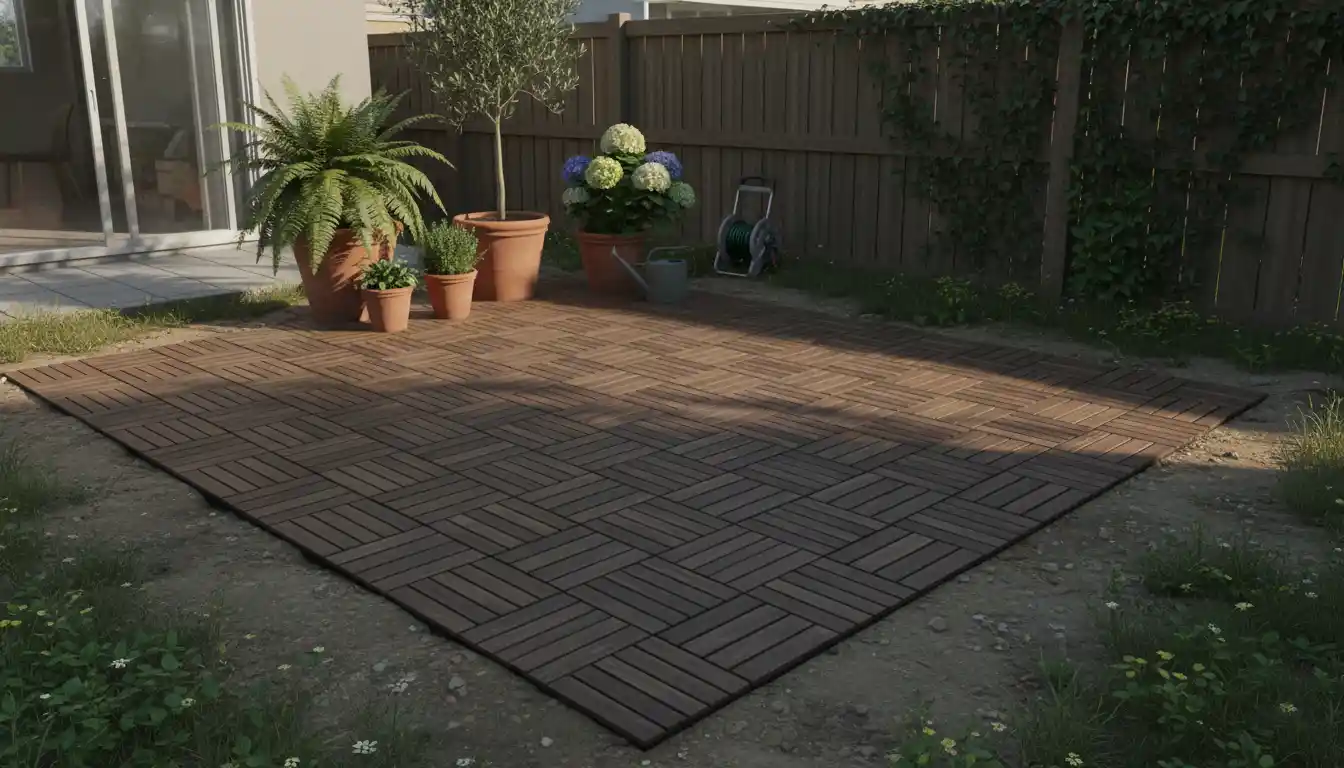
Interlocking deck tiles are a game-changer for renters. These tiles, typically made of wood, composite, or plastic, snap together to create a solid, stable “floating” deck directly on top of the dirt. They provide the look and feel of a high-end patio without any permanent installation. Simply level the ground slightly and start clicking them into place. When you move, they can be unsnapped and taken with you.
2. Outdoor Rugs: The Fastest Fix
For an instant transformation, an outdoor rug is your best friend. These rugs are made from durable, weather-resistant materials like polypropylene that can handle direct contact with the ground. Placing a large outdoor rug over the most-used part of your yard can immediately define a seating area and provide a clean surface for furniture. Layering a couple of rugs can add even more style and coverage.
3. Artificial Grass: A Lush, Reversible Lawn
If you crave the look of a green lawn without the commitment, high-quality artificial grass is an excellent option. You can purchase large sections of turf and roll them out directly over the dirt. This provides a soft, clean surface that is perfect for kids and pets. While it can be a larger upfront investment, it is completely removable and can be sold or taken with you when your lease ends.
4. Mulch or Pea Gravel: Budget-Friendly Zoning
For a very affordable and effective solution, consider using mulch or pea gravel to create defined zones. Use inexpensive landscape edging to create a boundary for a patio or walkway, then fill it with your material of choice. Wood chips, rubber mulch, or smooth pea gravel can create a tidy, functional space and significantly reduce mud. To prevent weeds and stop the material from sinking into the dirt, lay down a layer of landscape fabric first.
Go Vertical & Portable: The Power of Container Gardening
Just because you can’t dig into the ground doesn’t mean you can’t have a lush, thriving garden. Container gardening is a renter’s secret weapon. It allows you to grow flowers, vegetables, and even small trees, all while keeping your garden completely portable.
5. Raised Garden Beds: Your Ticket to a Thriving Garden
Raised garden beds are perfect for renters. Whether made of metal, wood, or even durable fabric, these beds sit on top of the ground and can be filled with high-quality soil. This allows you to bypass the poor-quality dirt in your yard entirely. You can grow a surprising amount of produce or flowers in a few raised beds, and when you move, you can either empty them and take them with you or negotiate to leave them for the next tenant.
6. Pots and Planters: A Mobile Oasis
Never underestimate the transformative power of a well-arranged collection of pots. Grouping planters of various sizes, colors, and textures creates a stunning visual impact. This approach allows you to cultivate a diverse garden that can be easily rearranged or moved. It’s a fantastic way to add color and life to your new patio space or to create green borders along the edges of your yard.
7. Vertical Gardens: Grow Up, Not Out
When ground space is limited, the only way to go is up. Vertical gardens, which can be either freestanding towers or wall-mounted panels, are perfect for growing herbs, lettuces, and trailing flowers. They turn a boring fence or wall into a living work of art and are incredibly space-efficient, making them ideal for smaller dirt backyards.
Create Ambiance: Zones, Lighting, and Comfort
Once you’ve covered the dirt and added some greenery, the final step is to make the space feel like an inviting outdoor room. This is achieved by creating functional zones and adding personal touches that bring comfort and style.
8. The Entertainment Zone: Seating and Focal Points
Designate a primary area for relaxing and entertaining. Arrange comfortable, weather-resistant seating around a central focal point. A portable, standalone fire pit can be a fantastic addition for evening gatherings. While portable pits are great for renters, any consideration for a more permanent fixture, such as connecting a fire pit to a gas line, involves serious planning and is a project that absolutely requires landlord permission and professional installation. You can learn more about the complexities involved in a fire pit gas line connection to understand why temporary options are usually best for rentals.
9. Lighting for Atmosphere
The right lighting can completely change the feel of a backyard after dark. Solar-powered string lights or cafe lights are an easy, affordable, and damage-free way to add a warm, inviting glow. Solar stake lights can be used to illuminate pathways or highlight interesting plants in your container garden. Since they don’t require any wiring, they are the perfect temporary lighting solution for renters.
10. Shade Solutions: Umbrellas and Sun Sails
An unusable sunny spot can be made comfortable with the right shade. A large cantilever umbrella can provide flexible shade over a seating or dining area. For a more modern look, a sun sail can be installed using temporary posts or attached to existing structures with non-damaging hardware. Both options are easily removable and make the yard usable even on the hottest days.
11. Soil Health and Pest Management
Before you lay down your new ground cover, take a moment to assess the area. An untended dirt lot can sometimes attract pests. A quick inspection can reveal any issues that need addressing. For minor wildlife concerns, humane solutions are often the best first step. Understanding what’s involved with something like a Havahart trap rental can provide a temporary, non-lethal way to manage any unwelcome critters before you start your project.
Additionally, if you plan to use mulch or gravel, a simple leveling of the ground might be necessary for the best result. While most of these solutions don’t require heavy equipment, if your yard has significant lumps and bumps, it can be helpful to understand what minor regrading entails. Exploring topics like how hard is it to operate a mini excavator can provide perspective on larger-scale earth-moving, reinforcing why the temporary solutions in this guide are so ideal for renters.
Quick-Reference: Comparing Backyard Solutions for Renters
Choosing the right solution depends on your budget, effort, and lease limitations. This table provides a quick comparison of the top rental-friendly options to help you decide which path is best for your dirt backyard transformation.
| Solution | Estimated Cost | Effort Level | Portability | Landlord-Friendliness |
|---|---|---|---|---|
| Outdoor Rugs | Low | Very Low | Excellent | Excellent |
| Pea Gravel / Mulch | Low | Medium | Low | Good (with landscape fabric) |
| Artificial Grass | Medium-High | Medium | Good | Excellent |
| Container Gardening | Low-Medium | Medium | Excellent | Excellent |
| Interlocking Deck Tiles | High | Low-Medium | Excellent | Excellent |
| Raised Garden Beds | Low-Medium | Medium | Good | Excellent |
Your Rental Backyard: From Dirt Patch to Dream Oasis
A dirt backyard in a rental property doesn’t have to be a source of frustration. By thinking creatively and focusing on temporary, non-permanent solutions, you can completely overhaul the space without risking your security deposit or over-investing in a property you don’t own.
From interlocking deck tiles that create an instant patio to the simple elegance of a well-placed outdoor rug, the options are plentiful. Embrace the portability of container gardening and the ambiance of solar lighting. With a bit of planning and communication with your landlord, you can convert that muddy, dusty patch into a clean, functional, and beautiful outdoor living area that truly feels like an extension of your home.