
What Size Sink for 18 Inch Vanity? Avoid This Costly Mistake
An 18-inch vanity is a brilliant solution for a powder room or a small guest bathroom, offering essential functionality without overwhelming the space. But this compact choice introduces a significant design challenge: selecting a sink that is both stylish and practical. Choosing the wrong size sink is more than an aesthetic misstep; it can lead to a cramped, unusable counter and persistent water splashing, turning your space-saving solution into a daily frustration.
The core problem lies in balancing the sink’s basin size with the minimal countertop surface area. A sink that is too large will eliminate any usable “landing zone” for soap or toiletries, making the vanity feel cluttered and impractical. Conversely, a sink that is too small can be difficult to use and may cause water to splash onto the floor and surrounding fixtures, creating a constant need for cleanup and potential water damage over time.
You'll Learn About
Decoding the Dimensions: The Golden Rule for 18-Inch Vanities
Before selecting a sink, it is crucial to understand the measurements of your vanity. An “18-inch vanity” typically refers to the cabinet’s width (from side to side). However, the depth (from front to back) is equally important and usually ranges from 12 to 21 inches for these smaller units. These dimensions dictate the maximum possible size of your sink.
The most critical principle for pairing a sink with a small vanity is to ensure adequate counter space on all sides of the basin. A sink that is too wide is the single most common and costly mistake. As a golden rule, you should aim to leave at least 1.5 to 2 inches of countertop on each side of the sink. For an 18-inch wide vanity, this means your sink’s maximum width should be between 14 and 15 inches.
Beyond Width: Depth and Faucet Clearance
The front-to-back measurement of the sink is just as vital. You must leave enough space behind the sink for the faucet and in front of the sink to prevent accidental water spillage over the edge. A standard 18-inch deep vanity can typically accommodate a sink that is up to 12-14 inches deep, leaving room for a standard faucet installation.
One of the most frequently overlooked issues is faucet handle clearance. In a tight space, a faucet with large or wide-set handles can hit the backsplash or wall, preventing full operation. For this reason, single-hole faucets are the superior choice for 18-inch vanities, as they consolidate the controls into a minimal footprint, ensuring smooth function without spatial conflict. Wall-mounted faucets are another excellent, space-saving alternative.
Best Sink Styles for a Compact 18-Inch Vanity
The style of the sink you choose will dramatically impact both the aesthetics and functionality of your small vanity. Each type offers a unique set of advantages and disadvantages in a compact setting. Making the right choice is essential for creating a bathroom that is both beautiful and practical, where even small details can affect the overall harmony of the space.
Understanding these differences is key. A compact vanity is often a solution for tight spaces, where every inch counts, much like the debate around positioning a toilet in front of a vanity. Both decisions hinge on maximizing usability in a constrained layout.
Undermount Sinks: The Sleek Space-Saver
Undermount sinks are installed from below the countertop, creating a seamless, clean line that maximizes usable counter space. This makes cleaning incredibly easy, as you can wipe water and spills directly into the sink without a raised lip getting in the way. For an 18-inch vanity, an undermount sink can make the area feel larger and more open.
However, the cutout required for an undermount sink can slightly reduce the overall basin size compared to a drop-in model of similar exterior dimensions. Proper installation is critical to ensure a waterproof seal and prevent any potential for moisture damage to the vanity cabinet below.
Drop-In (Top-Mount) Sinks: The Classic Choice
Drop-in sinks, also known as top-mount or self-rimming sinks, are installed from above into a pre-cut hole in the countertop. The sink’s rim rests on the counter, supporting its weight. This style is generally more affordable and easier to install than an undermount sink, making it a popular DIY option.
The primary drawback for a small vanity is that the sink’s rim occupies valuable counter space. While often a minimal loss, on an 18-inch surface, every inch matters. Nonetheless, a drop-in sink with a slim profile can be a very effective and budget-friendly solution.
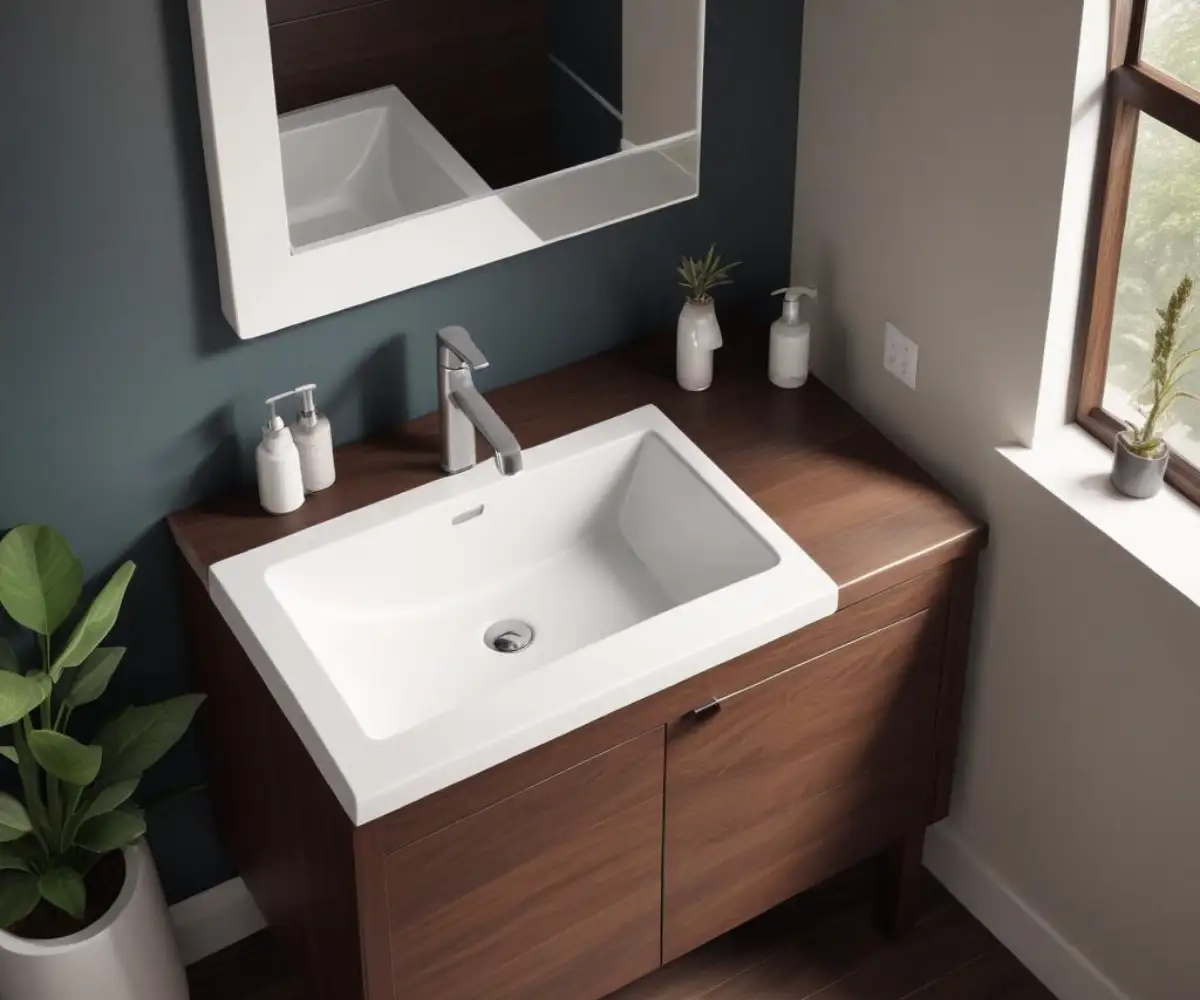
Vessel Sinks: The Bold Statement
Vessel sinks sit on top of the countertop, acting as a standalone basin. This style adds a dramatic, sculptural element to the bathroom and comes in a vast array of materials, from glass and ceramic to natural stone. Because the sink sits on the counter, it frees up interior cabinet space that would otherwise be occupied by a deep basin.
The main considerations for a vessel sink on an 18-inch vanity are height and splashing. A tall vessel can feel overwhelming in a small space and may be uncomfortable for children to use. It is crucial to pair it with a faucet that is tall enough to clear the rim and has a spout positioned to direct water into the center of the bowl to minimize splashing.
Integrated Sinks: The Seamless Solution
An integrated sink is formed from the same material as the countertop, creating a single, continuous surface. This design offers a modern, minimalist aesthetic and is the easiest of all types to clean, with no seams or crevices to trap grime. Materials like solid surface, quartz, and cultured marble are commonly used for integrated sinks.
The biggest potential downside is that if the sink bowl is ever seriously damaged, the entire countertop must be replaced. However, the durability of modern materials makes this a rare concern. For an 18-inch vanity, an integrated sink can provide a custom, high-end look that visually expands the space.
| Sink Style | Pros for 18-Inch Vanity | Cons for 18-Inch Vanity | Best For |
|---|---|---|---|
| Undermount | Maximizes usable counter space; easy to clean; sleek, modern look. | Requires professional installation; slightly smaller internal basin. | Maximizing every inch of a minimalist, modern countertop. |
| Drop-In | Easy to install; generally more affordable; wide variety of options. | Rim takes up valuable counter space; can look dated. | Budget-conscious renovations and DIY projects. |
| Vessel | Adds a unique style statement; frees up cabinet space underneath. | Can be prone to splashing; requires a taller, specific faucet. | Powder rooms where style is a priority over heavy daily use. |
| Integrated | Completely seamless and easy to clean; creates a custom, high-end look. | If damaged, the entire vanity top must be replaced. | Achieving a clean, contemporary, and unified aesthetic. |
Creating Functional Landing Zones
With an 18-inch vanity, you are not just installing a sink; you are designing a compact functional station. The small amount of counter space you have must be treated as a deliberate “Functional Landing Zone.” This is the dedicated area for your daily essentials—a soap dispenser, a toothbrush holder, or a hand towel.
Prioritizing an undermount or integrated sink is the most effective way to maximize this zone. Without a sink lip to break up the surface, the countertop becomes a single, usable plane. If you’re struggling with limited surface area, you’re likely also wondering where to hang towels. We have some brilliant solutions if you have no room for a towel bar.
The Unspoken Challenge: Faucet Placement and Usability
The interaction between the sink, faucet, and user is paramount in a small space. A common complaint is the inability to wash your hands without bumping them against the back of the sink or the faucet itself. Choosing a sink with a slightly offset drain can sometimes allow for more flexible faucet placement, such as in a corner, freeing up central space.
This careful planning also extends to the vertical elements of your bathroom. The choice of faucet and sink impacts decisions like where to place your vanity light over the mirror for optimal illumination and to avoid creating awkward shadows. Every element must work in concert to create a cohesive and functional design.
Final Recommendations for a Flawless Fit
Choosing the right sink for your 18-inch vanity is a decision that blends precise measurements with stylistic preference. To avoid the common pitfalls, prioritize functionality first. A beautiful sink is useless if it makes your daily routines more difficult.
Remember the golden rule: the sink’s width should not exceed 14-15 inches. Opt for sink styles that maximize counter space, like undermount or integrated models, and pair them with a compact, single-hole faucet. By carefully considering these factors, you can transform your small vanity into a highly efficient and stylish feature that enhances your bathroom for years to come.
