
What Size Sink for an 18-Inch Cabinet? The Answer Isn’t What You Think
You have an 18-inch cabinet and a vision for a sink. But after a quick search, you’re faced with a frustrating reality: almost no standard sink is designed to fit. This compact cabinet size is one of the most challenging puzzles in kitchen and utility room design, often leading to costly mistakes and compromised functionality.
The core problem isn’t just the small size; it’s a series of hidden constraints that most people overlook until it’s too late. From misleading measurements to forgotten hardware, navigating these obstacles is key. Fortunately, with precise information, you can find a sink that not only fits but works perfectly for your space.
You'll Learn About
Why Your 18-Inch Cabinet Is a Sink-Fitting Nightmare
An 18-inch cabinet base is rarely used for sinks, which is why finding a compatible model is so difficult. It’s typically designed for narrow pull-out spice racks, small drawer stacks, or tray dividers. Understanding the exact limitations is the first step toward finding a viable solution.
It’s Not Actually 18 Inches on the Inside
The most common mistake is assuming an 18-inch cabinet offers 18 inches of usable space. The 18-inch measurement refers to the exterior width of the cabinet box. Cabinet walls are typically constructed from material that is 1/2-inch to 3/4-inch thick. This means you lose up to 1.5 inches of space from the start.
Your actual, usable interior width is likely closer to 16.5 inches. This is the absolute maximum space available, and the sink itself must be even smaller to accommodate its mounting hardware and allow for installation.
The Forgotten Space-Eaters: Clips, Faucets, and Plumbing
The sink bowl is only part of the equation. Undermount sinks require mounting clips to secure them to the countertop, which can take up an additional inch or more of interior space. This immediately reduces your workable width to around 15.5 inches.
Furthermore, you must account for the faucet and plumbing. There needs to be enough clearance behind the sink for the faucet installation and water lines, as well as space below for the drain, P-trap, and potentially a garbage disposal. These components make an already tight space even more constrained.
The Only Sink Types That Stand a Chance
For an 18-inch cabinet, your choices are limited to very specific sink categories. Standard kitchen sinks are immediately out of the question. Your focus should be on small bar or prep sinks, which are purpose-built for compact installations.
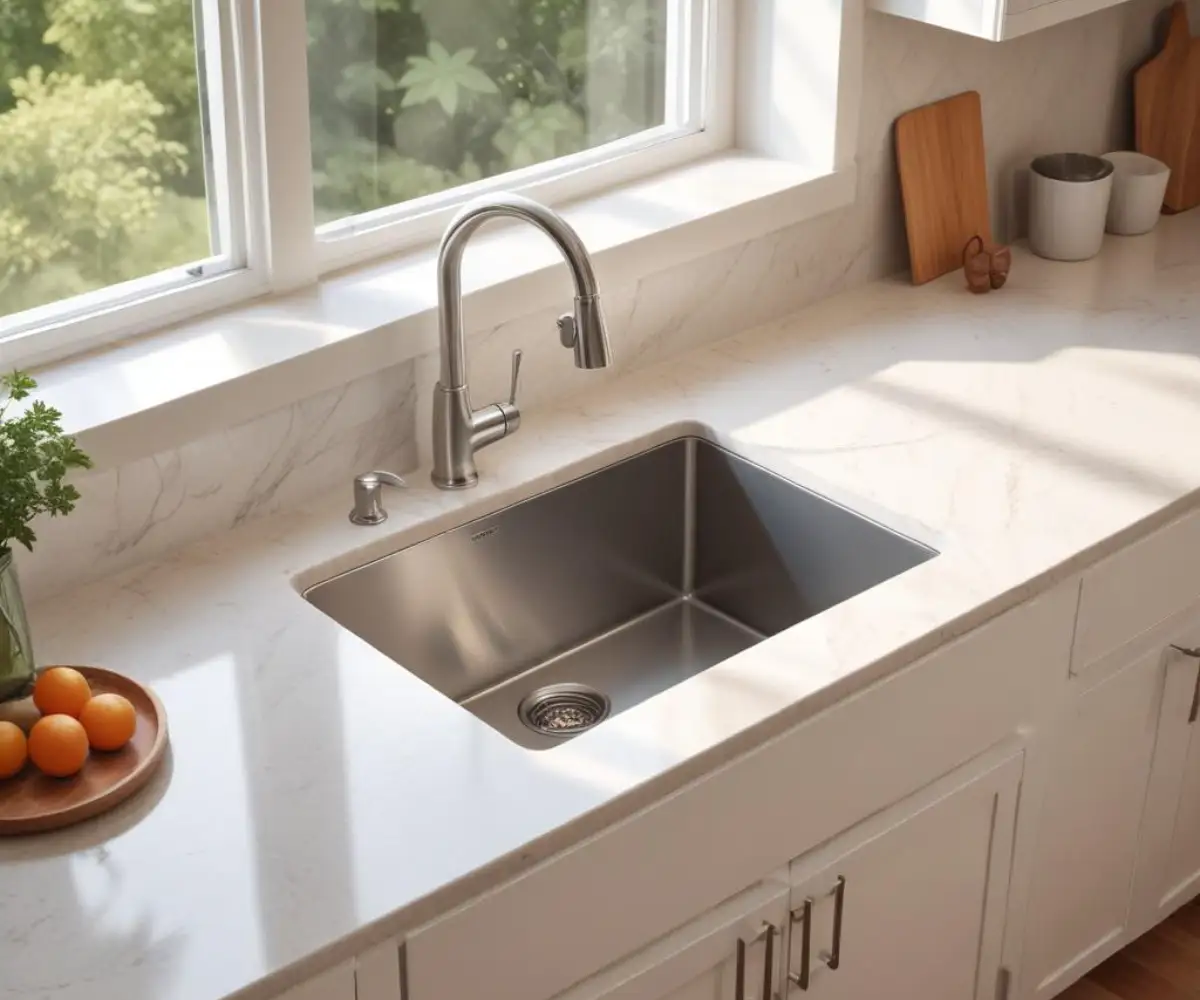
Choosing the right type of sink is critical. The installation style—undermount versus top-mount—will dramatically impact what is possible within such a narrow space. Each has distinct advantages and disadvantages.
| Sink Type | Pros | Cons | Typical Max Bowl Width |
|---|---|---|---|
| Undermount Sink | Sleek, seamless look; easy to wipe counter debris into the sink. | Extremely difficult to install; requires precise countertop cut; clips reduce usable space. | 14-15 inches |
| Top-Mount (Drop-In) | Easier to install; the lip provides a more forgiving fit; bowl can be slightly larger. | The rim sits on the counter, creating a seam that can trap grime. | 15-16 inches |
| Bar/Prep Sink | Specifically designed for small cabinets; available in both undermount and top-mount styles. | Limited size and depth; not suitable for washing large items. | 13-15 inches |
Undermount Sinks: The High-Stakes, High-Reward Option
An undermount sink offers a clean, modern aesthetic. However, installing one in an 18-inch cabinet is a job for a skilled professional. The mounting clips that hold the sink to the underside of the countertop are the biggest obstacle, requiring careful placement in an already cramped area.
Success with an undermount sink depends on finding a model with a very narrow bowl and minimal flange. The interior cabinet width of approximately 16.5 inches is your hard limit, and the overall sink dimension, including the flange, must fit comfortably within that.
Top-Mount (Drop-In) Sinks: Your Safest Bet
A top-mount sink is a far more practical choice for an 18-inch cabinet. With this style, the sink is lowered into the countertop cutout, and its lip rests on top of the counter. This design is more forgiving because the mounting clips underneath have more room to grab the countertop from inside the cabinet.
Because the sink’s rim provides support from above, the bowl can be slightly wider than an undermount model. This makes a top-mount sink the easiest and most reliable solution for maximizing basin size in a narrow cabinet.
The Golden Rule: How to Find Your Maximum Sink Size
Forget guesswork and manufacturer recommendations that don’t apply to this unique situation. You must rely on precise, real-world measurements. Follow this process to determine the largest sink you can realistically install.
First, measure the interior width of your cabinet from wall to wall. Next, subtract a minimum of 1.5 to 2 inches for clearance. This buffer accounts for undermount sink clips and gives the installer enough room to work. Your maximum sink bowl width will be this final number.
For example: 18-inch cabinet (exterior) → 16.5 inches (interior) – 1.5 inches (clearance) = 15-inch maximum sink bowl width. This simple calculation prevents one of the most common and costly renovation errors.
Beyond the Sink: The Overlooked Details That Will Ruin Your Project
Successfully installing a sink in an 18-inch cabinet requires thinking beyond just the sink itself. Several other critical factors are often ignored, leading to installation-day disasters. Planning for these details ahead of time is non-negotiable.
The Faucet Fiasco: Where Does it Actually Go?
With a narrow sink, there is often no room on the sink deck for a faucet. You must plan for a countertop-mounted, single-hole faucet. This means the hole for the faucet will be drilled directly into your countertop behind the sink. This requires careful coordination between your cabinet installer, countertop fabricator, and plumber.
Ensure there is enough space between the back of the sink and the backsplash for the faucet base and for its handle to operate without hitting the wall. This detail is frequently missed and can render a faucet unusable.
The Garbage Disposal Dilemma
An 18-inch cabinet leaves almost no room for a standard garbage disposal. The unit, combined with the P-trap and drain lines, will likely not fit. This is a crucial consideration that many homeowners forget until the plumber arrives.
If a disposal is essential, you must source a compact or space-saving model designed for tight quarters. Even then, fitting it will be a challenge. In many cases, the most practical solution is to forgo the garbage disposal entirely in such a small cabinet.
Pro-Tip: The Art of “Scooping” Cabinet Walls
In extremely tight situations, an expert installer can sometimes gain an extra fraction of an inch by “scooping” or “scalloping” the inside of the cabinet walls. This involves carefully carving out a small section of the cabinet material where the sink mounting clips need to go. This is an advanced technique that should only be attempted by a seasoned professional.
Attempting this without experience can easily lead to damaging the cabinet structure, which could result in a costly fix for chipped kitchen cabinets. The integrity of the cabinet is paramount, and the quality of its construction—something to consider when comparing brands like Fabuwood vs. KraftMaid—can determine if such a modification is even possible.
So, What’s the Verdict?
Fitting a sink into an 18-inch cabinet is an expert-level task, but it is not impossible. Your best option is a dedicated bar or prep sink with a bowl width of 15 inches or less. A top-mount (drop-in) model will offer the easiest installation, while an undermount model is possible with professional help and careful planning.
Remember to always measure your cabinet’s interior, account for hardware and plumbing, and plan for a countertop-mounted faucet. The constraints of an 18-inch cabinet are a world away from standard installations, such as finding the largest undermount sink for a 36-inch cabinet, where the rules are far more flexible.
By arming yourself with this knowledge, you can avoid common pitfalls and make an informed decision. With the right product and a clear plan, you can install a functional and stylish sink in even the most compact of spaces.
Frequently Asked Questions
What is the largest sink that can fit in an 18-inch cabinet?
As a general guideline, the sink should be at least 2 to 3 inches smaller than the cabinet’s width. For an 18-inch cabinet, this means a sink around 15 to 16 inches wide is typically the maximum size recommended. This ensures there is enough space inside the cabinet for installation clips and mounting hardware.
What are the ideal dimensions for a sink in an 18-inch cabinet?
For an 18-inch base cabinet, a sink with exterior dimensions of about 15-16 inches in width (left to right) and 15-16 inches in length (front to back) is suitable. The interior bowl depth can vary, but it’s a crucial factor to consider for functionality, especially in a compact sink.
Is there a difference in sizing for undermount versus top-mount sinks?
Yes, the mounting style is important. Top-mount (drop-in) sinks rest on the countertop, so the cutout is slightly smaller than the sink itself. Undermount sinks are installed from below, requiring a precise cutout and enough interior cabinet space for the sink’s rim and mounting hardware.
Can I install a kitchen sink in an 18-inch cabinet?
Yes, you can install a sink in an 18-inch cabinet, which is a standard cabinet size. These are often used for smaller kitchens, bar areas, or as a secondary prep sink. The key is to select a sink specifically designed for this compact dimension.
What should I consider before installing a sink in an 18-inch cabinet?
Beyond the sink’s dimensions, consider the faucet placement and any additional accessories like a soap dispenser, as space is limited. Ensure there is adequate clearance behind the sink for the faucet and plumbing. Also, confirm the cabinet’s interior is clear of obstructions.
Where can I find sinks for an 18-inch cabinet?
Many manufacturers offer sinks designed for smaller cabinets. It is advisable to check the sink’s specifications for the “minimum cabinet size” requirement before purchasing. This information is typically provided by the manufacturer.
