
Don’t Buy a Medicine Cabinet for Your 60-Inch Vanity Until You Read This
You’ve invested in a beautiful 60-inch vanity, the centerpiece of your dream bathroom. Now comes the final touch: the medicine cabinet. This decision seems simple, but getting it wrong can throw off the entire room’s balance, turning a stylish sanctuary into an awkward, poorly proportioned space.
The most common mistake is choosing a cabinet based on storage needs alone, completely ignoring its relationship with the vanity below. The result is a cabinet that’s either comically small or aggressively oversized, creating a visual disconnect that undermines all your other design choices.
You'll Learn About
Why Size Matters: The Unspoken Rules of Bathroom Harmony
Achieving a harmonious bathroom design is all about proportion and scale. Your medicine cabinet isn’t just a box on the wall; it’s a key architectural element. Its size directly influences the perception of space, light, and balance within the room.
A well-proportioned cabinet complements the vanity, making the entire area feel cohesive and intentional. Conversely, a poorly sized cabinet creates visual tension, making the space feel cramped or disjointed. Functionality is also at stake, as the right size ensures a comfortable user experience without compromising on storage.
The Core Principle: Matching Cabinet Width to Your Vanity
The cardinal rule of sizing a medicine cabinet is simple: it should never be wider than the vanity it hangs above. Adhering to this principle is the first step toward a balanced and aesthetically pleasing installation. From there, you have a few options.
Some designers prefer a cabinet that is a few inches narrower than the vanity, which creates a subtle, layered look. Others opt for a cabinet that is the exact same width, offering a more monolithic and seamless appearance. Both approaches can be successful, but the narrower option is often considered more foolproof.
Single vs. Double: Choosing Your Configuration for a 60-Inch Vanity
A 60-inch vanity provides ample space, giving you the flexibility to choose between a single, large medicine cabinet or a pair of smaller ones. This choice depends on your sink configuration—whether you have a single sink or a double-sink setup—and your personal aesthetic preferences.
The Case for a Single, Large Medicine Cabinet
A single, expansive medicine cabinet offers a bold, streamlined look. It provides an unbroken mirror surface, which can make the bathroom feel larger and more open. This option works particularly well over vanities with a single, centered sink.
For a 60-inch vanity, a single cabinet should typically be between 48 and 54 inches wide. This leaves a pleasant visual margin of 3 to 6 inches on each side of the cabinet, framing it nicely above the vanity. However, be mindful of the door swing on a large cabinet, as it can be cumbersome in smaller bathrooms.
The Power of Two: Using Double Medicine Cabinets
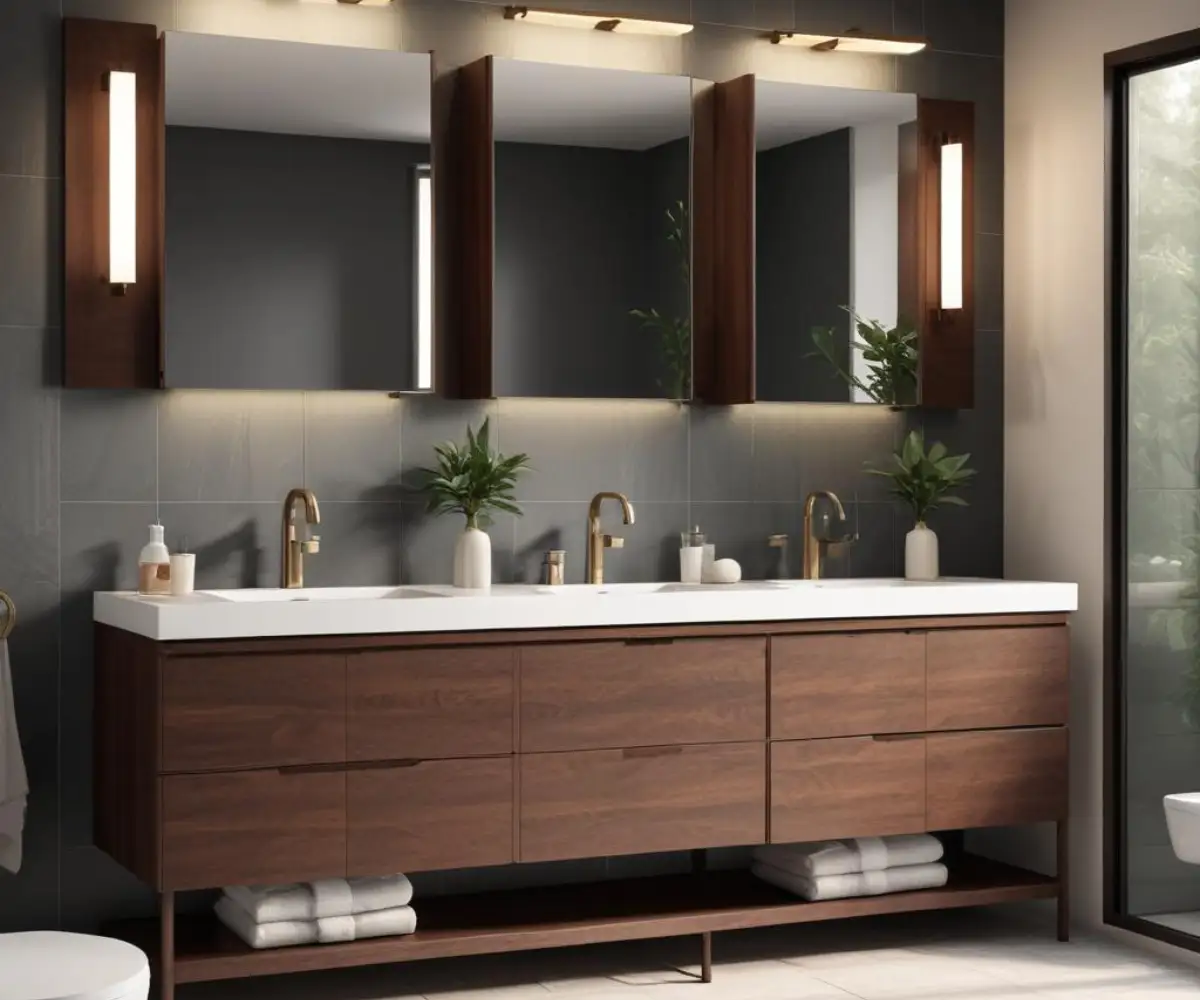
For a 60-inch double vanity, the most popular and visually balanced solution is to use two separate medicine cabinets. This creates a pleasing symmetry, with each cabinet centered over a sink. This configuration also offers the practical benefit of providing separate, dedicated storage for two users.
When using two cabinets, each one should typically be between 20 and 24 inches wide. Two 24-inch cabinets create a substantial presence with a 12-inch gap in the middle, perfect for a stylish light fixture. For a more delicate look, two 20-inch cabinets leave more “white space” around them. Deciding on the hinge side is also crucial; you need to consider which way a medicine cabinet should open to ensure the doors don’t collide or block access.
Beyond Width: Critical Height and Depth Considerations
While width is the primary concern, the height and depth of your medicine cabinet are also crucial for both functionality and aesthetics. These dimensions affect everything from user comfort to the overall visual impact of the cabinet.
Perfecting Placement: How High to Hang Your Cabinet
The standard practice is to hang the bottom of the medicine cabinet 5 to 10 inches above the vanity countertop. This provides enough clearance for the faucet and prevents water from splashing onto the cabinet. The center of the mirror should be at eye level for the average user, which typically falls between 60 and 72 inches from the floor.
Always consider the height of your faucet when determining placement. Tall, gooseneck-style faucets require more clearance and may necessitate hanging the cabinet slightly higher. The key is to strike a balance between comfortable mirror access and adequate faucet clearance.
Recessed vs. Surface-Mount: The Depth Dilemma
You have two primary installation options for your medicine cabinet: recessed or surface-mounted. A recessed cabinet is installed into the wall between studs, creating a seamless, built-in look that saves space. This is an excellent choice for smaller bathrooms or for achieving a minimalist aesthetic.
A surface-mounted cabinet is installed directly onto the wall, protruding into the room. This option is easier and less expensive to install, as it doesn’t require cutting into the wall. If you opt for a recessed model, careful planning of the medicine cabinet rough opening is essential to ensure a flawless fit.
The Designer’s Secret: Applying the Golden Ratio to Your Vanity
For a truly harmonious and professionally designed look, consider the Golden Ratio. This mathematical principle, found in nature and art, creates proportions that are naturally pleasing to the human eye. In bathroom design, it can be applied to the relationship between the vanity and the medicine cabinet.
The Golden Ratio is approximately 1:1.618. To apply it, treat the combined height of your vanity and medicine cabinet as a single visual element. The height of the cabinet should ideally be about two-thirds the height of the vanity. This creates a subtle, balanced relationship that elevates the entire design from simply “correct” to aesthetically beautiful.
A Practical Sizing Guide for 60-Inch Vanities
To simplify your decision, here is a table summarizing the best medicine cabinet configurations for a 60-inch vanity based on different styles and sink setups. This guide will help you visualize the options and choose the one that best suits your needs.
| Vanity Style | Cabinet Configuration | Recommended Width(s) | Key Considerations |
|---|---|---|---|
| Double Sink (Symmetrical) | Two Cabinets | 20 to 24 inches each | Creates perfect symmetry and allows for a central light fixture. |
| Single Sink (Centered) | One Cabinet | 48 to 54 inches | Offers a sleek, unified look with a large, unbroken mirror surface. |
| Single Sink (Offset) | One Cabinet | 30 to 36 inches | Cabinet should be centered over the sink, not the entire vanity. |
Coordinating with Faucets and Lighting
Your medicine cabinet does not exist in a vacuum. It must coexist harmoniously with your faucet and lighting fixtures. Failure to consider these elements can lead to functional problems and a disjointed design.
Faucet Clearance is Non-Negotiable
Before you purchase a medicine cabinet, measure the height of your faucet. Many modern designs feature tall, arched spouts that can interfere with a low-hanging cabinet. Ensure there is enough clearance to operate the faucet comfortably and to clean around it without obstruction.
This is a critical step that is often overlooked. There is nothing more frustrating than discovering during installation that your beautiful new faucet and medicine cabinet are incompatible. A few inches can make all the difference between a functional setup and a design disaster.
How Lighting Fixtures Dictate Your Cabinet Choice
The style and placement of your vanity lighting will heavily influence your medicine cabinet selection. If you plan to use side sconces, you’ll need to leave enough space on either side of the cabinet(s) for installation. This will likely require you to choose narrower cabinets.
If you prefer a vanity bar light mounted above the cabinet, the width of the light fixture should be similar to the width of the cabinet. This creates a cohesive look and ensures even light distribution across the mirror. A light fixture that is significantly wider or narrower than the cabinet can look awkward and unbalanced.
Final Touches: Features That Elevate Your Choice
Once you’ve determined the perfect size and configuration, consider the finer details that can enhance both the style and functionality of your medicine cabinet. These features can make a big difference in your daily routine.
Framed or frameless? A frameless cabinet offers a clean, modern look, while a framed cabinet can add a touch of traditional elegance. The choice should complement the overall style of your bathroom. Also, consider the luxury of silence; upgrading with a soft close hinge insert prevents slamming and adds a high-end feel.
Conclusion: The Perfect Fit for a Flawless Design
Choosing the right size medicine cabinet for your 60-inch vanity is a crucial decision that bridges the gap between functionality and design. By following the core principle that the cabinet should never be wider than the vanity, and by carefully considering whether a single or double cabinet configuration is right for your space, you can create a balanced, harmonious look.
Remember to account for height, depth, and the interplay with your faucet and lighting. By taking a thoughtful and measured approach, you can select a medicine cabinet that not only meets your storage needs but also serves as the perfect finishing touch to your beautiful bathroom.
