
What Size Dining Table for a 9×10 Room? Stop Guessing!
Figuring out the right dining table for a 9×10 room can feel like a complex puzzle. You want a table that’s large enough for comfortable meals but doesn’t swallow the entire space, making it feel cramped and difficult to navigate. This is a common challenge for many homeowners trying to create a functional and inviting dining area in a compact room.
The core of the problem lies in balancing the table’s footprint with the essential need for clearance and comfortable traffic flow. A table that’s too large can make the room unusable, while one that’s too small might not meet your daily needs. The key is to understand the principles of space planning before you even start shopping.
You'll Learn About
The Golden Rule of Dining Room Space: The 36-Inch Clearance
Before you fall in love with a particular table, grab a tape measure. The most critical rule in designing a dining space is ensuring adequate clearance. You need at least 36 inches of open space between the edge of your dining table and the nearest wall or piece of furniture. This isn’t just a suggestion; it’s a functional necessity.
This 36-inch zone allows people to easily pull out their chairs to sit down and stand up without bumping into anything. It also provides enough room for someone to walk behind a seated person. In a 9×10 room (which is 108 inches by 120 inches), this rule immediately helps you calculate your maximum table size. Subtracting 72 inches (36 inches on each side) from your room’s dimensions gives you the largest possible tabletop you should consider.
Beyond Clearance: Defining Your Activity Zone
While 36 inches is the standard for movement, think about how you truly live in the space. This concept of an “Activity Zone” is about planning for real-life scenarios beyond just sitting. Will you need extra space to bring in serving platters? Do kids use the table for homework, spreading out books and laptops?
If your dining area is a high-traffic path to another room, you might even consider increasing your clearance to 48 inches along that path. Visualizing these activities is crucial. A great way to do this is by using painter’s tape on the floor to mark out the dimensions of a potential table. You can then walk around it and practice pulling out chairs to get a real feel for the space it will occupy.
The Shape Showdown: Finding the Best Fit for a 9×10 Room
The shape of your table has a massive impact on both the functionality and the perceived size of your 9×10 room. While rectangular tables are common, they are not always the best choice for a nearly square room. The right shape can optimize seating and improve the flow of movement.
Why Round and Oval Tables Often Win in Small Spaces
For a room that is close to a square, like a 9×10 space, a round or oval table is often the superior choice. Round tables have no sharp corners, which immediately makes navigating the room easier and safer. They create a more intimate dining experience, as everyone can easily see and converse with each other.
From a spatial perspective, a round table has a smaller footprint than a square or rectangular table that seats the same number of people. This visual lightness helps the room feel more open. For a 9×10 room, a round table between 40 and 48 inches in diameter is an excellent choice, comfortably seating four to six people without overwhelming the space.
When to Consider a Rectangular or Square Table
A rectangular table can still work, especially if you plan to place it against a wall. Pushing one of the long sides against a wall, perhaps with bench seating, can be an effective space-saving strategy. If you opt for a rectangular table, look for one that is relatively narrow—around 30 to 36 inches wide—to preserve as much clearance as possible.
Square tables offer a balanced, symmetrical look but can sometimes feel bulky. They are best for creating an intimate dining experience for four people. If you’re considering a square table, a pedestal base can be a significant space-saver by eliminating the corner legs that often get in the way of chairs.
Style Secrets That Create the Illusion of Space
The dimensions of your table are only part of the story. The style, material, and construction of the table can dramatically influence how large your 9×10 room feels. The right design choices can make your dining area feel open, airy, and inviting rather than cluttered and small.
The Power of the Pedestal Base
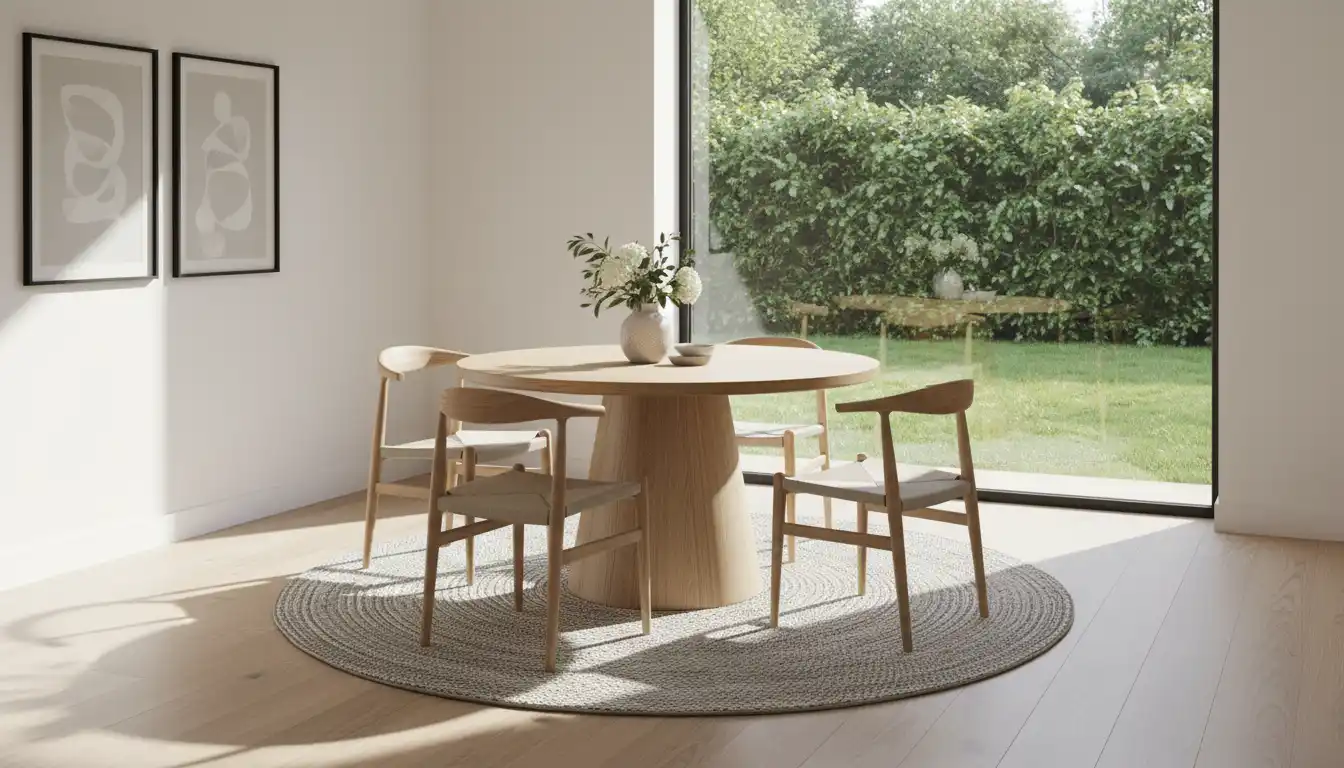
One of the most effective strategies for a small dining room is to choose a table with a pedestal base. A single, central support instead of four legs at the corners frees up a surprising amount of space. It eliminates the leg-wrestling that can happen with traditional tables and allows you to tuck chairs in more completely.
This design also provides more flexibility in seating. You can often squeeze an extra person around a pedestal table more comfortably than a four-legged one. The visual effect is also significant; with fewer legs cluttering the floor, the space appears more open and tidy.
Material and Color Can Transform a Room
Heavy, dark wood tables can absorb light and feel visually massive, shrinking the room. To counteract this, opt for tables made from lighter-colored woods or those with a white or light gray finish. These lighter tones reflect light, which helps to create a sense of spaciousness.
A table with a glass top is another excellent choice for small spaces. The transparency of the glass allows you to see the floor underneath, which tricks the eye into perceiving a larger area. Paired with a slim metal or light wood base, a glass table can feel almost weightless in the room. This approach to durable finishes is just as important as choosing the right paint for a snowblower; it’s about ensuring longevity and maintaining appearance through regular use.
Choosing Chairs and Accessories to Complete the Look
Your dining chairs and other decor elements play a crucial role in the overall success of your 9×10 dining room. Bulky chairs or an incorrectly sized rug can quickly undo all the careful planning you put into selecting your table. The goal is to choose pieces that are both functional and visually lightweight.
Slim, Armless, and See-Through Chairs
When it comes to chairs, think lean. Armless dining chairs are a must for small spaces as they take up less width and can be pushed completely under the table. Look for chairs with slim profiles and tapered legs rather than heavy, solid designs.
Chairs with open or slatted backs allow light to pass through, reducing their visual weight. For the ultimate space-saving illusion, consider “ghost” chairs made from clear acrylic. These chairs are sturdy and comfortable but visually disappear into the room, making the space feel much more open.
Anchor the Space with the Right Rug and Lighting
A rug can beautifully define your dining area, but the wrong size is a common mistake. The rug should be large enough so that when you pull the dining chairs out, the back legs remain on the rug. A rug that is too small will make the entire setup feel cramped and disconnected.
Lighting is also a powerful tool. A large pendant light or chandelier centered over the dining table not only provides focused illumination but also acts as a visual anchor, drawing the eye upward and defining the dining zone. Proper lighting is a key component of any home project; understanding the fundamentals is important, even if you don’t need to consider the full cost to upgrade to 200 amp service for a single fixture.
Versatile Seating: The Bench Advantage
For rectangular tables, especially those placed near a wall, using a bench instead of chairs on one side is a brilliant space-saving solution. A bench can typically seat more people than individual chairs in the same amount of space. When not in use, it can be tucked completely under the table, freeing up valuable floor space and improving traffic flow.
| Table Shape | Ideal Size for 9×10 Room | Seats | Pros | Cons |
|---|---|---|---|---|
| Round | 40″- 48″ Diameter | 4-6 | Excellent for flow, intimate conversations, no sharp corners. | Less surface area, can be inefficient for larger groups. |
| Rectangular | 30″- 36″ Wide x 48″- 60″ Long | 4-6 | Works well against a wall, maximizes seating in narrow rooms. | Can feel bulky, corners can impede traffic flow. |
| Square | 36″- 44″ Square | 4 | Creates a balanced, symmetrical look; great for intimate meals. | Can be inefficient for seating more than four people. |
| Oval | 36″ Wide x 50″- 60″ Long | 4-6 | Blends the benefits of round and rectangular tables. | Can sometimes be harder to find in a variety of styles. |
Common Mistakes to Avoid
Designing a small dining space is fraught with potential pitfalls. Being aware of these common mistakes can save you from a purchase you might regret. It’s about thinking beyond the showroom and focusing on how the furniture will function in your actual home.
The most frequent error is buying a table that is simply too large. It might look perfectly proportioned in a vast furniture showroom, but it will dominate a 9×10 room. Always measure your room and the furniture before you buy. Equally important is choosing chairs that are out of scale—chairs that are too wide, too deep, or have bulky arms will make your dining area feel cluttered.
Final Checklist for Your 9×10 Dining Room
To ensure you make the best choice, use this quick reference guide. First, confirm your measurements, always subtracting a minimum of 72 inches from both the length and width of the room to find your maximum table size. Next, prioritize a round or oval table to enhance traffic flow and create a more open feel.
Opt for a pedestal base to maximize legroom and seating flexibility. Choose light-colored materials or a glass top to make the space feel brighter and larger. Finally, pair your table with slim, armless chairs that can be tucked away easily. Making smart choices in every detail, similar to how one might learn how to replace metal shed doors to improve a structure, will ensure your dining area is both beautiful and highly functional.
