Flooring For Cedar Walls: Unlock Your Home’s True Potential
Cedar walls bring unparalleled warmth and rustic charm to any space. Their rich tones and natural texture create an instant sense of comfort and connection to the outdoors. However, this distinctive feature presents a significant design challenge: choosing the right flooring. The wrong choice can clash with the wood’s powerful presence, making the room feel dated, dark, or visually chaotic.
Many homeowners find themselves stuck, worried about overwhelming the space or failing to create a cohesive look. The key is to select a floor that complements the cedar without competing with it, enhancing its natural beauty while establishing a balanced and harmonious environment. This guide will walk you through the best flooring options to pair with your cedar walls, ensuring your final design is both stunning and timeless.
You'll Learn About
Understanding the Unique Character of Cedar
Before selecting a flooring material, it’s essential to understand the specific characteristics of your cedar walls. Cedar is not a monolithic color; it varies widely in tone, from pale, honeyed ambers and blondes to deep, resonant reds and rich browns. The grain pattern can also range from straight and subtle to knotty and dramatic, significantly influencing the room’s overall feel.
Pay close attention to the cedar’s undertones. Most cedar has warm red, orange, or yellow undertones that will heavily influence your flooring choice. Furthermore, consider the finish on the wood. A natural, matte finish will have a different effect than a glossy, sealed one, which can reflect light and intensify the color.
The Impact of Lighting on Cedar’s Appearance
Natural and artificial light play a crucial role in how your cedar walls look throughout the day. A room with abundant natural light can handle darker flooring choices without feeling cavernous. Conversely, a space with limited light will benefit from lighter flooring that reflects light and prevents the cedar from feeling too heavy or enclosing.
Always observe your walls at different times of the day to get a true sense of their color profile. What appears as a soft honey in the morning sun might look like a deep auburn in the evening. This understanding is critical for finding a flooring material that harmonizes with the cedar’s dynamic nature.
Top Flooring Choices That Harmonize with Cedar Walls
The perfect flooring serves as a foundation that elevates your cedar walls into a deliberate design statement. The goal is to create either a subtle harmony or a striking, intentional contrast. Here are the top flooring options that achieve this balance beautifully.
Hardwood Flooring: The Classic Companion
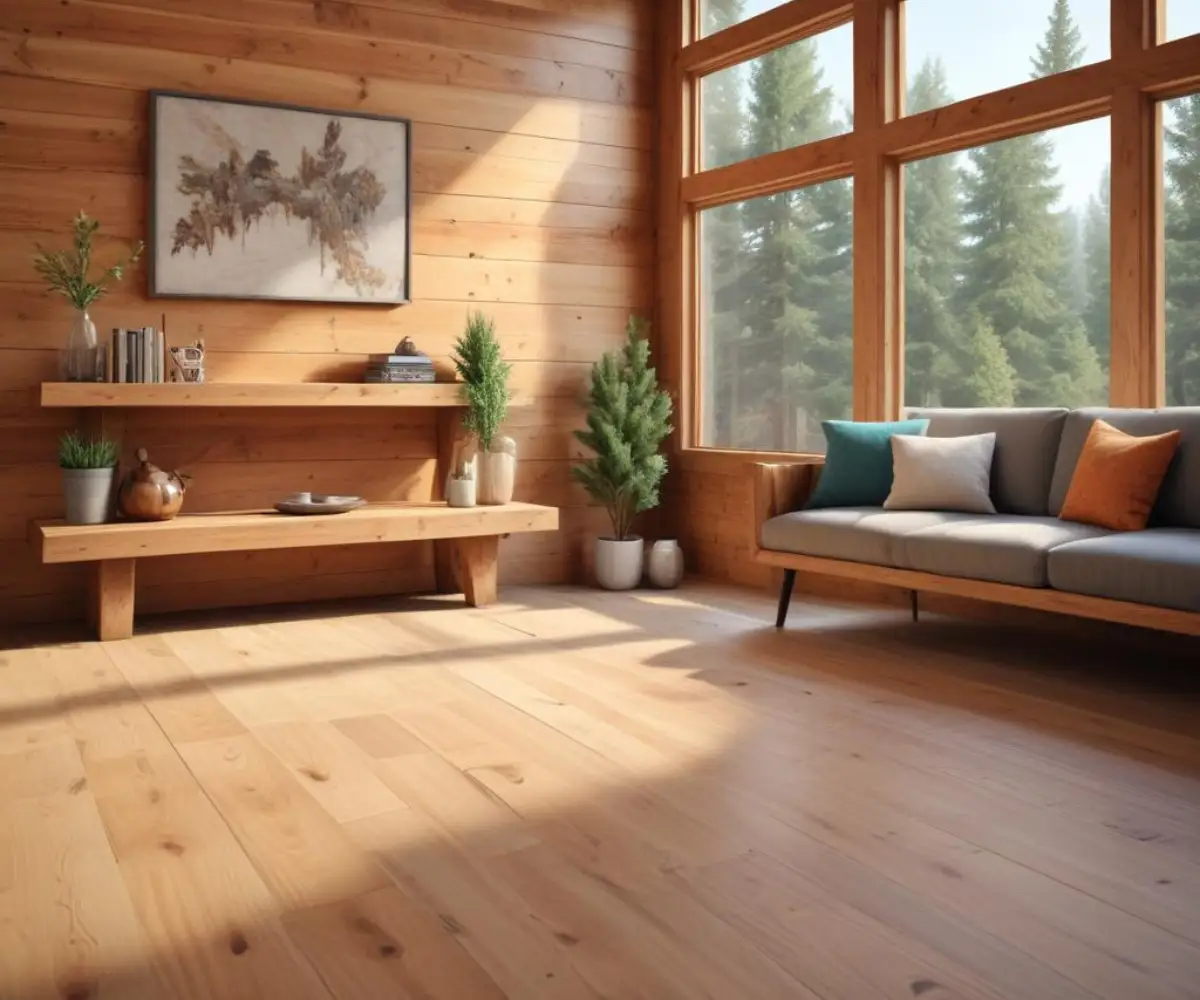
Wood-on-wood can be a sophisticated choice, provided you follow one crucial rule: create clear contrast. Avoid matching your floor color too closely to your walls, which can make the space feel like a monotonous wooden box. Instead, opt for a hardwood that is either significantly lighter or significantly darker than your cedar.
For a bright and airy feel, consider light-colored hardwoods like white oak, maple, or ash. These woods provide a clean, modern contrast that allows the rich tones of the cedar to stand out. For a more dramatic and cozy atmosphere, a dark walnut or hickory floor creates a luxurious foundation that grounds the room and makes the cedar walls feel even warmer. The substance of the flooring is also important; choosing a quality product, like what you might find in a discussion about proper lumber thickness, ensures longevity and a solid feel underfoot.
Natural Stone & Tile: Earthy Elegance
Natural stone offers a wonderful textural contrast to the organic lines of wood. Slate is an exceptional choice for pairing with cedar. Its deep, earthy tones of gray, black, and subtle green provide a cool, grounding counterpoint to the warmth of the wood, creating a look that is both rustic and refined. Slate’s natural cleft texture also adds another layer of visual interest.
For a warmer, more Mediterranean feel, travertine in creamy beige or soft gray can work beautifully. If you prefer a more uniform look, porcelain or ceramic tiles offer endless possibilities. You can opt for a solid neutral color or even a wood-look tile in a contrasting shade, giving you the aesthetic of wood with the durability and water resistance of tile. This is especially useful in moisture-prone areas, where proper installation is as critical for the floor as it is for other parts of the home, like ensuring a correctly installed shower curb.
Polished Concrete: The Modern Industrial Edge
For a truly modern and striking look, nothing beats the sleek minimalism of polished concrete. The cool, industrial feel of concrete provides a stark and compelling contrast to the warm, rustic texture of cedar walls. This pairing is perfect for creating a contemporary cabin, a modern loft, or any space that aims to blend natural and industrial elements.
Polished concrete floors are incredibly durable, easy to maintain, and can be stained in various shades of gray, black, or even warmer earth tones to subtly tie into the cedar. The smooth, reflective surface of the concrete also helps to bounce light around the room, which can be a great benefit in spaces with heavy wood features.
Luxury Vinyl Plank (LVP) & Laminate: The Budget-Friendly Chameleons
Modern flooring technology has made luxury vinyl plank and laminate incredible contenders. These options are no longer the cheap-looking alternatives of the past. High-quality LVP and laminate offer hyper-realistic visuals that can convincingly mimic hardwood, stone, or concrete at a fraction of the cost.
This versatility allows you to achieve the perfect look to complement your cedar walls without breaking the budget. Choose a light oak LVP to brighten the space or a slate-look laminate for that earthy contrast. Furthermore, these materials offer exceptional durability, scratch resistance, and are often waterproof, making them a practical choice for busy households with pets or children.
Carpet & Area Rugs: Adding Softness and Comfort
While hard surfaces are often the go-to choice, don’t discount the power of carpet. Wall-to-wall carpeting in a low-pile, neutral color can provide a soft, quiet foundation that allows the cedar walls to be the star. Stick to shades of cream, beige, taupe, or gray to avoid visual competition.
If you opt for a hard surface floor, an area rug is essential for defining the space, adding comfort, and introducing another layer of texture. A neutral-toned wool rug or a vintage patterned rug with muted colors can tie the room together beautifully, softening the transition between the floor and the walls.
Key Factors to Consider Before Your Final Decision
Choosing the right material is only half the battle. To ensure you make the best choice for your home and lifestyle, you need to consider a few practical factors that will influence the long-term success of your flooring.
Room Function and Traffic
Think carefully about how the room will be used. A high-traffic area like an entryway or kitchen demands a highly durable and easy-to-clean floor such as porcelain tile, slate, or LVP. A durable entryway is crucial for handling everything that gets tracked inside. In a bedroom or a formal living room with less foot traffic, you have more flexibility to choose materials like hardwood or carpet.
Lighting and Room Size
The interplay of light and space is critical. As a general rule, lighter floors make a room feel larger and more open, while darker floors can make a space feel smaller and more intimate. If you have a small room or one with limited natural light, a light-colored floor is almost always the better choice to pair with cedar walls, preventing the space from feeling oppressive.
Your Home’s Overall Design Style
Your flooring choice should align with the overarching aesthetic of your home. If your style is modern farmhouse, a wide-plank white oak would be a perfect fit. For an industrial loft vibe, polished concrete is the clear winner. For a rustic mountain cabin, natural slate or a dark, hand-scraped hardwood would feel right at home. The flooring is the anchor for your home’s style, so ensure it tells the same story as your cedar walls and furnishings.
Flooring Options for Cedar Walls: A Comparison
To help simplify your decision, this table provides a side-by-side comparison of the top flooring choices. Use it as a quick reference guide to weigh the pros and cons of each option based on your priorities.
| Flooring Type | Best For (Style) | Durability | Maintenance | Average Cost (per sq. ft.) |
|---|---|---|---|---|
| Hardwood | Modern Farmhouse, Traditional, Rustic | Good to Excellent | Moderate (requires refinishing) | $8 – $25 |
| Slate Tile | Rustic, Modern, Industrial | Excellent | Low (requires sealing) | $5 – $20 |
| Polished Concrete | Industrial, Modern, Minimalist | Exceptional | Very Low | $3 – $15 |
| Luxury Vinyl Plank (LVP) | All Styles (Versatile) | Excellent | Very Low | $3 – $10 |
| Carpet | Traditional, Cozy, Transitional | Fair to Good | Moderate (regular vacuuming) | $2 – $12 |
The Unspoken Rule: Balancing Wood Tones and Textures
One of the most sophisticated design principles when working with multiple wood elements is managing the balance of tones and grains. Avoid having wood floors and wood walls with the same grain intensity and color. This is where many designs fail, resulting in a room that feels visually noisy and overwhelming.
If your cedar walls have a prominent, knotty grain, opt for flooring with a subtle, more uniform pattern, like a straight-grain oak or maple. Conversely, if your cedar walls are clear-grained and uniform, you can introduce a floor with more character and visual texture, such as a rustic, hand-scraped hickory. This balance ensures that one wood element acts as the focal point while the other serves as a quiet, supporting backdrop.
Mastering the Undertones
The secret to a professional-looking result lies in the undertones. Cedar is overwhelmingly warm, with red, yellow, or orange undertones. Your flooring should either share this warm base (like a warm-toned travertine or a red oak) or provide a deliberate cool contrast (like gray slate or concrete). The biggest mistake is choosing a flooring with a clashing undertone, such as a floor with a greenish-yellow cast against a reddish cedar wall. Always get samples and view them together in your home’s light.
Common Mistakes to Avoid
Navigating the pairing of flooring with cedar walls can be tricky. Being aware of common pitfalls can save you from a costly and frustrating design misstep. Here are the top mistakes to steer clear of.
Mistake 1: The “Matchy-Matchy” Look
The most common error is trying to match the flooring color exactly to the cedar walls. This erases all definition and contrast, making the room feel flat, dated, and uninspired. Always aim for a distinct difference in shade and tone between the floor and walls.
Mistake 2: Ignoring the Scale of the Room
A dark floor paired with wood walls in a small, low-ceilinged room can create a cavelike effect. Always consider the volume of your space. Lighter flooring is a safer and often more effective choice for enhancing the feeling of spaciousness in cozier rooms.
Mistake 3: Forgetting About Samples
Never choose a flooring material based on a picture online or a tiny sample seen in a brightly lit showroom. You must bring large samples into your home. Place them on the floor next to your cedar walls and observe them throughout the day as the light changes. This is the only way to accurately judge the color and texture interaction.
Conclusion: Creating a Cohesive and Beautiful Space
Choosing the right flooring to accompany your cedar walls is one of the most impactful design decisions you can make. The key is to view the flooring not as an isolated element, but as a foundational partner to the walls. By focusing on creating a pleasing contrast in color, complementing the undertones, and selecting a material that suits your home’s style and your family’s lifestyle, you can create a truly harmonious and breathtaking space.
Whether you choose the classic elegance of hardwood, the earthy feel of slate, or the modern edge of concrete, the right choice will transform your room, allowing the natural beauty of your cedar walls to shine as the stunning centerpiece they were meant to be. With this thoughtful approach, you can confidently select a floor that you will love for years to come.