What Color Wall Plates With Grey Walls? Your Guide to a Flawless Finish
Grey walls have become a timeless choice for interior design, offering a versatile and sophisticated backdrop for nearly any decor style. However, this popular choice introduces a subtle but critical question that can make or break the entire aesthetic of a room: what color wall plates should you use with grey walls?
This single detail, though small, has a significant impact on whether your space looks cohesive and professionally designed or disjointed and unfinished. Choosing the wrong color can create visual clutter, drawing the eye for all the wrong reasons and undermining the calm, elegant atmosphere you worked so hard to create.
You'll Learn About
Why Your Wall Plate Choice Is a Make-or-Break Decision
Think of wall plates—the covers for your light switches and electrical outlets—as the punctuation marks in your room’s design story. When chosen correctly, they seamlessly integrate into the narrative, enhancing the overall look. When chosen poorly, they become distracting eyesores, like a typo in an otherwise perfect sentence.
The wrong wall plate can cheapen the look of expensive paint, clash with your decor, and create a jarring focal point. The right choice, however, elevates the space, demonstrating a thoughtful attention to detail that speaks to a high-end, intentional design. It’s the secret ingredient that pulls the entire room together.
The Three Core Strategies for Perfect Wall Plate Pairing
When selecting a color for your wall plates against grey walls, you generally have three strategic options. Each one creates a distinct look and feel, so the right choice depends entirely on your desired outcome and personal style. Let’s explore the pros and cons of each approach.
Strategy 1: The Seamless Blend to Make Plates Disappear
For a truly minimalist, high-end look, the goal is to make the wall plates vanish into the wall. This creates an uninterrupted plane of color, making your walls feel cleaner and more expansive. This is the preferred method in modern and contemporary design where clean lines are paramount.
The most effective way to achieve this is with paintable wall plates. These specially designed covers can be painted the exact same color as your walls, ensuring a perfect match in both color and sheen. A perfect color match is critical for this high-end look, just as finding the perfect neutral like a lighter shade of a popular gray can define a room’s entire mood.
To do this correctly, you must prime the plate first, then apply a few thin coats of your wall paint, and finally, seal it with a durable topcoat (like a matte or satin polyurethane) to protect it from fingerprints and wear.
Strategy 2: The Classic Approach of Matching Your Trim
This is arguably the most common and foolproof strategy. In most homes, the baseboards, window casings, and door frames are painted a contrasting color to the walls, most often a shade of white. Matching your wall plates to your trim color creates a sense of cohesion and intention.
If your trim is a crisp, bright white, then crisp, bright white wall plates are the natural choice. This method frames the room, creating a clean, consistent outline that feels polished and traditional. It’s a safe bet that always looks good because it anchors the plates to another existing element in the room.
This strategy prevents the “floating rectangle” effect that can happen when a white plate is placed on a grey wall with no other white elements nearby. It connects the plate to the room’s architectural “bones.”
Strategy 3: The Bold Accent for a Deliberate Statement
Sometimes, you don’t want the wall plates to blend in. Instead, you can use them as a design accent, much like jewelry or hardware. This approach works best when the accent color is repeated elsewhere in the room, such as on cabinet pulls, light fixtures, or furniture legs.
Popular accent colors for grey walls include:
- Matte Black: Creates a dramatic, modern, and industrial feel. It provides a strong grounding point and pairs exceptionally well with both light and dark grey walls.
- Satin Nickel or Pewter: A softer, more contemporary choice than chrome. This metallic finish offers a subtle contrast that feels sophisticated and coordinates well with stainless steel appliances or chrome fixtures.
- Brass or Champagne Bronze: Adds warmth and a touch of glamour. Brass plates against a cool charcoal grey wall can create a stunning, high-contrast look perfect for mid-century modern or art deco styles.
- Oil-Rubbed Bronze: Offers a more traditional or rustic feel. The deep, warm tones work well with warmer greiges and traditional decor.
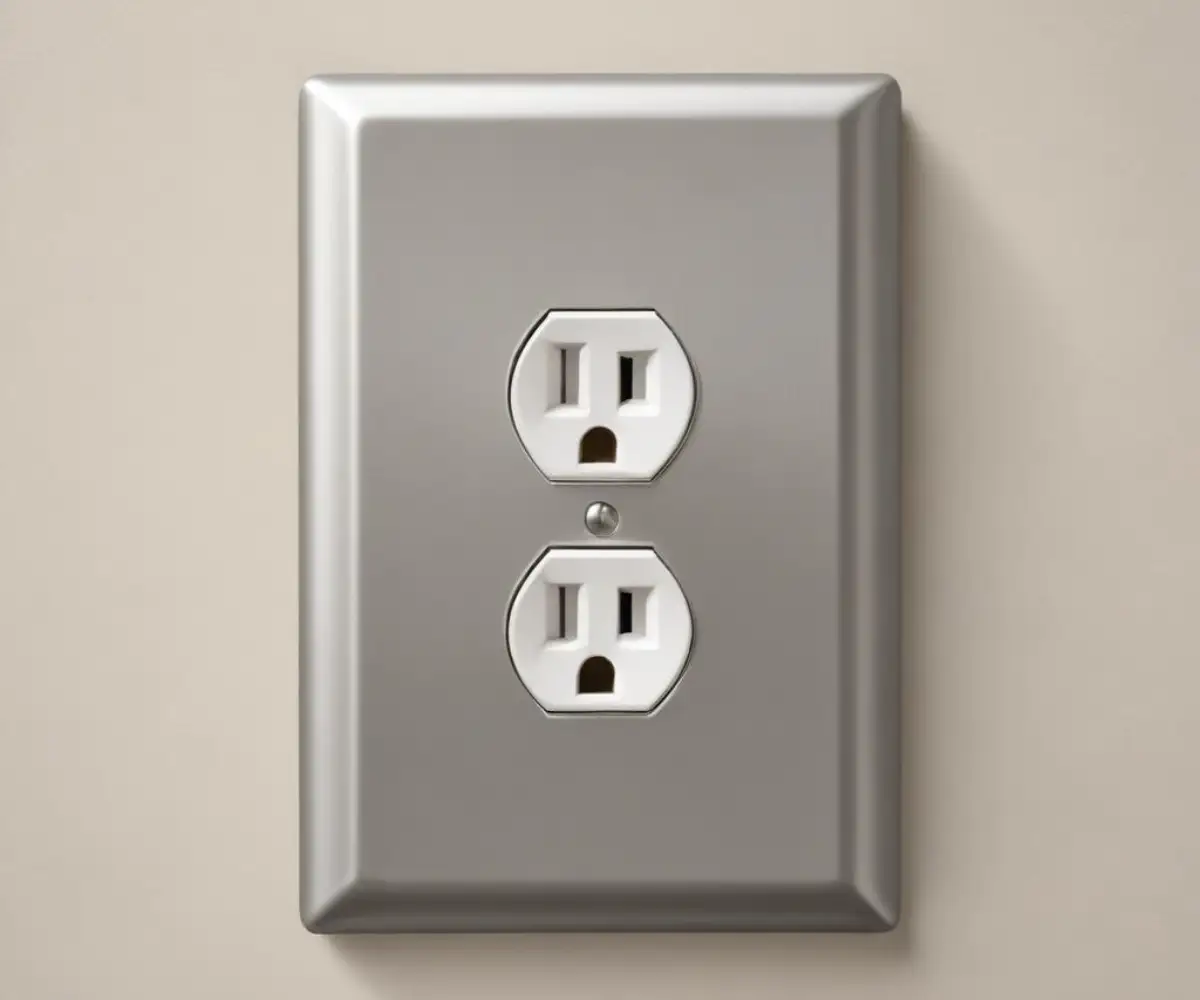
When using wall plates as an accent, consistency is key. Ensure all the plates in the room, and preferably in sightlines, follow the same accent theme to avoid a cluttered or chaotic look.
The Unspoken Rule: Match Your Wall’s Undertone
Here is a design principle that many articles fail to mention: the undertone of your grey paint is the most critical factor in your decision. Grey is rarely just grey; it almost always has a subtle undertone of another color, which places it in one of two categories: cool or warm.
Cool Greys have blue, purple, or green undertones. They feel crisp, airy, and modern. Warm Greys (often called “greige”) have beige, yellow, or brown undertones. They feel cozy, earthy, and inviting.
Choosing Plates for Cool Grey Walls
If your walls have a cool undertone, you should stick with plate colors that share that coolness. Bright, pure white plates are a perfect match for the trim. For metallic finishes, satin nickel, chrome, and pewter are ideal as they have a silvery-blue base that complements the wall color. Matte black also works exceptionally well, providing a stark, graphic contrast.
Choosing Plates for Warm Grey Walls
For warm grey or greige walls, you need plates with corresponding warmth. A stark white plate can look too clinical here. Instead, consider off-white, biscuit, or light almond colored plates. For metallics, satin brass, champagne bronze, and oil-rubbed bronze are fantastic choices because their warm, golden, or brown hues will harmonize beautifully with the wall’s undertone.
The Ultimate Wall Plate Pairing Guide
To simplify your decision, this table breaks down the best choices based on your wall color and desired aesthetic. It provides a clear cheat sheet for making the perfect selection every time.
| Grey Wall Tone | Recommended Plate Color | Primary Design Strategy | Best For These Styles |
|---|---|---|---|
| Cool Grey (Light to Mid-Tone) | Paintable (Exact Match) | Seamless Blend | Minimalist, Contemporary, Scandinavian |
| Cool Grey (Light to Mid-Tone) | Crisp White | Classic Trim Match | Transitional, Coastal, Modern Farmhouse |
| Cool Grey (Any Shade) | Matte Black | Bold Accent | Industrial, Modern, High-Contrast |
| Cool Grey (Any Shade) | Satin Nickel / Chrome | Bold Accent | Contemporary, Transitional, Art Deco |
| Warm Grey / Greige | Off-White / Biscuit | Classic Trim Match | Traditional, Transitional, Cozy Modern |
| Warm Grey / Greige | Satin Brass / Champagne Bronze | Bold Accent | Mid-Century Modern, Glam, Eclectic |
| Warm Grey / Greige | Oil-Rubbed Bronze | Bold Accent | Rustic, Farmhouse, Traditional |
| Charcoal / Dark Grey | Matte Black | Seamless Blend (Tone-on-Tone) | Moody, Dramatic, Modern |
| Charcoal / Dark Grey | Satin Brass | Bold Accent | Luxe, Glam, Art Deco |
Beyond Color: Finish and Style Matter Too
While color is the primary consideration, the finish and style of the wall plate also play a crucial role. A cheap, glossy plastic plate can ruin the effect of a beautiful metallic finish or a carefully chosen color.
Sheen and Finish
Try to coordinate the sheen of your wall plate with your wall’s paint finish. If you have matte or eggshell walls, a matte or satin finish wall plate will look much more integrated than a high-gloss one. Glossy plates reflect light differently and can look like a mistake.
When using metallic plates, a brushed or satin finish is often more forgiving and looks more luxurious than a highly polished, reflective finish, which can show fingerprints and smudges easily.
Style and Shape
The style of the plate itself should align with your room’s decor. For a modern, seamless look, screwless wall plates are an excellent choice. They have a clean, minimalist face that further helps them blend into the wall.
For more traditional homes, a standard plate with visible screws is perfectly acceptable. You can even find decorative plates with beveled edges or architectural details that can add another layer of texture to your room. Even the color of the screws is a detail worth noting—a brass plate looks best with brass screws, not standard silver ones.
Special Considerations and Common Mistakes to Avoid
Before you make your final decision, consider these specific scenarios and pitfalls. A thoughtful approach now will save you from design regret later.
Handling Unused Outlets
Sometimes you have an electrical box that is no longer in use. Instead of leaving an empty hole or a useless outlet, a simple and clean solution is required. This is precisely what blank wall plates are used for, providing a safe and visually appealing cover that can be matched to your wall or trim just like any other plate.
Consistency Throughout Your Home
While you don’t need to use the same wall plates in every single room, you should aim for consistency within a single space or open-concept area. It’s perfectly fine to use bold black plates in a modern kitchen and classic white plates in the traditional bedrooms. The key is to make the choices feel intentional for each space’s unique design.
In smaller homes, like a compact dining room that flows into other areas, maintaining a consistent style for wall plates can help the space feel larger and more cohesive.
The Biggest Mistake: Forgetting the Device
Perhaps the most common error is choosing a beautiful new wall plate color while ignoring the color of the switch or outlet itself. A stunning matte black plate paired with a standard white outlet looks awkward and unfinished. Always coordinate the device with the plate.
Most manufacturers offer switches and outlets in a range of colors like white, black, brown, and light almond. If you are upgrading to a statement color like black or bronze for your plates, invest the extra few dollars to get matching outlets and switches. This final step is what separates an amateur attempt from a professional-looking result.
Your Final Decision
Choosing the right color wall plates for your grey walls is a detail that deserves careful consideration. It’s the finishing touch that completes your design vision. By following one of the three core strategies—blending with the wall, matching the trim, or creating a bold accent—you can ensure a beautiful result.
Remember to always consider your grey’s undertone as your primary guide. By pairing cool greys with cool-toned plates and warm greys with warm-toned plates, you’ll create a harmonious and sophisticated space. With this knowledge, you are now equipped to make a confident choice that will elevate your home and prove that when it comes to great design, every detail matters.