
China Cabinet Color Crisis? Unlock the Perfect Hue
That beautiful, solid wood china cabinet in the corner of your dining room holds more than just dishes; it holds memories. However, its dated, dark wood finish can make an entire room feel heavy and out of sync with your modern decor. The problem isn’t the furniture itself—it’s the color.
Choosing a new paint color can feel like a monumental decision, fraught with the fear of making the wrong choice and ruining a beloved piece. This indecision often leads to procrastination, leaving the cabinet as a source of frustration rather than a point of pride. The key is to move past this color paralysis with a clear, confident plan.
You'll Learn About
Why That Old Finish Isn’t Working Anymore
Tastes and design trends evolve. What was once a cherished heirloom can become a design challenge, making a room feel smaller and darker. Dark wood tones, while classic, can absorb light and clash with contemporary aesthetics that favor brightness and airiness.
A fresh coat of paint is the most effective way to breathe new life into an old piece of furniture. It can instantly transform a china cabinet from an overlooked item into a stunning focal point. This simple update not only modernizes the cabinet but also elevates the entire room’s ambiance.
The Crucial First Step: Preparation is Everything
Before a single drop of paint is applied, proper preparation is non-negotiable for a professional-looking finish. Rushing this stage is the most common mistake and will inevitably lead to a disappointing result. A flawless paint job begins with a flawlessly prepped surface.
Start by thoroughly cleaning the entire cabinet with a degreaser to remove years of dust, grime, and furniture polish. Once clean and dry, a light scuff sanding with 150-grit sandpaper is essential. You aren’t trying to strip the old finish, just rough it up enough to give the new primer and paint something to grip onto.
Understanding When to Prime
Primer is a critical barrier that prevents old stains and wood tannins from bleeding through your new paint color. This is especially important when painting dark wood, like mahogany or cherry, a lighter color. A quality stain-blocking primer ensures your chosen color stays true and vibrant.
Applying two thin coats of primer, with light sanding in between, creates an ideal canvas. While some paints claim to have a built-in primer, for a piece of furniture as significant as a china cabinet, using a separate, high-quality primer is always the safer, more reliable choice. It’s a foundational step, much like knowing when to use specific tools for a specialized job, such as when a plumber needs to know if you can use SharkBite on soft copper; the right foundation prevents future problems.
Decoding Your Room’s Influence on Color
The perfect paint color doesn’t exist in a vacuum. Its appearance is dramatically influenced by the light and existing colors in your room. A shade that looks perfect on a swatch in the store can look completely different at home.
Consider the natural light your room receives. North-facing rooms have cooler, softer light that can bring out gray or green undertones in paint. South-facing rooms enjoy warm, bright light all day, which can intensify colors. Test your potential paint colors on a small, inconspicuous area of the cabinet or on a sample board and observe them at different times of the day.
Harmonizing with Your Existing Decor
The cabinet’s new color must complement the room’s existing color palette. Look at your wall color, flooring, rug, and other furniture. The goal is to create a cohesive look, whether you’re aiming for a subtle, monochromatic scheme or a bold, contrasting statement.
Don’t forget to consider the items you plan to display inside the cabinet. If you have a collection of all-white porcelain, a darker interior color can make them pop. Conversely, a light interior will beautifully showcase colorful or patterned dishes.
Choosing the Right Color Palette for Your Style
With the prep work understood, the exciting part begins: selecting the color. The right hue can align your china cabinet with any design style, from modern farmhouse to sleek contemporary. Current trends lean towards colors that are both sophisticated and personal.
Classic and Timeless Neutrals
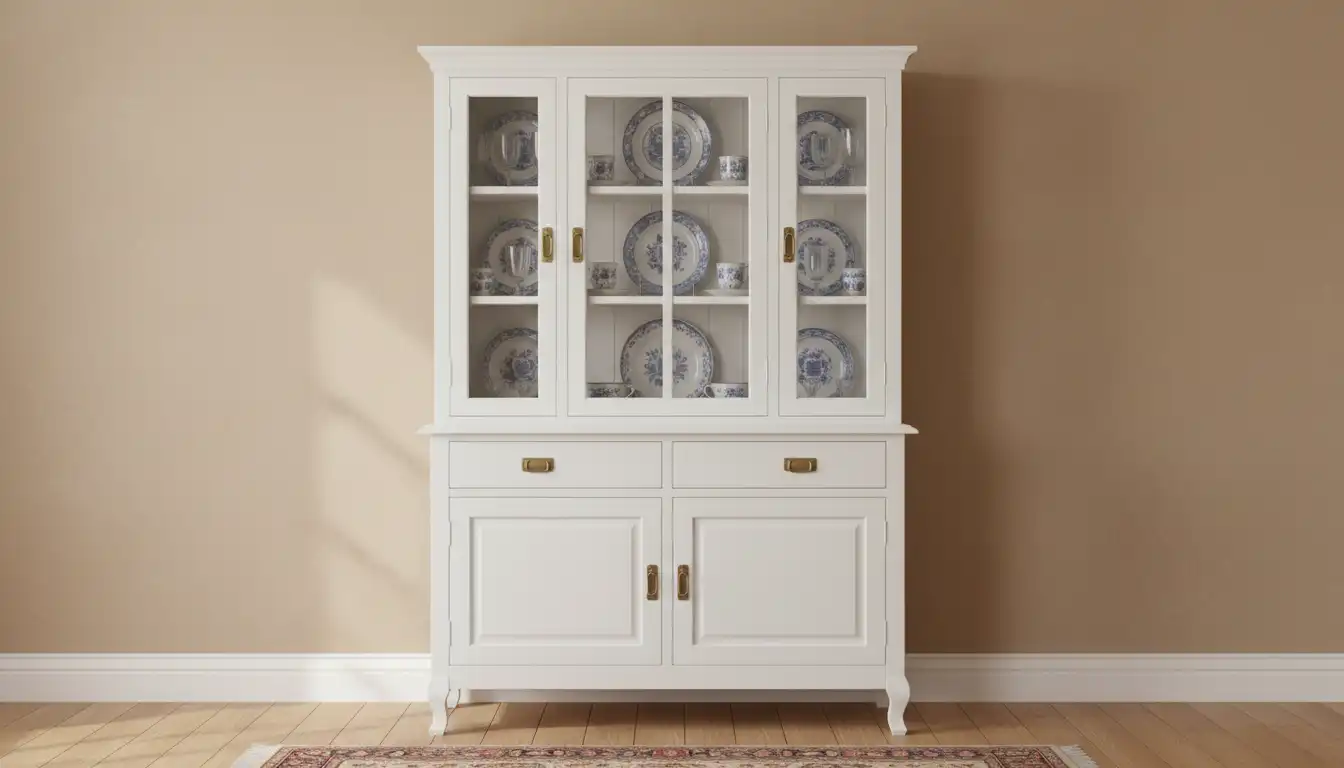
You can never go wrong with a classic neutral. Shades of white, cream, and gray are perpetually in style and offer a clean, airy feel. A warm off-white or a soft greige (a mix of gray and beige) can provide a sophisticated update that feels both modern and timeless.
Top Neutral Choices:
- Warm White: Creates a fresh, cottage-inspired look without feeling stark.
- Soft Gray: Offers a modern, elegant alternative to white and pairs well with almost any color.
- Cream/Linen: Provides a gentle warmth and a slightly vintage, romantic feel.
Bold and Dramatic Statements
For a more dramatic transformation, consider a dark and moody color. These shades turn a china cabinet into an undeniable statement piece, adding depth and sophistication to a room. They work especially well in well-lit spaces where their richness can be fully appreciated.
Dramatic Color Ideas:
- Charcoal or Soft Black: Creates a powerful, modern contrast and makes displayed items stand out.
- Deep Navy Blue: A timeless, regal color that feels both classic and contemporary.
- Emerald Green: A jewel tone that adds a touch of luxury and personality.
Modern and Earthy Hues
Connecting with nature continues to be a dominant trend in interior design. Earthy, muted tones bring a sense of calm and organic beauty indoors. These colors are versatile and pair beautifully with natural materials like wood and stone.
Trending Earthy Shades for this Year:
- Sage and Olive Green: These soft greens are calming and bring a touch of the outdoors in.
- Terracotta and Clay: Warm, grounded colors that create a cozy and inviting atmosphere.
- Dusty Blue: A muted, serene blue that adds a peaceful pop of color without overwhelming the space.
The Secret to a High-End Look: Sheen and Technique
The color is only half the story; the paint’s finish, or sheen, plays a vital role in the final look and durability of your project. High-traffic pieces like furniture require a finish that can withstand cleaning and daily use. A little bit of planning can make all the difference, just as a simple solution like a light switch extender can solve an everyday annoyance.
For furniture, satin or semi-gloss sheens are typically recommended. A satin finish offers a subtle, velvety luster and is more durable and easier to clean than a flat or matte finish. Semi-gloss provides even greater durability and a noticeable shine, which is excellent for highlighting the cabinet’s details but can also accentuate any surface imperfections.
Advanced Finishing Techniques
To elevate your project further, consider techniques that add character and custom detail. A two-tone finish, for instance, can be stunning. Painting the exterior of the cabinet one color (like a soft white) and the interior back panel a contrasting shade (like a dark gray or dusty blue) adds depth and visual interest.
Another popular technique is distressing, which works well for farmhouse or shabby chic styles. After painting, lightly sand the edges and raised details to reveal hints of the wood or a base color underneath. This creates a beautifully aged, time-worn patina.
Finally, don’t overlook the interior. Applying a high-quality peel-and-stick wallpaper to the back panel of the cabinet is a fantastic way to introduce pattern and personality. It’s a simple touch that yields a highly professional and customized result.
| Paint Type | Best For | Finish Appearance | Durability | Pro-Tips |
|---|---|---|---|---|
| Chalk Paint | Distressed, matte, vintage looks. | Velvety, ultra-matte finish. | Low to moderate; requires a top coat (wax or polycrylic) for protection. | Excellent adhesion with minimal prep. Ideal for achieving a shabby chic or aged look. |
| Milk Paint | Authentic antique, chippy finish. | Can be smooth or naturally chip and crackle for a rustic look. | Moderate; typically sealed with wax or oil for durability. | Comes in powder form you mix yourself. Creates a unique, authentically aged finish. |
| Latex Paint (Acrylic) | Modern, smooth finishes and wide color availability. | Available in all sheens from flat to high-gloss. | Moderate to high; choose a satin or semi-gloss enamel for best results. | Requires proper priming for good adhesion. Easy cleanup with soap and water. |
| Alkyd (Oil-Based) Enamel | Maximum durability and a glass-smooth finish. | Typically satin, semi-gloss, or high-gloss. Levels beautifully. | Very high; resistant to scratches and scuffs. The professional’s choice. | Slower drying time and requires mineral spirits for cleanup. Offers a superior, hard-wearing finish. |
Final Touches: Hardware and Styling
The transformation isn’t complete without addressing the hardware. Old, tarnished brass or dated wooden knobs can undermine your beautiful new paint job. Replacing them with new hardware is an easy and relatively inexpensive update that makes a huge impact.
Consider the overall style you want to achieve. For a modern look, sleek bar pulls in a matte black or brushed nickel finish are excellent choices. For a farmhouse or classic style, consider cup pulls or simple knobs in an oil-rubbed bronze or antique brass finish. Sometimes, even a quality spray paint designed for metal can completely revitalize the existing hardware.
Once the paint is cured and the hardware is installed, it’s time to style your shelves. Arrange your china, glassware, and decorative objects thoughtfully. Create balance by mixing heights and shapes, and don’t be afraid to leave some empty space to avoid a cluttered look. Your newly painted china cabinet is now ready to be the centerpiece it was always meant to be, a perfect blend of cherished history and modern style, much like the timeless efficiency found in a classic German Schrank.

![What Causes Joint Compound to Mold [And Prevention]](https://fixitinthehome.com/wp-content/uploads/2023/01/black-mold-in-joint-compoun-768x432.jpg)