
Wrong Landscape Rock for Your Tan House? Avoid This Mistake
You have a beautiful tan house, a neutral and inviting canvas. Yet, when it comes to the finishing touch of landscape rock, you find yourself stuck. This decision feels surprisingly permanent and carries more weight than you expected.
The wrong choice can make your home look washed out, dated, or simply “off.” The right choice, however, can elevate your entire property, creating stunning curb appeal that looks professionally designed.
This guide breaks down the science and art of pairing landscape rock with a tan house. We’ll move beyond generic advice to help you make a confident decision that you’ll love for years to come.
You'll Learn About
Why Rock Color is So Critical for a Tan Home
The core issue isn’t just about picking a pretty color; it’s about understanding the relationship between your home’s specific shade of tan and the rocks you place next to it. Tan is rarely a simple, flat color. It has subtle undertones that can be warm, cool, or neutral.
Ignoring these undertones is the most common mistake homeowners make. A warm, yellow-based tan paired with a cool, blue-gray rock can clash, creating a jarring visual effect. The goal is to choose a rock that either complements these undertones for a harmonious look or contrasts with them deliberately for a dramatic one.
The Secret Language of Tan: Identifying Your Home’s Undertone
Before you even look at rock samples, you must analyze your house. Look at your siding or paint in different lights—morning, noon, and evening. What subtle colors do you see?
Warm Tans: These have hints of yellow, orange, or soft pink. They feel sunny and earthy. Think beige, buff, or khaki.
Cool Tans: These lean towards gray or have a slight green or taupe cast. They feel more modern and muted. Think greige or stone.
Option 1: Creating Bold Contrast for Maximum Curb Appeal
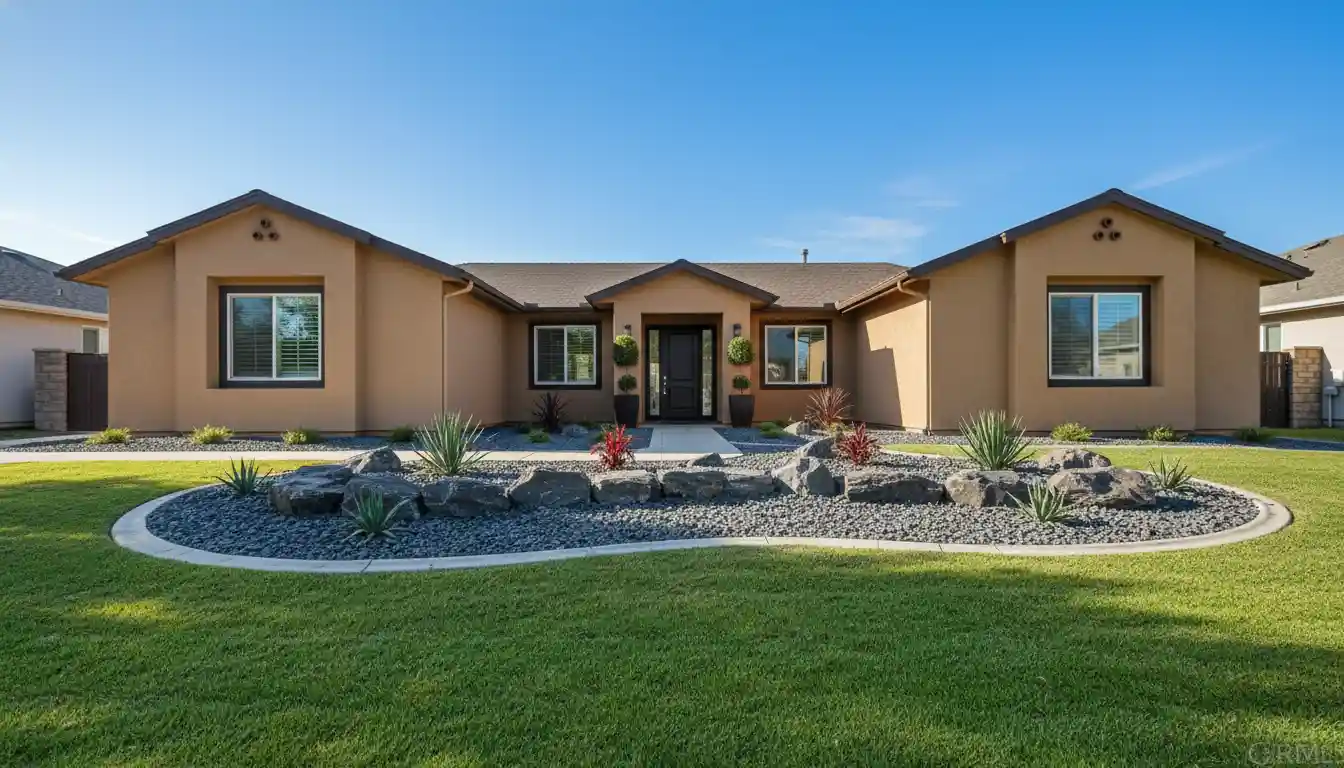
If you want your landscaping to make a statement and your tan home to truly pop, contrast is your best friend. This approach uses rocks that are significantly darker than the house, creating a crisp and defined look.
Dark Charcoal and Black Rocks
This is a classic, high-impact choice for a reason. Dark gray or black rocks create a powerful visual anchor that makes a tan house look brighter and more intentional. This modern aesthetic is clean, sharp, and excellent for drawing attention to the architecture of your home.
Consider using black lava rock for a textured, lightweight option or polished black pebbles for a sleek, contemporary feel. These colors work exceptionally well with both warm and cool-toned tan houses, making them a versatile and popular choice.
Rich Browns and Deep Reds
For a warmer, more organic contrast, look to the brown and red family. A deep chocolate brown or mahogany-colored rock can provide the depth you want without the starkness of black. This creates an earthy, sophisticated palette that pairs beautifully with warm tans.
Red or burgundy lava rocks are a bolder choice that can bring out the warmer undertones in your home’s paint. This combination feels vibrant and full of personality, perfect for Southwestern or rustic-style homes.
Option 2: Achieving a Seamless, Harmonious Look
Perhaps you prefer a softer, more blended aesthetic where the landscaping and home feel like a single, cohesive unit. A harmonious color scheme uses rocks that are closer in tone to the house color, creating a serene and elegant look.
Creams, Whites, and Light Tans
Using rocks in the white and cream family can brighten your entire property. White marble chips create a brilliant, clean edge against a tan house, offering a look of classic luxury. Softer, cream-colored pebbles can provide a gentle transition from the house to the lawn.
The key here is to match the undertones. A warm, creamy tan house pairs best with an off-white or cream-colored rock. A cooler, greige house looks stunning with a brighter, cleaner white rock.
Multi-Toned River Rocks
One of the most forgiving and natural-looking options is a multi-toned river rock. These mixes often contain a blend of tans, grays, creams, and browns. This variety is excellent at tying everything together.
The different colors in the rock mix will pick up on the undertones of your tan house, your trim color, and even colors from the surrounding nature. This creates a rich, textured look that feels effortless and is very low-maintenance in terms of showing dirt.
The Ultimate Rock Selection Guide for Tan Houses
Choosing the right landscape rock goes beyond just color. You must also consider the size, shape, and finish of the stone, as these details contribute significantly to the final look.
The size of the rock impacts the texture of your garden beds. Smaller rocks like pea gravel create a smooth, uniform surface, while larger 2-3 inch rocks add dimension and a more rugged feel. Always consider the scale of your house and garden beds when selecting a size.
| Rock Color | Visual Effect | Best Paired With (Tan Undertone) | Pro Tip |
|---|---|---|---|
| Charcoal Gray / Black | Bold, Modern, High-Contrast | Works with all undertones | Can absorb heat in sunny climates; consider for areas with heat-tolerant plants. |
| Rich Chocolate Brown | Earthy, Sophisticated, Warm Contrast | Warm (Yellow/Orange) Tans | Creates a deep, luxurious look that hides dirt well. |
| Burgundy / Red | Vibrant, Energetic, Bold | Warm (Red/Pink) Tans | Use strategically as an accent to avoid overwhelming the landscape. |
| Cream / Off-White | Bright, Soft, Harmonious | Warm (Yellow) Tans | Provides a clean look but may require occasional rinsing to stay bright. |
| Bright White | Crisp, Classic, Clean | Cool (Gray/Greige) Tans | Offers a striking contrast that can make spaces feel larger and more open. |
| Multi-Tone River Rock | Natural, Forgiving, Textured | Works with all undertones | Excellent for blending different elements of your home and landscape together. |
More Than Just Color: Practical Considerations
Before you lay a single stone, proper preparation is essential for a long-lasting, low-maintenance landscape bed. This means clearing the area of all grass and weeds. A critical step is deciding what to put down as a weed barrier underneath the rocks.
Many homeowners wonder about using landscape fabric or plastic around foundation areas. While both can suppress weeds, fabric allows water and air to pass through to the soil, which is generally healthier for nearby plants.
Additionally, be mindful of how you place materials near your home. Just as you should avoid piling mulch against a brick house to prevent moisture damage and pests, ensure your rock beds have proper grading and drainage to direct water away from your foundation.
Your Step-by-Step Plan to the Perfect Choice
Feeling empowered? Here is a simple checklist to guide you to the perfect landscape rock decision for your tan house.
1. Confirm Your Undertone: Spend a day observing your house in different lighting conditions. Is it a warm, cool, or neutral tan? This is the most important step.
2. Define Your Desired Vibe: Do you want a dramatic, head-turning contrast or a serene, harmonious blend? Decide this before you start looking at options.
3. Always Get Samples: Never choose from a photo online or a small bin at the store. Bring home at least three different samples and place them next to your house’s foundation. Observe them for a full day to see how they look in changing light.
4. Consider Scale and Sunlight: Assess the size of the area. A large space might look better with larger rocks, while a small, delicate garden might benefit from pea gravel. Note how much direct sun the area gets to anticipate heat absorption.
Make a Choice That Lasts
Choosing the right landscape rock is a design decision that will impact your home’s curb appeal for decades. By understanding the critical role of your tan house’s undertones and making a conscious choice between contrast and harmony, you can avoid common mistakes.
You can create a beautiful, cohesive landscape that not only enhances the value of your property but also brings you joy every time you pull into the driveway. This thoughtful approach ensures a professional-quality result you can be proud of.
Frequently Asked-Questions
What are the best landscape rock colors for a tan house?
Earth-toned rocks in shades of brown, gray, red, and muted green tend to complement a tan house well, creating a natural and harmonious look. Lighter-colored rocks like cream, beige, and light gray can also blend seamlessly with a tan exterior. For a bolder look, a pop of color can be added with red or gold-toned rocks, or a modern contrast can be achieved with black or charcoal-colored stones.
Should I choose a rock color that matches my house exactly?
While you can choose rocks that match your home’s tan color for a cohesive look, it’s often recommended to select a complementary or contrasting color to add visual interest. Consider matching the rock color to your home’s trim for a unified appearance. Earth tones are generally a safe and appealing choice that will balance well with the tan exterior.
What color rocks will make my landscaping stand out?
To create a bold and contemporary look that makes your landscaping pop against a tan house, consider using dark-colored rocks like black or charcoal. Red rocks can also provide a vibrant contrast, especially when paired with green foliage. Using a contrasting color can help to highlight architectural features and create a more dynamic and visually interesting landscape.
How do I choose between light and dark-colored rocks?
Light-colored rocks can brighten up shady areas and create a serene feel, but may show dirt more easily. Darker rocks provide a strong contrast, can make plants and flowers appear more vibrant, and may be lower maintenance in terms of visible dirt. The best choice depends on your desired aesthetic and the specific lighting conditions of your yard.
Are there any other factors to consider besides color?
Yes, the texture and size of the rocks also play a significant role in the overall look. Consider how different textures, like smooth river rocks versus angular slate chips, will complement your home’s style. Also, think about the surrounding elements like your driveway and any existing natural stone in your landscape to ensure a cohesive design.
