
Weeping Willow Indoor Plant: The Shocking Truth You Need to Know
The elegant, cascading branches of a weeping willow tree evoke a sense of serene beauty. Many gardeners dream of bringing this iconic look into their home, only to be confronted by a major problem: its immense size.
A mature weeping willow is a giant, far too large for any indoor space. This guide reveals the truth about growing a weeping willow indoor plant and provides the expert solution you need for success.
You'll Learn About
Why a Standard Weeping Willow Won’t Survive Indoors
Attempting to grow a regular weeping willow tree inside is a recipe for disappointment. These trees are simply not adapted for an indoor environment for several critical reasons.
Their root systems are incredibly aggressive and seek out vast amounts of water, often spreading wider than the tree is tall. Furthermore, they exhibit a rapid growth rate, capable of adding several feet in height each year, which is unmanageable indoors.
The Bonsai Solution: Your Key to an Indoor Weeping Willow
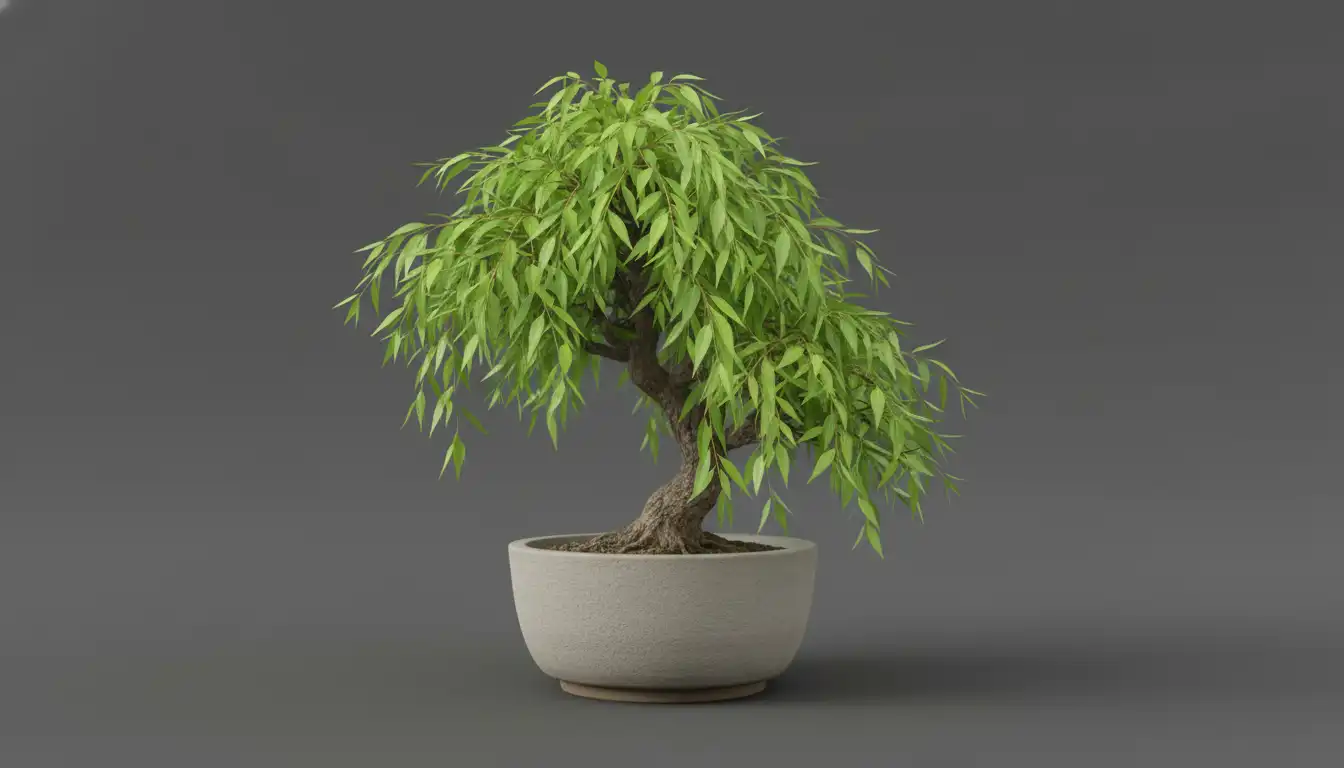
The secret to successfully cultivating a weeping willow indoors lies in the ancient art of bonsai. This technique allows you to grow a miniature, yet mature-looking, tree in a small container.
By carefully pruning the roots and branches, you can control the tree’s size while still encouraging its beautiful, characteristic weeping form. A weeping willow bonsai offers the perfect way to enjoy this magnificent tree’s aesthetics within the confines of your home.
Choosing Your Weeping Willow for Bonsai
Not all willow varieties are equally suited for bonsai cultivation. The classic Weeping Willow (Salix babylonica) is a popular choice, as is the Dwarf Weeping Willow (Salix caprea ‘Kilmarnock’).
When selecting a plant, look for a young specimen with a healthy trunk and several well-spaced branches. A pre-bonsai starter from a nursery is often the easiest entry point for beginners.
Essential Supplies for Your Indoor Willow Project
To begin your bonsai journey, you will need a few specific items. A proper bonsai pot with ample drainage holes is crucial for preventing root rot.
You will also need a specialized bonsai soil mix that promotes good drainage and aeration. Finally, a set of sharp pruning shears and concave cutters will be necessary for shaping your tree.
Step-by-Step Guide to Potting Your Weeping Willow Bonsai
Potting your weeping willow is the foundational step in creating your indoor masterpiece. This process involves carefully pruning the roots and securing the tree in its new, compact home.
Follow these steps methodically to ensure your tree has a healthy start. Taking your time here will pay dividends in the long run.
Step 1: Preparing the Tree
Carefully remove the young willow from its nursery container. Gently tease apart the roots with your fingers or a root rake, removing as much of the old soil as possible to inspect the root structure.
Step 2: Root Pruning
Root pruning is essential for bonsai and the key to keeping the tree small. Trim away any thick, circling roots and shorten the overall root mass by about one-third. This encourages the growth of a fine, fibrous root system better suited to container life.
Step 3: Preparing the Pot
Cover the drainage holes of your bonsai pot with a small piece of mesh to prevent soil from escaping. If you plan to wire the tree into the pot for stability, thread your wires through the holes now.
Step 4: Potting the Tree
Place a small layer of bonsai soil in the bottom of the pot. Position your willow in the pot, considering the most aesthetically pleasing angle, and then fill the remaining space with soil, gently working it in around the roots with a chopstick to eliminate air pockets.
The Secret to Keeping Your Indoor Weeping Willow Alive: Care Essentials
Once potted, the real work begins. A weeping willow bonsai has specific needs that must be met consistently to thrive indoors. Mastering its care requirements is the difference between a stunning living sculpture and a short-lived plant.
Light, water, and humidity are the three pillars of successful indoor willow care. Each must be carefully balanced to mimic the tree’s natural environment as closely as possible.
Mastering the Art of Watering
Weeping willows are famous for their love of water. In a small bonsai pot, the soil can dry out extremely quickly, making consistent moisture the most critical element of care. Never allow the soil to become completely dry.
Check the soil daily by touching the surface. If it feels even slightly dry, it’s time to water thoroughly until it runs freely from the drainage holes. The quality of your water can also impact plant health; sometimes, unusual noises from your plumbing, like a water heater that sounds like rocks, can be an indicator of hard water, which may affect sensitive plants over time.
Light Requirements: Mimicking the Outdoors
Indoors, providing enough light is a significant challenge. Your weeping willow needs at least six hours of direct, bright sunlight every day. The best location is typically a south-facing window.
To supplement natural light, especially during the shorter days of winter, using a full-spectrum LED grow light is highly recommended. Position the light a few inches above the tree and run it on a timer for 12-14 hours per day.
Temperature and Humidity: Creating the Right Microclimate
Willows prefer cool to moderate temperatures and are not fond of the dry air common in heated homes. They thrive in temperatures between 60-75°F (15-24°C). Keep the plant away from heat vents or drafts.
To increase humidity, you can place the bonsai pot on a tray filled with pebbles and water, ensuring the bottom of the pot sits on the pebbles and not in the water itself. Grouping it with other plants can also help create a more humid microclimate, turning its location into a sort of thermostat niche of ideal conditions.
Feeding Your Miniature Giant: Fertilizing Best Practices
During the growing season (spring and summer), your bonsai will benefit from regular feeding. Use a balanced liquid fertilizer diluted to half-strength every two weeks.
Avoid fertilizing during the fall and winter when the tree’s growth naturally slows. Over-fertilizing can burn the delicate roots and harm the tree.
Shaping Your Weeping Willow: Pruning and Wiring Techniques
Regular pruning is non-negotiable for maintaining the bonsai’s miniature size and iconic weeping shape. It is both an art form and a necessary horticultural practice.
Wiring is a more advanced technique used to guide the branches into the desired downward curve. This should be done with care to avoid damaging the tree’s delicate bark.
Pruning for Health and Shape
Throughout the growing season, trim back new shoots to maintain the tree’s overall shape and scale. Pruning encourages the tree to develop finer, more intricate branching, which enhances its aged appearance.
The best time for more significant structural pruning is in the late winter or early spring, just before the new growth begins. This is when you can remove any unwanted or awkwardly placed branches.
The Gentle Art of Wiring
To create the weeping effect, you can use anodized aluminum or annealed copper bonsai wire. Carefully wrap the wire around a branch at a 45-degree angle, being firm but not so tight that it cuts into the bark.
Gently bend the wired branch into the desired position. Keep a close eye on the wire, as it will need to be removed after a few months before it begins to scar the growing branch.
Common Problems and How to Solve Them
Even with the best care, you may encounter issues with your indoor weeping willow. Identifying problems early is key to resolving them quickly. This table outlines some of the most common ailments.
| Problem | Signs | Solution |
|---|---|---|
| Yellowing Leaves | Leaves turn yellow and may drop prematurely. | This is often a watering issue. Check soil moisture; it could be overwatering (root rot) or underwatering. Adjust your watering schedule accordingly. |
| Pest Infestations | Look for aphids on new growth or fine webbing from spider mites. | Spray the tree with insecticidal soap or neem oil. Increase humidity to deter spider mites. |
| Powdery Mildew | A white, dusty coating appears on the leaves. | Improve air circulation around the plant. Treat with a fungicide designed for powdery mildew. |
| Branch Dieback | Individual branches become dry, brittle, and lose their leaves. | This can result from a lack of light, underwatering, or root damage. Prune the dead branches and assess the tree’s primary care conditions. |
The Unspoken Challenge: Dormancy for Indoor Willows
Here is a critical piece of information often overlooked in guides for indoor plants. Weeping willows are temperate trees, and they absolutely require a period of winter dormancy to survive long-term. Skipping this step is a primary reason why these trees fail indoors after a year or two.
Dormancy is a natural rest period triggered by cold temperatures, which allows the tree to conserve energy and prepare for spring growth. To induce dormancy, you must provide a cold period of at least 6-8 weeks where temperatures are consistently below 40°F (4°C) but above freezing. An unheated garage, a cold basement, or a protected shed are ideal locations.
Beyond Bonsai: The Short-Term Indoor Option
If bonsai seems too intensive, there is another way to enjoy a willow indoors, albeit temporarily. You can grow a very young, non-bonsai willow in a large container for a single season.
This approach allows you to enjoy the plant’s vigorous growth but requires a firm plan. By the following year, the tree will have grown too large and its roots too demanding, necessitating a move to a permanent outdoor location.
Transitioning Your Willow Outdoors
When it’s time to move your temporary willow outside, you must acclimate it slowly to prevent shock. Start by placing it in a shady, protected spot for a few hours a day, gradually increasing its exposure to direct sun and wind over two weeks.
This process, known as hardening off, is crucial for its survival. Once it’s ready for its permanent home, perhaps you could use a structure like a small greenhouse to help it adapt. In fact, it is possible to turn a metal shed into a greenhouse, which could serve as an excellent transitional space for plants like this.
Conclusion: Is an Indoor Weeping Willow Right for You?
The dream of a weeping willow indoor plant is not impossible, but it demands dedication and the right technique. Success hinges on embracing the art of bonsai and committing to its specific care requirements.
From constant watering and providing supplemental light to ensuring a necessary winter dormancy period, the journey is hands-on. For the gardener willing to meet these challenges, the reward is a breathtaking piece of living art that captures the timeless elegance of the weeping willow in miniature form.
