Wall Vent Blocked by Furniture? This Costly Mistake Wrecks Your HVAC
You’ve spent hours perfecting your room’s layout. The sofa is perfectly centered, the bookshelf adds a touch of sophistication, and every piece of furniture feels just right. But in the quest for the perfect aesthetic, you may have made a critical, and costly, mistake: pushing a piece of furniture directly against a wall vent.
It seems harmless, a minor detail in your overall design. However, blocking that small grille is one of the most significant and overlooked errors in home maintenance. This simple act can set off a chain reaction of problems, leading to soaring energy bills, catastrophic HVAC damage, and even serious health hazards lurking within your walls.
This guide will illuminate the hidden dangers of a blocked wall vent. We will explore the severe consequences for your heating and cooling system, your finances, and your home’s air quality, providing clear, actionable solutions to protect your home and family.
You'll Learn About
Why Blocking a Wall Vent Is a Bigger Deal Than You Think
Your home’s HVAC system is like its respiratory system, breathing air in and out to maintain a comfortable environment. Vents are the critical entry and exit points for this airflow. Obstructing them is akin to trying to breathe with a hand over your mouth—it strains the entire system, leading to a cascade of problems that extend far beyond a single stuffy room.
Starving Your HVAC System: The Airflow Restriction Problem
When you block a wall vent with a dresser, sofa, or bookshelf, you are creating a dam in an essential airway. This airflow restriction forces your HVAC system’s blower motor to work exponentially harder to push or pull air through a much smaller opening. This constant strain leads to a significant increase in energy consumption as the system struggles to circulate air.
This isn’t just a temporary issue. Over time, the relentless pressure causes premature wear and tear on the system’s most critical components. The blower motor can burn out, and other parts can fail, leading to expensive and unexpected repair bills that could have been easily avoided.
The Ripple Effect: From Discomfort to Damage
A blocked vent immediately disrupts the temperature balance in your home. The room with the blocked vent will develop uncomfortable hot or cold spots, but the problem doesn’t stop there. Because that room fails to reach the temperature set on your thermostat, the system will run continuously, trying to compensate for a problem it can’t fix.
This constant operation can lead to severe mechanical failures. In the winter, a furnace that can’t circulate hot air properly can overheat, potentially cracking the heat exchanger—a dangerous situation that could leak carbon monoxide into your home. In the summer, an air conditioner that can’t disperse cold air can cause the evaporator coils to freeze into a solid block of ice, shutting down the entire system.
A Hidden Threat to Your Home and Health
Beyond mechanical issues, a blocked vent creates a micro-environment ripe for health hazards. When airflow is stagnant, moisture from the conditioned air can condense on the wall behind the furniture. This dark, damp, and undisturbed space is the perfect breeding ground for mold and mildew.
Mold spores can then be circulated throughout your home once the system kicks on, degrading your indoor air quality and triggering allergies, asthma, and other respiratory issues. Furthermore, this trapped moisture can damage your wall, warp your furniture, and lead to costly remediation. In extreme cases, an overworked system can generate excessive heat, and if you find a wall hot to the touch, it’s a critical fire hazard that requires immediate professional attention.
Is It a Supply Vent or a Return Vent? (And Why It Matters)
Not all vents are created equal. Your HVAC system has two distinct types: supply vents that deliver conditioned air into a room, and return vents that pull stale air back into the system to be heated or cooled. Blocking either is problematic, but the consequences differ. Identifying which type of vent you’re dealing with is a crucial first step.
The easiest way to tell the difference is the “paper test.” Turn on your HVAC system’s fan and hold a light piece of paper up to the vent. If the paper blows away, it’s a supply vent. If the paper is sucked toward the grille, it’s a return vent.
Blocking a supply vent creates high pressure in the ductwork, causing air leaks and leading to the temperature imbalances and system strain mentioned earlier. Blocking a return vent is often even more damaging. It effectively suffocates the entire HVAC system, forcing it to pull air from unintended places, like crawl spaces or attics, which can introduce dust, insulation fibers, and other pollutants into your home. This strain can also manifest as strange noises, and if you hear that your return air vent whistles, it’s a definitive signal of an airflow problem.
The Telltale Signs Your Wall Vent Is Blocked
Often, the signs of a blocked wall vent are subtle at first, but they become more apparent over time. Being able to recognize these clues early can save you from more significant damage and expense down the road. Pay close attention to your home’s performance and environment.
Audible and Visible Clues
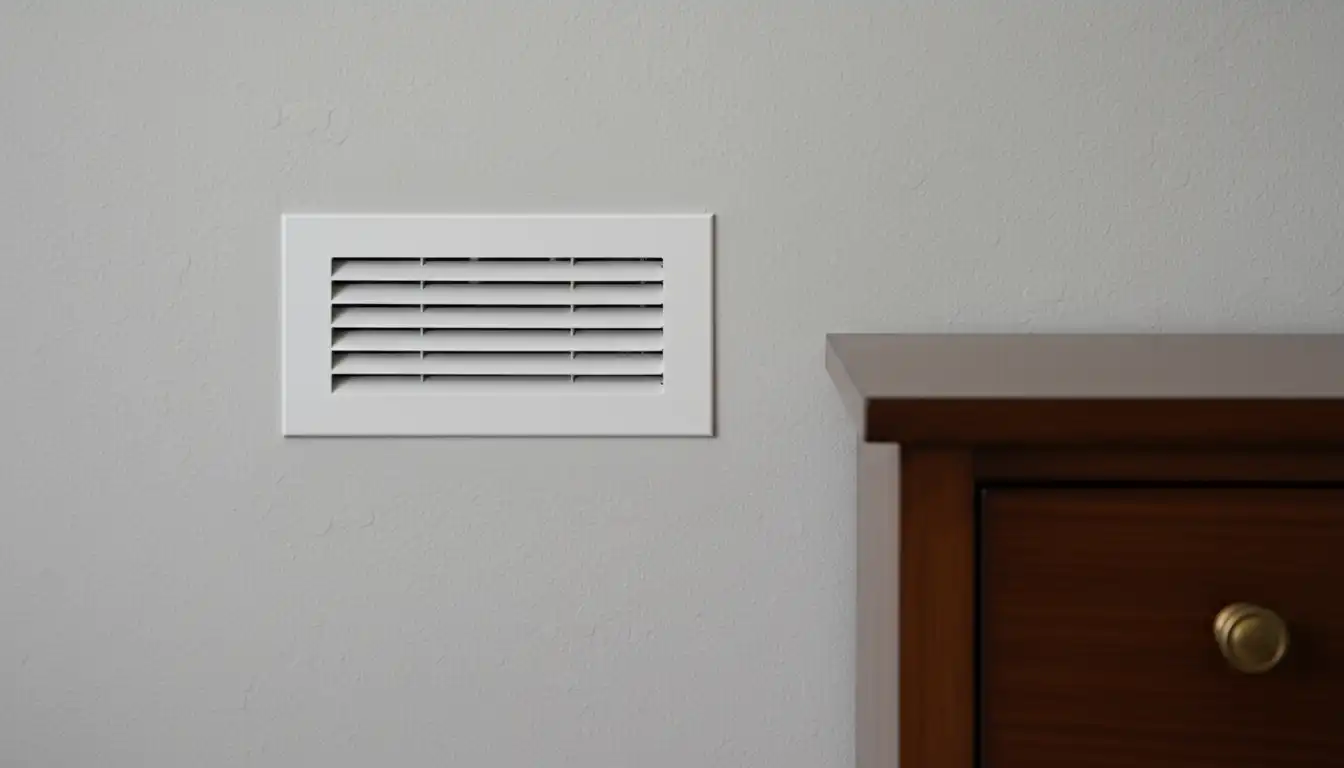
One of the first indicators is often a change in sound. You might notice your HVAC system running louder or making unusual humming or whistling noises as it strains against the blockage. Visually, you may see an accumulation of dust and pet hair on the furniture directly in front of the vent.
Over a longer period, you might observe discoloration or even heat damage on the surface of the furniture pressed against the vent. The wall itself may show signs of moisture or paint peeling due to condensation, a clear warning of potential mold growth.
Performance-Based Indicators
The most common symptom is a noticeable difference in temperature. The room with the blocked vent will feel consistently stuffy, too hot in the summer, or too cold in the winter, regardless of the thermostat setting. This discomfort is a direct result of poor air circulation.
Keep an eye on your utility bills. A sudden, unexplained spike in your heating or cooling costs is a major red flag that your system is working overtime. If your HVAC system seems to be running in longer cycles than it used to, it’s likely struggling to heat or cool your home efficiently due to an obstruction.
Strategic Solutions: How to Safely Arrange Furniture Around Vents
The good news is that solving this problem is often straightforward and doesn’t require a complete overhaul of your home’s design. With a few strategic adjustments, you can achieve both the aesthetic you desire and the healthy airflow your home requires. The key is to prioritize function alongside form.
The Golden Rule: Create a Breathing Zone
The most critical step is to ensure adequate clearance. As a rule of thumb, you should maintain a minimum of 6 to 12 inches of open space between any piece of furniture and a wall vent. For larger items like sofas, entertainment centers, and bookshelves, providing even more space is ideal.
This “breathing zone” allows air to circulate freely, preventing pressure buildup and ensuring the conditioned air can effectively distribute throughout the room. Before moving any heavy furniture, locate all the vents in the room and plan your layout accordingly.
Choosing the Right Furniture
When shopping for new furniture, consider pieces that are inherently vent-friendly. Furniture with legs, such as console tables, sideboards, and sofas with higher clearances, are excellent choices for placement near walls with vents. These designs naturally allow air to flow underneath, minimizing obstruction.
Avoid solid, boxy furniture that sits flat on the floor if you know it needs to be placed on a wall with a vent. Open-back shelving units are also a better choice than solid-backed bookshelves, as they are less likely to impede airflow significantly.
When You Can’t Move Your Furniture: Creative Workarounds
Sometimes, a room’s layout offers no other option but to place furniture in front of a vent. In these cases, you can use simple, inexpensive accessories to mitigate the problem. An air vent deflector is a plastic or metal cover that attaches to your vent (often magnetically) and redirects the airflow upwards, downwards, or sideways, away from the obstruction.
For floor vents covered by furniture, a vent extender can be a lifesaver. This device creates a channel that guides the air from the vent out from underneath the furniture and into the open room. These solutions ensure that you don’t sacrifice your HVAC system’s health for the sake of your room’s layout.
| Furniture Type | Bad Placement (The “Don’t”) | Good Placement (The “Do”) | Pro Tip |
|---|---|---|---|
| Sofa / Couch | Pressed flat against a wall, completely covering a return or supply vent. | Pulled at least 12 inches away from the wall, or using a sofa with high legs. | Use an air deflector to redirect airflow upwards, over the top of the sofa. |
| Bookshelf / Dresser | Solid-back unit pushed directly over a vent, trapping air behind it. | Positioned on a different wall, or leaving at least 6-8 inches of clearance. | Opt for an open-back bookshelf or a dresser with legs to encourage circulation. |
| Bed | Headboard is flat against the wall, blocking the air vent behind it. | Position the bed on a wall without a vent, or use a headboard with openings. | The dangers of placing a bed over an air vent are significant, impacting both comfort and system health. Ensure clearance. |
| Curtains / Drapes | Heavy, floor-length drapes that cover the vent when closed. | Hem curtains to end just above the vent or use tie-backs to keep them clear. | Install curtain rods that extend further past the window frame so drapes rest on the wall beside the vent. |
The Financial Aftermath: The True Cost of a Blocked Vent
Ignoring a blocked air vent is not a financially neutral decision. The long-term costs associated with this simple mistake can be staggering, affecting everything from your monthly budget to the overall value of your home. Understanding these financial consequences underscores the urgency of addressing the issue promptly.
First and foremost are the increased utility bills. An HVAC system fighting against an obstruction can consume up to 25% more energy, leading to a noticeable and frustrating increase in your monthly expenses. This is money spent not on better comfort, but on wasted energy.
Next come the repair costs. The strain on the blower motor, compressor, and heat exchanger leads to premature failures. Replacing a blower motor can cost several hundred dollars, while a failed compressor or a cracked heat exchanger can run into the thousands. Ultimately, the cumulative damage can shorten the lifespan of your entire HVAC system, forcing a full replacement years ahead of schedule—a major capital expense.
Frequently Asked Questions (FAQ)
Is it okay to partially block a wall vent?
No, even a partial blockage can disrupt airflow and cause your HVAC system to work harder. It’s always best to keep vents completely unobstructed to ensure maximum efficiency and prevent strain on the system. Any obstruction forces the system to compensate, leading to inefficiency.
How far should a couch be from a wall vent?
For a large piece of furniture like a couch, a minimum clearance of 12 inches is recommended. This provides enough space for air to circulate freely into the room and back to the system, preventing pressure imbalances and ensuring proper heating and cooling.
Can I put a TV stand in front of a return air vent?
It is strongly discouraged to place any solid furniture, including a TV stand, in front of a return air vent. These vents are critical for your system’s airflow. Blocking them can cause more strain than blocking a supply vent, leading to more severe and rapid equipment failure.
What happens if I block a return air vent with a dresser?
Blocking a return vent with a dresser will “starve” your HVAC system for air. This increases strain on the blower motor, reduces efficiency, and can lead to serious damage like a frozen AC coil or an overheated furnace. It will also degrade your indoor air quality by preventing proper filtration.
Will a vent deflector reduce airflow?
When used correctly, a vent deflector should not significantly reduce airflow. Its purpose is to redirect the air, not block it. Ensure you purchase a deflector that is the correct size for your vent and keep it free of dust to maintain proper function.
The Final Takeaway: Prioritize Airflow for a Healthy Home
That perfectly placed piece of furniture might complete your room’s look, but if it’s blocking an air vent, it’s silently undermining your home’s health and your financial well-being. A blocked vent is never just a minor inconvenience; it’s a catalyst for high energy bills, expensive repairs, poor air quality, and potentially hazardous conditions like mold or fire.
Take a moment to walk through your home and inspect every wall vent. Ensure they all have ample room to operate. By making small adjustments to your furniture layout or using simple tools like deflectors, you can protect your most significant investment. Remember, a truly well-designed room is one that is not only beautiful but also functional and safe. Give your vents room to breathe.