
Wall Oven Vent Secrets: Stop Kitchen Smoke & Steam Now!
You’ve meticulously planned your kitchen renovation, selecting the perfect cabinets and countertops. The sleek, integrated wall oven is the centerpiece, promising gourmet meals and a clean, modern aesthetic. But then you use it for the first time, and an unexpected wave of hot air, steam, or even smoke pours into your kitchen, setting off the smoke alarm and creating a greasy film on your new cabinets. This is the moment many homeowners realize they never considered a crucial question: how does a wall oven vent?
The problem is a widespread misunderstanding of wall oven design. Unlike a range cooktop that often has a powerful hood directly above it to capture and exhaust fumes, a wall oven’s ventilation is far more subtle and built directly into the appliance itself. Ignoring how this system works is a direct path to frustration, damaged cabinetry, and a kitchen that’s constantly filled with lingering odors and haze.
You'll Learn About
The Great Misconception: Unmasking How Your Wall Oven Breathes
Let’s clear the air on the biggest myth: most electric wall ovens do not vent to the outside. They are self-contained units designed to vent directly back into the kitchen. This surprises many people who are accustomed to the external ducting required for range hoods or dryers.
Instead of a large duct, modern wall ovens use a sophisticated internal cooling fan. This fan’s primary job is to protect the oven’s sensitive electronic controls from the high heat of the cooking cavity. It pulls room-temperature air into the chassis, circulates it around the electronics, and then expels the warmed air back into the kitchen through a small, discreet vent, usually located just below the control panel or at the bottom of the door.
Front-Venting: The Unseen Workhorse of Your Kitchen
This process is known as front-venting, and it’s the standard for the vast majority of residential wall ovens on the market today. While some steam and cooking odors will inevitably mix with this expelled air, the vent’s main purpose is thermal regulation for the appliance, not smoke and grease extraction for your kitchen. Understanding this distinction is the key to solving most common “venting” problems.
When you open the oven door, a plume of steam and heat escapes; this is normal. However, a constant stream of visible smoke or excessive moisture from the front vent itself points to underlying issues that need to be addressed, from improper installation to simple maintenance oversights.
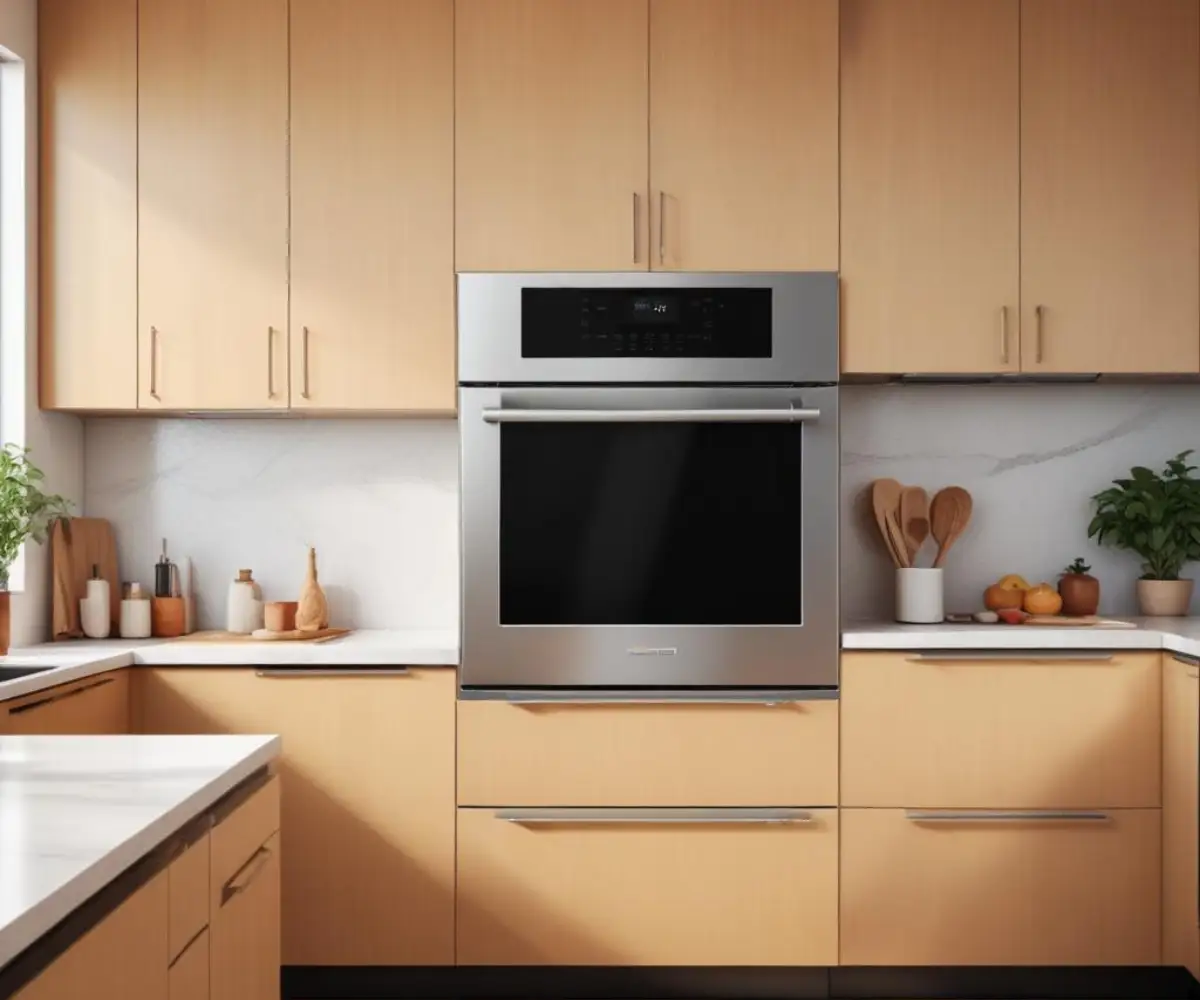
Solving the Most Common Wall Oven Vent Frustrations
Once you understand that your oven is designed to vent into the room, you can tackle the specific problems that arise. Most issues fall into three main categories: excessive smoke and odors, heat damage to surrounding cabinets, and persistent fan noise.
Problem: My Kitchen Fills with Smoke and Lingering Odors
This is the most frequent complaint. If your smoke alarm becomes your new dinner bell, it’s not the vent’s fault; it’s a symptom of something happening inside the oven. The solution begins with what you’re cooking and how clean your oven is.
The Culprit: The smoke is caused by food splatters, grease buildup, or sugary spills burning on the hot surfaces of the oven interior or on the heating elements. Using high-smoke-point oils and ensuring your oven is clean are the first lines of defense. For particularly greasy foods, placing a larger baking sheet on a lower rack can catch drips before they hit the oven floor and start to smoke.
The Solution: The best long-term strategy is to support your oven’s built-in vent with adequate room ventilation. Even though an external vent for the oven isn’t required, your kitchen still needs a way to exhaust the air. Always use your range hood fan when the oven is on, even if you aren’t using the cooktop. This creates airflow, drawing the steam, grease, and odors expelled by the oven vent up and out of the room.
Problem: The Fan Runs Forever and It’s So Loud
A common surprise for new wall oven owners is that the cooling fan continues to run long after the cooking cycle is complete. You might turn the oven off, but a noticeable whirring sound persists for up to an hour or more. This is not a defect; it’s a critical safety feature.
The Reason: The fan’s job is to cool the electronic components, and those components remain hot long after the oven cavity begins to cool. The fan will run until the internal thermostat confirms that the controls have reached a safe temperature. However, if you notice a sudden increase in volume, like a grinding or rattling, this could indicate a problem. Sometimes, excessive fan noise is a sign of a deeper issue. If the sound is troubling you, a resource on ZLINE oven fan noise can provide more specific troubleshooting steps.
Problem: My Cabinets Are Getting Hot, Discolored, or Warped
This is the most serious and potentially dangerous issue, and it almost always points to one root cause: improper installation. Heat damage is a clear sign that the hot air being expelled from the oven vent has nowhere to go and is instead being trapped against your cabinetry.
The Critical Fix: Every wall oven manufacturer provides a detailed installation manual with precise minimum clearance dimensions. These aren’t suggestions; they are requirements for safety and proper function. The specifications ensure there is a sufficient air gap around the entire oven chassis—top, bottom, sides, and back—to allow for unimpeded airflow. An installer who simply builds a box to the oven’s cutout dimensions without accounting for these air channels is setting you up for failure.
Installation and Cabinetry: The Secret to Venting Success
Proper installation is more than just sliding the oven into a hole. The surrounding cabinetry must be designed to work *with* the oven’s ventilation system, not against it. This is where many kitchen designs fall short, prioritizing a flush, seamless look over the appliance’s functional needs.
A crucial, often overlooked element is the need for an air channel that allows cool air to be drawn in from the bottom and hot air to escape at the top. This might involve a vent in the cabinet’s toe-kick or a deliberate space left above the oven, which can be concealed by trim. Without this passive airflow, the oven’s cooling fan is forced to work harder, recirculating ever-hotter air, which leads to overheating components and heat-damaged cabinets. This is especially vital when considering a shallow wall oven, where space is already at a premium.
The entire kitchen’s construction plays a role. Even the way your flooring is installed can impact cabinetry alignment and airflow. Ensuring a clean transition where your wall tile meets the baseboard can prevent subtle shifts that might compromise the precise fit needed for your oven cabinet.
Specialized Ventilation: When Is It Necessary?
While most electric wall ovens are fine with their front-venting system and good ambient kitchen ventilation, there are exceptions. High-powered professional-style ovens or gas wall ovens may have different requirements and could necessitate a dedicated external ventilation solution. Furthermore, some homeowners simply prefer a more robust system to handle heavy cooking odors or moisture.
In these cases, supplemental ventilation options can be explored. These are not part of the oven itself but are installed to work in tandem with it.
| Ventilation Type | How It Works | Best For | Installation Complexity |
|---|---|---|---|
| Standard Front-Vent (Built-in) | Internal fan cools electronics and expels air into the kitchen. | Virtually all standard electric wall ovens. | None (part of the oven). Cabinetry must allow airflow. |
| Ceiling-Mounted Exhaust Fan | A powerful fan (similar to a high-end bathroom fan) installed in the ceiling above the oven. | Kitchens where a range hood isn’t feasible but supplemental venting is desired. | Moderate to High. Requires ductwork to the exterior and electrical wiring. |
| Downdraft Ventilation | A retractable vent that rises from the countertop behind or beside the appliance to pull air down. | Island or peninsula installations, though rarely used or practical for wall ovens. | High. Requires significant under-floor or in-cabinet ductwork. |
| Recirculating Kit/Hood | A ductless hood that pulls air through charcoal filters to remove odors and grease before returning it to the room. | Situations where external ducting is impossible. Less effective than vented options. | Low to Moderate. Requires mounting and electrical connection but no ductwork. |
Achieving a Flawless, Smoke-Free Kitchen
Your wall oven is an advanced piece of engineering designed for both performance and a sleek, integrated look. Its ventilation system, while subtle, is critical to its longevity and your safety. The key is to recognize that it’s a closed-loop system designed primarily to cool the appliance, not to clear your kitchen air.
By ensuring your oven is installed with the manufacturer-specified clearances, keeping the interior clean to prevent smoke at the source, and using your range hood as a whole-kitchen ventilation partner, you can eliminate nearly every common issue. Understanding your wall oven vent isn’t just about solving a problem—it’s about unlocking the full potential of your appliance and ensuring your kitchen remains a clean, comfortable, and welcoming space for years to come.
