
Vinyl Flooring Around Fireplace: The #1 Safety Mistake to Avoid
You envision a beautiful, seamless floor flowing through your living room, but one major obstacle stands in the way: the fireplace. The desire for the modern look and durability of vinyl plank flooring clashes with nagging questions about safety. Can vinyl handle the heat? Will it melt, warp, or release dangerous fumes?
This uncertainty leads many homeowners to compromise on their design or, worse, make a critical installation error that risks their home and family’s safety. The core problem isn’t just about aesthetics; it’s about understanding the science of heat transfer, the limitations of vinyl as a material, and the non-negotiable building codes that govern fireplace installations.
You'll Learn About
Why a Fireplace Is a Flooring Danger Zone
A fireplace is more than just a cozy feature; it’s a significant heat source that interacts with its surroundings in complex ways. Understanding these interactions is the first step to a safe and lasting flooring installation. Ignoring them can lead to flooring failure and serious safety hazards.
The Hidden Dangers of Radiant Heat
Even when your fireplace isn’t roaring, the pilot light and the mass of the fireplace itself can radiate a surprising amount of heat. This constant, low-level heat can be deceptive. While luxury vinyl is durable, it’s still a PVC-based product, and excessive temperatures can cause it to soften, discolor, or warp over time.
This is especially true for wood-burning fireplaces, which generate the most intense heat. Gas and electric fireplaces produce less heat, but clearance requirements must still be strictly followed. The thermal integrity of your flooring depends on respecting the safe distance from any heat source.
Ember and Spark Risks You Can’t Ignore
For wood-burning fireplaces, the risk of a hot ember popping out of the firebox is a primary concern. Vinyl flooring is flame-retardant, meaning it won’t typically spread flames if something catches fire. However, a direct hit from a hot coal can easily melt or scorch the surface, creating permanent damage.
This is precisely why building codes mandate a non-combustible area directly in front of and around the fireplace opening. This zone, known as the hearth, is designed to catch any stray sparks or embers safely.
The Expansion and Contraction Nightmare
All floating floors, including vinyl plank, need to expand and contract with changes in temperature and humidity. The area around a fireplace experiences more dramatic temperature swings than the rest of the room. This makes a proper expansion gap absolutely critical.
Without a sufficient gap between the flooring and the hearth, the planks have nowhere to go when they expand. This pressure can cause the floor to buckle, peak at the seams, or even separate, ruining your beautiful installation.
The Solution: A Code-Compliant & Beautiful Vinyl Floor
The good news is that you absolutely can have vinyl flooring around your fireplace. The key is to do it correctly by prioritizing safety regulations and using the right materials and techniques. This ensures a beautiful result that is also safe and durable.
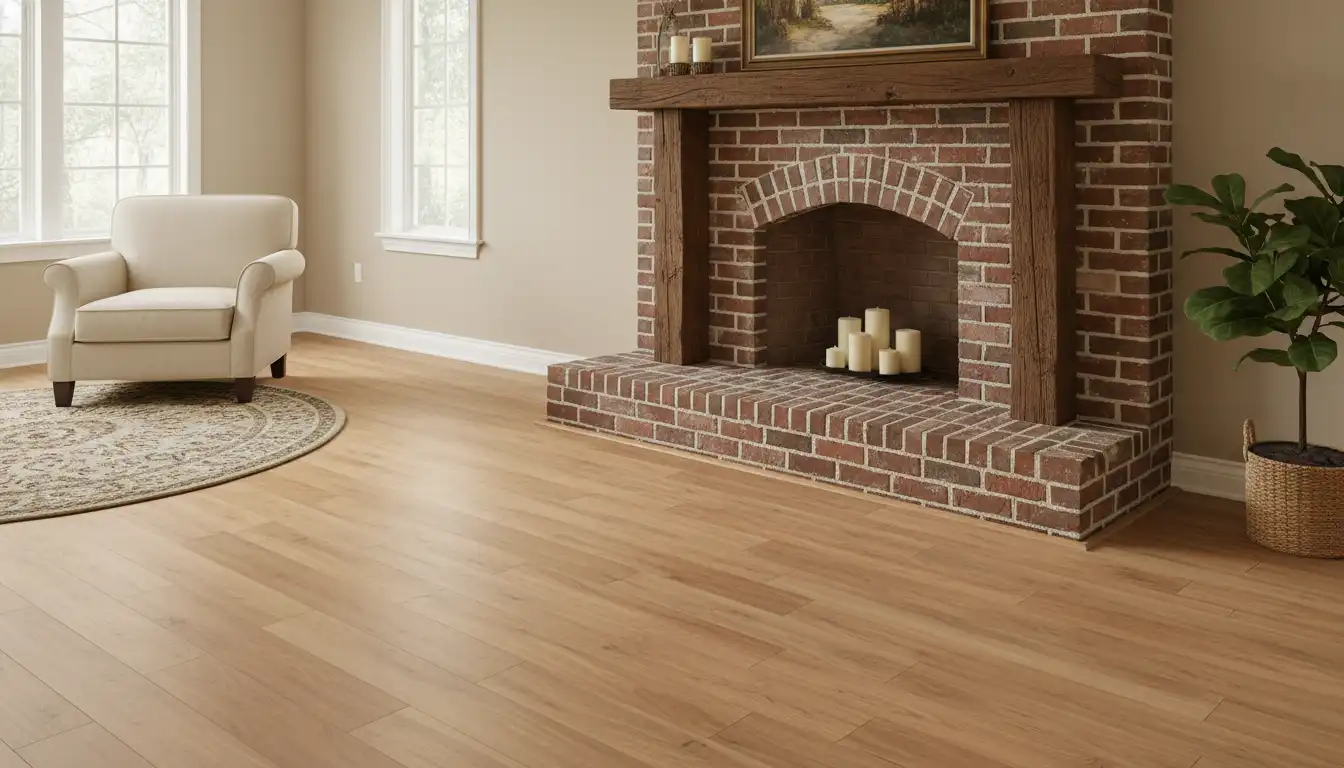
Decoding Fireplace Codes and Clearances
Before a single plank is laid, you must understand your local building codes. While specifics can vary, organizations like the National Fire Protection Association (NFPA) provide standards that are widely adopted. A core rule is that combustible materials cannot be placed within a certain distance of the fireplace opening.
Generally, any combustible trim or flooring must be kept at least 6 inches away from the firebox opening. This distance increases if the material projects outwards. It is essential to have a hearth made of non-combustible material like brick, tile, or stone extending in front of and to the sides of the fireplace.
Choosing the Right Vinyl: Why SPC Core Is Superior
Not all vinyl flooring is created equal, especially when dealing with temperature fluctuations. The core construction of the plank makes a significant difference. For areas near a heat source, Stone Polymer Composite (SPC) vinyl is the superior choice.
SPC cores are made from a mixture of natural limestone powder, polyvinyl chloride, and stabilizers. This composition makes them far more dense, stable, and less susceptible to expansion and contraction than their Wood Plastic Composite (WPC) counterparts. This dimensional stability is precisely what you need in the challenging environment around a fireplace.
| Feature | SPC (Stone Polymer Composite) | WPC (Wood Plastic Composite) | Traditional Sheet Vinyl |
|---|---|---|---|
| Core Composition | Limestone, PVC, Stabilizers | Wood Pulp, PVC, Foaming Agents | PVC Layers |
| Heat Stability | Excellent; very stable | Good; more prone to expansion | Poor; can warp easily |
| Durability | Highest; very dense and rigid | High; softer underfoot | Varies; prone to dents |
| Best Use Near Fireplace | Highly Recommended | Acceptable, with caution | Not Recommended |
The Critical Role of a Non-Combustible Hearth
It cannot be stressed enough: vinyl flooring must not be installed directly in the hearth zone. Your vinyl planks should be installed up to the edge of a code-compliant hearth. This creates a safe, non-combustible barrier that protects both your floor and your home.
The hearth must extend a minimum distance from the fireplace opening—often 16 inches in front for most standard fireplaces. Ensure your hearth meets local code before planning your flooring layout.
Step-by-Step Installation for a Flawless Finish
Proper installation is the final piece of the puzzle. A careful approach ensures your floor not only looks professional but also performs safely for years to come. Rushing these steps can lead to gaps, buckling, and an unsatisfying result.
Step 1: Prepare the Subfloor and Hearth
Begin with a clean, flat, and level subfloor. It’s crucial that the surface where the vinyl meets the hearth is perfectly even. Any height difference can create a trip hazard and prevent a clean finish.
If your hearth is raised, you will use transition molding to cover the edge. If it is flush, your precision cuts will be the star of the show.
Step 2: The All-Important Expansion Gap
When installing a floating vinyl plank floor, you must leave an expansion gap around the entire perimeter of the room, and this includes against the fireplace hearth. A gap of at least 1/4-inch is standard.
This space is non-negotiable. It allows the flooring to move freely with temperature changes, preventing the buckling and damage that can occur when planks are installed too tightly against a fixed object like a hearth.
Step 3: Scribing and Cutting for a Perfect Fit
Fireplace hearths, especially those made of brick or stone, are rarely perfectly straight. To achieve a clean, tight fit, you will need to scribe the planks. This technique transfers the exact contour of the hearth onto your flooring plank for a precise cut.
A contour gauge is an excellent tool for this job. For complex layouts, using a good flooring layout software can help you plan these intricate cuts and minimize waste.
Step 4: Concealing the Gap for a Professional Look
Once the planks are laid and the expansion gap is in place, you need to cover it for a clean, finished appearance. You have several options depending on the style of your hearth and your personal preference.
For a seamless look against a straight hearth, color-matched, flexible caulk can be a great option. For a more traditional finish, especially with raised hearths, transition moldings are ideal. For a detailed guide on this specific finishing touch, see our article on using quarter round around fireplace hearths to hide gaps effectively.
Advanced Tips & Common Mistakes to Avoid
Going beyond the basics can elevate your installation from good to great. Avoiding common pitfalls ensures your investment is protected and your floor remains beautiful for its full lifespan.
The Underlayment Question
Many vinyl plank products come with a pre-attached underlayment. If yours does not, be mindful of the type you choose. You want an underlayment that provides moisture protection and sound deadening without adding excessive thermal insulation, which could trap heat against the planks.
Always check the flooring manufacturer’s recommendations for approved underlayment types. Using an unapproved product can often void the warranty.
Beyond Wood-Look: Exploring Styles
While wood-look planks are incredibly popular, don’t forget that luxury vinyl also comes in stunning stone and tile looks. A slate or travertine-look LVT can create a beautiful, classic transition to a stone fireplace. For those with a more ornate style, some vinyl options offer intricate patterns. While modern looks are popular, some homeowners prefer a more classic feel, which you can explore in our Baroque flooring reviews.
The #1 Mistake: Ignoring Manufacturer’s Instructions
Building codes provide the minimum safety requirements, but the flooring manufacturer’s warranty and installation guide are the ultimate authority. These documents will specify the maximum surface temperature the flooring can withstand and the required clearances from heat sources.
Installing the product outside of these specifications can lead to flooring failure and will almost certainly void your warranty. Always read and follow these instructions meticulously.
A Safe and Stylish Conclusion
Installing vinyl flooring around a fireplace is entirely possible and can yield a stunning result. Success hinges on a foundation of safety, knowledge, and precision. You must adhere strictly to building codes, ensuring a proper non-combustible hearth separates your floor from the heat source.
Choosing a dimensionally stable product like SPC vinyl provides an essential layer of security against temperature-induced warping. Finally, respecting the need for an expansion gap and finishing the edges properly will ensure your floor can move as needed, preventing buckling and preserving the beauty of your installation for years to come.
