Is Your Vintage Concrete Laundry Sink Worth a Fortune or Just Junk?
That hulking concrete sink sitting in the basement—the one that’s been there since before your grandparents’ time—might be more than just a dusty relic. Many homeowners uncover these behemoths during renovations and immediately face a dilemma. Is this a valuable piece of architectural history, or is it a several-hundred-pound headache that needs to be sledgehammered into oblivion?
The truth is, it could be either. The worth of a vintage concrete laundry sink is not a simple calculation; it’s a fascinating blend of history, condition, aesthetics, and modern design trends. Before you decide its fate, it’s crucial to understand what makes these sinks desirable and what makes them little more than scrap.
You'll Learn About
Is Your Old Concrete Sink a Hidden Gem or a Heavy Headache?
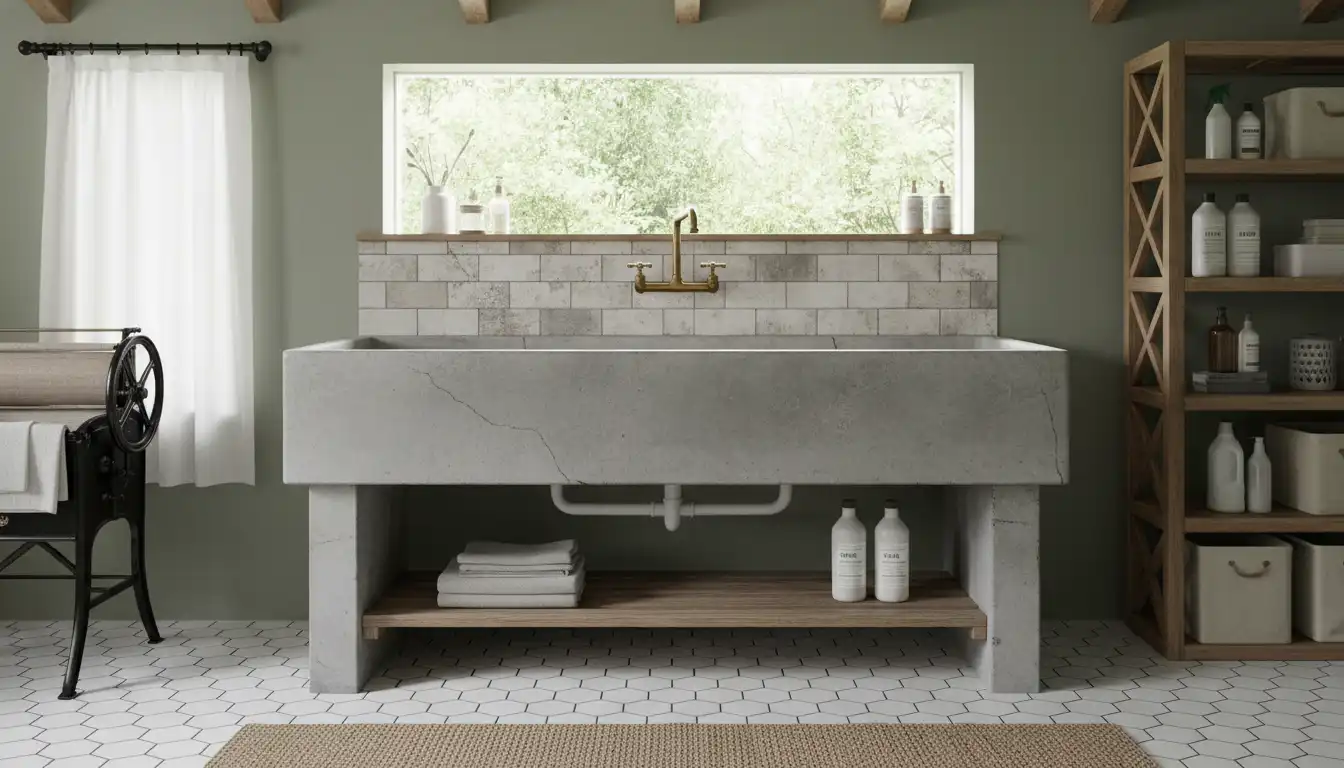
Before the era of sleek stainless steel and modern composites, laundry sinks were built for one purpose: to endure. Usually made from Portland cement and sometimes reinforced with wire mesh, these tubs were fixtures of durability in homes from the 1920s through the 1960s. Their reappearance in modern homes taps into the popular industrial, modern farmhouse, and rustic design movements.
However, their practicality comes with challenges. These sinks are incredibly heavy, often weighing between 250 and 600 pounds, making removal or relocation a significant undertaking. Furthermore, their porous nature and age can lead to cracks, stains, and plumbing incompatibilities. The key to determining value lies in balancing its historical charm against these very real logistical hurdles.
Deciphering the Clues: Key Factors That Determine a Vintage Concrete Sink’s Value
To accurately assess your sink’s worth, you need to play detective. The value isn’t just about its age; it’s a combination of several critical factors. A careful examination will reveal whether you have a salvage-yard reject or a sought-after designer piece.
Condition is King: Assessing Cracks, Stains, and Integrity
The most important factor is the sink’s structural integrity. Minor surface imperfections and stains are often seen as character, contributing to its patina and history. However, deep structural cracks that compromise its ability to hold water can render it nearly worthless, unless a buyer is looking for a garden planter.
Look closely for hairline cracks versus large, separating fissures. Check the drain area, as this is a common point of failure where the original metal fittings may have corroded and damaged the surrounding concrete. A solid, leak-free basin will always command a higher price.
The Maker’s Mark: Identifying Brands and Age
While many of these sinks were made by local craftsmen and bear no markings, some were produced by well-known manufacturers of the era. Look on the underside or back for stamps, patent numbers, or logos from companies like Crane Co. Finding a maker’s mark can help date the sink and add to its provenance.
Even without a mark, the style can offer clues. Sinks with zinc or metal-wrapped rims were designed to prevent chipping and often date to an earlier period. These features, if in good condition, are highly desirable.
Size, Shape, and Style: From Single Basins to Triple Troughs
Vintage concrete sinks came in various configurations. Double-basin models are the most common, but single, deep basins are also popular for their utility. Rarer triple-basin models can be quite valuable to the right buyer with enough space.
Unique features add significant value. Look for built-in washboards, fluted fronts, or integrated drainboards. Freestanding models with their original concrete or steel legs are typically more sought-after than built-in models that were encased in surrounding construction.
Original Hardware: The Faucets and Legs That Add Value
Never underestimate the importance of the original fixtures. The original metal legs, faucets, and drain assemblies can be worth as much as the sink itself. Many of these components are difficult to find and are prized by restorers looking for period-correct details.
If the original faucet is still attached, even if it’s not functional, it adds to the overall value. Rust on the steel stand can often be removed and the stand can be repainted, so don’t dismiss it just because it shows its age.
The Big Question: What Are They Actually Worth?
The monetary value of a vintage concrete laundry sink can fluctuate wildly based on condition, location, and demand. Prices can range from being given away for free (if you can haul it) to several hundred dollars. In some cases, fully restored and unique sinks have been known to fetch over a thousand dollars from renovators or designers.
Local marketplaces like Facebook Marketplace and Craigslist are common places to find these sinks, with prices generally ranging from $50 to $300 depending on the factors listed above. Architectural salvage yards often price them higher, reflecting their effort in sourcing and storing these heavy items.
| Condition | Configuration | Original Hardware | Estimated Value Range |
|---|---|---|---|
| Project Condition (Major stains, hairline cracks, needs full restoration) | Single or Double Basin | Missing or Damaged | $0 – $100 |
| Good Condition (Usable, minor stains/chips, structurally sound) | Double Basin | Partial or Restorable | $100 – $350 |
| Excellent / Restored (Clean, sealed, no major flaws) | Double or Triple Basin | Intact and Functional | $350 – $800+ |
| Excellent with Unique Features (Washboard, drainboard, original legs) | Any | Complete and in Good Shape | $500 – $1,200+ |
The Restoration Route: Turning a Dusty Relic into a Designer Piece
If you’ve determined your sink has good bones, a restoration project can transform it into a stunning focal point. The process requires patience and the right materials, but the results can be incredibly rewarding. Bringing an old fixture back to life is a sustainable choice that adds unmatched character to a home.
Cleaning and Stain Removal: The First Crucial Step
Start with a gentle but thorough cleaning. Avoid harsh acids or aggressive abrasives that can damage the porous concrete. A pH-neutral cleaner and a stiff bristle brush are your best tools for removing decades of grime.
For stubborn stains, you can create a poultice by mixing a cleaning agent (like OxiClean or baking soda) with water to form a paste. Apply it to the stain, cover it with plastic wrap, and let it sit for 24-48 hours to draw the stain out of the concrete.
Repairing Cracks and Chips: Is a DIY Fix Possible?
Small chips and non-structural hairline cracks can be repaired. Use a concrete patching compound or a two-part epoxy designed for masonry. It’s important to clean the damaged area thoroughly before applying the filler to ensure a strong bond.
For larger structural cracks, it’s best to consult a professional. Attempting a major repair without the right expertise could lead to future leaks. While tackling these updates, homeowners often discover other outdated systems; for instance, you might be considering a Honeywell Chronotherm III replacement to modernize your home’s climate control at the same time.
Sealing for Modern Use: The Key to Durability
This is the most critical step for making a vintage sink functional in a modern home. Sealing the concrete is non-negotiable. An unsealed sink will absorb water, harbor bacteria, and stain easily.
Use a high-quality, penetrating concrete sealer. If you plan to use the sink in a kitchen or for food preparation, ensure you choose a food-safe sealer. Multiple thin coats are more effective than one thick coat.
Beyond the Laundry Room: Creative Uses for Vintage Concrete Sinks
The appeal of these sinks now extends far beyond their original purpose. Their rustic, industrial charm makes them a versatile design element. Their sheer durability and generous size open up a world of creative repurposing possibilities that add a unique story to any space.
Consider these alternative uses:
- Farmhouse Kitchen Sink: As the centerpiece of a kitchen, a restored concrete sink makes a bold statement.
- Outdoor Potting Sink: In a garden or greenhouse, it provides a durable and stylish workstation for potting plants.
- Outdoor Bar or Ice Trough: For entertainers, a double-basin sink filled with ice becomes a memorable drink station for parties.
–Bathroom Vanity: A single-basin model can be mounted on a custom vanity for a unique, industrial-chic bathroom.
The Practicalities: Moving, Installing, and Plumbing Challenges
The single biggest obstacle with any concrete sink is its weight. Do not attempt to move one alone. You will need at least two or three strong helpers, a heavy-duty dolly, and a clear plan to navigate stairs and doorways. Lay down plywood to protect floors during the move.
Installation requires careful planning. If installing on a cabinet base, the structure must be reinforced to support the immense weight. Plumbing can also be tricky, as vintage drain sizes and faucet spacings may not match modern standards, often requiring custom solutions from a skilled plumber. During a renovation, you may encounter various plumbing questions, such as can you use SharkBite on soft copper for other pipe connections.
The Verdict: Should You Keep, Sell, or Scrap Your Concrete Sink?
Ultimately, the “worth” of your vintage concrete laundry sink is a personal calculation. It’s a balance of its monetary value, its aesthetic appeal, your willingness to tackle a restoration, and the practicalities of installation. Some projects, like replacing telephone wire with Cat6, are straightforward upgrades, while restoring a concrete sink is a labor of love.
Ask yourself a few final questions. Do you love its story and appearance? Is its condition salvageable? Do you have the right space and the budget for a proper installation? If the answer is yes, then you may have found a timeless treasure that will be a conversation piece in your home for decades to come.