
V Evo Max Flooring Reviews: The Unvarnished Truth Before You Buy
Choosing the right flooring feels like navigating a minefield. You’re balancing aesthetics, durability, and a budget, all while being bombarded with marketing claims from dozens of brands. It’s a significant investment, and the fear of making a costly mistake is very real.
Amidst the sea of options, V Evo Max flooring by Durato has emerged, promising unparalleled durability and style. But are these claims justified, or are they just clever marketing? This article cuts through the noise to provide a comprehensive, fact-based review to help you decide if V Evo Max is the right foundation for your home.
You'll Learn About
What Exactly is V Evo Max Flooring?
V Evo Max is a line of luxury vinyl plank (LVP) flooring, specifically categorized as a Stone Polymer Composite (SPC) floor. This construction is a key differentiator in the crowded vinyl market. Unlike traditional vinyl, SPC floors have a rigid core made from a mixture of natural limestone powder, polyvinyl chloride, and stabilizers.
This rigid core technology is the source of many of V Evo Max’s lauded benefits. It provides exceptional dimensional stability, meaning the planks are less likely to expand, contract, or warp with changes in temperature and humidity. The manufacturer, Durato, also highlights its “Quantum X Wear Layer,” which is said to incorporate real diamonds for industry-leading scratch and dent protection.
Deconstructing the Layers: The Core of V Evo Max’s Performance
Understanding the construction of a V Evo Max plank reveals why it performs the way it does. Each plank is a multi-layered product engineered for resilience and appearance. At the top, the Quantum X wear layer provides resistance against scratches and stains.
Beneath that is the high-resolution decorative film that gives the plank its realistic wood look. The main event is the SPC core, which provides the plank’s structure, impact resistance, and waterproof properties. Finally, most V Evo Max products come with an attached underlayment or pad, designed to reduce sound and add a touch of comfort underfoot.
The Great Debate: V Evo Max Pros and Cons Uncovered
No flooring product is perfect for every situation. A balanced look at the advantages and potential drawbacks is crucial for making an informed decision. Based on product specifications and user feedback, here is a breakdown of what you can expect.
The Bright Side: Why Homeowners Are Choosing V Evo Max
The primary draw for V Evo Max is its robust durability. The 7mm overall thickness and 20mil wear layer are substantial specifications in the residential LVP market, suggesting a product built to withstand active households. Many users praise its resistance to everyday wear and tear from pets and children.
Its 100% waterproof nature is another significant selling point. This makes it a suitable option for installation in any room of the house, including moisture-prone areas like kitchens, bathrooms, and basements, without the risk of water damage warping the planks.
The Hidden Downsides: What Some Reviews Won’t Tell You
While durable, no floor is indestructible. Some users note that despite the advanced wear layer, heavy or sharp objects can still cause scratches or gouges. The rigidity of the SPC core, while a benefit for stability, can also make the floor feel harder and colder underfoot compared to WPC (Wood Polymer Composite) alternatives.
Another point of contention can be pattern repetition. While the decorative films are high-resolution, there is a finite number of unique plank patterns. During installation, careful planning is needed to avoid placing identical planks too close together, which can create an artificial look.
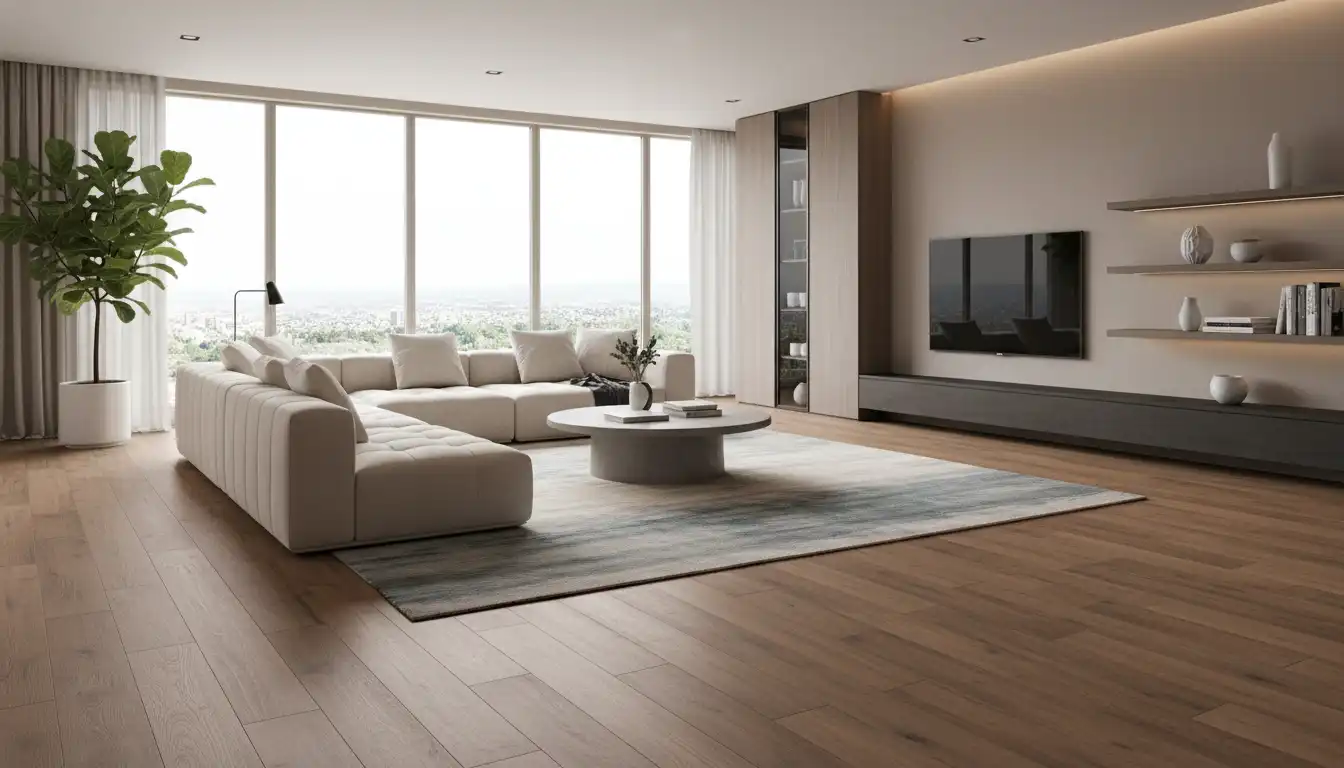
Installation Deep Dive: Is V Evo Max Truly DIY-Friendly?
V Evo Max is marketed as a floating floor with a click-lock installation system, which is often appealing to DIY enthusiasts. While the mechanism itself is straightforward, the success of the installation hinges almost entirely on one critical factor: subfloor preparation.
The manufacturer’s instructions specify that the subfloor must be clean, structurally sound, and level to within 3/16 of an inch over a 10-foot radius. Failure to meet these requirements can lead to a host of problems, including planks separating, joints breaking, and a hollow or “bouncy” feeling underfoot. These issues are frequently and mistakenly blamed on the flooring itself when the root cause is an imperfect subfloor.
The Subfloor Secret No One Talks About
The critical importance of a flat subfloor cannot be overstated for rigid core flooring like V Evo Max. Because the planks are so stiff, they do not flex to conform to imperfections in the surface below. Any high or low spots in the subfloor create stress points on the locking mechanisms.
Over time, daily foot traffic will cause movement in these unsupported areas, eventually leading to the locking system failing. Many negative flooring reviews across all brands can be traced back to installers cutting corners on subfloor leveling. Investing in self-leveling compound or professional subfloor preparation is not an optional expense; it is insurance for your flooring investment.
Real-World Durability: Scratch, Dent, and Water Resistance
Marketing claims are one thing, but real-world performance is what matters. V Evo Max is designed to be tough. The 20mil wear layer is a commercial-grade specification, offering significant protection against scuffs and scratches from pet claws, furniture legs, and daily foot traffic.
The SPC core provides excellent indent resistance. This means dropping a heavy object is less likely to leave a permanent dent compared to softer flooring types like traditional hardwood or some other vinyl products. Furthermore, its waterproof construction ensures that spills, tracked-in rain, or pet accidents won’t cause the planks to swell or delaminate, provided the moisture is cleaned up in a reasonable time.
| Feature | V Evo Max (Durato) | Typical Big Box LVP | Engineered Hardwood |
|---|---|---|---|
| Core Material | Stone Polymer Composite (SPC) | SPC or WPC | Plywood/HDF with Wood Veneer |
| Total Thickness | ~7mm | 4mm – 6mm | 9mm – 14mm |
| Wear Layer | 20mil | 6mil – 12mil | N/A (Wood Veneer) |
| Waterproof | Yes | Often Yes (Water-Resistant Top) | No |
| DIY Friendliness | High (with proper subfloor prep) | High | Moderate to Low |
| Price Point (Material) | $3.00 – $4.50 | $2.50 – $4.00 | $5.00 – $15.00+ |
V Evo Max vs. The Competition: A Head-to-Head Comparison
When evaluating V Evo Max, it is helpful to see how it stacks up against its competitors. The flooring market is vast, with countless options vying for your attention.
V Evo Max vs. Other Specialty Brands
Compared to other well-regarded LVP brands, V Evo Max competes on specifications. Its 7mm thickness and 20mil wear layer place it in the premium category. Brands like COREtec, Shaw, and Mohawk offer similar products, and the choice often comes down to specific color/style preference, local availability, and price.
It’s always wise to get samples. While you might be looking for a specific review like for Palmetto Road flooring reviews, seeing and feeling the product in your own home’s lighting is invaluable.
How Does It Stack Up Against Big Box Brands?
When you look at big-box store offerings, the difference in quality can often be significant. Many store-brand vinyl floors feature thinner wear layers (often 6-12mil) and a less robust core construction. If you’re wondering, “Is Costco vinyl flooring good?” the answer is that while it may offer good value, it’s essential to compare the technical specifications directly against a product like V Evo Max to understand the trade-offs in long-term durability.
The Financial Verdict: Is V Evo Max a Smart Investment?
V Evo Max is positioned as a mid-to-high-end LVP, and its price reflects that. While it may require a higher initial outlay than some budget-friendly options, its longevity can make it a smarter long-term investment. A floor that resists scratches and water damage and doesn’t need to be replaced after a few years provides significant value.
The key is to factor in the total cost of ownership. This includes not just the material itself but also the cost of any necessary subfloor preparation, installation labor (if not DIY), and transition pieces. A cheaper floor that fails prematurely is no bargain.
Decoding the Warranty: What’s Actually Covered?
Durato offers a lifetime limited residential warranty and a 10-15 year limited light commercial warranty for V Evo Max. However, it’s crucial to understand what “limited” means. Nearly all flooring warranties cover manufacturing defects, but they explicitly exclude damage resulting from improper installation or maintenance.
This goes back to the importance of the subfloor. If your floor fails because the subfloor wasn’t level, the warranty will be void. It also won’t cover scratches, dents, or dulling from normal use. The warranty is there to protect against rare defects in the product itself, not to serve as an insurance policy against wear and tear.
The Final Say: Our Unbiased Recommendation
V Evo Max stands out as a high-quality, durable flooring option that is well-suited for the demands of a modern home. Its robust construction, waterproof properties, and realistic aesthetics make it a compelling choice for homeowners seeking a resilient and attractive foundation for their living spaces.
However, its performance is directly tied to the quality of its installation. The importance of a perfectly flat and sound subfloor cannot be ignored. Without this foundation, even the most expensive flooring can fail.
Who Should Buy V Evo Max Flooring?
This flooring is an excellent choice for active households with kids and pets. Its superior scratch and water resistance provide peace of mind. It’s also ideal for homeowners who want a consistent look throughout their entire home, including in kitchens, laundry rooms, and bathrooms.
Who Should Look Elsewhere?
Homeowners on a very tight budget might find the upfront cost of V Evo Max and the potential expense of subfloor leveling to be prohibitive. Additionally, those who prioritize a soft or warm feel underfoot might prefer a WPC vinyl or carpeting. If your subfloor is significantly uneven, the cost to correct it could make other flooring types a more practical option.
