Upside Down Tiger Lily: Your Guide to These Unique Blooms
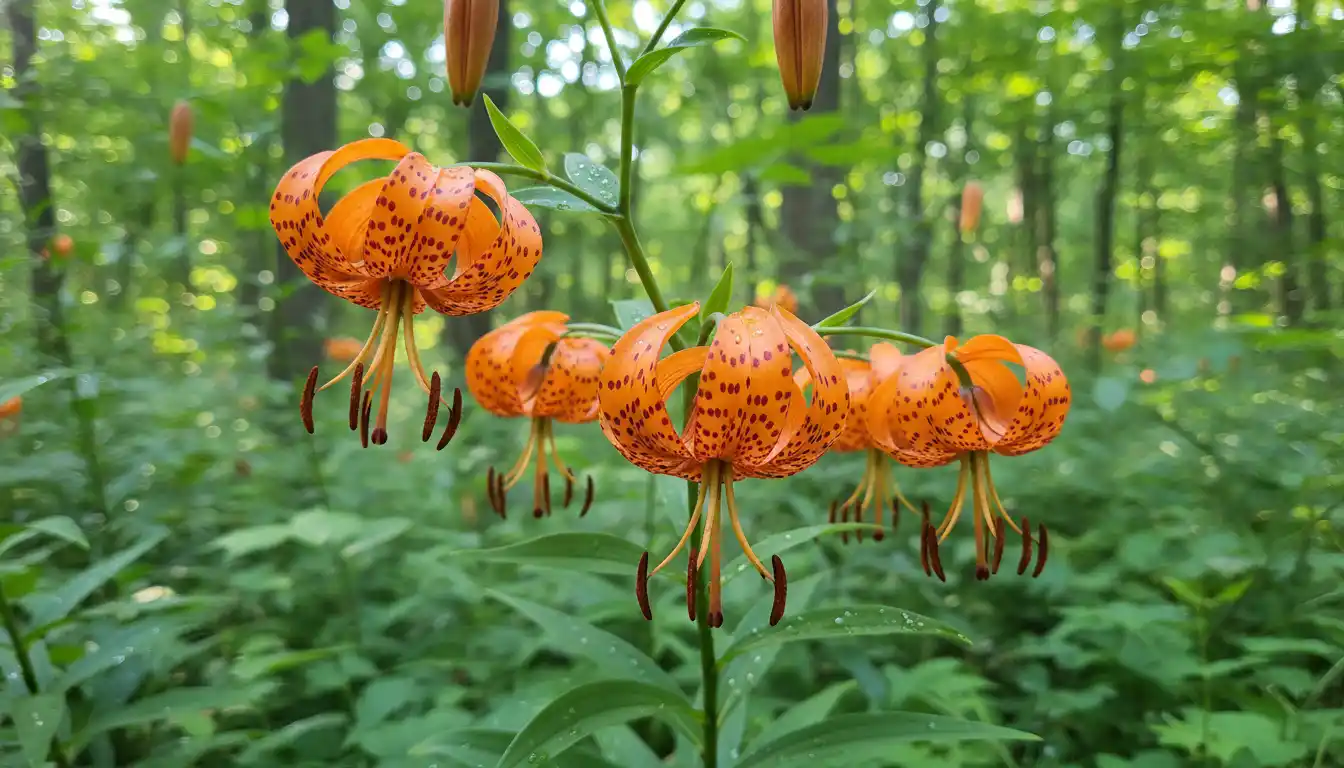
Have you ever noticed a lily in your garden with flowers that seem to hang upside down, gracefully nodding towards the earth? This unique trait often causes gardeners to wonder if something is wrong. Rest assured, this downward-facing posture is not a sign of distress but the signature characteristic of a stunning group of lilies often called “upside down tiger lilies” or, more accurately, Turk’s Cap Lilies.
These elegant flowers, with their beautifully recurved petals, are a captivating addition to any garden. This guide will solve the mystery behind their appearance, providing everything you need to know to cultivate these remarkable blooms successfully.
You'll Learn About
What Exactly is an ‘Upside Down Tiger Lily’?
The term “upside down tiger lily” is a descriptive nickname rather than a formal botanical name. It’s often used by home gardeners to describe lilies whose flowers droop downwards. This name usually refers to species like Lilium superbum (the American Turk’s Cap Lily) or Lilium martagon (the Martagon Lily), not a diseased or struggling true Tiger Lily (Lilium lancifolium).
The defining features of these lilies are their reflexed petals—petals that curve back so dramatically they almost touch at the stem, creating a turban-like shape. This unique, downward-facing orientation is an evolutionary marvel. It serves a practical purpose by protecting the flower’s precious pollen and nectar from being washed away by summer rains, ensuring successful pollination.
The #1 Mistake Gardeners Make with Downward-Facing Lilies
The most common pitfall when growing Turk’s Cap Lilies is improper soil preparation and planting depth. Many gardeners treat them like their sun-loving, upward-facing Asiatic lily cousins, which is a critical error. These woodland natives have specific needs that, if ignored, lead to weak stems, bulb rot, and a disappointing lack of flowers.
Unlike lilies that thrive in full, direct sun, Turk’s Cap Lilies prefer a gentler environment. They are naturally found at the edges of forests, and replicating these conditions is the key to success. Failure to provide the right soil drainage and light exposure is where many gardening efforts go wrong.
Mastering the Basics: Perfect Planting for Prolific Blooms
Providing the right foundation from the start will reward you with years of beautiful, nodding blooms. Success with these lilies is all about location and soil.
Choosing the Right Location
Location is everything for these elegant plants. They flourish in conditions that mimic their native woodland habitat. Look for a spot that receives morning sun with afternoon shade or dappled sunlight throughout the day. This protects them from the intense heat of the afternoon sun, which can scorch their foliage and cause the flowers to fade prematurely.
Soil Preparation Secrets
Turk’s Cap Lilies demand humus-rich, well-draining soil. They are highly susceptible to bulb rot if their roots sit in waterlogged conditions. If you have heavy clay soil, amending it is not just a suggestion—it’s a requirement. Create a loose, fertile medium by incorporating generous amounts of organic matter.
A perfect soil mix can be created by combining equal parts garden soil, compost or leaf mold, and coarse sand or fine gravel. This mixture ensures excellent drainage while retaining just enough moisture to keep the bulbs happy. A slightly acidic to neutral soil pH, generally between 6.0 and 7.0, is ideal for optimal nutrient absorption.
Planting the Bulbs Correctly
Autumn is the best time to plant Turk’s Cap Lily bulbs. Planting them at the correct depth is crucial for stability and growth. A good rule of thumb is to dig a hole that is about three times the height of the bulb itself, which is typically around 6 to 7 inches deep.
Place the bulb in the hole with the pointed end facing up and the roots spread out at the bottom. Space bulbs about 8 to 12 inches apart to give them ample room to multiply over the years. After planting, water the area thoroughly to settle the soil around the bulbs.
Ongoing Care for Your ‘Upside Down’ Beauties
Once established, Turk’s Cap Lilies are relatively low-maintenance. However, consistent care during their growing season will ensure a spectacular floral display.
Watering Wisely
These lilies prefer consistently moist soil, especially during their active growth period in the spring and summer. They are not drought-tolerant, so regular watering is necessary if rainfall is scarce. However, avoid overwatering at all costs, as this is the quickest way to cause bulb rot.
A good practice is to water deeply once a week, allowing the soil to become slightly dry to the touch before watering again. Applying a 2-inch layer of mulch, such as shredded leaves or pine bark, can help conserve soil moisture and keep the roots cool.
Feeding for a Fabulous Flower Show
To encourage robust growth and plenty of flowers, feed your lilies in the early spring as new shoots emerge. Use a balanced, slow-release fertilizer or a formula that is high in phosphorus to promote strong blooms. A 5-10-10 NPK ratio is an excellent choice.
You can apply fertilizer again in mid-summer to help the bulbs store energy for the following year’s growth. Scratch the granular fertilizer lightly into the soil surface around the plant base, being careful not to disturb the roots, and water it in well.
To Stake or Not to Stake?
Turk’s Cap Lilies can grow quite tall, sometimes reaching heights of 6 feet or more. While their stems are generally sturdy, plants grown in windier locations or with an exceptionally high number of blooms may benefit from staking. If you choose to stake, do so carefully to avoid piercing the bulb. Installing stakes early in the season, just as the plant begins its rapid upward growth, is the best approach. Proper support can be just as crucial for your garden’s aesthetic as foundational home elements; for instance, thoughtfully replacing wrought iron porch columns can dramatically improve curb appeal.
Troubleshooting Common Problems: From Pests to Poor Performance
Even the most resilient plants can face challenges. Being able to identify and address common issues will keep your “upside down tiger lilies” healthy and thriving.
Pests and Diseases
The most notorious pest for all lilies is the Red Lily Leaf Beetle. Both the adult beetles and their larvae can decimate the foliage of a plant in a short time. The most effective control method is to hand-pick them off the plants and drop them into a bucket of soapy water. Inspect your plants regularly, especially the undersides of leaves, for their orange egg clusters.
Fungal diseases like Botrytis blight can also be an issue, particularly in cool, wet weather. This appears as grayish-brown spots on leaves and flowers. To prevent it, ensure good air circulation by spacing plants properly and avoid overhead watering. If you notice any infected plant parts, remove them immediately to prevent the disease from spreading.
Why Aren’t My Lilies Blooming?
A lack of flowers can be frustrating, and there are several potential culprits. Young bulbs, especially those grown from seed, may take a few years to mature enough to bloom. Another common reason is insufficient light; while they prefer partial shade, too much shade will result in weak growth and no flowers.
Finally, review your soil conditions. Poorly drained soil or a lack of nutrients can stress the plant and inhibit blooming. Amending the soil with compost and applying a high-phosphorus fertilizer can often resolve the issue.
A Closer Look: Popular ‘Upside Down’ Lily Varieties
Exploring different varieties can add diverse colors and heights to your garden design. The following table highlights a few popular types of Turk’s Cap Lilies suitable for home gardens.
| Variety Name | Color | Mature Height | Bloom Time | USDA Hardiness Zone |
|---|---|---|---|---|
| Lilium superbum (American Turk’s Cap) | Orange with maroon spots | 4-8 feet | Mid to Late Summer | 4-9 |
| Lilium martagon (Martagon Lily) | Pinkish-purple with dark spots | 3-6 feet | Early to Mid Summer | 3-9 |
| Lilium martagon ‘Album’ | Pure white | 3-5 feet | Early to Mid Summer | 3-9 |
| Lilium pardalinum (Leopard Lily) | Reddish-orange with prominent spots | 5-7 feet | Mid Summer | 5-9 |
| ‘Claude Shride’ Martagon Hybrid | Deep mahogany-red | 3-4 feet | Early to Mid Summer | 3-8 |
Beyond the Basics: Advanced Tips for Spectacular Displays
Once you’ve mastered the fundamentals, you can elevate your garden design with these advanced techniques that create a truly stunning and self-sustaining display.
Companion Planting
Turk’s Cap Lilies pair beautifully with other shade-tolerant perennials. The classic rule for lilies is “feet in the shade, head in the sun.” Planting low-growing companions around their base helps keep the soil cool and moist. Excellent partners include Hostas, Ferns, and Astilbes.
These companion plants not only provide a living mulch but also create a lush, layered look in the garden. Their broad foliage contrasts wonderfully with the tall, slender stems of the lilies, adding texture and interest even when the lilies are not in bloom.
Naturalizing in the Garden
One of the most magical qualities of Turk’s Cap Lilies is their ability to naturalize. In an ideal environment, they will slowly multiply over the years, forming breathtaking drifts of color. To encourage this, simply leave the flower heads in place after they bloom to allow seeds to develop and scatter.
Additionally, the bulbs will produce offsets, or smaller new bulbs, around the parent bulb. Over time, this creates a dense and impressive clump. Resisting the urge to tidy up too much in the fall can help create a self-sustaining and ever-expanding colony of these beautiful flowers.
Propagation Techniques
If you wish to actively propagate your lilies to share with others or to populate new areas of your garden, it’s a straightforward process. The easiest method is to divide established clumps in the fall after the foliage has died back. Carefully dig up the entire clump, gently separate the bulbs and their offsets, and replant them immediately at the correct depth.
A more advanced technique is propagation from scales. In the fall, carefully remove a few of the outer scales from a healthy bulb. Place these scales in a plastic bag with slightly moist peat moss, keep them in a warm, dark place for a few months, and tiny bulblets will form at the base of each scale. These can then be planted out to grow into new plants, though it will take several years for them to reach flowering size.
Conclusion: Embrace the Grace of the Drooping Lily
The “upside down tiger lily,” or Turk’s Cap Lily, is a plant of unique elegance and charm. Its downward-facing blooms are not a flaw but a feature, a clever adaptation that adds a touch of woodland grace to any garden. By understanding and providing for their specific needs—dappled shade, rich, well-draining soil, and consistent moisture—you can cultivate a stunning display that will return with more vigor each year.
Embrace their distinctive form and let their nodding flowers bring a sense of wonder and sophistication to your home and garden landscape. With the right care, these remarkable lilies will become a cherished highlight of your summer garden for years to come.